
TL;DR:
- Ceramic car wax is a hybrid product with SiO2 that provides better water repellency and UV protection than traditional wax. It lasts three to six months and sits on top of the paint without chemically bonding like a professional ceramic coating. Reapplication every few months offers a practical upgrade for daily drivers seeking enhanced protection and gloss.
Ceramic car wax is defined as a hybrid detailing product that blends traditional wax or synthetic sealant with silicon dioxide (SiO2) to deliver stronger paint protection and water repellency than standard wax alone. The industry term for this category is “SiO2-infused wax,” and understanding that distinction matters before you spend money on any product. It sits between carnauba wax and a professional ceramic coating in terms of protection level, cost, and effort. Most formulas last 3–6 months under real-world conditions, making them a practical choice for daily drivers who want better protection without booking a professional appointment.
What is ceramic car wax made of, and how does it work?
Ceramic car wax gets its performance edge from SiO2 particles suspended in a traditional wax or sealant base. Silicon dioxide is the same compound found in glass and quartz. When applied to paint, these particles fill microscopic surface imperfections, creating a smoother, more reflective finish. The result is deeper color clarity and a gloss level that standard carnauba wax cannot match.
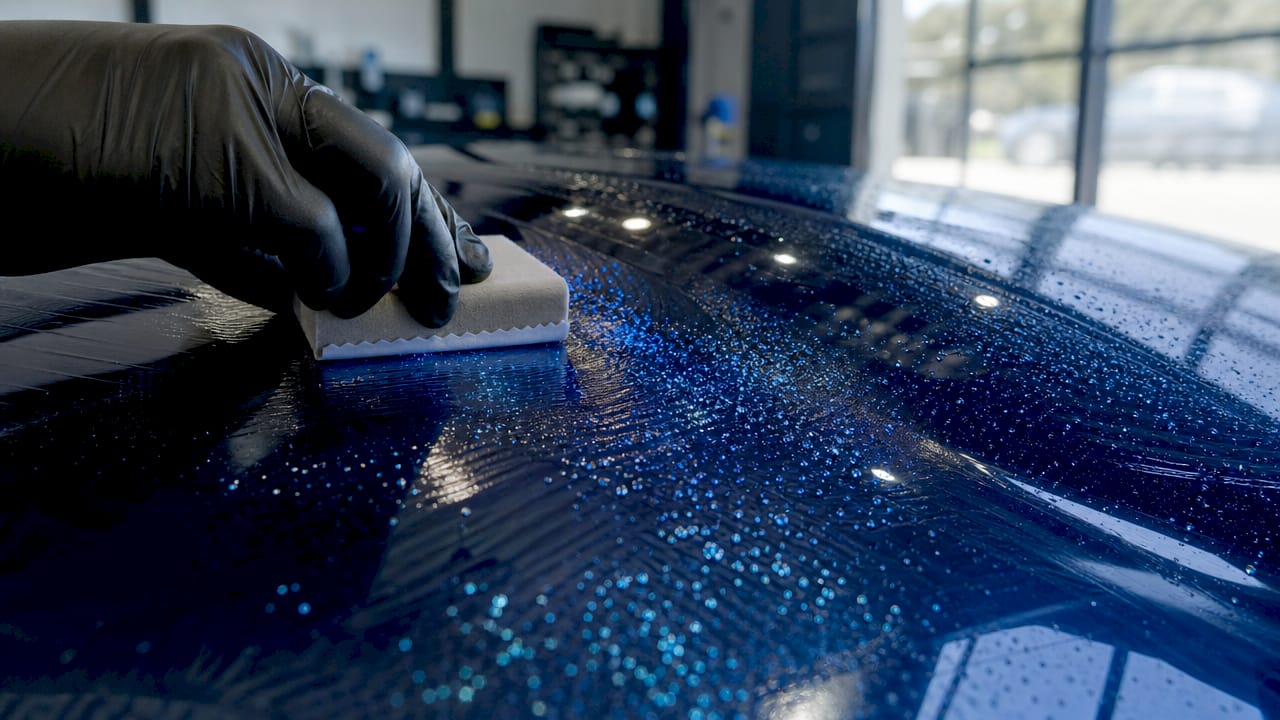
The hydrophobic effect is the most noticeable benefit. Water beads up and rolls off the surface instead of sheeting across it, which reduces water spotting and makes washing easier. SiO2 also reflects UV rays more effectively than organic waxes, slowing paint oxidation over time.
Carnauba wax, by contrast, is a plant-based product harvested from Brazilian palm leaves. It produces a warm, deep shine but breaks down quickly under heat and detergents. Organic carnauba wax requires reapplication every 4–6 weeks because of this breakdown. Ceramic wax replaces or supplements that organic base with SiO2, which is far more chemically stable.
One critical distinction: ceramic car wax does not chemically bond to your paint. A professional ceramic coating cross-links with the clear coat at a molecular level, creating a semi-permanent layer. Ceramic wax sits on top of the paint rather than bonding to it, which is why it eventually washes away. Think of it as a very durable, high-performance wax rather than a true coating.
Key ingredients that separate ceramic wax from traditional wax:
- SiO2 (silicon dioxide): The active protection agent; fills surface micro-imperfections and creates hydrophobic properties
- Carnauba or synthetic polymer base: Provides the carrier medium and contributes to initial gloss
- Surfactants and emulsifiers: Help the product spread evenly and release cleanly during buffing
- UV absorbers: Reduce paint oxidation from sun exposure
Pro Tip: Check the SiO2 percentage on any ceramic wax you buy. Products with higher concentrations generally offer better durability, but they also require more careful application to avoid streaking.
How does ceramic wax compare in durability and protection?
Durability is where ceramic wax earns its price premium over traditional wax. A properly applied ceramic wax retains over 80% of its hydrophobic properties after 50 washes with pH-neutral shampoo. Carnauba wax degrades noticeably after just 10–15 washes. That gap is significant for anyone washing their car weekly.
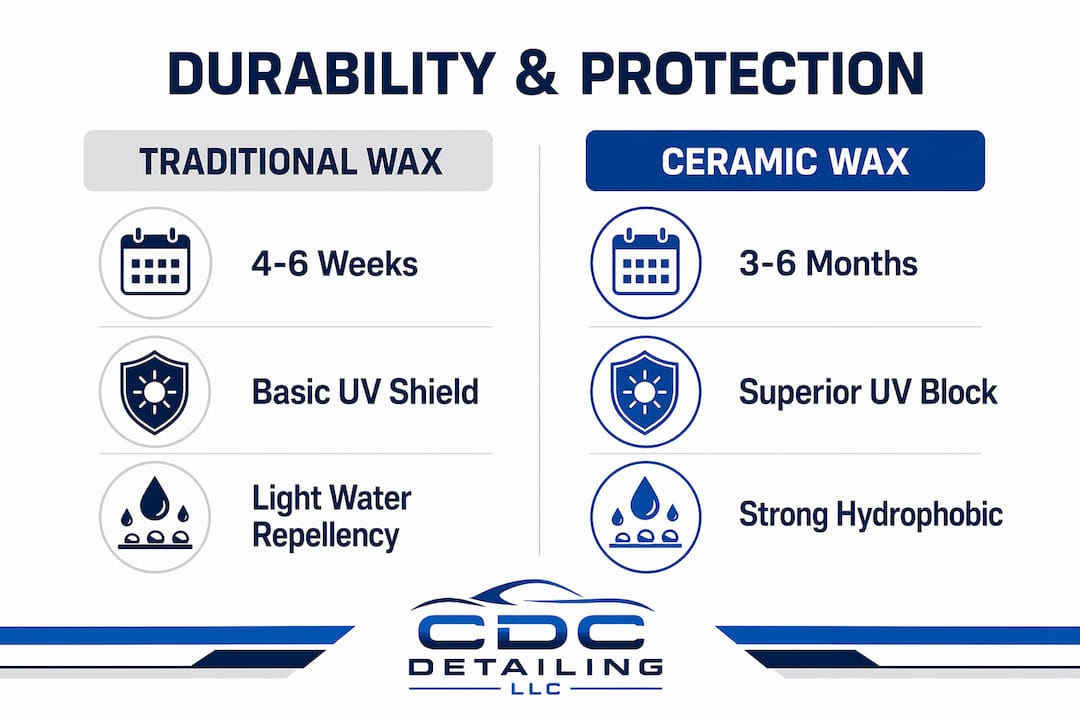
Real-world durability for ceramic wax runs 3–6 months for most drivers. Marketing claims of “up to one year” are technically possible under ideal conditions, but seasonal reapplication is the practical standard. A professional ceramic coating, by comparison, lasts 2–5 years because of its chemical bond with the clear coat.
Protection performance across common threats
Ceramic wax outperforms traditional wax against UV rays, bird droppings, tree sap, and light chemical contaminants. The SiO2 layer creates a barrier that slows the etching process when acidic materials land on the paint. That said, it does not prevent scratches or deep chemical damage the way a professional coating does.
| Feature | Traditional wax | Ceramic wax | Professional ceramic coating |
|---|---|---|---|
| Durability | 4–6 weeks | 3–6 months | 2–5 years |
| Hydrophobic retention | Low (10–15 washes) | High (50+ washes) | Very high (years) |
| UV protection | Moderate | Good | Excellent |
| Scratch resistance | Minimal | Minimal | Moderate to high |
| Application difficulty | Easy | Easy to moderate | Professional recommended |
| Cost | Low | Low to moderate | High |
The table makes the trade-off clear. Ceramic wax wins on value and convenience. A professional coating wins on longevity and protection depth. For most car owners, ceramic wax is the right call between those two extremes.
What ceramic wax protects against:
- UV-induced paint oxidation and fading
- Light water spotting and mineral deposits
- Bird droppings and tree sap (when removed promptly)
- Road grime and light chemical contamination
- Surface micro-scratches from washing (to a limited degree)
How to apply ceramic car wax for the best results
Preparation determines the outcome more than the product itself. Start with a thorough wash to remove loose dirt, then use a clay bar or iron remover to decontaminate the paint surface. Applying ceramic wax over contaminated paint traps contaminants under the layer and reduces adhesion. If your paint has visible swirl marks or scratches, a light machine polish before application will maximize the final gloss.
Step-by-step application process
- Wash and dry the vehicle completely. Any water left on the surface will dilute the product and cause uneven coverage.
- Decontaminate the paint. Run a clay bar across the surface to remove embedded particles. The paint should feel smooth like glass when you run your hand across it.
- Move to a shaded area. Applying on hot surfaces causes streaking and haze. A garage or shaded driveway works well.
- Apply a thin, even coat. Use a foam applicator pad or microfiber cloth. Work one panel at a time to maintain control.
- Allow the product to haze. Most ceramic wax formulas need 1–3 minutes to set before buffing. Follow the specific product’s instructions.
- Buff off with a clean microfiber towel. Use light, circular motions. Flip the towel frequently to avoid redepositing product.
- Inspect in direct light. Check for high spots or streaks. A second light buff resolves most issues.
Spray-and-rinse ceramic wax products can provide significant protection in under an hour, making them ideal for daily drivers who want quick results. Liquid paste formulas take longer but often deliver a deeper finish.
Pro Tip: If you have a professional ceramic coating already on your car, check the ceramic wax label for abrasive compounds before applying. Some ceramic wax products contain mild abrasives that can degrade an existing coating. Look for “coating-safe” or “non-abrasive” on the label.
Reapplication frequency depends on your environment and wash habits. Drivers in harsh climates or those who wash weekly should plan for reapplication every 3 months. Garage-kept vehicles in mild climates can stretch to 5–6 months.
What are the real benefits and limits of ceramic car wax?
Ceramic wax fits a specific type of car owner very well. Daily commuters, family SUV owners, and anyone who wants better protection than traditional wax without the cost or complexity of a professional coating will get strong value from it. The ease-of-use of spray-and-rinse formulas makes them highly appealing for drivers who want quick, effective paint protection without complex detailing.
Who benefits most
- Daily drivers: The 3–6 month durability aligns with a seasonal maintenance schedule
- Budget-conscious owners: Ceramic wax costs a fraction of a professional coating service
- DIY detailers: Application requires no special tools or training
- Owners of newer vehicles: Ceramic wax preserves factory paint finish during the first years of ownership
Where ceramic wax falls short
Ceramic wax is not the right choice for every situation. Car enthusiasts who want maximum long-term protection for a collector or show car should invest in a professional ceramic coating. The chemical bonding of a true coating provides scratch resistance and durability that no wax product can replicate.
A common misconception is that ceramic wax makes paint scratch-proof. It does not. The SiO2 layer adds minor resistance to light surface marring, but a key scratch from a shopping cart or road debris will cut right through it. Another myth is that ceramic wax eliminates the need for washing. The hydrophobic surface makes washing easier and less frequent, but regular cleaning is still necessary to prevent contamination buildup.
Ceramic wax also has lower SiO2 concentrations than professional coatings. That lower concentration is why reapplication is needed every few months rather than every few years. For most owners, that trade-off is acceptable given the cost and effort difference.
Key Takeaways
Ceramic car wax is the most practical upgrade from traditional wax for daily drivers, delivering superior hydrophobicity, UV protection, and a 3–6 month durability window without the cost or complexity of a professional ceramic coating.
| Point | Details |
|---|---|
| Hybrid formula | Ceramic wax blends SiO2 with traditional wax to outperform carnauba in durability and water repellency. |
| Realistic durability | Expect 3–6 months of protection under normal use, not the “up to one year” on some labels. |
| Not a coating replacement | Ceramic wax sits on top of paint and does not chemically bond like a professional ceramic coating. |
| Preparation is critical | Washing and decontaminating paint before application directly determines how long the wax lasts. |
| Coating compatibility | Check for abrasive ingredients before applying ceramic wax over an existing professional coating. |
Charles’s take: ceramic wax is misunderstood, and that costs car owners money
The biggest problem I see with ceramic car wax is not the product itself. It is the marketing around it. Brands use the word “ceramic” to imply professional-grade protection, and car owners buy it expecting results that only a true coating can deliver. When the wax wears off after four months, they feel cheated. The product did exactly what it was designed to do. The expectation was wrong.
Ceramic wax is genuinely useful. For someone who washes their car every two weeks and wants better water behavior and UV protection, it is a clear upgrade over carnauba. The ceramic car wax benefits are real. They are just not the same benefits you get from a professional coating.
Where I think the market is heading is toward higher SiO2 concentrations in consumer products and better formulas that bridge the gap between wax and coating. Some newer products already approach coating-level hydrophobicity with wax-level application simplicity. That trend will continue. For now, treat ceramic wax as a strong seasonal maintenance product, not a one-time solution.
My honest recommendation: use ceramic wax for your daily driver and book a professional coating for any vehicle you plan to keep for more than three years. The math works out clearly in favor of the coating over time, both in protection and in total cost.
— Charles
Professional ceramic protection from Cdcautodetailing
Ceramic wax is a strong DIY option, but it has a ceiling. When you want protection that lasts years instead of months, a professional ceramic coating is the answer.

Cdcautodetailing provides professional ceramic coating services in Pitman, New Jersey, with mobile detailing available across South Jersey. The process includes full paint decontamination, surface correction, and a professional-grade SiO2 coating that bonds directly to your clear coat. You get the water repellency and UV protection of ceramic wax, multiplied by years of durability. Cdcautodetailing also offers a full range of auto detailing services that complement any ceramic protection plan, from paint correction to interior deep cleaning. Book a consultation to find the right protection level for your vehicle.
FAQ
What does ceramic car wax actually do to paint?
Ceramic car wax deposits a layer of SiO2 particles on the paint surface that creates hydrophobic properties and UV resistance. It makes water bead and roll off, reduces water spotting, and adds gloss by filling microscopic surface imperfections.
How long does ceramic wax last compared to regular wax?
Ceramic wax lasts 3–6 months under normal daily driving conditions, while traditional carnauba wax degrades after 4–6 weeks. Ceramic wax also retains over 80% of its hydrophobic properties after 50 washes, compared to carnauba wax, which degrades after 10–15 washes.
Is ceramic wax the same as a ceramic coating?
No. Ceramic wax sits on top of the paint and wears away over time, while a professional ceramic coating chemically bonds to the clear coat and lasts 2–5 years. Ceramic wax is a modern upgrade to traditional wax, not a replacement for a professional coating.
Can I apply ceramic wax over an existing ceramic coating?
You can, but check the product label first. Some ceramic wax formulas contain mild abrasives that can degrade a professional coating. Look for products labeled “coating-safe” or “non-abrasive” before applying over an existing coating.
How often should I reapply ceramic car wax?
Plan for reapplication every 3–6 months depending on your climate, wash frequency, and storage conditions. Vehicles parked outdoors in harsh weather or washed weekly will need reapplication closer to the 3-month mark.