
TL;DR:
- Car detailing spray maintains vehicle appearance by removing light surface contaminants and adding protection. Quick detailers clean and enhance gloss temporarily, while spray sealants provide weeks of hydrophobic protection. Proper use involves cleaning, shade application, light misting, and clean towels to prevent paint damage.
Car detailing spray is a maintenance product that removes light surface contaminants, boosts gloss, and adds a protective layer to vehicle paint between full washes. The industry recognizes two main categories: quick detailers and spray sealants, which also include ceramic sprays. Each serves a distinct purpose, and choosing the wrong one for the wrong job leads to disappointment or, worse, paint damage. This guide breaks down what is car detailing spray, how each type works, and how to use detailing spray correctly so you get the results you expect without risking your finish.
What is car detailing spray and what types are available?
Car detailing sprays fall into two main categories: quick detailers and spray sealants. Understanding the difference is the first step to using them correctly.
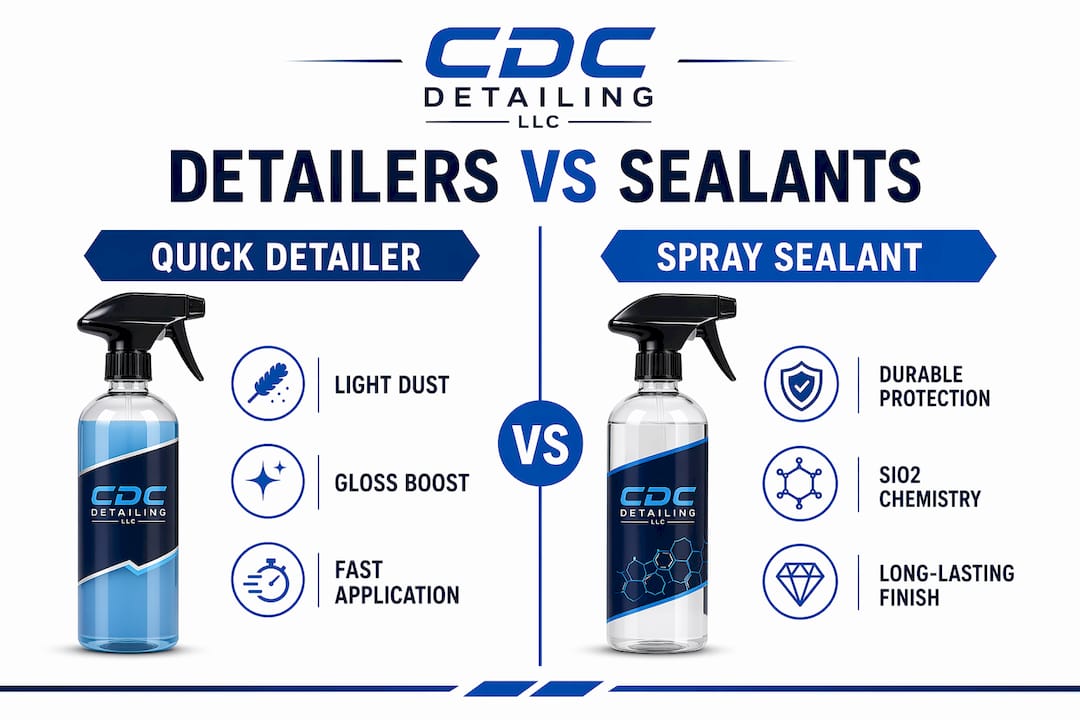
Quick detailers are low-residue sprays designed for light surface maintenance. They lift dust, pollen, fingerprints, and smudges from paint that is already mostly clean. They contain lubricants that help a microfiber towel glide across the surface without scratching. Their protection is minimal and temporary, lasting hours to a day at most.
Spray sealants and ceramic sprays are a different product class entirely. Spray sealants use SiO2 chemistry, the same silica dioxide found in professional ceramic coatings, to reduce surface energy and create a hydrophobic layer. Water beads and rolls off, carrying contaminants with it. This protection lasts weeks to months depending on the product and your local environment.
Here is a direct comparison of the two categories:
| Feature | Quick detailer | Spray sealant / ceramic spray |
|---|---|---|
| Primary use | Dust, smudges, light fingerprints | Refreshing protection and gloss |
| Protection duration | Hours to 1 day | Weeks to months |
| Hydrophobic effect | Minimal | Strong water beading |
| Surface requirement | Mostly clean paint | Clean, dry paint |
| Best timing | Between washes | After a full wash |
| Chemistry | Lubricants, light polymers | SiO2 silica-based compounds |
The key takeaway: detailing sprays are a spectrum of chemistry tailored to either quick surface gloss or durable protection. Mismatching the product to the task causes user disappointment and can damage paint.
How to properly use detailing spray for best results
Correct application technique matters as much as product selection. Follow these steps to get a clean, streak-free finish every time.
- Start with a clean surface. Quick detailers work only on mostly clean paint. If your car has visible road grime or mud, wash it first. Skipping this step is the most common mistake car owners make.
- Work in the shade on a cool surface. Direct sunlight causes the product to flash-evaporate before you can spread it. This leaves uneven coverage and streaks that are hard to remove.
- Apply a light mist, not a soaking spray. Over-application causes streaking and haze, especially on dark paint. A fine, even mist applied to the panel or directly to your towel gives you better control.
- Work one panel at a time. Spray a section, spread with one side of a folded microfiber towel, then flip to a clean side and buff lightly. Never let the product dry completely before buffing.
- Use a second, dry towel for final buffing. This removes any remaining residue and brings out the gloss without adding friction.
Pro Tip: Fold your microfiber towel into quarters. This gives you eight clean wiping surfaces per towel before you need a fresh one. Using a dirty towel face acts like abrasive sanding on your paint.
A few things to avoid:
- Never use a quick detailer on a visibly dirty car. Road grime dragged by a towel under lubrication causes swirl marks and permanent paint marring.
- Never reuse a towel that has fallen on the ground.
- Never apply in direct sunlight or on a hot hood.
- Never use the same towel for spreading and final buffing.
Microfiber towel quality and cleanliness are as critical as the spray product itself. Changing towel sides frequently prevents contamination and paint damage. Wash your towels separately from regular laundry and skip the fabric softener, which clogs the fibers and reduces their ability to lift debris safely.
What are the real benefits and limitations of detailing sprays?
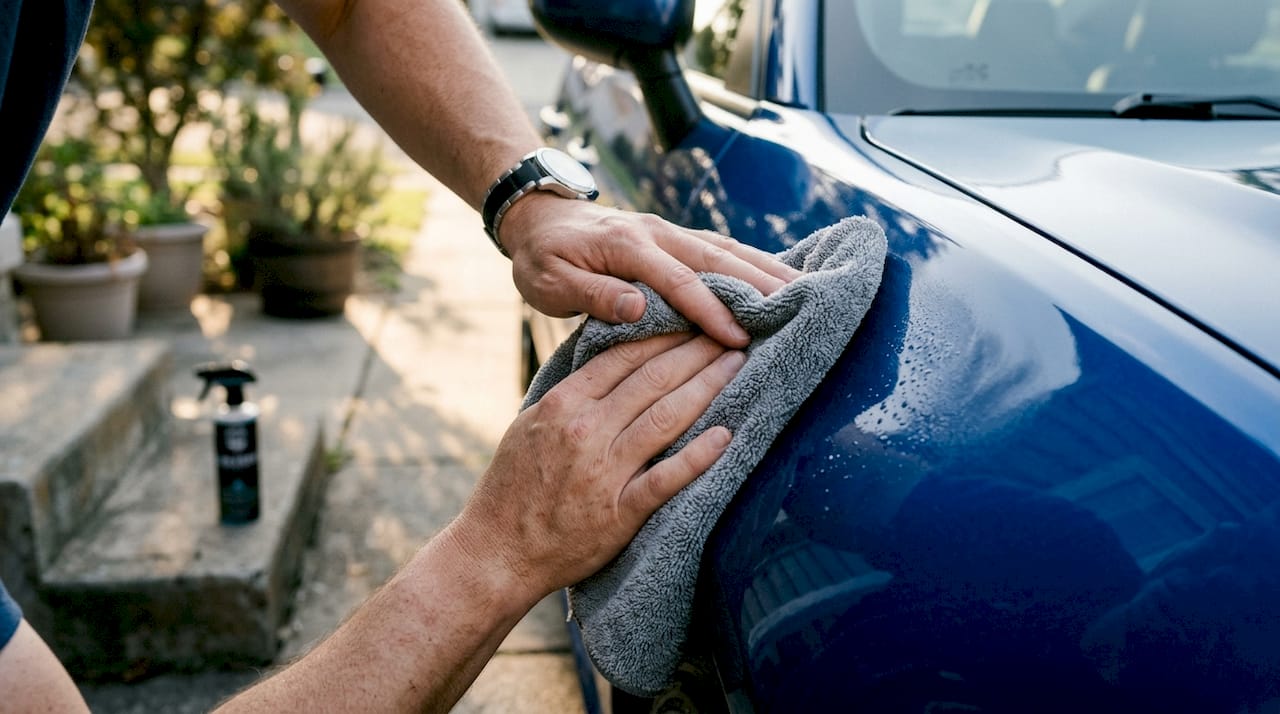
Detailing sprays deliver genuine value when used correctly. They are not a replacement for a full wash, wax, or professional ceramic coating. They are a maintenance layer that keeps your car looking sharp between those larger steps.
The core car detailing spray benefits include:
- Gloss enhancement. Even a quick detailer adds a noticeable shine after use.
- Light contamination removal. Pollen, dust, and bird dropping residue on otherwise clean paint come off quickly.
- Protection refresh. Spray sealants add a temporary hydrophobic layer that repels water and slows contamination buildup.
- Coating preservation. Using spray detailers after proper washing extends the life of existing coatings and maintains gloss and water repellency.
- Speed. A full panel takes under two minutes. You can maintain your car’s appearance in a parking lot with a towel and a bottle.
The limitations are equally real. Spray sealants are maintenance layers that refresh protection and gloss but do not replace full wax or ceramic coating applications. They do not correct paint defects, remove water spots, or decontaminate paint. Durability lasts weeks to months depending on the product and environment, not years like a professional ceramic coating.
Car detailing sprays work best as part of a structured routine. A full wash every 1–2 weeks, followed by a spray sealant application on clean dry paint, keeps protection active and gloss consistent. Quick detailers handle the days in between when light dust or smudges appear. Skipping the wash step and relying on sprays alone degrades paint over time.
The risk of misuse is real. Using a quick detailer as a shortcut on a visibly dirty vehicle creates swirl marks that require machine polishing to correct. That repair costs far more time and money than a proper wash would have. Understanding correct usage intervals protects both your paint and your investment.
Which factors should you consider when choosing a detailing spray?
Selecting the right product depends on your specific situation. The best car detailing products for one owner may be wrong for another. Work through these factors before buying.
Protection duration needed. If you want something to last through a season, choose a spray sealant with SiO2 chemistry. If you just need to knock dust off between washes, a quality quick detailer is the right call. Buying a spray sealant and using it daily is wasteful. Buying a quick detailer and expecting months of protection sets you up for frustration.
Paint finish condition. Sprays work on clear coat, single-stage paint, and paint protection film, but compatibility varies. Check the product label for surface compatibility before applying to wrapped or film-covered panels. Applying the wrong chemistry to paint protection film can cloud or degrade the film.
Climate and environment. Car owners in dusty, dry climates benefit more from quick detailers used frequently. Those in rainy or coastal environments get more value from hydrophobic spray sealants that repel water and resist salt contamination.
Existing coatings. If your car already has a professional ceramic coating service applied, use only spray products labeled as coating-safe or ceramic-compatible. Some spray sealants contain fillers that can reduce the hydrophobic performance of an existing coating.
Ease of application. Some spray sealants require precise timing and buffing. If you want something fast and forgiving, a quality quick detailer is easier to manage. You can find guidance on selecting detailing packages that match your protection goals and vehicle type.
Key Takeaways
Car detailing spray delivers real value only when the right product type is matched to the right surface condition and maintenance goal.
| Point | Details |
|---|---|
| Two distinct product types | Quick detailers handle light dust; spray sealants provide weeks of hydrophobic protection. |
| Surface must be clean first | Applying any spray to dirty paint drags grit and causes permanent swirl marks. |
| Application technique matters | Work in shade, use a light mist, and change microfiber towel sides frequently to avoid scratches. |
| Sprays supplement, not replace | Spray sealants refresh protection but do not substitute for wax, ceramic coatings, or full washes. |
| Product choice depends on context | Climate, existing coatings, and protection goals all determine which spray type fits your routine. |
Charles’s take on making detailing sprays actually work
Most car owners buy a detailing spray, use it once on a dusty car, and decide it does not work. The product is not the problem. The process is.
The single biggest mistake I see is treating a quick detailer like a waterless wash. It is not. A quick detailer is a finishing tool, not a cleaning tool. The moment you drag it across paint that has road film or dried bird droppings, you are grinding that contamination into your clear coat. The lubricants in the spray reduce friction, but they do not suspend grit the way a proper wash mitt and shampoo do. I have seen paint that needed a full machine polish correction because the owner used a quick detailer on a car that had not been washed in three weeks.
The routine that actually works is simple. Wash the car properly every one to two weeks. Apply a spray sealant right after drying, while the paint is still warm from the sun. Then use a quick detailer on the days between washes when dust or pollen settles. That sequence keeps protection active and gloss consistent without any single step doing more than it is designed to do.
One more thing: do not cheap out on microfiber towels. The spray is not doing the work alone. The towel is doing half the job. A cheap, low-pile towel on a freshly washed car can still leave fine scratches. Buy quality towels, wash them properly, and replace them when they start to feel rough. That investment costs less than one paint correction session. You can also review detailing best practices to build a routine that protects your paint long term.
— Charles
Professional detailing as the foundation for spray maintenance
Detailing sprays perform best on paint that has already been properly prepared and protected by a professional.

Cdcautodetailing provides mobile detailing services across South Jersey, including professional ceramic coating applications that give your paint the hydrophobic base that spray sealants are designed to maintain. When a trained technician preps and coats your paint correctly, every spray sealant you apply afterward works harder and lasts longer. Cdcautodetailing also helps car owners identify which spray products are compatible with their specific coating or film. To see the full range of services that set your paint up for long-term protection, visit the auto detailing services page or book a mobile appointment directly through the site.
FAQ
What is car detailing spray used for?
Car detailing spray removes light surface contaminants like dust, pollen, and fingerprints from clean paint while adding gloss and a temporary protective layer. Quick detailers handle between-wash maintenance, while spray sealants provide weeks of hydrophobic protection.
Is detailing spray worth it?
Yes, when used correctly on clean paint. Detailing spray extends the life of existing coatings, maintains gloss, and keeps your car looking sharp between full washes without requiring significant time or effort.
What is the difference between wax and detailing spray?
Wax is a dedicated protective layer applied after washing and typically lasts weeks to months with a deep, warm gloss. Detailing spray is a lighter maintenance product used between washes to refresh gloss and remove light contamination, not to replace wax or ceramic coatings.
How often should you use detailing spray?
Use a quick detailer as needed between washes when light dust or smudges appear. Apply a spray sealant after each full wash on clean, dry paint to refresh protection. Full washes are still recommended every 1–2 weeks.
Can detailing spray damage paint?
Yes, if misused. Applying any detailing spray to visibly dirty paint drags road grime across the clear coat, causing swirl marks and micro-scratches. Always wash the car first and use clean, high-quality microfiber towels to avoid paint damage.