
When time is scarce and every detail matters, keeping your vehicle looking flawless in South Jersey’s busy streets feels challenging. Between stubborn contaminants and unpredictable weather, maintaining a brilliant exterior finish takes more than a quick wash. Professional mobile auto detailing combines surface preparation with advanced paint protection methods, shielding your investment from ultraviolet rays, environmental pollutants, and daily wear. Discover how expert care preserves your car’s glossy finish and structural integrity without disrupting your schedule.
Table of Contents
- Defining Paint Protection and Detailing
- Types of Paint Protection Treatments
- How Detailing Boosts Paint Longevity
- Step-by-Step Paint Protection Process
- Common Detailing Mistakes to Avoid
Key Takeaways
| Point | Details |
|---|---|
| Paint Protection is Essential | Specialized treatments are necessary to shield vehicles from damage, including UV rays and chemicals. |
| Detailing Enhances Longevity | Professional detailing improves paint durability by removing defects and applying protective coatings. |
| Invest in Quality Treatments | Various paint protection options exist, each with unique benefits and costs, making informed choices crucial. |
| Avoid Common Mistakes | Improper techniques and tools can damage paint; professional-grade products should always be used. |
Defining Paint Protection and Detailing
Paint protection and detailing are complementary automotive care processes focused on preserving and enhancing a vehicle’s exterior appearance and structural integrity. Paint protection represents a specialized treatment designed to shield automotive surfaces from environmental damage, corrosion, and aesthetic deterioration. Automotive paint technologies have evolved significantly, offering advanced protective solutions that go beyond traditional maintenance approaches.
The fundamental goal of paint protection involves creating a robust barrier against multiple potential damage sources:
- Ultraviolet radiation
- Chemical contaminants
- Mechanical abrasions
- Environmental pollutants
- Oxidation and color fading
Professional detailing serves as the critical preparatory and maintenance process that enables effective paint protection. This comprehensive approach involves meticulous cleaning, surface preparation, and application of protective coatings that enhance both aesthetic appeal and long-term vehicle preservation. Automotive coating technologies demonstrate that proper surface preparation dramatically impacts the durability and performance of protective treatments.
Detailing encompasses multiple strategic steps that ensure optimal paint protection performance:
- Thorough surface cleaning and decontamination
- Paint correction and defect removal
- Surface smoothing and refinement
- Application of protective ceramic or polymer coatings
- Regular maintenance and periodic reapplication
Effective paint protection is not just about applying a coating, but creating a comprehensive preservation strategy that addresses multiple environmental challenges.
Pro tip: Invest in professional detailing services at least twice annually to maintain your vehicle’s protective coating and prevent long-term aesthetic degradation.
Types of Paint Protection Treatments
Paint protection treatments represent diverse technological solutions designed to preserve automotive exteriors against environmental and mechanical damage. Paint protection technologies have dramatically evolved, offering vehicle owners multiple sophisticated options to maintain their car’s aesthetic and structural integrity.
The primary paint protection treatments include:
- Wax Coatings: Traditional, affordable option
- Ceramic Coatings: Advanced, long-lasting protection
- Paint Protection Film (PPF): Physical barrier against scratches
- Graphene Coatings: Emerging high-performance solution
- Hybrid Coatings: Multifunctional protective systems
Each protection treatment offers unique characteristics and performance levels. Automotive paint protection methods demonstrate significant variations in durability, application complexity, and protective capabilities. Wax coatings provide basic protection and are most budget-friendly, typically lasting 3-6 months with regular maintenance. Ceramic coatings represent a substantial upgrade, offering superior hardness, UV resistance, and potential longevity of 2-5 years when professionally applied.
Here’s a side-by-side comparison of common paint protection treatments for vehicles:
| Treatment Type | Durability | Typical Cost Range | Notable Benefit |
|---|---|---|---|
| Wax Coating | 3-6 months | Low ($) | Easy DIY application |
| Ceramic Coating | 2-5 years | Moderate ($$) | Resistant to UV and chemicals |
| Paint Protection Film | 5-10 years | High ($$$) | Shields against scratches |
| Graphene Coating | 4-7 years (est.) | High ($$$) | High heat resistance |
| Hybrid Coating | 3-7 years | Moderate to High ($$-$$$) | Combines multiple technologies |
Advanced protection treatments like graphene and hybrid coatings are pushing technological boundaries:
- Superior chemical resistance
- Enhanced thermal stability
- Improved self-healing properties
- Nano-level surface protection
- Extended maintenance intervals
Professional-grade paint protection is an investment in your vehicle’s long-term aesthetic and structural preservation.
Pro tip: Consult with professional detailers to determine the most suitable paint protection treatment for your specific vehicle and driving conditions.
How Detailing Boosts Paint Longevity
Professional detailing plays a critical role in extending automotive paint longevity through meticulous surface preparation and protection techniques. Paint correction techniques systematically address microscopic imperfections that can accelerate paint degradation, ensuring vehicles maintain their aesthetic appeal and structural integrity.
The key mechanisms by which detailing enhances paint longevity include:
- Removing surface contaminants
- Eliminating microscopic scratches
- Smoothing paint irregularities
- Creating protective barrier layers
- Preventing oxidation and environmental damage
Detailing professionals utilize sophisticated techniques to protect automotive paint. By carefully eliminating surface defects, they prevent future damage and create an optimal surface for protective coatings. The process involves multiple precise steps, including thorough cleaning, clay bar treatment, polishing, and application of protective sealants that shield the paint from UV radiation, chemical contaminants, and environmental pollutants.
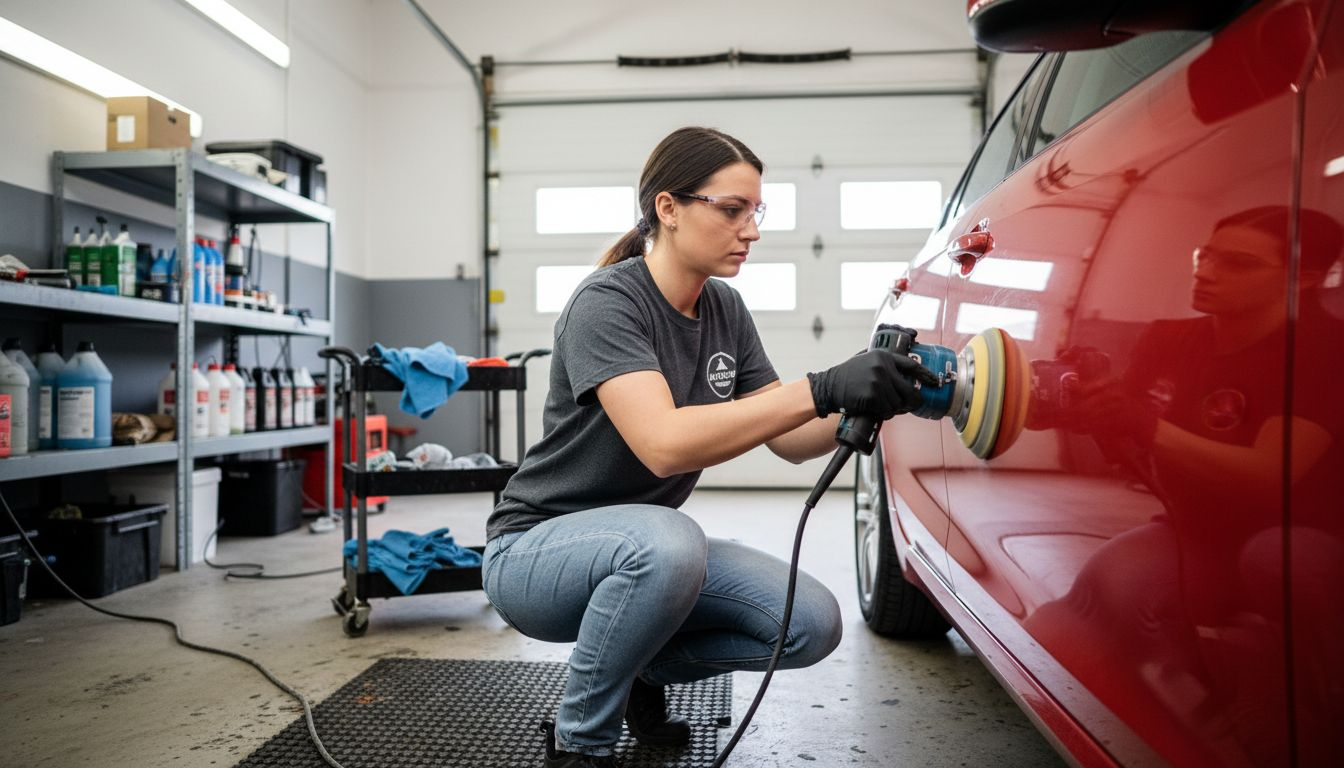
The comprehensive detailing process addresses paint degradation through strategic interventions:
The following table summarizes how professional detailing extends paint longevity:
| Detailing Action | Direct Benefit | Long-Term Impact |
|---|---|---|
| Paint correction | Removes micro-defects | Reduces risk of corrosion |
| Surface decontamination | Eliminates contaminants | Minimizes paint dullness |
| Protective coating application | Shields from environment | Slows overall paint fading |
| Routine maintenance | Maintains coating efficacy | Preserves fresh appearance |
- Initial deep cleaning and decontamination
- Paint correction and defect removal
- Surface preparation for protective coatings
- Application of ceramic or polymer sealants
- Regular maintenance and periodic reapplication
Consistent professional detailing transforms paint protection from reactive maintenance to proactive preservation.
Pro tip: Schedule professional detailing at least twice annually to maintain your vehicle’s paint integrity and prevent long-term aesthetic deterioration.
Step-by-Step Paint Protection Process
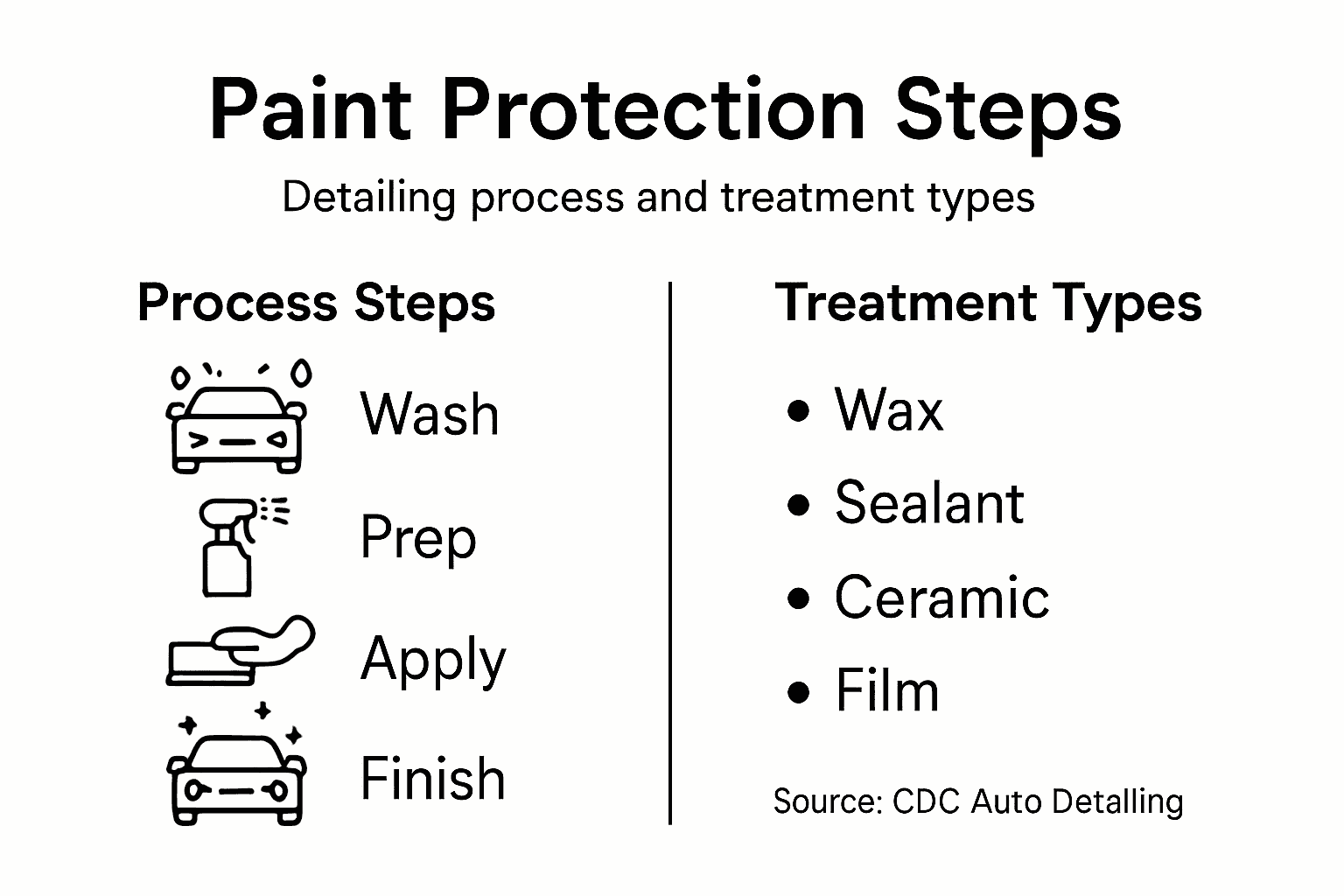
The paint protection process represents a meticulous and strategic approach to preserving automotive exterior surfaces. Paint protection preparation involves multiple carefully orchestrated stages designed to create a durable, long-lasting protective barrier that shields vehicles from environmental damage and aesthetic degradation.
The comprehensive paint protection process encompasses several critical stages:
- Initial deep cleaning
- Surface decontamination
- Paint correction and polishing
- Surface preparation
- Protective coating application
- Final curing and quality inspection
Professional detailers execute the paint protection process through precise, methodical interventions. Paint protection film techniques require extraordinary attention to detail, ensuring each step contributes to optimal paint preservation. The process begins with thorough cleaning to remove all surface contaminants, followed by advanced polishing techniques that eliminate microscopic imperfections and create an immaculate surface ready for protective treatment.
The detailed paint protection workflow follows these strategic steps:
- Comprehensive vehicle washing and chemical decontamination
- Clay bar treatment to remove embedded surface particles
- Machine polishing to eliminate scratches and swirl marks
- Precise surface preparation using specialized solutions
- Uniform application of protective ceramic or polymer coatings
- Heat activation and curing of protective layers
- Final quality assessment and touch-up
Successful paint protection is a precise science that transforms surface maintenance from reactive repair to proactive preservation.
Pro tip: Invest in professional detailing services that use multi-stage paint protection processes to maximize your vehicle’s long-term aesthetic and structural integrity.
Common Detailing Mistakes to Avoid
Automotive detailing requires precision and expertise, with even minor errors potentially causing significant damage to a vehicle’s paint and overall appearance. Car detailing safety tips highlight the importance of understanding potential pitfalls that can compromise paint protection and vehicle aesthetics.
The most critical detailing mistakes vehicle owners and inexperienced detailers frequently make include:
- Using improper washing techniques
- Applying incorrect cleaning products
- Neglecting surface preparation
- Using dirty or contaminated detailing tools
- Working in unsuitable environmental conditions
- Rushing through the detailing process
- Skipping crucial surface decontamination steps
Improper technique can transform a well-intentioned detailing effort into a potential disaster for automotive paint. Many enthusiasts unknowingly cause microscopic damage through seemingly harmless actions like using household towels, applying excessive pressure during cleaning, or using abrasive materials that create swirl marks and surface imperfections. Professional detailers understand that each step requires specific tools, techniques, and a methodical approach to prevent unintended paint damage.
The most dangerous detailing mistakes can be categorized by their potential impact:
- Surface preparation errors
- Chemical compatibility issues
- Tool and equipment misuse
- Environmental contamination risks
- Technique-related damage potential
- Product application mistakes
- Maintenance and aftercare failures
Detailing is a delicate art where precision matters more than enthusiasm.
Pro tip: Always invest in professional-grade microfiber towels and follow manufacturer-recommended techniques to minimize the risk of accidental paint damage.
Protect Your Vehicle’s Paint with Expert Detailing from CDC Auto Detailing
The article highlights the crucial role professional detailing plays in enhancing paint protection by removing contaminants, correcting imperfections, and applying durable protective coatings. Many vehicle owners struggle with common challenges such as surface damage, fading, and environmental wear that diminish their car’s aesthetic and value over time. CDC Auto Detailing understands these pain points and offers expert solutions including ceramic coatings, paint protection film, and precise paint correction designed to extend your vehicle’s paint longevity and keep it looking like new.
Experience the difference that professional-grade detailing brings:
- Meticulous surface preparation that removes microscopic scratches
- Application of premium protective coatings against UV, chemicals, and pollutants
- Convenient mobile service in South Jersey bringing the expertise right to your doorstep

Don’t let your vehicle suffer from preventable paint damage. Protect your investment with professional mobile detailing services tailored to your needs. Visit CDC Auto Detailing today and schedule your appointment for long-lasting paint protection that truly works.
Frequently Asked Questions
What is the role of professional detailing in paint protection?
Professional detailing plays a crucial role in paint protection by meticulously preparing vehicle surfaces, eliminating contaminants, and applying protective coatings that enhance the longevity and appearance of the paint.
How does detailing help extend the life of my vehicle’s paint?
Detailing helps extend the life of your vehicle’s paint by removing surface contaminants, fixing microscopic scratches, and creating a protective barrier that shields against environmental damage and UV radiation.
What are the typical steps involved in the paint protection process?
The typical steps in the paint protection process include initial cleaning, surface decontamination, paint correction, surface preparation, application of protective coatings, and final curing and inspection.
Why is it important to maintain a protective coating after detailing?
Maintaining the protective coating after detailing is important because it ensures that the barrier remains effective against environmental pollutants, UV rays, and mechanical abrasions, thereby preserving the vehicle’s aesthetic and structural integrity.