
Keeping a commercial fleet in top shape can feel like a constant race against time, weather, and daily wear. For South Jersey fleet managers, choosing between fleet cleaning and individual detailing means weighing operational needs against long-term vehicle health. Understanding the clear differences in scale, scheduling, and effectiveness will help you select the most efficient solution for protecting your investment and keeping your fleet looking its best.
Table of Contents
- Defining Fleet Cleaning and Individual Detailing
- Types of Services and Key Differences
- Efficiency, Scheduling, and Operational Impact
- Quality, Longevity, and Asset Protection
- Costs, Risks, and Choosing the Right Option
Key Takeaways
| Point | Details |
|---|---|
| Fleet Cleaning vs. Individual Detailing | Fleet cleaning targets businesses with multiple vehicles for efficiency, while individual detailing focuses on personalized care for single vehicle owners. |
| Operational Efficiency | Mobile fleet cleaning minimizes downtime and disruptions, providing flexible scheduling options compared to traditional in-bay washing. |
| Asset Protection | Regular professional cleaning significantly preserves vehicle value and performance by preventing damage and reducing long-term maintenance costs. |
| Cost Considerations | A comprehensive cost analysis must include immediate expenses and long-term savings, factoring in productivity and maintenance implications. |
Defining Fleet Cleaning and Individual Detailing
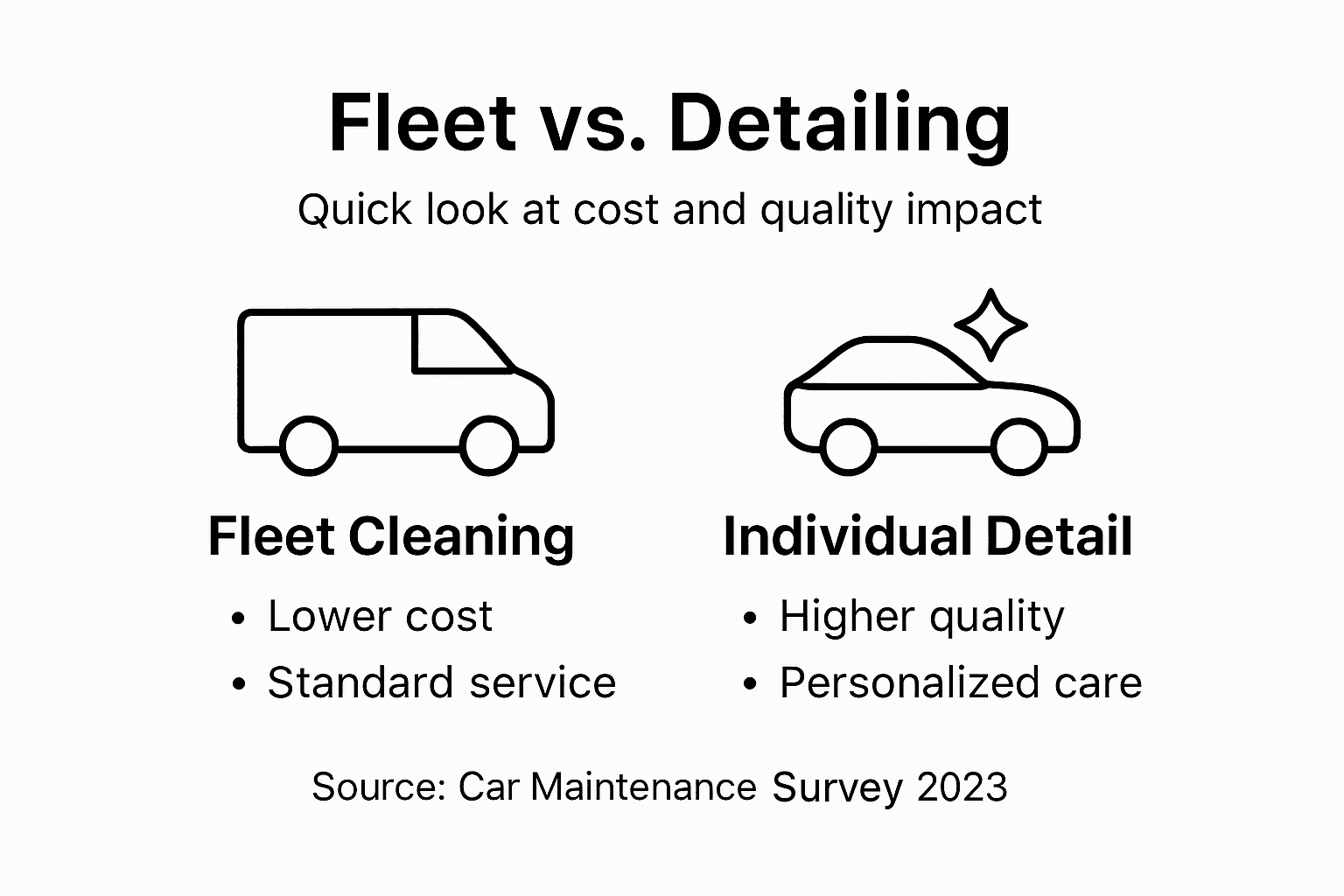
Fleet cleaning and individual detailing represent two distinct approaches to vehicle maintenance, each targeting different contexts and serving unique business and personal needs. While both processes aim to preserve and enhance vehicle appearance, their scope, methodologies, and objectives significantly differ.
Fleet Cleaning is a systematic, scalable approach specifically designed for businesses managing multiple vehicles simultaneously. Commercial vehicle detailing encompasses comprehensive cleaning and maintenance strategies tailored to entire vehicle collections, typically used by:
- Transportation companies
- Logistics organizations
- Rental car agencies
- Government vehicle departments
- Service-based businesses with vehicle fleets
The primary objectives of fleet cleaning include maintaining professional image, ensuring vehicle longevity, and minimizing long-term maintenance expenses. These services often involve standardized cleaning protocols, efficient processing of multiple vehicles, and specialized equipment designed for rapid, consistent results.
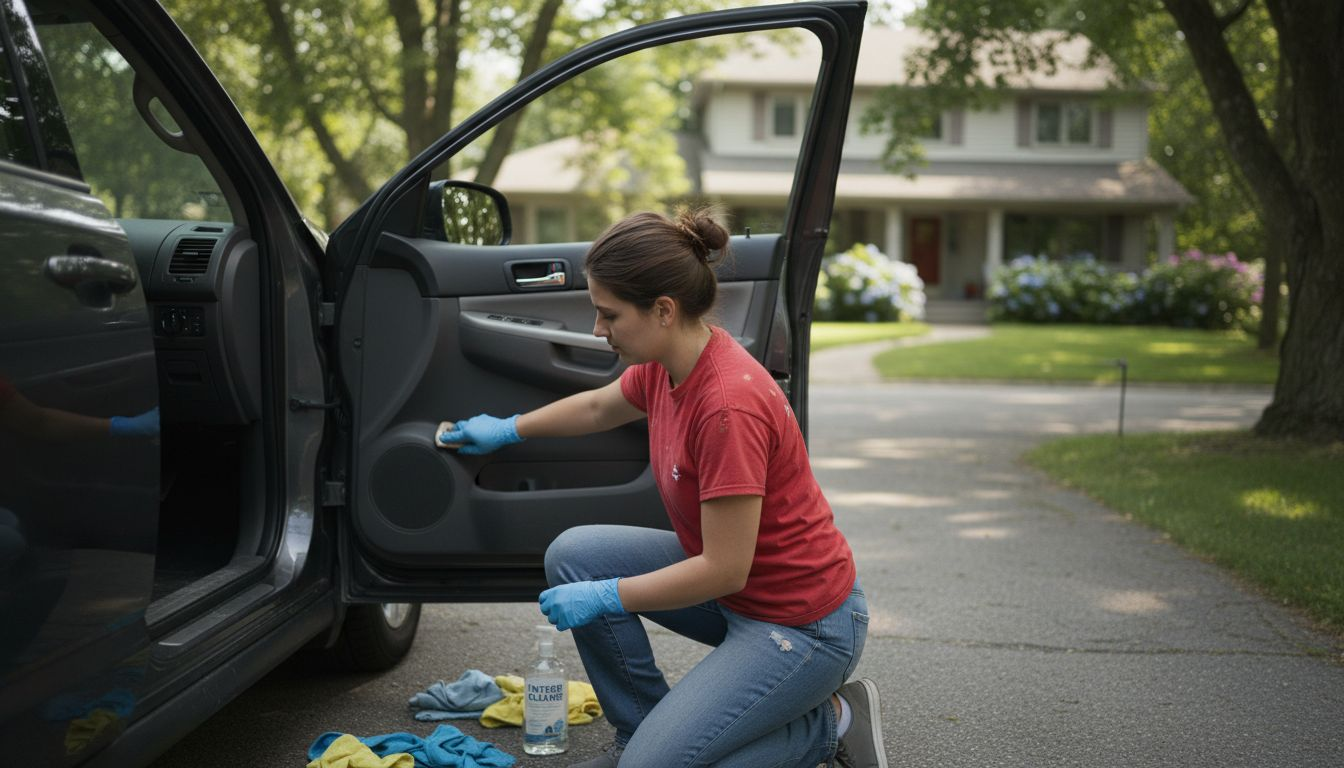
Individual Detailing, conversely, focuses on personalized automotive care for single vehicle owners. This approach provides meticulous, customized cleaning and restoration services targeting specific customer preferences and vehicle conditions. Individual detailing typically involves more intensive, hands-on processes that address unique vehicle characteristics and owner expectations.
The key differences between fleet and individual detailing emerge in several critical dimensions:
- Scale of service
- Complexity of treatment
- Time investment
- Pricing structure
- Equipment and technique requirements
Pro-Tip: Understand your specific vehicle maintenance needs before selecting between fleet cleaning and individual detailing services to maximize value and effectiveness.
Here’s a streamlined comparison of fleet cleaning and individual detailing across key business dimensions:
| Aspect | Fleet Cleaning | Individual Detailing |
|---|---|---|
| Target Clients | Businesses with multiple vehicles | Single vehicle owners |
| Service Customization | Standardized, protocol-driven process | High-touch, owner-specific attention |
| Operational Impact | Minimal downtime, batch processing | Greater downtime per vehicle |
| Pricing Approach | Volume-based, cost-efficient | Premium, pay-per-vehicle |
| Equipment Used | Industrial, high-capacity systems | Specialty tools for detailed care |
Types of Services and Key Differences
Fleet Cleaning Services encompass a wide range of specialized vehicle maintenance approaches designed to address the complex needs of businesses managing multiple vehicles. Mobile fleet washing techniques represent a critical component of these services, offering flexible and efficient cleaning solutions for diverse vehicle types.
The primary types of fleet cleaning services include:
- On-Site Mobile Washing: Technicians travel directly to client locations
- In-Bay Automated Washing: Fixed-location systems with standardized cleaning processes
- Comprehensive Fleet Detailing: Deep cleaning and restoration services
- Preventative Maintenance Washing: Regular scheduled cleanings to protect vehicle surfaces
- Specialized Industrial Vehicle Cleaning: Tailored approaches for heavy equipment and commercial vehicles
Individual Detailing Services differ significantly, focusing on personalized, high-touch cleaning experiences for single vehicle owners. These services typically involve more intricate processes and customized treatment plans that address specific vehicle conditions and owner preferences.
Key differences between fleet and individual cleaning services emerge across several critical dimensions:
- Service Scalability
- Time Investment per Vehicle
- Equipment Complexity
- Pricing Structures
- Customization Level
Mobile fleet washing offers unparalleled flexibility, allowing businesses to maintain vehicle appearance without disrupting operational workflows.
Pro-Tip: Evaluate your specific vehicle maintenance requirements carefully to select the most cost-effective and appropriate cleaning service strategy.
Efficiency, Scheduling, and Operational Impact
Fleet Cleaning Efficiency represents a critical operational consideration for businesses managing multiple vehicles. Mobile fleet washing strategies provide unprecedented flexibility in maintaining vehicle appearance while minimizing operational disruptions.
The key operational advantages of mobile fleet cleaning include:
- Minimal vehicle downtime
- Flexible scheduling options
- On-site service capabilities
- Reduced transit and waiting times
- Customizable cleaning windows
Scheduling Considerations play a pivotal role in determining the most appropriate vehicle maintenance approach. Traditional in-bay washing systems require vehicles to be physically transported to cleaning locations, creating significant workflow interruptions. Mobile fleet washing, conversely, allows businesses to clean vehicles during off-peak hours or rest periods, maintaining continuous operational readiness.
Operational impact varies dramatically between different cleaning methodologies, with critical differences emerging in:
- Total time investment
- Vehicle availability
- Logistical complexity
- Workforce productivity
- Cost-efficiency
Strategic fleet cleaning approaches can reduce vehicle downtime by up to 60%, directly improving overall operational efficiency.
Pro-Tip: Schedule fleet cleaning during natural operational breaks to minimize productivity disruptions and maximize cost-effectiveness.
The table below summarizes how scheduling affects overall cleaning strategy efficiency:
| Scheduling Factor | Mobile Fleet Cleaning | In-Bay Washing |
|---|---|---|
| Vehicle Uptime | Maximized, off-hours service | Reduced, must allocate downtime |
| Logistical Ease | Flexible, comes to the fleet | Requires planning for transport |
| Workforce Impact | Minimal workflow disruption | Greater impact on productivity |
Quality, Longevity, and Asset Protection
Vehicle Asset Protection represents a critical investment strategy for businesses and individual vehicle owners alike. Professional cleaning and maintenance services play a pivotal role in preserving vehicle value, preventing long-term degradation, and maintaining optimal performance across different operational contexts.
The key elements of comprehensive vehicle asset protection include:
- Preventing corrosion and paint damage
- Removing harmful contaminants
- Protecting against environmental wear
- Maintaining surface integrity
- Reducing long-term maintenance costs
Surface Preservation Techniques involve sophisticated cleaning methodologies that go beyond simple aesthetic improvements. These approaches focus on removing microscopic contaminants, applying protective coatings, and creating barriers against environmental damage that can significantly accelerate vehicle deterioration.
Multiple factors contribute to long-term vehicle asset protection:
- Frequency of professional cleaning
- Quality of cleaning products
- Comprehensiveness of treatment
- Environmental exposure conditions
- Specific vehicle usage patterns
Consistent professional cleaning can extend vehicle surface life by up to 40%, representing a substantial long-term financial benefit for fleet managers and individual owners.
Pro-Tip: Implement a proactive maintenance schedule that addresses both exterior and interior vehicle surfaces to maximize asset longevity and performance.
Costs, Risks, and Choosing the Right Option
Cost Analysis is crucial when selecting the most appropriate vehicle cleaning strategy for businesses and individual owners. Mobile fleet washing economics reveal complex considerations beyond simple per-vehicle pricing.
Key financial factors to evaluate include:
- Direct cleaning service costs
- Indirect operational expenses
- Vehicle downtime implications
- Long-term maintenance savings
- Potential productivity interruptions
Risk Management Strategies play a significant role in determining the most suitable cleaning approach. Different methodologies present unique challenges and potential complications that require careful assessment. Traditional in-bay washing systems might offer predictable outcomes, while mobile services provide greater flexibility but potentially less consistent results.
Critical decision-making factors for selecting the right cleaning option involve:
- Total fleet size
- Budget constraints
- Operational scheduling flexibility
- Required cleaning quality standards
- Environmental compliance requirements
Comprehensive cost analysis must consider both immediate expenses and long-term operational implications of vehicle maintenance strategies.
Pro-Tip: Conduct a thorough cost-benefit analysis that includes direct service charges, potential productivity losses, and long-term asset preservation when selecting a vehicle cleaning approach.
Choose the Right Detailing Solution for Your Vehicles Today
Understanding the challenges of balancing quality, cost, and operational impact between fleet cleaning and individual detailing is crucial for protecting your vehicle investments. Whether you manage a commercial fleet or own a single car, finding a trusted partner who delivers customized, efficient, and premium results is essential. CDC Auto Detailing specializes in tailored mobile services that accommodate your schedule while maximizing asset longevity with expert care for both fleet and individual vehicles.
Experience the convenience and professionalism of our mobile car detailing solutions in South Jersey designed to reduce downtime and protect your vehicles against environmental wear. Book your appointment today at CDC Auto Detailing and let us help you maintain a pristine, lasting appearance with services including fleet detailing, ceramic coatings, and paint protection. Don’t wait until wear affects your vehicle’s value—contact us now and keep your investment shining for years.
Frequently Asked Questions
What is the main difference between fleet cleaning and individual detailing?
Fleet cleaning is a systematic approach for businesses managing multiple vehicles, focusing on efficiency and standardized processes. Individual detailing, on the other hand, provides personalized care for single vehicle owners, emphasizing customized services and meticulous attention to detail.
How does scheduling impact the efficiency of fleet cleaning compared to individual detailing?
Fleet cleaning, especially mobile services, allows for minimal vehicle downtime and can be done during off-peak hours. In contrast, individual detailing often requires greater downtime since each vehicle is serviced one at a time, potentially interrupting operational workflows more significantly.
What are the cost differences between fleet cleaning and individual detailing services?
Fleet cleaning generally operates on a volume-based, cost-efficient pricing structure, making it more affordable for businesses with multiple vehicles. Individual detailing tends to be premium-priced, focusing on thorough, personalized care for each vehicle.
What factors should I consider when choosing between fleet cleaning and individual detailing?
Consider the total number of vehicles, budget constraints, operational flexibility, required cleaning quality, and long-term maintenance costs. Each option has distinct advantages depending on your specific vehicle maintenance needs.