
Matte paint care comes down to one rule: use only products made for low-gloss finishes, and skip anything that polishes, waxes, or rubs the surface into a shine. That means matte-specific shampoo, soft mitts, and a chemical-first approach to grime, plus a protection layer like a matte-safe sealant, matte ceramic coating, or PPF. PPG’s own refinish guidance, OEM manuals from Genesis and Kia, and detailer references like Dr. Beasley’s all agree on this.
TL;DR:
- Use only products labeled as matte-safe or non-gloss to avoid burnishing or creating shiny patches on matte paint surfaces.
- Wash matte finishes with a soft microfiber mitt, grit guards, and matte-specific shampoo, avoiding circular motions and abrasive scrubbing techniques.
- Remove contaminants like bird droppings and sap by soaking with alcohol-based cleaners first, then wiping gently in one direction without scrubbing.
- Apply matte-safe sealants or ceramic coatings carefully, ensuring proper curing time to maintain the low-gloss appearance and ensure long-lasting protection.
- Entrusting complex repairs or coating applications to professional detailers is advisable to prevent irreversible damage and ensure proper finish preservation.
Table of Contents
- Matte Paint Do’s and Don’ts You Need to Know
- How to Wash Matte Paint the Right Way
- How to Remove Bird Droppings, Sap, and Tar Safely
- Sealants, Matte Ceramic Coatings, and PPF Compared
- When Should You Call a Professional Detailer?
- An Honest Take on Owning a Matte Car
- Protect Your Matte Finish With CDC Auto Detailing
- Where This Guidance Comes From
- Sources
- FAQ
Matte Paint Do’s and Don’ts You Need to Know
Matte finishes look flat and non reflective because the clear coat has a textured, micro rough surface baked in at the factory. Rub that texture smooth, even accidentally, and it turns shiny in that exact spot. There’s no buffing it back out. That single fact drives every rule below.
Don’t:
- Apply wax, polish, or any gloss-enhancing product. All of these fill or flatten the texture and leave permanent shiny patches.
- Use a clay bar. The kneading and dragging motion is abrasive enough to burnish the surface.
- Run your car through an automatic wash with spinning brushes. The friction is uncontrolled and unpredictable on matte texture.
- Scrub in circular motions with any cloth or mitt, even a soft one. Circular pressure is what causes burnishing over time.
Do:
- Use a shampoo formulated for matte or satin finishes, not a standard gloss car wash soap.
- Wash with a soft microfiber mitt and a grit guard in your bucket to keep dirt out of the wash water.
- Blot water off with a clean microfiber towel instead of dragging it across the panel.
- Test any new product on a hidden, low-visibility panel first, exactly as PPG’s care guide recommends.
Pro Tip: If you’re not sure whether a product is matte-safe, check the label for the words “non-gloss” or “matte-specific.” If it just says “car wash soap” with no mention of finish type, assume it’s built for gloss paint and find something else.
How to Wash Matte Paint the Right Way
Washing matte paint isn’t fundamentally different from washing gloss paint. The difference is in the products you reach for and how gentle your motion is at every step.
1. Start with a pre-wash rinse. Hose the car down with a fan-tip nozzle before you touch it with anything. This knocks loose surface grit that would otherwise get dragged across the paint and cause micro-scratches during the wash. Grit guards and pre-rinsing exist for the same reason: reducing embedded grit%20-%20Final%20no%20QR.pdf) is one of the cheapest ways to protect the finish.
2. If you’re using a pressure washer, keep the fan tip at least 10 to 12 inches from the surface. OEM guidance for matte vehicles from Genesis recommends a wide fan pattern and moderate pressure rather than a narrow, high-PSI jet, which can etch or stress the clear coat if held too close.
3. Set up the two-bucket method. One bucket holds your matte-safe shampoo solution, the other holds clean rinse water. Both should have grit guards at the bottom.
4. Dip your wash mitt, wash one panel in straight lines (top to bottom), then rinse the mitt in the clean bucket before reloading it with soap. Never work in circles. Straight-line strokes limit the risk of swirl-style burnishing, and rinsing the mitt each time keeps grit from getting reground into the paint.
5. Work top to bottom across the whole vehicle, since dirt naturally runs downward and you don’t want to drag lower-panel grime up into cleaner sections.
6. Rinse the entire car with the fan-tip hose or pressure washer at the same safe distance.
7. Dry by blotting, not wiping. Lay a large, plush microfiber towel flat on a panel and press down to absorb water, then lift and move to the next spot. Dragging a towel across matte paint, even a soft one, applies the same kind of friction that causes burnishing over months of repeated washes.
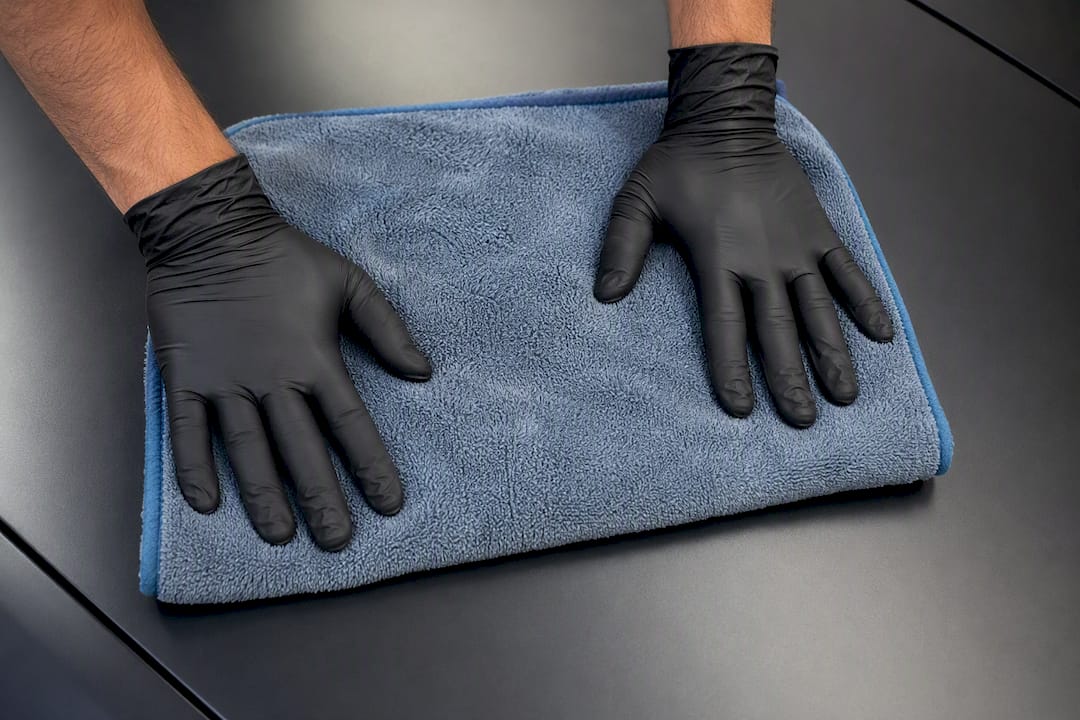
Detailer guides that specialize in matte and satin finishes back up this exact sequence, including the pre-wash and grit-guard approach as standard practice rather than an optional extra step.
On frequency: most matte-specific guidance lands on washing every one to two weeks, which matches what detailer resources recommend as a sustainable maintenance cadence for keeping contamination from building up between washes.
Your hand-wash kit doesn’t need to be complicated. Two buckets with grit guards, a matte-safe shampoo, two or three soft microfiber mitts, and several large plush drying towels covers almost every situation you’ll run into.
How to Remove Bird Droppings, Sap, and Tar Safely
Contaminants like bird droppings, tree sap, tar, and squashed bugs are the fastest way to burnish matte paint if you handle them wrong. The instinct to scrub it off immediately is exactly the instinct to fight.
Step one: soak before you touch it. Spray the spot generously with a matte-safe spot cleaner, or a mix of roughly 50% isopropyl alcohol and 50% deionized water, and let it sit for a minute or two. PPG’s guidance specifically calls out alcohol-based cleaners as safe for loosening spots without abrasive contact. The goal is to soften the contaminant chemically so it lifts away with almost no pressure.
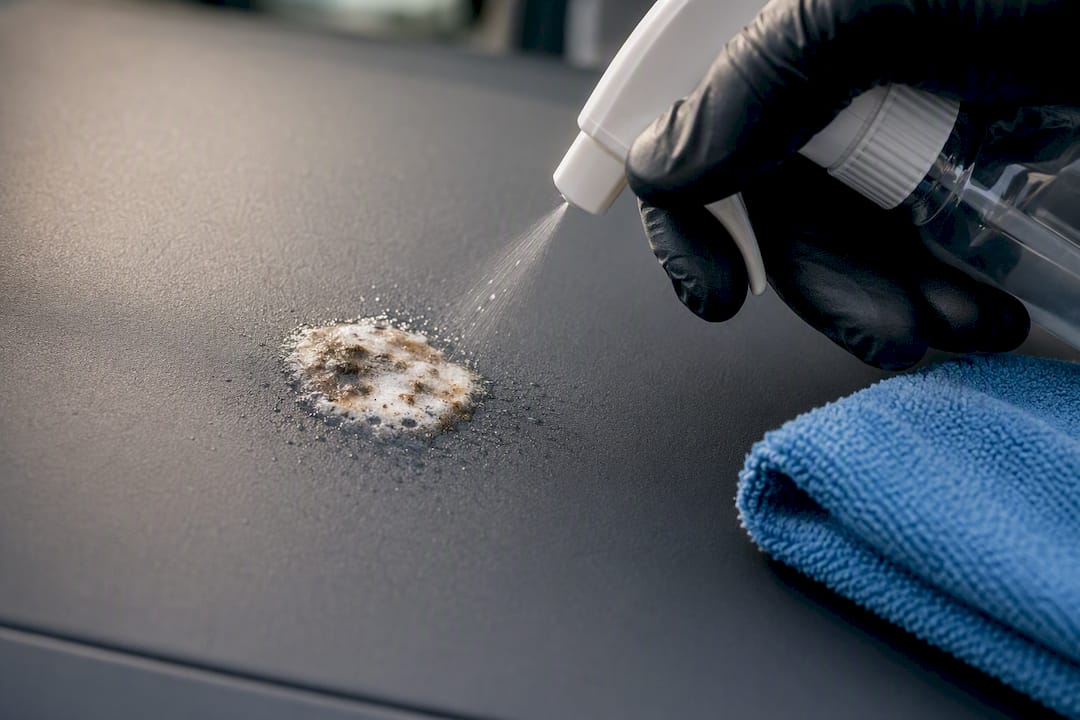
Step two: wipe gently, once, in one direction. Use a fresh microfiber towel and light pressure. If the spot doesn’t come up on the first or second pass, spray it again and wait longer. Repeated wiping without re-wetting is what turns a bug splatter into a permanent shiny patch.
For tar and sap specifically, a dedicated tar remover labeled safe for matte or satin finishes works better than alcohol alone. Apply it, let it dwell for the time listed on the product, then wipe once with a clean towel. Do not scrape, and do not use a fingernail or plastic scraper. Tar and sap are sticky enough that scraping motions almost always translate into rubbing pressure on the clear coat.
Know when to stop. If a spot has been sitting for weeks, has etched into the surface, or leaves a dull or shiny ring after you’ve tried the soak-and-wipe method twice, stop working on it yourself. At that point you risk making it worse, and it’s a sign the contamination has gone past a simple wipe-down.
Pro Tip: Keep a small spray bottle of alcohol-based spot cleaner in your trunk. Bird droppings do the most damage when they sit in the sun for hours, so treating a spot within the first ten minutes after you notice it prevents most of the etching that would otherwise require professional correction.
Sealants, Matte Ceramic Coatings, and PPF Compared
Matte paint needs a protective layer just as much as gloss paint does. It just needs one that won’t add shine.
Matte-safe spray sealants are the entry point. They’re sprayed on after a wash, wiped in lightly, and buffed off with a dry microfiber towel. They add a thin layer of hydrophobic protection against water spots and light contamination, but they wear off within weeks and need frequent reapplication.
Matte ceramic coatings last far longer, often a year or more, and bond to the clear coat rather than sitting on top of it. The catch is that not every ceramic coating on the market is matte-safe. Plenty of them are formulated for gloss paint and will fill in the texture that makes matte paint look matte in the first place, leaving you with a satin-ish sheen you didn’t ask for. Always confirm the product is explicitly labeled matte-safe, and follow the manufacturer’s cure window before the car gets wet or driven, since rushing the cure is one of the most common ways owners undermine a coating’s performance.
PPF (paint protection film) is a physical barrier rather than a chemical one. Quality matte PPF is engineered to preserve the low-gloss look while shielding the paint from rock chips, road debris, and light scuffs that no sealant or coating can stop. It’s the strongest defense against physical damage, though it doesn’t replace regular washing. If you’re weighing PPF against a coating, our breakdown of PPF compatibility with matte paint walks through where each option makes more sense.
A realistic maintenance schedule looks like this:
- Weekly: Quick visual check for new spots, sap, or bird droppings.
- Every one to two weeks: Full hand wash using the two-bucket method.
- Quarterly: Reapply matte-safe sealant if you’re not running a ceramic coating.
- Annually: Inspect ceramic coating or PPF condition and address any wear spots.
Whatever protection route you choose, our guide to protecting car paint at home covers the broader maintenance habits that keep any finish, matte or gloss, looking its best between services.
When Should You Call a Professional Detailer?
Some matte paint problems are beyond a driveway fix, and pretending otherwise usually makes things worse. Heavy contamination that won’t lift with a spot cleaner, deep-set iron particles from brake dust, or a first-time ceramic coating application are all jobs better left to a pro who works with matte finishes regularly.
Professional detailers bring a few things a home wash routine can’t:
- Chemical decontamination using iron removers and clay-alternative sprays that dissolve embedded particles without any physical abrasion.
- Matte-safe coating and PPF application, done with the correct surface prep and cure conditions so the product performs as advertised.
- Experience spotting early burnishing before it spreads, which matters because catching a small dull or shiny patch early sometimes allows for correction that a fully burnished panel won’t.
If you’re interviewing a detailer, ask direct questions: which specific matte-safe products do they use, what’s the cure or dry time before the car can get wet, and does the work come with any kind of warranty against fading or discoloration. A detailer who can’t name the actual product line they’re applying is a red flag. CDC Auto Detailing’s ceramic coating process walks through exactly what that prep and cure process looks like from start to finish.
An Honest Take on Owning a Matte Car
Matte paint rewards attention and punishes neglect faster than gloss paint does. A gloss car with a few weeks of road grime just looks dull. A matte car with the same neglect can pick up permanent shine spots that no amount of correction fixes.
If it’s your daily driver, build the ten-minute spot check into your routine, glance it over after work, wipe anything fresh before it dries. Show cars get the opposite treatment: garage storage, less exposure, and washes on a schedule rather than reacting to whatever the weather did that week.
The habit that saves the most headaches isn’t a product. It’s parking smart, away from trees and high-traffic bird areas, and treating every wipe-down like the surface is more fragile than it looks. Because it is.
— Charles
Protect Your Matte Finish With CDC Auto Detailing
Mobile detailing services offer an alternative to guessing your way through matte care with the wrong products from a big-box shelf. Some mobile detailers apply matte-safe ceramic coatings and matte-compatible PPF on-site, enabling customers to skip the drop-off and reduce the risk of a shop using gloss-formulated products on the finish by mistake.

Detailing jobs typically start with a decontamination wash using matte-safe products instead of standard gloss shampoo to avoid burnishing before protection is applied. Coating applications usually include a defined cure window to follow, with long-term benefits such as fewer washes, less contamination buildup, and protection against rock chips and etching beyond what spot-cleaning alone can prevent. If your matte finish needs a coating that’s actually built for it, check out our ceramic coating service and get a quote for your vehicle.
Where This Guidance Comes From
This article draws on PPG’s matte finish care guide for product and technique rules, Genesis’s OEM matte paint guide for wash and pressure-wash procedures, and Dr. Beasley’s matte paint care guide for coating and maintenance schedules. For extra product perspective, see Diamondbrite’s matte protection guide. Warranty-specific questions belong with your vehicle’s OEM documentation.
Sources
- Matte Finish Guide | User Guides and Manuals | Refinish (PPG)
- Genesis matte paint care guide (OEM owner guide)
- Dr. Beasley’s matte paint care guide
FAQ
What Is the Best Treatment for Matte Paint?
A matte-safe ceramic coating paired with a chemical-first wash routine gives the strongest long-term protection, since it guards against contamination and light scratches without adding any sheen to the finish.
What Can You Use to Protect Matte Paint?
Matte-safe spray sealants, matte-specific ceramic coatings, and paint protection film are the three main options, each labeled explicitly as matte-safe or non-gloss by the manufacturer.
How Do You Seal Matte Paint?
Wash and fully dry the panel, apply a matte-safe sealant or coating according to the product’s instructions, and respect the manufacturer’s cure window before exposing the car to water or driving.
Is Matte Paint Harder to Maintain Than Gloss Paint?
Matte paint isn’t harder to wash, but it’s far less forgiving of mistakes. Wrong products or abrasive motion cause permanent shiny burnished spots that gloss paint would simply shrug off.
Can You Wax Matte Paint?
No. Standard wax and polish products are designed to create shine, and applying them to matte paint fills the textured surface and leaves a permanent glossy patch that can’t be buffed back to matte.