
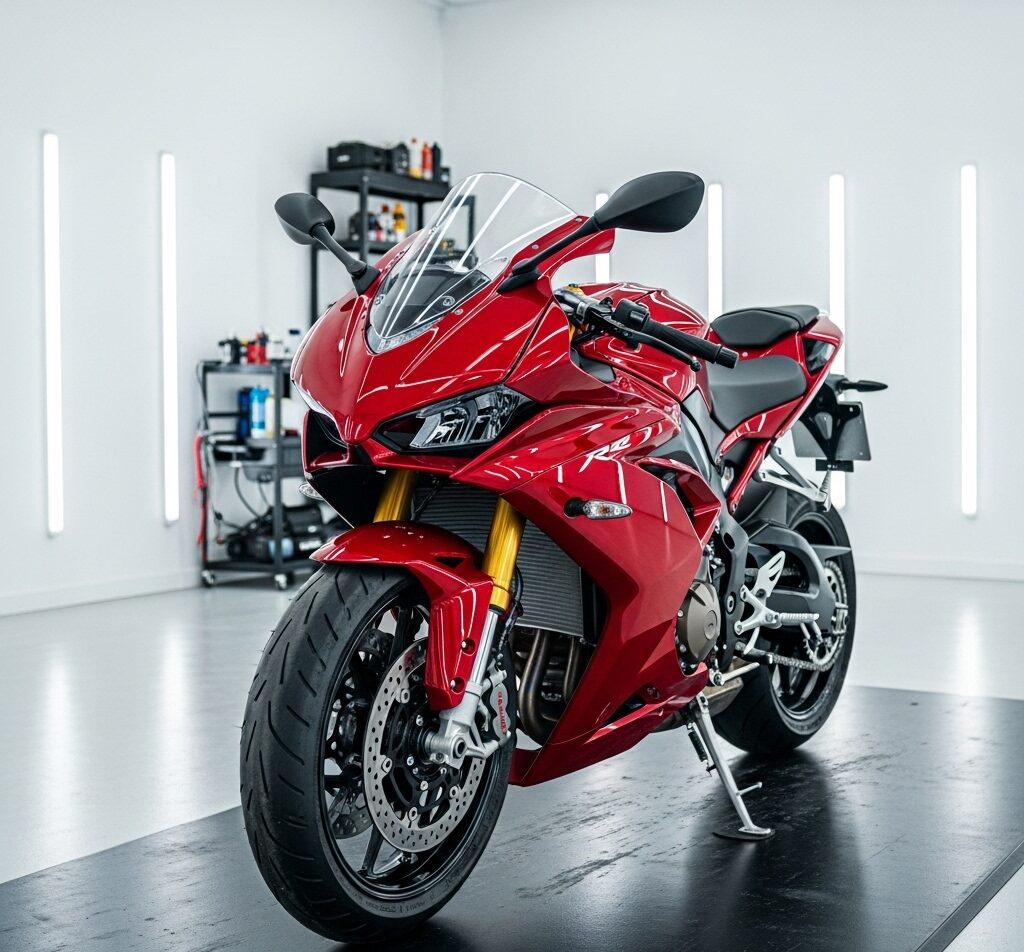
Professional motorcycle detailing in Sewell, NJ typically costs between $200 and $350 for a full service, covering hand washing, chrome polishing, paint correction, and protective sealant. South Jersey’s road salt season and nine-month riding calendar make regular detailing essential for preserving chrome, paint, and mechanical components. Mobile services bring professional results directly to your driveway.
Why Sewell Riders Face Unique Detailing Challenges
Sewell sits within Washington Township, a community of nearly 50,000 residents according to U.S. Census Bureau QuickFacts, tucked into Gloucester County’s suburban sprawl southwest of Philadelphia. It is a place built around homeownership, garages, and the kind of disposable income that supports premium vehicles and the services that protect them. The median household income here reached $154,583 in 2024, and the homeownership rate hovers around 82%. That demographic profile maps almost perfectly onto the typical motorcycle enthusiast: settled, invested in quality, and unwilling to watch a $15,000 Harley or a precision-built sport bike deteriorate from neglect.
But Sewell’s geography works against riders in specific ways that generic detailing content never addresses. South Jersey winters bring road salt that lingers on asphalt well into March. Chrome components, exhaust pipes, frame welds, and exposed metal surfaces absorb that salt every time a bike rolls through a damp intersection or gets parked near a salted lot. Unlike a car with enclosed panels and an undercarriage, a motorcycle leaves its engine, frame, and chrome completely exposed. Every mile ridden in late-season conditions accelerates corrosion, which can become expensive problems if left unaddressed.
Then there is the heat. South Jersey summers are humid and relentless, with UV exposure that degrades paint clarity, fades plastics, and dries out leather seating faster than riders in cooler climates typically expect. A bike stored between rides without a proper protective sealant is essentially baking under the same sun that cracks parking lot asphalt every August.
What Does Motorcycle Detailing Actually Include?
Motorcycle detailing is not a glorified car wash. Because a bike’s surfaces are almost entirely exposed and irregularly shaped, every stage of the process is done by hand. A trained detailer works around triple-tree assemblies, spoke wheels, exhaust headers, engine fins, tank seams, windshields, and saddlebags. The labor intensity is real: a thorough full detail typically takes four to eight hours depending on the bike’s condition and complexity.
A standard full-service motorcycle detailing service generally covers the following stages, each handled with products and techniques specific to the surface type involved.
Pre-Wash and Bug Removal
The first pass removes road grime, insect residue, and loose contamination before any scrubbing begins. Skipping this step and scrubbing a dirty surface directly causes swirl marks and micro-scratches in the clear coat. A quality pre-wash uses a pH-neutral foam or dedicated bug remover to lift debris safely.
Hand Wash and Rinse
Every panel, every spoke, every crevice gets washed by hand using microfiber mitts and detailing brushes sized for tight spaces. Spoke wheels on cruisers and vintage bikes are particularly labor-intensive. Engine cooling fins collect road film that requires careful brushwork to clear without leaving residue.
Chrome and Metal Polishing
Chrome is one of the defining aesthetic features of touring bikes and cruisers, and it is also one of the first surfaces to show road salt damage. Polishing removes surface oxidation and restores reflectivity. A protective chrome sealant is then applied to slow future corrosion. For heavily pitted chrome, the detailer may recommend a more intensive correction pass before sealing.
Paint Decontamination and Polish
Paint surfaces go through clay bar decontamination to remove embedded particles that washing alone cannot lift, followed by machine or hand polishing to address swirl marks, light scratches, and oxidation. On a well-maintained tank and fenders, a single polish pass is usually sufficient. On a bike that has spent years without professional care, a two-stage correction may be needed.
Protective Sealant or Ceramic Coating
The final paint protection step is where long-term value is built. A quality carnauba wax or synthetic paint sealant provides several months of UV and water protection. A ceramic coating, which bonds chemically to the clear coat, extends that protection to years rather than months and provides a significantly harder surface against minor abrasion. For Sewell riders who store their bikes seasonally, a ceramic coating applied before winter storage is one of the most effective preservation investments available.
Leather and Seat Care
Leather seats, saddlebags, and handlebar grips require a dedicated cleaning and conditioning step. South Jersey heat accelerates leather drying and cracking, making conditioning a functional necessity rather than a cosmetic luxury.
Tire and Wheel Dressing
Wheels are cleaned of brake dust and road film, and tires are dressed with a non-slick protectant that restores appearance without creating a safety hazard under braking or cornering.
Motorcycle Detailing Cost Breakdown for South Jersey Riders
Pricing in the South Jersey market runs slightly above the national average, reflecting regional labor costs and the density of the Philadelphia metro economy. According to Detail King’s professional detailing guide, national benchmarks for motorcycle detailing fall into three clear tiers, and South Jersey pricing follows a similar structure with a modest regional premium.
| Service Tier | What’s Included | South Jersey Price Range |
|---|---|---|
| Basic Wash and Dress | Hand wash, bug removal, wheel clean, tire dress, quick wipe-down | $50 – $100 |
| Full Detail | All basic steps plus polish, paint sealant, chrome polish, leather conditioning | $200 – $350 |
| Sport Bikes (Full Detail) | Full detail on fairings and bodywork with fewer chrome surfaces | $150 – $250 |
| Cruisers and Touring Bikes | Full detail with extensive chrome work, saddlebags, windshield | $250 – $400 |
| Trikes and Custom Builds | Extended full detail for added surfaces and complexity | $350 – $500+ |
| Ceramic Coating Add-On | Multi-year paint protection bonded to clear coat | $100 – $400+ |
| Paint Correction Add-On | Two-stage polish for heavy swirl marks or oxidation | $100 – $300+ |
The primary cost drivers are the bike’s current condition, the surface complexity of the specific model, and the level of protection the owner selects. A lightly used sport bike with clean paint costs less to detail than a chrome-heavy touring bike ridden through a full South Jersey riding season.
How Often Should Sewell Riders Get Their Motorcycle Detailed?
For riders in the South Jersey market, where the riding season stretches roughly nine months and road salting begins by late November, a practical detailing schedule follows the riding calendar rather than a fixed monthly interval.
A spring detail before the first significant ride removes winter storage dust, addresses any oxidation that formed during storage, and applies fresh protective sealant ahead of UV-heavy summer months. A mid-summer refresh, particularly for riders covering significant mileage on weekend runs through the Pine Barrens or down to the shore, addresses insect accumulation and heat-accelerated contamination. A pre-storage detail in late October or early November is arguably the most protective investment of the year. Cleaning road film and salt residue before a bike sits through winter prevents corrosion from working uninterrupted for four months.
In general, professional detailers recommend a full detail every two to three months for active riders, with basic maintenance washes in between. Riders who use their bikes primarily for weekend trips and shows can often stretch to quarterly professional service supplemented by careful home washing.
Is Motorcycle Detailing Worth It? The Honest Answer
For the average Sewell rider, the math on professional detailing is fairly straightforward. A well-maintained motorcycle holds its resale value significantly better than one showing surface neglect. Documented professional detailing history signals to prospective buyers that the bike’s owner took care of it, reducing price negotiation friction and supporting a stronger asking price.
Beyond resale, regular detailing serves a practical inspection function. A detailer working methodically across every surface is likely to notice early corrosion near exhaust headers, cracking in leather that has gone unconditioned too long, or surface contamination near brake calipers that a casual owner would miss. The National Highway Traffic Safety Administration notes that motorcyclists represent a disproportionate share of traffic fatalities, with 6,228 motorcyclist deaths recorded in 2024 alone. Keeping a bike’s components clean, visible, and properly conditioned is not a purely cosmetic exercise. Clear lenses, clean mirrors, and contamination-free controls contribute to rider safety in measurable ways.
The detailing-as-maintenance argument is particularly strong for the Sewell demographic. When the median household income in the area exceeds $154,000, and the average rider is in the 45-to-64 age bracket, the investment calculus shifts. These are not riders looking for the cheapest possible option. They are owners who understand that protecting a significant asset with regular professional care is simply good financial management.
The Mobile Detailing Advantage for Washington Township Homeowners
One of the most significant gaps in the current South Jersey detailing market is the absence of genuine mobile convenience tailored to suburban homeowners. Sewell’s 82% homeownership rate means the vast majority of riders have exactly what a mobile detailing visit requires: a driveway, a garage apron, or a level surface where a professional can work without trailering the bike to a shop.
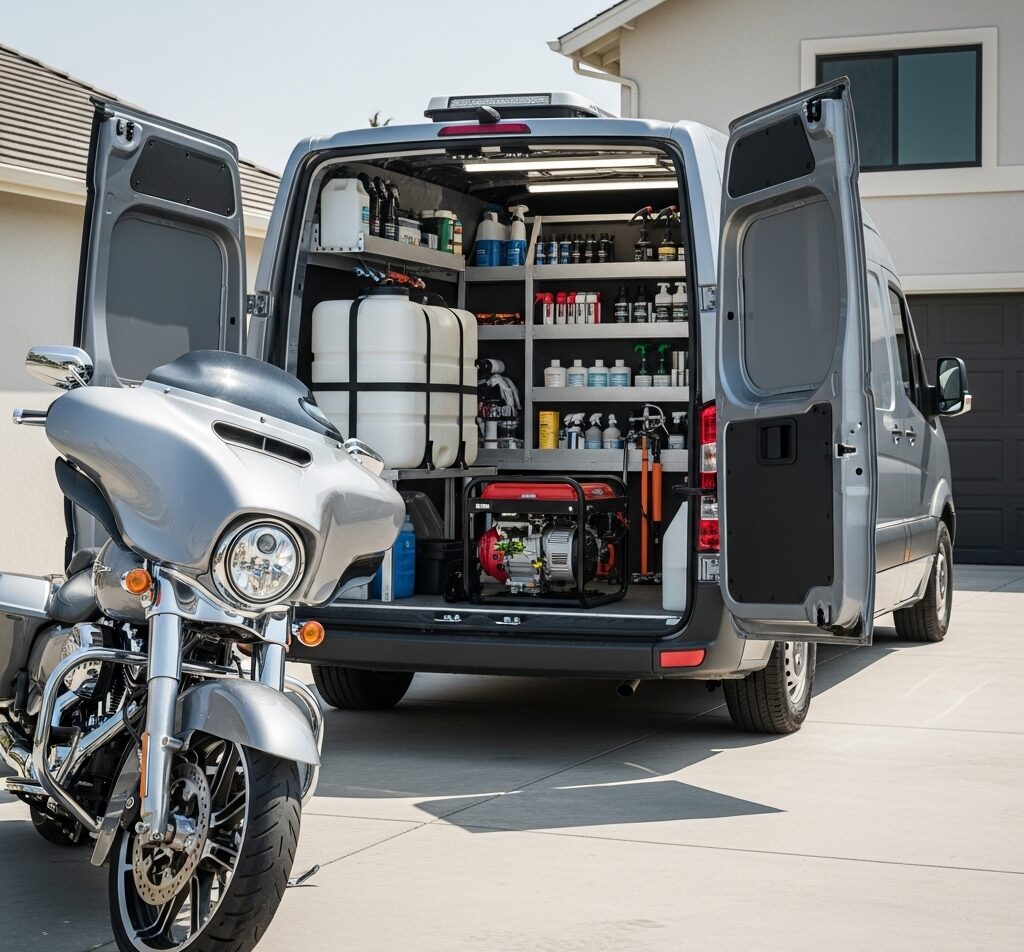
CDC Detailing LLC operates as a fully equipped mobile service, bringing every tool needed to deliver a showroom-quality result directly to the customer’s location. There is no scheduling around shop hours, no arranging a ride home, and no waiting room. The bike gets detailed in its own environment, and the rider gets their afternoon back.
Preparing Your Bike for a Professional Detail: What to Do Beforehand
A few straightforward steps before a detailer arrives help ensure the appointment runs efficiently and delivers the best possible result. Move the bike to a shaded area if possible, since direct sunlight causes products to dry too quickly during application. Remove any aftermarket accessories or saddlebag contents that the detailer would need to work around. Note any specific areas of concern, whether that is a chrome section showing early surface rust, a section of tank paint with heavy swirl marks, or a leather seat that has begun to show dryness and cracking.
Communicate the bike’s history. If it has been through two South Jersey winters without a proper detail, the detailer needs to calibrate expectations around what a single visit can reasonably restore versus what might require a follow-up correction session.
Can You Ride Immediately After a Motorcycle Detail?
The short answer is that it depends on what products were applied. After a standard wash, polish, and wax or sealant service, the bike is typically ready to ride within an hour of the final product cure time. Ceramic coatings require a longer cure window, sometimes 24 hours or more, during which the bike should stay dry and parked. A quality detailer will always advise on specific cure requirements for every product applied before closing out the appointment.
Frequently Asked Questions
How much does motorcycle detailing cost in Sewell, NJ?
A full motorcycle detail in the South Jersey market typically runs between $200 and $350, depending on bike type, current condition, and services selected. Basic wash-and-dress services start around $50 to $100. Premium add-ons like ceramic coating or two-stage paint correction add $100 to $400 or more to the base service price.
How long does it take to detail a motorcycle?
A thorough full-service motorcycle detail generally takes four to eight hours, depending on the complexity of the bike and its current condition. Chrome-heavy touring bikes and trikes take longer than sport bikes with fairings. Heavily neglected bikes requiring paint correction or intensive chrome restoration will fall on the longer end of that range.
How often should I get my motorcycle detailed in New Jersey?
South Jersey riders benefit most from a three-point seasonal schedule: a spring pre-season detail to clear winter storage residue, a mid-summer refresh to address insect buildup and UV damage, and a pre-storage detail in late October before road salting begins. Active daily or weekend riders should consider professional service every two to three months.
Does detailing a motorcycle protect it from road salt corrosion?
Yes, but the protection depends on the products applied. A quality paint sealant or ceramic coating creates a barrier that slows salt penetration on painted surfaces. Chrome sealants protect exposed metal from oxidation. The pre-storage fall detail is the single most effective salt-protection step, removing accumulated road salt before it works on surfaces through winter.
What is the difference between washing and detailing a motorcycle?
Washing removes surface dirt and is a maintenance step any rider can perform at home. Detailing goes further, addressing paint decontamination, polishing, scratch and swirl correction, chrome restoration, leather conditioning, and protective coating application. Detailing restores and protects; washing maintains. Both are necessary parts of a complete motorcycle care routine.
Is ceramic coating worth it on a motorcycle?
For South Jersey riders, ceramic coating offers strong value, particularly on bikes ridden regularly through warm, humid summers and parked near road-salt zones in late season. The coating bonds to clear coat and creates multi-year protection against UV fading, water spotting, and minor abrasion. The upfront cost is higher, but the durability substantially reduces how often full protective treatments are needed.
Sewell and the surrounding Washington Township area has a riding culture worth protecting. If your bike is carrying a season’s worth of road film, salt exposure, or surface oxidation, now is the right time to schedule a professional detail before the next ride takes more out of the paint and chrome than necessary. CDC Detailing LLC brings professional-grade motorcycle detailing directly to your driveway, covering everything from a single-pass refresh to a full correction and ceramic coating package. When you are ready to book or have questions about the right service for your bike, contact us, and we will put together a plan that fits the bike, the season, and your schedule.