
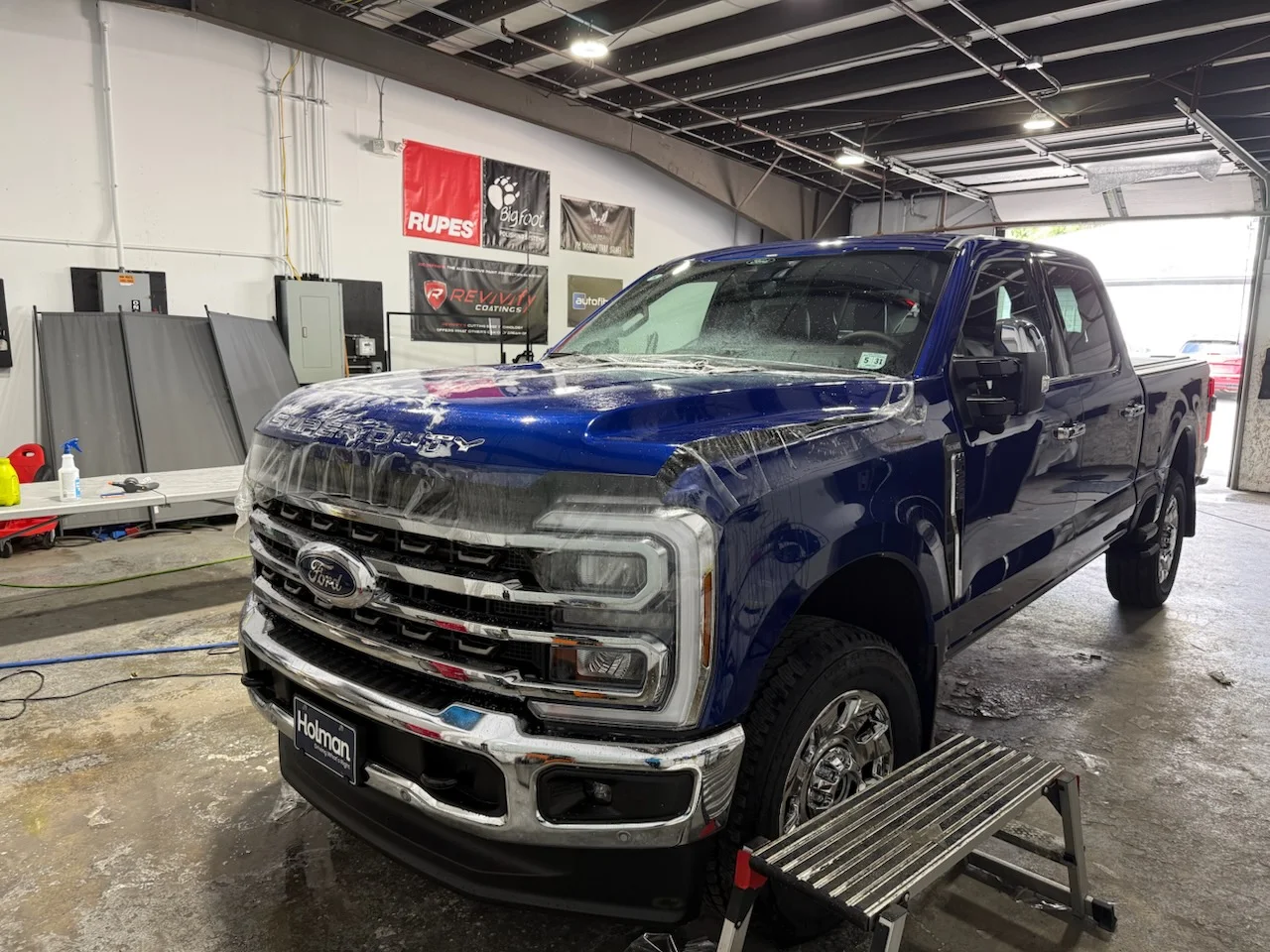
Paint protection film (PPF) is a clear, self-healing thermoplastic urethane applied directly to a vehicle’s painted surfaces to absorb rock chips, road salt damage, and UV degradation before they reach the paint. For Washington Township, NJ drivers commuting daily on I-295 and Route 42, PPF is one of the most cost-effective ways to preserve a vehicle’s finish and resale value in South Jersey’s demanding driving environment. A trusted paint protection film installer can protect your investment for years.
Why Washington Township Drivers Face Above-Average Paint Damage Risk
Washington Township sits at the eastern edge of the Philadelphia metro corridor, a geography that puts its 48,559 residents in the path of some of New Jersey’s most paint-punishing road conditions. As Gloucester County’s official fast facts confirm, Washington Township is the largest municipality in the county, which means a lot of vehicles on roads that see heavy municipal maintenance, including aggressive salting schedules every winter.
The daily commute tells the whole story. Residents heading into Philadelphia or Cherry Hill typically travel I-295, the Black Horse Pike, or Route 42, all high-speed corridors where trailing tractor-trailers and construction vehicles kick up gravel, debris, and fine aggregate at a constant rate. Highway driving dramatically increases the frequency and force of rock chip impacts on a vehicle’s front end. A single daily commute on Route 42 exposes a hood and bumper to more high-velocity debris than a week of local surface-street driving.
Then there is the winter problem, which is severe and specific to New Jersey’s road management practices. The main threat to paint isn’t snow or ice itself. It’s the salt and brine that crews pre-treat roads with before a storm arrives. Sodium chloride and magnesium chloride brine solutions coat every road surface in the township for months at a stretch, and those chemicals don’t just affect metal components. They degrade clear coat, accelerate micro-chip oxidation, and cause the kind of paint fade that shows up gradually but is costly to reverse. No competitor in the South Jersey PPF market has addressed what this means specifically for Washington Township commuters. That gap is exactly why local drivers are increasingly seeking out professional film installation rather than hoping their factory paint holds up.
What Paint Protection Film Actually Does (And What It Doesn’t)
PPF is a physical barrier, not a cosmetic treatment. It absorbs and distributes the kinetic energy of an incoming rock chip before that energy reaches the paint surface. The film itself may take a nick or a scratch, but premium-grade films are formulated with self-healing topcoats that allow minor surface scratches to disappear when exposed to heat, whether from sunlight or warm water.
What PPF does not do is add gloss or hydrophobic water-beading properties the way a ceramic coating does. This is a distinction worth understanding clearly, because PPF and ceramic coating are not competing products. They protect against entirely different threats. PPF is a physical shield against mechanical damage: chips, abrasions, and impacts. Ceramic coating is a chemical bond that repels water, contaminants, and UV oxidation. The two are most effective when combined, with PPF applied first as the primary armor layer, and ceramic coating applied on top to enhance appearance and ease maintenance.
Self-Healing Technology: How It Works in NJ Temperatures
Self-healing PPF performs best when it can access heat quickly, which is relevant for New Jersey’s climate. In summer months, South Jersey’s heat and direct sun mean minor scratches typically repair themselves within minutes of sun exposure. In winter, a quick pass with warm water from a car wash achieves the same result. The elastomeric polymer structure of quality PPF returns to its flat, uniform shape as the material warms, effectively erasing light surface scratches without any product application or buffing.
How Much Does Paint Protection Film Cost in Washington Township, NJ?
Pricing for professional PPF installation in New Jersey runs at the upper end of national averages, reflecting higher labor costs and stronger demand across the Philadelphia metro corridor. National pricing guides place partial front packages between $600 and $1,200, full front clip coverage between $1,500 and $3,000, and full-vehicle wraps between $5,500 and $8,000 or more. In the New Jersey market, those figures generally land at or above the midpoint of those ranges.
Real-world NJ pricing reported by local car owners corroborates this: full front coverage, including bumper, hood, fenders, and mirrors has been quoted at approximately $2,300 in the South Jersey area, a figure that area installers describe as consistent with regional rates. Paint correction, which is a necessary preparatory step before film application, is typically quoted separately and adds to the overall investment.
| Package | What’s Covered | Typical NJ Price Range |
|---|---|---|
| Partial Front | Front bumper, partial hood, side mirrors | $800 to $1,400 |
| Full Front Clip | Full bumper, full hood, fenders, mirrors | $1,800 to $3,000 |
| Track/Sport Package | Full front plus rocker panels, door edges | $2,500 to $4,500 |
| Full Vehicle Wrap | All painted exterior surfaces | $5,500 to $8,500+ |
One note on pricing transparency: most South Jersey PPF installers do not publish their rates publicly, requiring potential customers to fill out a contact form before receiving any figure. This makes it genuinely difficult for Washington Township drivers to comparison shop without committing significant time. Understanding the ranges above gives you a credible baseline before any consultation.
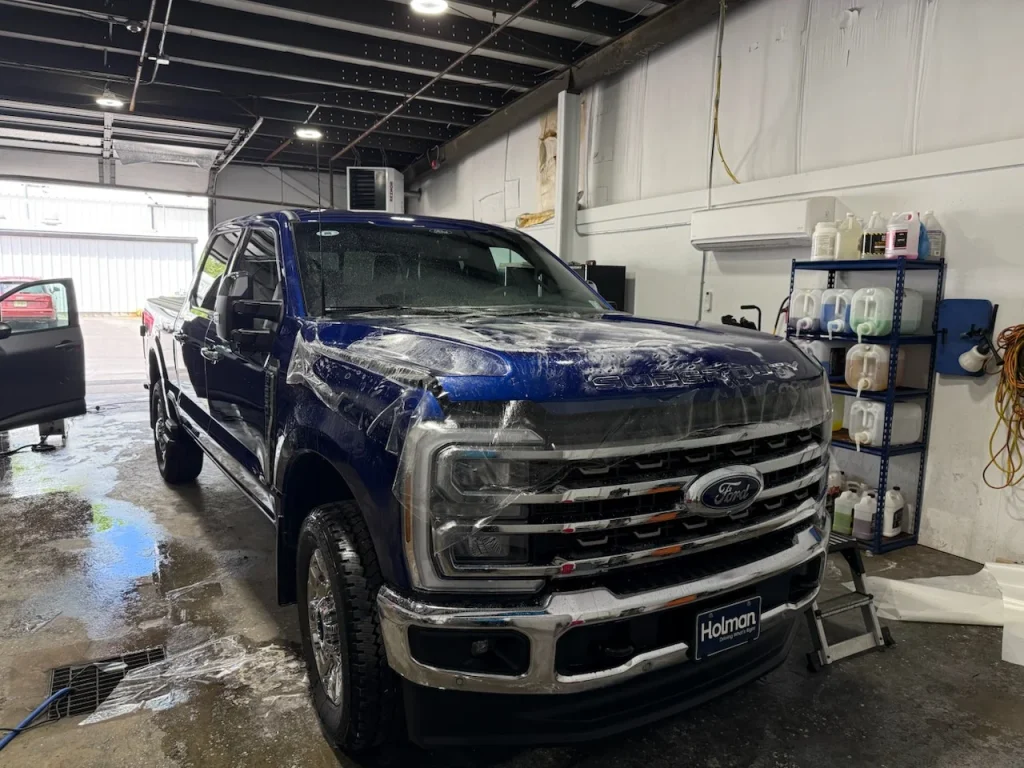
Is PPF Worth It for a Washington Township Daily Driver?
The ROI question deserves a straightforward answer, and the data points in one direction. According to a national dealership survey on PPF resale value, 96% of dealership respondents believe applying PPF to a new vehicle’s painted surfaces helps retain more of its value over the ownership period, with 70% citing value-retention gains of up to 15%. More than 90% of respondents said PPF should give vehicle owners greater confidence in resale value when it’s time to trade in or sell.
For Washington Township residents, those numbers connect to local economic reality in a meaningful way. According to the U.S. Census Bureau, Washington Township’s median household income is $114,249, roughly 10% above both the Gloucester County median and the statewide New Jersey figure, and approximately 40% above the national median. Residents here are buying newer, higher-value vehicles and holding them longer in a high-homeownership community with an 80% ownership rate. A 15% improvement in resale value on a $45,000 vehicle is a $6,750 return on an investment that typically costs $1,500 to $3,000 for front-end coverage.
The daily driver argument is also worth making directly. Many PPF conversations center on luxury or exotic vehicles, but the economics apply just as strongly to a three-year-old SUV or sedan driven 15,000 miles per year on South Jersey highways. Rock chips are cumulative. Each unprotected chip is a potential rust initiation point, and once the clear coat fails around a chip, paint oxidation spreads. Correcting that damage before sale requires paint correction or touch-up work that costs money and still doesn’t fully restore factory condition. Prevention, in the form of film, is almost always less expensive than correction.
What Areas of a Car Should You Protect With PPF?
The answer depends on your driving patterns, and for Washington Township commuters, the priority order is fairly consistent. The front bumper takes the highest volume of direct debris impact at highway speeds and should be covered in virtually every package. The leading edge and full surface of the hood are exposed to chip spray thrown up by vehicles ahead, particularly at I-295 speeds. Side mirrors collect fine debris from both directions and are vulnerable to car-wash brush damage as well.
After those three priorities, the calculus shifts based on budget. Front fenders complete the “full front clip” picture and cover the panels most visible from a three-quarter view. Rocker panels are a strong addition for vehicles parked in areas with heavy sand and gravel runoff, which is relevant to many Washington Township neighborhoods adjacent to unpaved lots or gravel driveways. Door edges protect against the inevitable parking-lot nick, and the rear bumper is a practical choice for vehicles that receive frequent rear passenger loading or equipment handling.
Should You Get PPF Before or After Ceramic Coating?
PPF always goes on first. The film bonds directly to the paint surface, and applying ceramic coating on top of PPF gives you the best of both products: physical chip protection underneath and hydrophobic chemical protection on the exterior surface. Ceramic coating applied over PPF is also easier to maintain, since the coating causes water and road grime to sheet off rather than bonding to the film’s surface.
Does Paint Protection Film Turn Yellow Over Time?
Earlier generations of PPF, particularly products installed before roughly 2015, were known for yellowing and hazing over time, largely due to UV degradation of the adhesive layer. Premium films available today include UV inhibitors in both the film body and the topcoat, which dramatically reduce and in many cases eliminate yellowing under normal use conditions. High-quality film from reputable brands, properly installed by a certified technician in a controlled environment, should maintain optical clarity for the full duration of its warranty period, which typically spans seven to ten years.
The installation environment matters here. Film applied in a dust-contaminated or humidity-uncontrolled environment is more likely to develop issues over time, including bubbling, edge lifting, and adhesive clouding. A professional shop maintains a climate-controlled installation bay and keeps vehicles in that environment for at least 24 hours after application to allow the adhesive to fully cure before the vehicle is exposed to road conditions.
How to Choose a PPF Installer in Washington Township, NJ
The skill of the installer is the single largest variable in the quality and longevity of a PPF installation. Film brand matters, but technique matters more. Seams, edges, and compound curves like bumper corners and mirror housings are where inexperienced installations fail first, either lifting at the edges or showing visible gaps and finger marks in the adhesive.
When evaluating any shop, ask specifically about their installation environment: whether it’s a dedicated, filtered, and climate-controlled bay, or a shared space. Ask about the brands of film they carry and whether they are certified installers for those brands. Ask to see completed work, particularly on vehicles similar to yours in terms of body complexity. And ask about warranty terms in writing: who backs the warranty, the shop or the film manufacturer, and what the claims process involves.
CDC Detailing LLC serves Washington Township and the surrounding South Jersey communities with professional PPF installation, bringing the technical attention to detail that a quality film installation demands. With the local knowledge of NJ road conditions and commuter damage patterns, the team understands exactly what Washington Township drivers are up against every time they get on Route 42 or merge onto I-295.
Frequently Asked Questions About PPF in Washington Township, NJ
How much does paint protection film cost in New Jersey?
In New Jersey, PPF pricing ranges from approximately $800 to $1,400 for a partial front package, $1,800 to $3,000 for a full front clip, and $5,500 to $8,500 or more for full-vehicle coverage. NJ rates run at the upper end of national averages due to higher regional labor costs and strong demand in the Philadelphia metro corridor.
Is paint protection film worth it for a daily driver in Washington Township?
Yes, particularly for commuters using I-295 and Route 42, where highway speeds create high-frequency rock chip exposure. Combined with New Jersey’s aggressive road salting practices, unprotected paint on a daily driver deteriorates measurably faster. PPF can help preserve up to 15% more resale value, according to national dealership surveys, making it a cost-effective investment.
How long does paint protection film last?
Premium PPF installed by a certified technician in a controlled environment typically lasts seven to ten years, backed by manufacturer’s warranty. Film longevity depends on installation quality, the brand of film used, and how well the vehicle is maintained afterward. Regular washing and occasional ceramic coating application on top of the film extend its service life.
Can paint protection film be removed without damaging the paint?
Yes, when installed correctly on properly prepared paint, quality PPF can be removed cleanly without damage. The process involves applying heat to soften the adhesive, then carefully peeling the film. Any residual adhesive is removed with a safe solvent. Paint underneath the film is typically in significantly better condition than exposed surfaces after comparable time and mileage.
Does PPF require special maintenance after installation?
PPF requires minimal maintenance beyond standard vehicle washing. Avoid pressure-washing directly at film edges, and wait at least a week after installation before running the vehicle through an automated car wash. A ceramic coating applied over the film simplifies maintenance further by making the surface hydrophobic. Annual inspections help catch any edge lifting or bubbling early.
What is the difference between PPF and ceramic coating for NJ road conditions?
PPF is a physical barrier that absorbs chip and abrasion damage before it reaches the paint. Ceramic coating is a chemical bond that repels water, salt, and contaminants. For New Jersey’s road salt and highway debris conditions, the two work best together: PPF as the primary protection layer with ceramic coating applied on top for enhanced surface performance and easier cleaning.
Washington Township drivers who want real protection against South Jersey’s roads don’t have to settle for hoping their factory paint holds up. Whether your priority is stopping highway chip damage, fighting back against winter road salt, or preserving the resale value of a vehicle you’ve invested in, professional PPF installation delivers measurable, lasting results. Reach out to CDC Detailing LLC to see the reviews from your Washington Township neighbors, or visit CDC Detailing LLC on the map to find us, and when you’re ready to protect your vehicle the right way, contact us to schedule a consultation and get a quote tailored to your vehicle and coverage goals.