
For most drivers, full front paint protection film is the right call. It covers the hood, fenders, bumper, and mirrors where the majority of rock-chip damage occurs, according to Wraptor. Partial front makes sense if you’re leasing or watching every dollar, and full body earns its higher price only if you’re keeping the car a long time or protecting a rare paint finish. Mileage, paint type, and how long you plan to own the car are what actually move you between tiers.
TL;DR:
- Full front coverage generally protects the most vulnerable areas and offers a cleaner look, making it the best choice for most owners planning medium to long-term ownership.
- Longer-term owners or those with high-value, special-order paint should consider full body coverage to maximize protection and maintain resale value.
- Key factors influencing coverage choice include driving mileage, paint value, ownership length, budget, and warranty conditions, which should be evaluated before selecting a package.
- Cost increases significantly from partial front to full body, with full body often costing two to three times more, and quality film selection impacts durability and appearance over time.
- Upgrading from partial to full front later is possible but depends on the film type and installation quality, so clarify upgrade policies when initially booking.
Table of Contents
- What Are the Main PPF Coverage Options?
- Pros and Cons of Each Coverage Tier
- How Do You Choose the Right Coverage Tier?
- Matching PPF Coverage to Your Vehicle and Budget
- What Does a Professional PPF Install Actually Involve?
- What I’d Actually Tell a Friend Buying PPF
- Ready to Book PPF Installation With Cdcautodetailing
- Sources
- FAQ
What Are the Main PPF Coverage Options?
PPF packages break down into four standard tiers, though installers sometimes tweak the exact panel list. Knowing what’s actually in each one keeps you from paying for coverage you don’t need or skipping protection you’ll regret losing.
Partial front covers the front bumper, about 18 to 24 inches of the hood, part of the front fenders, and the mirror caps. It’s the cheapest tier and it targets the section of the car that eats the most rock chips at highway speed, which is why Wraptor’s breakdown treats it as the entry point rather than a compromise.
Full front extends that same protection across the entire hood, both full fenders, the bumper, mirrors, and often the headlights. This is the tier most shops recommend as a baseline, and it’s popular for a practical reason: a properly wrapped full-front job hides the film’s edge under existing body lines, so you don’t get that visible demarcation line partway up the hood.
Track or extended packages add rockers, A-pillars, the leading edge of the roof, door edges, handle cups, and sometimes the rear bumper. The name is a little misleading. These packages get bought constantly by daily commuters on gravel roads or long highway stretches, not just track-day owners, because the protection logic is about exposure, not motorsport use.
Full body wraps every painted panel on the vehicle, eliminating visible film edges entirely.
Common hybrid builds worth knowing about:
- Full front plus rockers, for commuters who deal with wet roads and road spray
- Full front plus door edges, aimed at owners fighting parking-lot dings
- Full front plus rear bumper, common on hatchbacks and SUVs where cargo loading scuffs the tailgate
Panel lists vary by installer, so confirm exactly what’s included before you book, since naming conventions aren’t fully standardized across shops.
Pros and Cons of Each Coverage Tier
Every tier is a trade between money, looks, and how much of the car actually stays chip-free.
- Partial front: Lowest cost, protects the highest-risk zone, but the hood edge can be visible up close on some vehicles.
- Full front: Covers around 80% of chip-prone areas with a cleaner look than partial, at a meaningfully higher price.
- Track/extended: Adds rocker and pillar protection for gravel or salted roads, but it’s a real cost jump over full front.
- Full body: No visible edges anywhere and total coverage, typically two to three times the cost of full front, which only pencils out for long-term owners.
Film quality matters as much as the tier you pick. Cheap, no-name film is more likely to yellow early or lose its self-healing properties within a couple of years, according to Ultimate Film Solutions. If a rock strike does damage a panel, repair usually means replacing film on that section only, not the whole install, though seam placement affects how clean that repair looks.
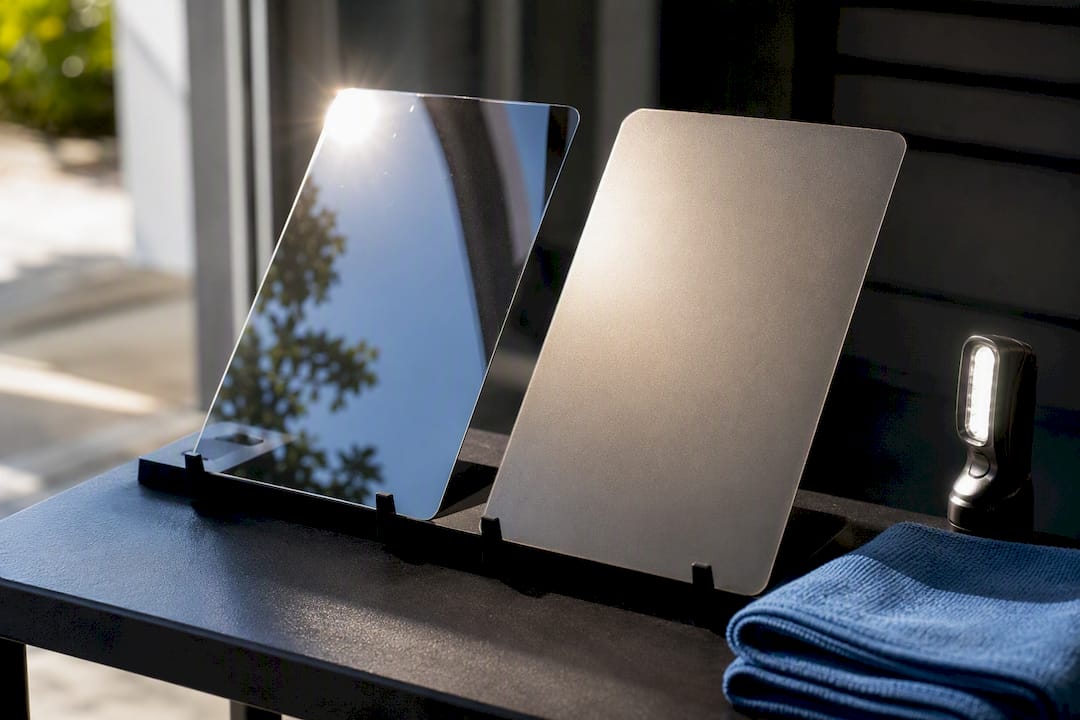
Pro Tip: Ask your installer to show you a sample of the exact film brand they’re quoting, not just a demo panel. Gloss and matte finishes can look identical in a showroom but behave very differently in direct sun.
How Do You Choose the Right Coverage Tier?
Work through these questions before you commit to a package:
- How many highway miles do you drive? Heavy highway use or regular gravel road exposure pushes you toward full front or track packages, since low-speed parking lot dings aren’t your main risk.
- What’s your paint worth? Matte finishes, special-order colors, and high-value vehicles justify full body because a single unprotected panel is expensive and sometimes impossible to color-match.
- How long will you own the car? Leases and short-term ownership favor partial or full front. Long-term keepers get more value out of full body coverage over a decade of exposure.
- What’s your realistic budget? Hybrid packages, like full front plus rockers, often deliver the best return for drivers with a specific known risk area.
- What does the installer’s warranty cover? Ask about warranty length, which film brand they’re using, their edge-wrap technique on curved panels, and whether you can upgrade coverage later without redoing the whole job.
Matching PPF Coverage to Your Vehicle and Budget
Price bands vary by installer and vehicle size, but the general pattern holds across the industry: partial front sits at the low end, full front in the middle, and track or full body cost noticeably more, with full body running two to three times the price of full front. Shops commonly publish starting ranges for each tier so buyers can budget before requesting a quote, a pattern Gilroy Blackout confirms is standard across the industry.
Vehicle value gives you a rough starting point:
- Economy commuters: Partial front usually covers the real risk without overspending.
- Mid-range daily drivers: Full front is the sweet spot for most owners.
- Luxury, collector, or special-order paint: Full body protects an investment that’s hard or impossible to replace exactly.
If you’re a commuter who also hits gravel roads on weekends, full front plus rockers covers both risks without jumping to a full-body price tag. Many shops let you start with partial or full front and upgrade later, though how clean that upgrade looks depends on the film type and how the original seams were finished.
What Does a Professional PPF Install Actually Involve?
A proper install starts with paint correction if the surface has swirl marks or old contamination. Film applied over damaged paint locks in those flaws, and in cases where paint damage is widespread across multiple panels, correcting it first is usually more cost-effective than installing film over it, per Forbes. After correction, the technician measures and cuts the film, fits each panel, wraps the edges, and squeegees out air and moisture before the film cures.
- Full front installs typically run several hours depending on the vehicle and film complexity.
- Mobile installs need a clean, temperature-stable space, ideally a garage or shaded driveway, since film adhesion suffers in extreme heat or cold.
- Cured film needs a short waiting period before the first wash. Our PPF maintenance guide covers safe washing intervals and products that won’t lift the edges.
- For day-to-day care, a two-bucket wash method protects both the film and the paint underneath it from swirl marks.
Pro Tip: Skip the automatic car wash for at least a few weeks after install. Brush-style washes are the fastest way to lift a fresh film edge before the adhesive fully sets.
What I’d Actually Tell a Friend Buying PPF
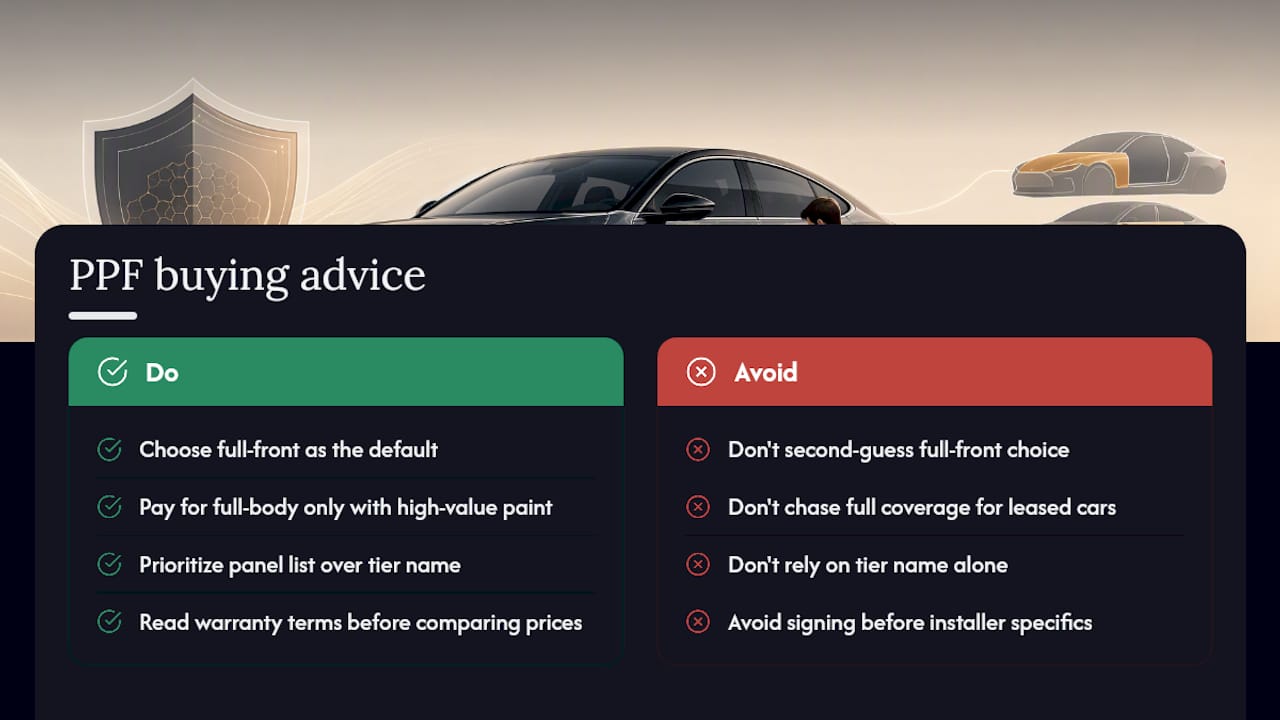
Full front is the right default for most people reading this, and I’d stop second-guessing that choice once your paint or highway mileage doesn’t scream for full body. Leased or short-term cars don’t need to chase full coverage. High-value paint and long-term ownership are the two real exceptions worth paying up for.
The panel list matters more than the tier name, so get specific with your installer before signing anything, and read the warranty terms before you compare pricing across shops.
— Charles
Ready to Book PPF Installation With Cdcautodetailing
PPF installation can be arranged to come directly to your driveway, avoiding the need for shop drop-off and multi-day waits associated with fixed-location installers.
Whether you’re leaning toward partial front for a leased commuter or full body for a car you plan to keep for a decade, the Paint Protection Film service page lays out package options and lets you request a vehicle-specific assessment. If your paint needs correction first, that conversation happens before film ever touches the car, not after. Many owners also pair PPF with a detailing package from the service package lineup to protect the finish and refresh the interior in one visit. Reach out through the PPF page to get a vehicle-specific assessment and pricing details based on your vehicle and driving habits.
Sources
- PPF Coverage Packages Explained: Partial Front vs Full Front vs Track vs Full Body | Wraptor Blog
- PPF packages range from basic partial coverage to comprehensive full-body protection | UPPF
- Best PPF Coverage Options: Full Front vs Track vs Full Body | Gilroy Blackout
- Paint protection film: stopping your car’s aging process (Forbes)
FAQ
Which Is Better, XPEL or 3M PPF?
Both are established film manufacturers with reputable warranty programs, and the better choice usually comes down to which brand your installer has the most experience fitting. What matters more than the brand name is avoiding cheap, unbranded film, since lower-quality film is more prone to early yellowing and weaker self-healing performance.
What Is the Downside of PPF?
The main downsides are cost, the possibility of a visible film edge on lower coverage tiers, and the fact that film needs replacing after years of UV exposure. Full body avoids the visible-edge issue entirely but costs roughly two to three times what full front costs.
What Are the Different Types of PPF Coverage?
The four standard tiers are partial front, full front, track or extended coverage, and full body, each covering progressively more of the vehicle’s painted surface. Partial front protects the bumper and part of the hood, while full body wraps every panel with no visible seams anywhere on the car.
Can I Upgrade From Partial to Full Front Later?
Many shops allow upgrades from partial to full front, though how seamless it looks depends on the film type and how the original edges were finished. Ask your installer about upgrade policy before your first install if you think you might want more coverage down the road.
Is PPF Worth It for a Leased Vehicle?
Partial or full front usually makes the most financial sense on a leased car, since you’re protecting against chips and dings that affect lease-end inspection without paying for full-body coverage you won’t keep long enough to fully use. Full front is generally the better balance for most lease terms, covering the highest-risk panels without the premium price of full body.