
Paint protection film doesn’t create orange peel on your car. It reveals whatever texture already exists in the clearcoat beneath it, and film top coat plus installer technique decide how much that texture shows. Dark colors and raking light expose it fastest. The fix, when one is needed, usually starts with polishing the film and only escalates from there.
TL;DR:
- The visibility of orange peel after PPF installation depends on the existing clearcoat texture, especially on dark-colored cars under raking light.
- The film’s top coat and installer technique significantly influence how much of the underlying orange peel is visible, with better films and professional methods reducing texture.
- Surface irregularities caused by trapped dust, overstretching, or poor squeegee technique can add to visible texture, which polishing may mitigate in minor cases.
- For highly reflective dark colors, texture becomes more apparent under low-angle lighting, while light-colored cars and straight-on lighting mask it better.
- If orange peel exists in the clearcoat pre-installation, PPF cannot eliminate it; polishing or, as a last resort, professional removal and reinstallation are the main correction options.
Table of Contents
- What Causes That “PPF Orange Peel” Look?
- What Causes Orange Peel Under PPF?
- When Does Orange Peel Actually Show Up?
- How Do You Fix or Reduce Visible Orange Peel?
- What Should You Ask Your Installer Before Booking?
- How CDC Auto Detailing Handles Optical Results
- When Is Optical-Grade Film Worth the Extra Cost?
- Book a PPF Install Focused on Optical Results
- Sources
- FAQ
What Causes That “PPF Orange Peel” Look?
Orange peel is the micro-texture you see in reflections when light rakes across a panel at a low angle, similar to the dimpled skin of the citrus fruit it’s named after. Every factory clearcoat has some of it, and it’s more visible on some cars than others depending on how the paint was sprayed and cured. The MIC film guide on optical clarity explains this is exactly how installers and buyers judge finished work: they check reflections under raking light, not straight-on lighting where texture flattens out.
Here’s where it gets confusing for owners. Paint protection film has its own top coat, a thin polyurethane layer with its own microtexture. When that film goes over paint that already has orange peel, you’re now looking through two layers of texture instead of one. Some of what buyers describe as “PPF orange peel effect” is really the film’s top coat adding a slight texture on top of the paint’s own imperfections. That’s also why certain films get marketed as “optical” or low-texture products. They’re positioned specifically to minimize that stacking effect rather than eliminate the paint’s underlying texture, which no film can do.
What Causes Orange Peel Under PPF?
Two things determine how much texture you’ll see after installation: the film itself, and the hands installing it.
Film chemistry matters first. Some polyurethane top coats are formulated to sit flatter and reflect light more evenly, which is why certain products get marketed as low-texture or nano-ceramic infused options, as the XPEL vs STEK comparison lays out. Cheaper films tend to have a more pronounced top-coat texture straight out of the roll.
But installer technique often matters more than the film brand. A properly documented PPF installation guide points to specific steps that affect final appearance: isopropyl alcohol wipe-downs to strip contaminants before the film goes on, correct slip solution ratios so the film can be positioned without dragging, and squeegee strokes that move outward from center rather than trapping air or debris underneath.
- Trapped dust or lint under the film shows up as tiny bumps that catch light differently than the surrounding surface.
- Overstretching film around curves during heat activation can thin the top coat unevenly.
- Poor squeegee technique leaves faint streak patterns visible at certain angles.
Installer tips from GSWF’s install guide back this up, noting that overlapping squeegee strokes and keeping the adhesive side wet during positioning cut down on trapped particles significantly. One thing installation can’t fix: if your clearcoat had noticeable orange peel before the film went on, it will very likely still be visible after.
Pro Tip: Ask your installer if they can show you a photo of the bare panel under raking light before the film goes on. If the orange peel is already visible there, no film on earth will make it disappear.
When Does Orange Peel Actually Show Up?
Not every car shows this the same way, and that’s the part most owners overlook when they’re stressing over a spec sheet.
Dark colors are the biggest factor. Black, dark blue, and dark gray paint reflect light almost like a mirror, so any surface irregularity gets amplified. Light silver or white cars can have identical texture underneath and look almost flawless because the color scatters reflections instead of concentrating them. Raking light, the low, angled light you get at a car show, under a garage bulb, or at sunset, is when texture becomes obvious. Straight overhead lighting on a cloudy day tends to hide it almost completely.
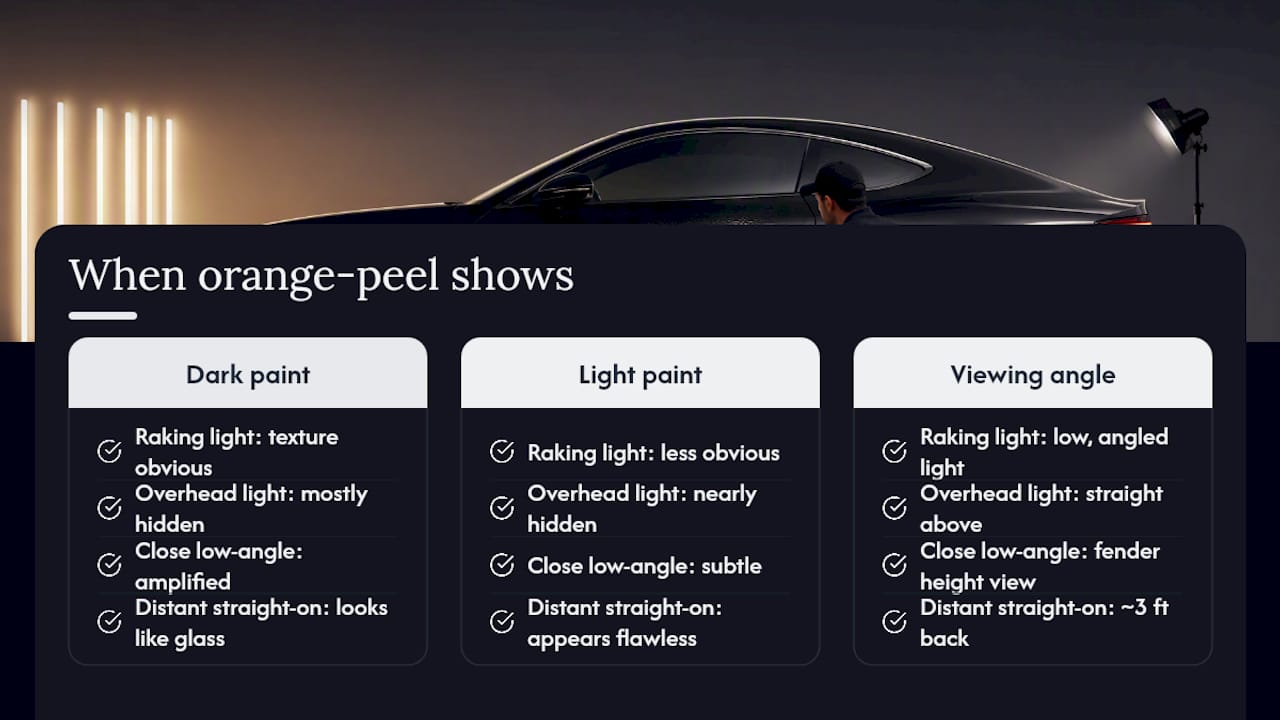
Distance and viewing angle change the story too. Stand three feet back and look straight at a hood, and most PPF installs look like glass. Get down at fender height and rake your eyes across the same panel under a shop light, and you’ll start noticing texture that wasn’t visible a moment ago.
For most daily drivers, some texture under harsh raking light is normal and not worth chasing. For show cars or dark-colored vehicles where owners inspect every panel under a flashlight, it’s a different conversation.
How Do You Fix or Reduce Visible Orange Peel?
If the texture bothers you after installation, work through these options in order, starting with the least invasive.
- Polish the film surface. A controlled, film-safe polish or fine compound applied by hand or with a dual-action polisher can smooth minor surface irregularities in the top coat. This won’t fix orange peel that’s actually in the paint underneath, only the film layer itself.
- Consider wet sanding only as a last resort. This is a high-risk correction typically reserved for clearcoat, not film, and it’s not something most owners should attempt themselves. If a professional recommends it for PPF specifically, get a second opinion.
- Request reinstallation with a different film. If polishing doesn’t get you where you want to be, removing and replacing the film with an optical-grade product is the more reliable fix. This means paying for materials and labor again, so it’s worth confirming expectations with your installer before the initial install rather than after.
- Have the film professionally removed if you’re unhappy overall. According to installation guidance on removal and paint risk, PPF can be removed by a professional without damaging the paint underneath when done correctly, though aggressive corrections like wet sanding carry real risk to the clearcoat.
A Reddit thread among detailing enthusiasts reflects what installers see constantly: many owners with dark cars notice a slight texture change after PPF goes on, and most decide it’s acceptable once they see it isn’t visible from normal viewing distance. Don’t attempt DIY removal or aggressive correction on a car you care about. Check a DIY paint protection film guide first if you’re weighing that route, since removal mistakes can lift clearcoat in ways that cost far more than the film did.
What Should You Ask Your Installer Before Booking?
Set expectations before the film touches your car, not after.
- Request photos of the bare panel and the finished install, both taken under raking light, not just straight-on shots that hide texture.
- Ask which film top coat they’re using and whether it’s marketed as a lower-texture or optical-grade option.
- Check the seams and edges closely for trapped debris, air bubbles, or texture inconsistency where two pieces meet.
- Ask what their warranty covers regarding optical appearance, not just adhesion or yellowing.
- Confirm their removal policy in writing if you decide down the road that you want the film off.
A step-by-step DIYer’s installation guide is worth reading even if you’re hiring a pro. It shows you what proper prep and squeegee work should look like, so you know what to expect when you inspect the finished job.
Pro Tip: Walk away if an installer won’t show you raking-light photos of previous work on a dark-colored car. That’s the single fastest way to judge whether their technique controls for visible texture.
Red flags include visible streak lines across large panels, bubbles that weren’t there on the bare paint, and edges that lift within the first few days. A good post-install touch-up should be minor spot corrections, not a full re-squeegee of an entire panel.
How CDC Auto Detailing Handles Optical Results
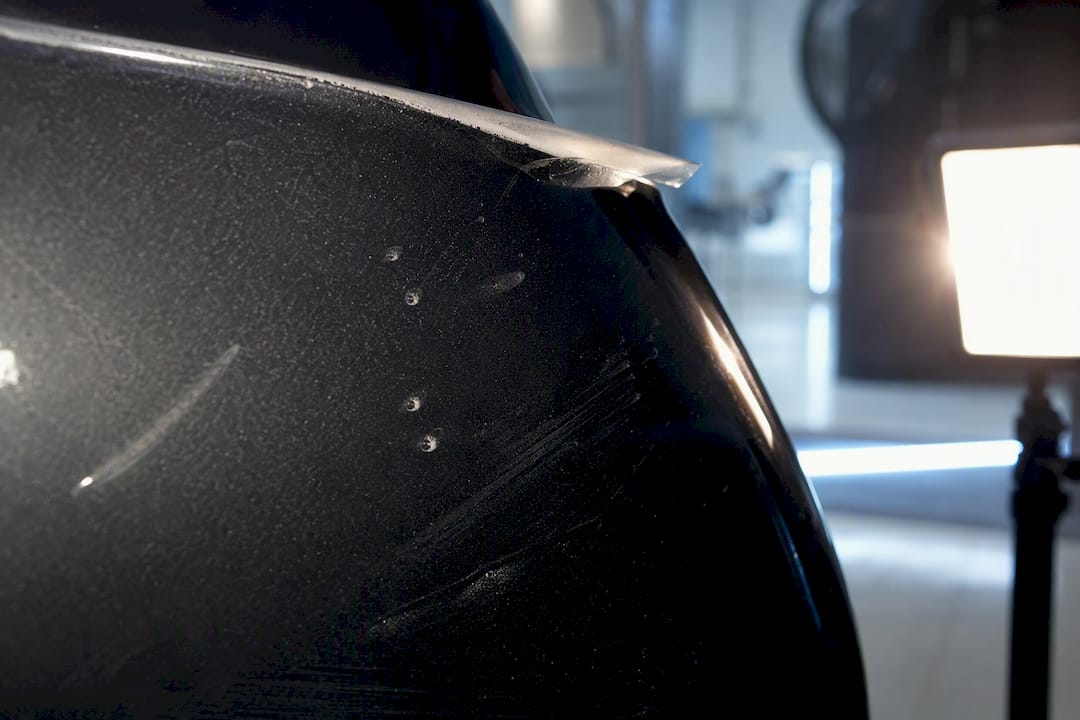
Getting a clean, low-texture PPF install comes down to process discipline: IPA wipe-downs before film goes on, correctly mixed slip solution, squeegee strokes worked outward from center, and controlled heat during activation for curved panels. Every finished install should be checked under raking light before the customer signs off, not just eyeballed under shop fluorescents.
Aftercare matters just as much as the install itself. Our installer-backed PPF maintenance timeline outlines wash restrictions and curing windows that prevent early edge-lift and trapped moisture, both of which can distort how the surface looks weeks later. For readers who want the full process breakdown, our PPF installation workflow covers each step in order.
When Is Optical-Grade Film Worth the Extra Cost?
If you’re driving a light-colored daily and rarely inspect your car under a flashlight, standard film and a competent install are enough. Save the premium spend.
If you own a dark, high-end vehicle you plan to show or sell for top dollar, optical-grade film and a meticulous installer are worth paying for. Resale buyers who know what to look for will check panels under raking light, and a flawless finish photographs better for listings. Either way, budget for annual inspection, not just installation.
— Charles
Book a PPF Install Focused on Optical Results
Cdcautodetailing treats orange peel as a photography problem, not just a chemistry problem. Every professional mobile PPF install includes raking-light photos of the finished panels, so you see exactly what a buyer or judge would see before you ever drive away.

That documentation matters because it’s the same standard we hold ourselves to on edge-lift remediation and correction visits. If a seam looks off or a panel needs a touch-up during the curing period, our maintenance timeline flags the window to catch it early rather than after it’s set. If matte or satin paint is part of your consideration, our partner resource on preserving matte finishes is a useful read on how texture interacts with different top coats.
Ready to see what an appearance-focused install looks like on your vehicle? Visit our paint protection film page to review options and request a booking, or pair your install with an exterior detail beforehand so the film goes on a fully corrected surface.
Sources
For technical background on film top coats, installation steps, and removal safety, see the XPEL vs STEK optical clarity guide and GSWF’s installation tips.
- MIC film | XPEL vs STEK PPF Guide – Orange Peel, Optical Clarity, Hydrophobic Top Coat
- 10 Important PPF Install Tips – GSWF
- How to Install Paint Protection Film (PPF) | Step-by-Step Guide
FAQ
Does PPF Cover Up Orange Peel in the Paint?
No. PPF sits over whatever texture already exists in the clearcoat, so noticeable orange peel in the paint will typically still be visible after installation, sometimes slightly altered by the film’s own top coat.
How Do You Fix Orange Peel on a Vehicle’s Clearcoat?
Light orange peel in factory clearcoat can sometimes be reduced through wet sanding and polishing done by a trained professional, since this process removes a thin layer of clearcoat and carries real risk if done incorrectly.
Does Xpel PPF Have Orange Peel?
All film top coats have some degree of microtexture, and how visible it is depends on the specific product line and installer technique, according to comparisons of film optical clarity.
Can PPF Be Peeled Off Without Damaging the Paint?
Yes, when a professional handles the removal correctly, PPF comes off without damaging the paint underneath, based on installation and removal guidance. Aggressive DIY removal attempts carry a much higher risk of lifting clearcoat.
What Does CDC Auto Detailing Charge for a PPF Install?
Pricing for Cdcautodetailing’s paint protection film service isn’t published; current rates and package details are available on the PPF service page.