
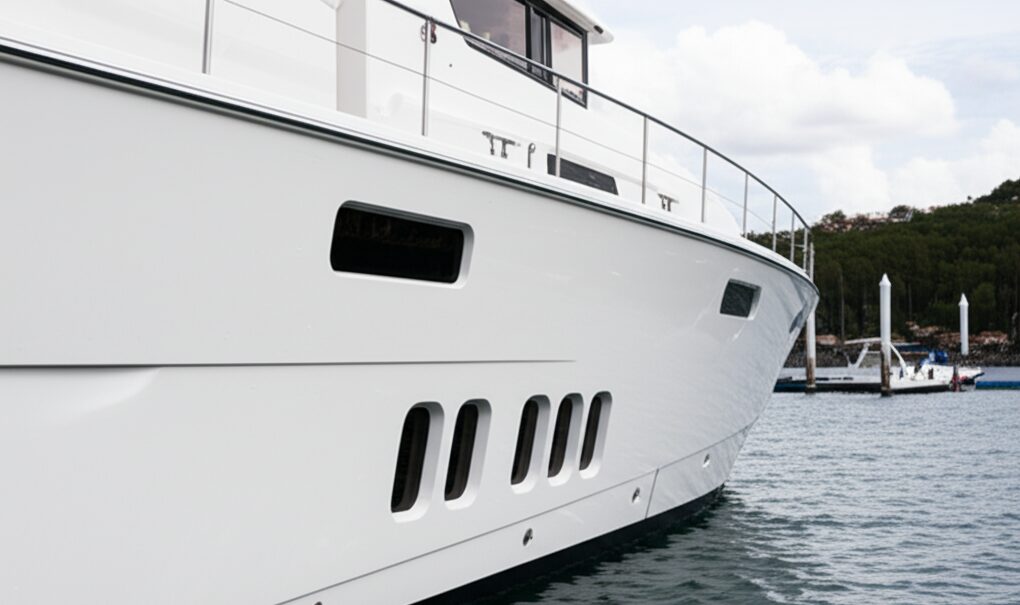
Spring boat prep in South Jersey means more than a quick rinse before your first run of the season. A proper spring detail addresses salt crystallization in the gelcoat, oxidation from winter UV exposure, and waterline staining that builds up in coastal storage. For most South Jersey boats, professional detailing runs $12 to $40 per foot, and booking early, before the April rush, is the single best move you can make.
Why South Jersey Boats Need More Than a Basic Wash in Spring
South Jersey sits at a rare convergence of saltwater environments. The Atlantic Ocean, Delaware Bay, and a dense network of back bays and tidal channels from Ocean City to Cape May Point expose boats to conditions that are genuinely punishing on gelcoat, vinyl, and metal hardware. According to Boatsetter’s New Jersey boating guide, the state has approximately 146,000 registered recreational boats, and the Cape May and Wildwood area is home to one of the largest offshore fishing fleets on the entire Eastern Seaboard.
That concentration of saltwater boating means detailing professionals here see specific, recurring damage patterns that inland detailers rarely encounter. Salt does not just sit on the surface after a day on the water. It works its way into microscopic pores in the gelcoat, and when the boat sits over winter, those crystals expand and contract with temperature changes. By the time spring arrives, what looks like light surface haze can actually be the early stage of structural oxidation. Left untreated, it accelerates every season.
For South Jersey boat owners, spring is not just a cosmetic reset. It is the single most important maintenance window of the year, and the difference between a maintenance detail and a correction detail comes down to how long you wait. Boat detailing done proactively in spring, before oxidation sets in deeply, keeps costs manageable and protects the resale value of the vessel.
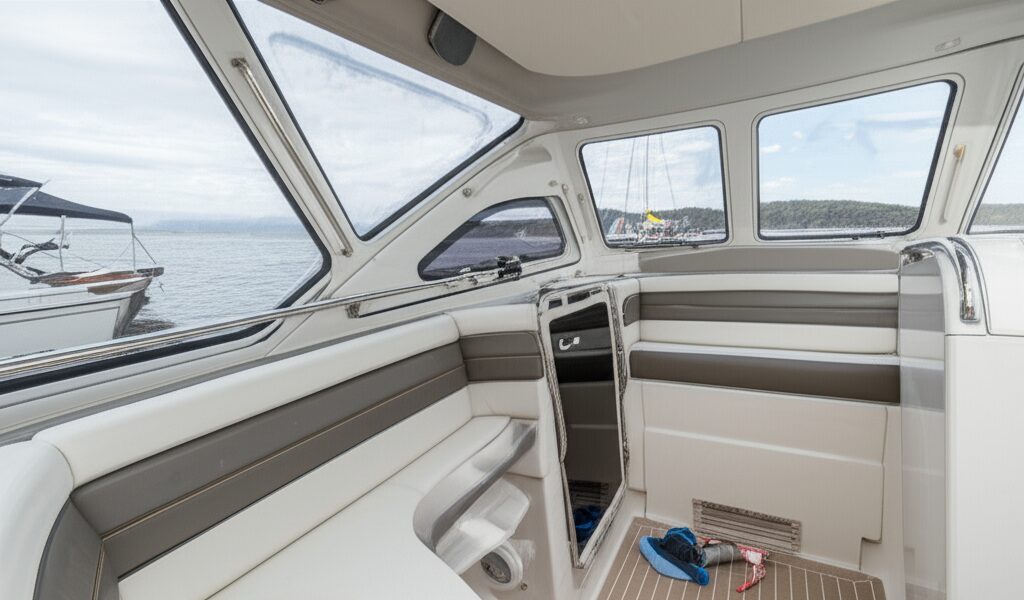
What Does a Full Spring Boat Detail Actually Include?
The phrase “boat detailing” covers a wide range of services, and understanding what is included at each level helps owners make smarter decisions when requesting quotes.
Basic Spring Package
A foundational spring detail typically includes a full hull and topside wash, non-skid deck scrubbing, interior compartment cleaning, vinyl conditioning with UV protectant, metal polishing on cleats and hardware, and a protective sealant applied to exterior surfaces. For a 25-foot boat in fair condition, this level of service generally runs between $500 and $900 in the South Jersey market.
Machine Correction Detail
If the gelcoat has developed visible oxidation, swirl marks, or faded color panels, machine correction is the appropriate step up. A rotary or dual-action polisher is used to cut through the damaged surface layer before any sealant is applied. This level of work typically ranges from $1,375 to $2,500 for a 25-foot boat, depending on the severity of oxidation. It is corrective work, meaning it is recovering condition that has already been lost rather than simply maintaining what is there.
Full Restoration
For boats that have gone multiple seasons without professional attention, or vessels coming out of extended storage with severe oxidation, full restoration can exceed $5,000 on a 25-foot boat. This is the highest-cost scenario, and it is almost always avoidable with consistent annual detailing.
Ceramic Coating for Long-Term Protection
Ceramic coating has become the preferred protection upgrade for South Jersey boat owners who want maximum durability between details. Unlike traditional wax, which bonds to the surface temporarily, a properly applied ceramic coat creates a semi-permanent hydrophobic layer that repels salt, UV rays, and contaminants at the molecular level. It requires professional prep and application to perform properly, but the protection it offers in a coastal saltwater environment is significantly superior to that of wax alone.
Spring Detailing Cost Breakdown for South Jersey Boats
| Service Level | What Is Included | Estimated Cost (25-ft Boat) |
|---|---|---|
| Basic Spring Detail | Wash, non-skid scrub, vinyl conditioning, metal polish, sealant | $500 to $900 |
| Machine Correction Detail | Basic services plus rotary polishing of oxidized gelcoat | $1,375 to $2,500 |
| Full Restoration | Heavy correction, fiberglass treatment, full refinishing prep | $2,500 to $5,000+ |
| Ceramic Coating Add-On | Professional ceramic application after correction or maintenance detail | $500 to $2,000+ depending on size |
| Spring Opening Package (Under 27 ft) | Pressure wash, vacuum, interior conditioning, starting at $16 per foot | Starting at $432 for 27 ft |
Pricing reflects the South Jersey coastal market and is based on reported local competitor rates and national industry data. Final cost depends on the boat’s current condition, materials, and specific services requested.
The Maintenance vs. Correction Distinction: Why It Matters for Your Budget
One of the most overlooked conversations in boat detailing is the difference between maintaining condition and correcting lost condition. A maintenance detail keeps a well-cared-for boat looking clean and protected. A correction detail costs significantly more because the detailer is working to reverse damage, cut through oxidation, and restore gloss that has already degraded.
The practical implication for South Jersey boat owners is straightforward. A boat detailed twice per year, once in spring and once in the fall before winter storage, will consistently land toward the lower end of any pricing range. A boat that goes two or three seasons without professional attention will almost always require correction-level work, which can cost two to three times as much.
The best rhythm for South Jersey’s saltwater environment is spring detailing before launch and fall detailing before shrink wrap or storage. Salt air and UV exposure are year-round threats in a coastal climate, and protective coatings have a finite lifespan without refreshing.
South Jersey Spring Boating Checklist Beyond the Detail
A spring boat detail works best as part of a broader commissioning checklist. Before launch day, South Jersey boat owners should confirm registration and documentation are current alongside the physical condition of the vessel.
NJ Registration and Legal Requirements
Under NJ boat registration requirements, all boats more than 12 feet in length must be titled through a Motor Vehicle Commission agency, and all power vessels regardless of length must be registered. Registration certificates expire annually, which makes spring the natural window to renew before the first launch. All operators of motorized watercraft in New Jersey are also required to carry a valid New Jersey Boat Safety Certificate.
If you boat on Atlantic County waterways such as Lake Lenape, any boat with a motor requires a yearly permit. Boats over 9.9 horsepower must supply $500,000 in liability insurance along with registration, a boating endorsement, and appropriate safety gear.
Spring Commissioning Items to Complete Before or After Your Detail
Detailing and commissioning are two separate but related processes. A professional detail restores and protects the exterior and interior surfaces. Commissioning covers the mechanical and safety side: bilge pump function test, battery charge and terminal inspection, navigation light check, fire extinguisher inspection, life jacket count and condition review, visual hull inspection for stress cracks or blistering, and fuel system check. Completing commissioning before or alongside your spring detail ensures the boat is launch-ready on every level, not just cosmetically.
Environmental Compliance: What South Jersey Boaters and Detailers Need to Know
This is an area where professional detailers separate themselves from DIY approaches and less-scrupulous operators. According to NJ environmental regulations for boat washing published by the New Jersey Department of Environmental Protection, discharging power wash wastewater into surface or ground waters of the state is a violation of the Water Pollution Control Act and the NJPDES rules. Detailers working at marinas or outdoor facilities must capture and filter wash water through proper containment systems rather than letting it run off into surrounding waterways.
The NJDEP’s Clean Marina Program is a voluntary initiative that encourages marina operators and boaters to adopt practices that minimize pollution from oil, grease, paint, and cleaning chemicals. Choosing a detailer who operates in compliance with these standards protects both the water quality of the bays and inlets South Jersey boaters rely on and protects the boat owner from any liability exposure.
When to Book Your Spring Detail in South Jersey
Timing matters more than most boat owners realize. March through May is peak demand season in South Jersey, and detailers who do quality work fill their schedules fast. The practical advice is to book your spring detail in late February or early March at the latest. Waiting until April means longer lead times, less scheduling flexibility, and sometimes higher pricing as demand peaks.
Owners who want to save money without sacrificing quality can consider fall or early winter booking for any corrective work that is not time-sensitive. Some detailers offer off-season rates for customers willing to schedule restoration or ceramic coating work outside the spring surge. That work can be completed while the boat is in storage, leaving spring appointment slots open for the lighter maintenance detail needed at launch.
Mobile Boat Detailing in South Jersey: What to Expect
Mobile detailing has become the preferred option for many South Jersey boat owners because it eliminates the hassle of hauling the boat to a fixed shop. A qualified mobile detailer brings all equipment to the marina, storage facility, or driveway, works around the boat’s location, and leaves it ready to go.
When evaluating a mobile detailer in South Jersey, the key questions to ask are whether they use marine-safe products specifically formulated for gelcoat and vinyl rather than automotive products, whether they carry liability insurance, how they handle wash water containment in compliance with NJDEP rules, and whether they offer written estimates before starting work. A detailer who can answer all four questions clearly is almost always worth the premium over a cheaper option that cannot.
For South Jersey boat owners looking for that combination of local expertise, proper equipment, and marine-specific product knowledge, CDC Detailing LLC delivers professional results for boats across the region, from Cape May County through Atlantic County and the surrounding coastal communities.
Frequently Asked Questions About Spring Boat Prep in South Jersey
How much does spring boat detailing cost in South Jersey?
Spring boat detailing in South Jersey typically runs $12 to $40 per foot, depending on boat size, condition, and service level. A 25-foot boat in fair condition usually lands between $500 and $900 for a full spring maintenance detail. Boats requiring correction for oxidation or heavy salt buildup can run significantly higher, sometimes $1,375 to $2,500 or more.
How often should I detail my boat in a saltwater environment?
In a saltwater environment like South Jersey, professional detailing twice per year is the recommended minimum. A spring detail before launch removes winter damage and applies fresh protective coatings. A fall detail before winter storage protects surfaces during the off-season. Boats detailed on this schedule consistently require less corrective work and cost less per detail over time.
What is the difference between boat washing and boat detailing?
A boat wash removes loose dirt, salt, and debris from the surface. Boat detailing goes significantly further, including clay bar treatment, polishing or machine correction of the gelcoat, conditioning of vinyl and upholstery, metal polishing, and application of protective sealants or ceramic coatings. Washing maintains cleanliness; detailing maintains and restores the integrity of the boat’s surfaces.
Can car detailing products be used on a boat?
Using automotive products on marine surfaces is not recommended. Boat gelcoat, vinyl, and teak require formulations specific to marine environments and the unique stresses of saltwater, UV exposure, and submersion. Automotive polishes and sealants are designed for painted metal panels and can damage, dull, or degrade gelcoat and marine vinyl when used incorrectly. Always use marine-rated products applied by someone with boat-specific experience.
What is spring commissioning and how does it relate to detailing?
Spring commissioning, also called de-winterizing, covers the mechanical and safety preparation of a boat for the new season, including bilge pump testing, battery inspection, fuel system checks, and safety equipment review. Detailing handles the surface protection and cosmetic restoration side. They are complementary processes, and completing both in spring ensures the boat is fully ready for launch, mechanically and cosmetically.
Should I wax or ceramic coat my boat in spring?
Ceramic coating offers significantly longer-lasting protection than traditional wax, especially in South Jersey’s saltwater environment. A quality wax lasts a single season. A professionally applied ceramic coat can last two to five years with proper maintenance. For boat owners who want maximum protection between details and strong resistance to salt, UV, and waterline staining, ceramic coating is the stronger long-term investment.
Spring in South Jersey only comes once a year, and the window between the last freeze and the first busy weekend on the water is shorter than most boat owners expect. Getting your vessel professionally detailed before that window closes protects your investment, keeps your boat looking its best all season, and costs far less than corrective work down the road. If your boat is coming out of winter storage and you want it ready for the season, book now before the spring schedule fills up.