
TL;DR:
- Tire dressing improves appearance, protects against UV rays, and slows surface cracking but doesn’t extend tire life.
- Water-based formulas are preferable in humid regions like South Jersey due to reduced sling and rubber safety.
- Consistent, correct application of quality products, paired with proper tire maintenance, yields the best long-term results.
Most South Jersey vehicle owners assume shiny tires are healthy tires. That assumption feels logical until you notice that tire shine and tire protection are two different things, and confusing them can lead to wasted money and unintentional rubber damage. Tire dressing does far more than make your sidewalls look good in the driveway. When selected and applied correctly, it guards against UV rays, prevents surface cracking, and keeps rubber looking fresh through New Jersey’s punishing humidity and sun cycles. This article breaks down what tire dressing actually does, which formulas work best for local conditions, what the hype gets wrong, and how mobile detailers get lasting results every time.
Table of Contents
- What is tire dressing?
- Comparing types of tire dressings: Water vs. solvent based
- Myths and truths: What tire dressing can and cannot do
- How to use tire dressing for best results (especially via mobile services)
- Why chasing the highest gloss can hurt more than help
- Enhance your tires with mobile detailing in South Jersey
- Frequently asked questions
Key Takeaways
| Point | Details |
|---|---|
| More than shine | Tire dressing restores shine but also conditions rubber and protects against UV damage. |
| Water-based preferred | Water-based dressings are best for South Jersey’s climate to prevent sling and improve longevity. |
| Gloss isn’t everything | A high-gloss finish does not guarantee better protection or longer tire life. |
| Proper application is key | Prepping tires and applying product in moderation ensures cleaner, longer-lasting results. |
| Expert mobile help available | Professional mobile detailing offers safe, effective tire dressing tailored to local conditions. |
What is tire dressing?
Before we dig into the types and best practices, let’s get clear on what tire dressing actually is and isn’t.
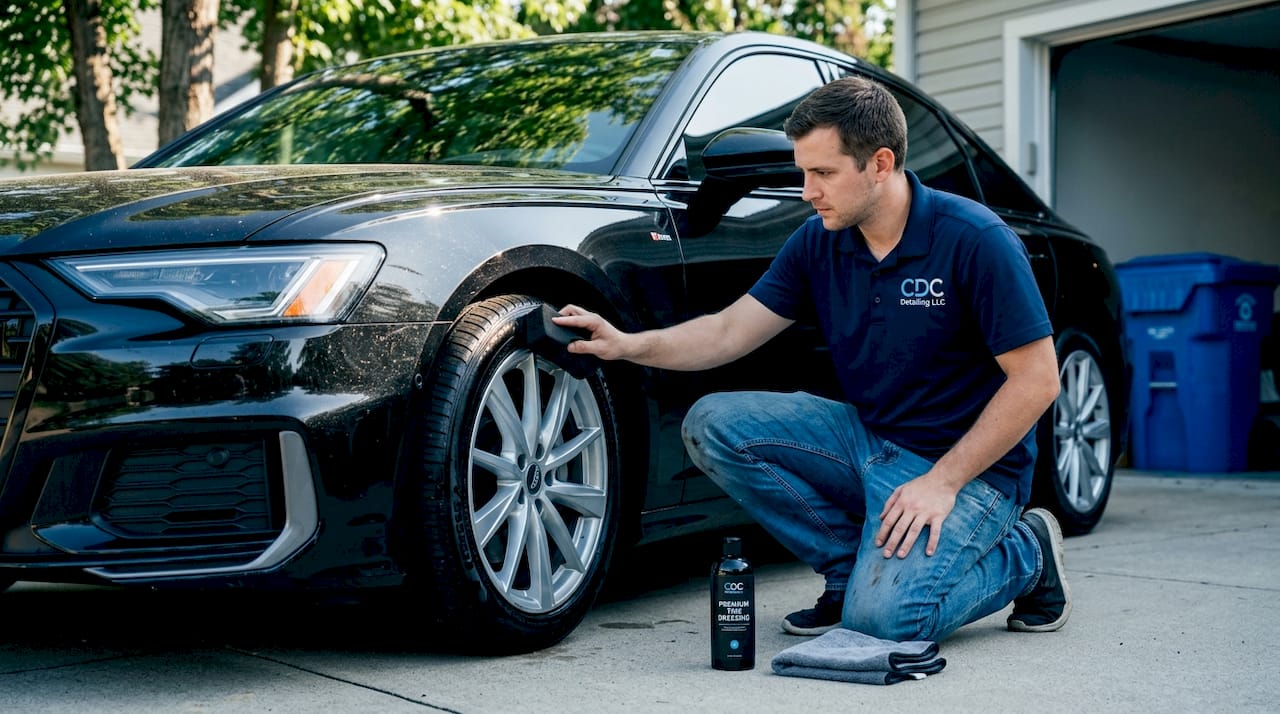
Tire dressing is a topical product applied to tire sidewalls to restore shine, condition rubber, and protect against UV damage, cracking, and fading. It’s not a tire treatment that soaks into the compound and restructures the rubber from within. It’s a surface product, and that distinction matters a lot when you’re deciding what it can realistically do for your vehicle.
The primary functions of tire dressing include:
- Restoring color and shine to tires that have faded from sun and road exposure
- Conditioning the rubber surface to slow the appearance of surface cracking
- Providing a UV-blocking barrier that reduces the rate at which tires brown and oxidize
- Repelling dirt and road grime between washes, keeping the sidewalls cleaner longer
- Enhancing overall curb appeal without any mechanical work required
Two broad categories of tire dressings exist: water-based and solvent-based. Water-based formulas use a polymer or silicone suspended in water, making them gentler and more environmentally friendly. Solvent-based formulas use petroleum or chemical carriers, which deliver a more intense gloss but come with trade-offs we’ll cover shortly.
Professional detailers, DIY enthusiasts, and mobile services all use tire dressings regularly. For anyone following solid wheel and tire care tips, adding a quality dressing to the routine makes visible sense. But here’s the myth that trips people up: the highest-gloss product is not always the healthiest one for your tires. Gloss level is a cosmetic outcome, not a measure of protection quality.
A common mistake: Vehicle owners often select tire dressing based on photos of that “wet look” shine, not on ingredient quality or rubber compatibility. That habit creates frustration when results fade fast or products fling onto the vehicle’s paint.
Sticking to reputable vehicle maintenance recommendations means treating tire dressing as one layer of a larger care routine, not a shortcut that replaces regular inspection and inflation checks.
Comparing types of tire dressings: Water vs. solvent based
Now that you know what tire dressing is, understanding the formulas helps you choose what really fits your needs and local weather.
| Feature | Water-based | Solvent-based |
|---|---|---|
| Gloss level | Natural to moderate satin | High gloss, “wet look” |
| Longevity | Shorter; may need reapplication | Longer initial hold |
| Sling risk | Low to none | Moderate to high |
| Rubber safety | Gentler on rubber compounds | Can dry out rubber over time |
| Environmental impact | Lower; water-based carrier | Higher; chemical solvents |
| Best climate fit | Humid, rainy (South Jersey ideal) | Dry, controlled environments |
| Ease of application | Easy; forgiving on timing | Requires precise application |
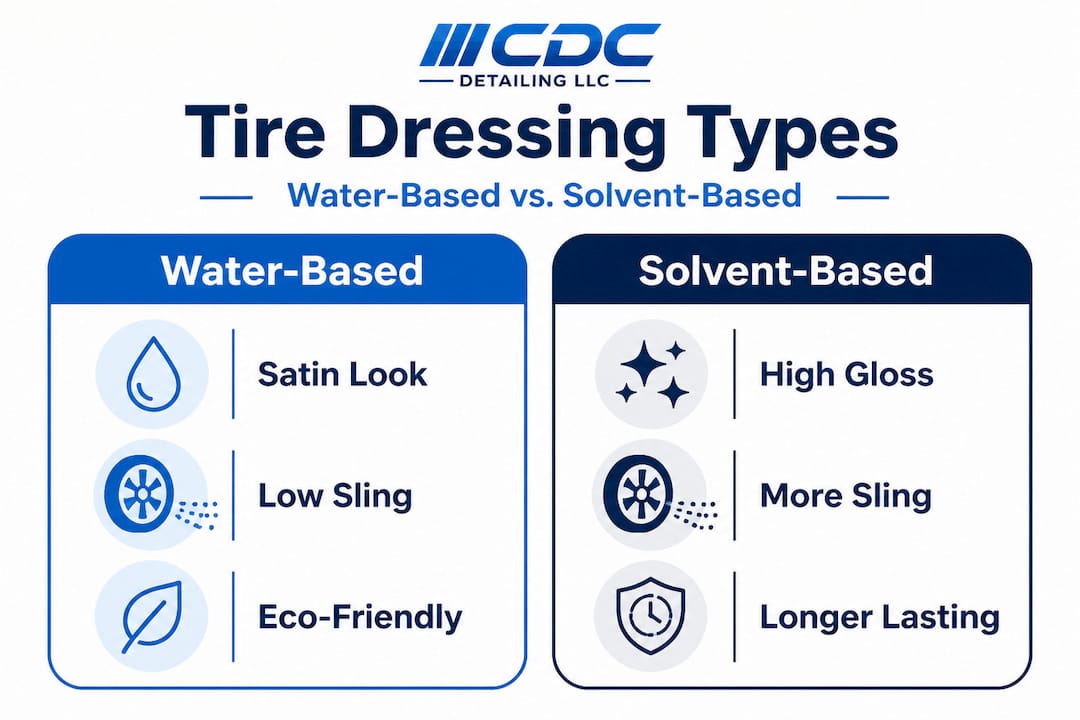
For most vehicle owners in South Jersey, the choice should lean water-based. Water-based dressings minimize sling in humid or rainy conditions, which makes them far more practical when roads are often wet and temperatures fluctuate enough to affect how products cure. Sling happens when excess dressing flings off the spinning tire onto your paint, windows, and wheel wells. It’s messy, it can stain, and it undoes a lot of the visual work you just paid for.
Solvent-based dressings offer that deep, mirror-wet gloss that looks stunning in product photos. But the trade-offs are real. Over time, solvent carriers can strip away natural oils from the rubber, causing long-term dryness and micro-cracking. In South Jersey’s summer humidity and spring rain cycles, solvent-based products often sling more aggressively and wash off faster than expected, meaning you get less durability despite the stronger formula.
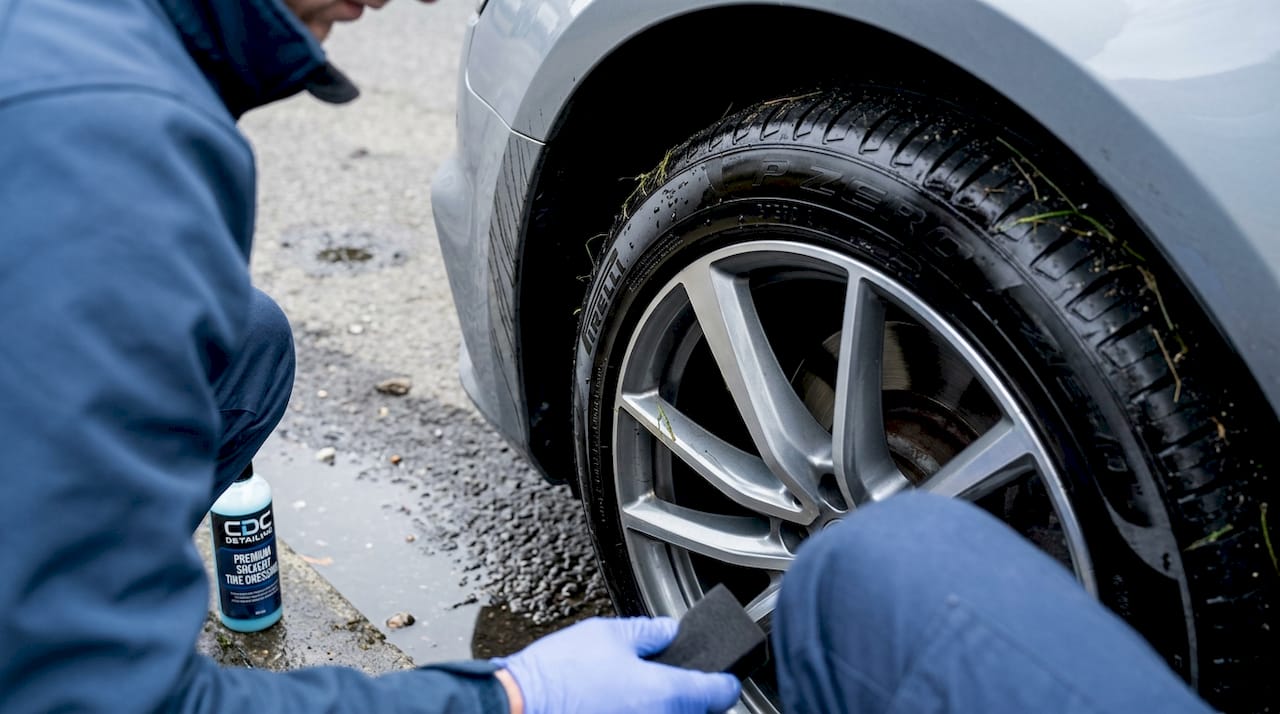
For mobile detailers following solid mobile detailing best practices, the recommendation is almost always water-based for outdoor applications in this region. The environment is unpredictable, and a safe, long-lasting result beats a flashier finish that disappears after the first rainstorm.
Pro Tip: Before applying any dressing, check the product label for the carrier type. If it lists petroleum distillates or silicone in a solvent carrier, it’s solvent-based. If it lists water, emulsifiers, or polymer blends first, it’s water-based. Also, always clean the tire surface with an all-purpose cleaner before dressing. Applying over a dirty tire locks in contaminants and reduces how well the dressing bonds to the rubber.
A reliable vehicle maintenance tracker can help you log when you last dressed your tires, so you reapply on a consistent schedule rather than waiting until the tires look neglected.
Myths and truths: What tire dressing can and cannot do
You’ve seen the technical side, but let’s clear up what tire dressing really delivers and where it can’t deliver on the hype.
The tire care market is full of overblown claims. Products advertise themselves as tire preservatives, life extenders, and performance enhancers. Most of that is marketing. Here’s what the evidence and real-world experience actually show:
-
Myth: Tire dressing extends tire lifespan. The truth is that dressing enhances appearance and UV protection but does not significantly add years to your tire’s functional life. Tire lifespan depends on tread depth, inflation, alignment, driving habits, and rubber compound quality.
-
Myth: More gloss equals more protection. A high-shine finish is a cosmetic result. The actual protection comes from the UV-blocking polymers in the formula, not from how wet or shiny the surface looks. Some matte-finish dressings outperform high-gloss products in UV shielding.
-
Myth: You only need to dress tires when they look bad. Waiting until tires look brown or cracked means the surface oxidation has already progressed. Regular application prevents that stage from arriving, which is why consistent upkeep matters more than reactive fixes.
-
Truth: Tire dressing genuinely prevents surface cracking. UV exposure breaks down the carbon black and anti-ozonants in rubber over time. A good water-based dressing creates a thin protective barrier that slows this process, keeping the sidewall surface more flexible and resistant to surface cracking.
-
Truth: Prep determines results more than product does. A premium dressing applied to a dirty, contaminated tire will underperform a basic dressing applied to a clean, prepped surface every single time.
Understanding how detailing impacts vehicle longevity means recognizing that tire dressing is one piece of a complete exterior care plan, not a standalone miracle. Pair it with proper tire pressure checks and rotation schedules.
Key statistic: According to data on vehicle protection strategies, the majority of tire failures are caused by underinflation, road hazards, and structural issues, not by surface oxidation. Tire dressing addresses the cosmetic and surface layer only. Don’t rely on it as a substitute for mechanical tire maintenance.
The practical takeaway is this: use tire dressing for what it actually does well, which is preserving appearance, blocking UV rays, and keeping rubber from drying out on the surface. Manage your expectations, and you’ll be satisfied every time.
How to use tire dressing for best results (especially via mobile services)
Now, if you want your tires to look great and actually last, here’s the smartest way to get mobile application right.
Proper application is where most DIY attempts fall short. Either the tires aren’t clean enough, too much product gets applied, or the timing is wrong for outdoor conditions. Mobile detailers in South Jersey deal with all of these variables simultaneously, which is why their process matters and is worth following closely.
Here’s the step-by-step method that delivers consistent, professional results:
-
Rinse the tire thoroughly. Remove loose dirt, mud, and brake dust with a pressure rinse or hose before applying any cleaning product.
-
Scrub with a tire-specific cleaner. Use a stiff-bristle tire brush and an all-purpose cleaner or dedicated tire degreaser. Work in circular motions across the full sidewall. Brown staining (tire blooming) from anti-ozonant migration needs direct scrubbing to lift.
-
Rinse again and allow to dry. This step is critical. Applying dressing to a wet tire dilutes the formula and reduces bonding. Give the tire at least a few minutes to dry, or wipe it down with a clean microfiber towel.
-
Apply dressing to an applicator, not directly to the tire. A foam applicator pad gives you controlled, even coverage. Applying directly to the tire tends to over-saturate certain areas.
-
Work the product into the sidewall in even strokes. One thin, even coat is more effective than a thick, globbed-on application. Less product, better result.
-
Wipe off any excess. Run a clean microfiber towel lightly over the surface to catch any pooled product near the rim edge or tread shoulder.
-
Allow full flash time before moving the vehicle. This is the step most people skip.
Pro Tip: Letting the dressing flash fully before driving means waiting 10 to 20 minutes after application before the vehicle moves. This curing window allows the formula to bond to the rubber, which dramatically reduces sling and improves longevity. In South Jersey humidity, adding a few extra minutes to that window is worth it.
For timing in rainy or humid conditions, mobile detailers follow the mobile detailing application principle of working in covered or shaded areas when possible. Direct afternoon sun in New Jersey summers can cause some water-based formulas to dry unevenly on the tire surface before they’ve spread properly. Early morning or shaded applications give the product the best chance to cure correctly.
Your tire cleaning checklist should include dressing reapplication every two to four weeks depending on how much sun and rain exposure your vehicle sees. Vehicles parked outdoors full-time in South Jersey need more frequent attention than garage-kept cars.
Checking regular car care reminders helps you build tire dressing into your overall maintenance calendar so nothing gets skipped through the busy seasons.
Why chasing the highest gloss can hurt more than help
Here’s the honest perspective that most tire product marketers won’t share with you.
We’ve worked on hundreds of vehicles across South Jersey, and one pattern shows up consistently: the customers who insist on that maximum-shine solvent formula are often the ones calling back because their tires look worse after a few weeks than vehicles that got a simple water-based application. The wet-look obsession is understandable but it creates shortcuts that work against the rubber.
Solvent-based overuse doesn’t just cause sling issues. It gradually strips the tire’s natural oils. The rubber becomes more brittle on the surface, and while it may look intense for a day, the underlying condition gets worse with repeated heavy applications. This is exactly why focusing on quality over gloss is the smarter long-term strategy for rubber health.
The best mobile detailers don’t reach for the strongest product available. They reach for the right product for the conditions in front of them. Moderation and preparation beat product strength every single time.
Consistency is also where most DIY tire care breaks down. Applying an aggressive gloss product twice a year isn’t better than applying a quality water-based formula every three weeks. The cumulative protection from regular, moderate applications far outperforms the occasional extreme treatment. Those following mobile care trends in 2025 have started moving away from the “one-and-done” mindset toward scheduled maintenance routines, which is exactly how professionals approach it.
The vehicles that age the best aren’t the ones that got the most product. They’re the ones that got the right product, applied correctly, on a regular schedule.
Enhance your tires with mobile detailing in South Jersey
Ready to see visible, lasting results from expert tire care? Here’s how we can help.
At CDC Auto Detailing, we specialize in mobile services that come to your driveway, your workplace, or your fleet lot across South Jersey. Our tire dressing applications use water-based, rubber-safe formulas matched to local climate conditions, and every application starts with a thorough tire prep so the product actually bonds and lasts.

Whether you own a single vehicle or manage a commercial fleet, we make the process simple. Browse our auto detailing examples to see the quality of results we deliver, learn more about how we implement mobile detailing for a range of vehicles and budgets, or go ahead and book mobile detailing directly online. Protecting your tires the right way is one appointment away.
Frequently asked questions
Does tire dressing extend the life of my tires?
Tire dressing offers UV protection and appearance benefits but does not significantly extend tire lifespan. True tire longevity depends on inflation, rotation, alignment, and structural integrity.
Which tire dressing is best for humid or rainy conditions?
Water-based dressings minimize sling in humid or rainy climates and are the best choice for South Jersey vehicles. They bond more reliably in variable outdoor conditions and are gentler on rubber.
Can applying too much tire dressing cause issues?
Yes, over-applying causes excess product to sling onto paint and wheels while also leaving a coating that never fully cures or bonds properly to the rubber surface.
Do all shiny tires have good protection?
No, high gloss does not equal strong protection. The quality of UV-blocking polymers in the formula matters far more than the final shine level your tires show after dressing.
Is tire dressing safe for all wheels and tires?
Most water-based dressings are safe for standard passenger tires and wheels, but always check the product label for compatibility if you have specialty rims, white-letter tires, or performance-compound rubber.
Recommended
- Tips to maintain wheels and tires – CDC Detailing
- Mobile detailing: save time, protect value, simplify care
- Vehicle Detailing: How It Prolongs Car Lifespan
- Benefits of Mobile Car Detailing for Busy Vehicle Owners
- Auto Maintenance Tracker: Your Guide to Smart Vehicle Care – CarJourney Blog