
TL;DR:
- Exterior detailing removes embedded contaminants and applies protective coatings to extend paint life and preserve resale value. It addresses surface damage caused by environmental factors beyond standard washing, offering deeper cleaning and long-lasting protection. Regular detailing every 3 to 6 months—more frequently in harsh climates—ensures optimal vehicle appearance, safety, and long-term cost savings.
Exterior detailing is a comprehensive cleaning and protection process that removes embedded contaminants, restores paint clarity, and applies protective coatings to shield your vehicle from environmental damage. Understanding why exterior detailing is important goes far beyond keeping your car looking sharp. It directly affects paint longevity, resale value, and the cost of future repairs. Every vehicle exposed to road salt, UV rays, bird droppings, and industrial fallout is accumulating damage that a standard car wash cannot reverse. Professional detailing, using techniques like clay bar treatment, machine polishing, and wax or sealant application, addresses damage at the surface level before it becomes permanent.
What are the main benefits of exterior detailing for your vehicle?
Exterior detailing delivers protection and value that no quick wash can match. The process removes road grime, bird droppings, tree sap, salt, and airborne pollutants that actively degrade your paint. Bird droppings and tree sap contain acidic compounds that etch into clear coat and cause permanent fading if left untreated. That means a single ignored splatter can create a repair bill that far exceeds the cost of a detail.
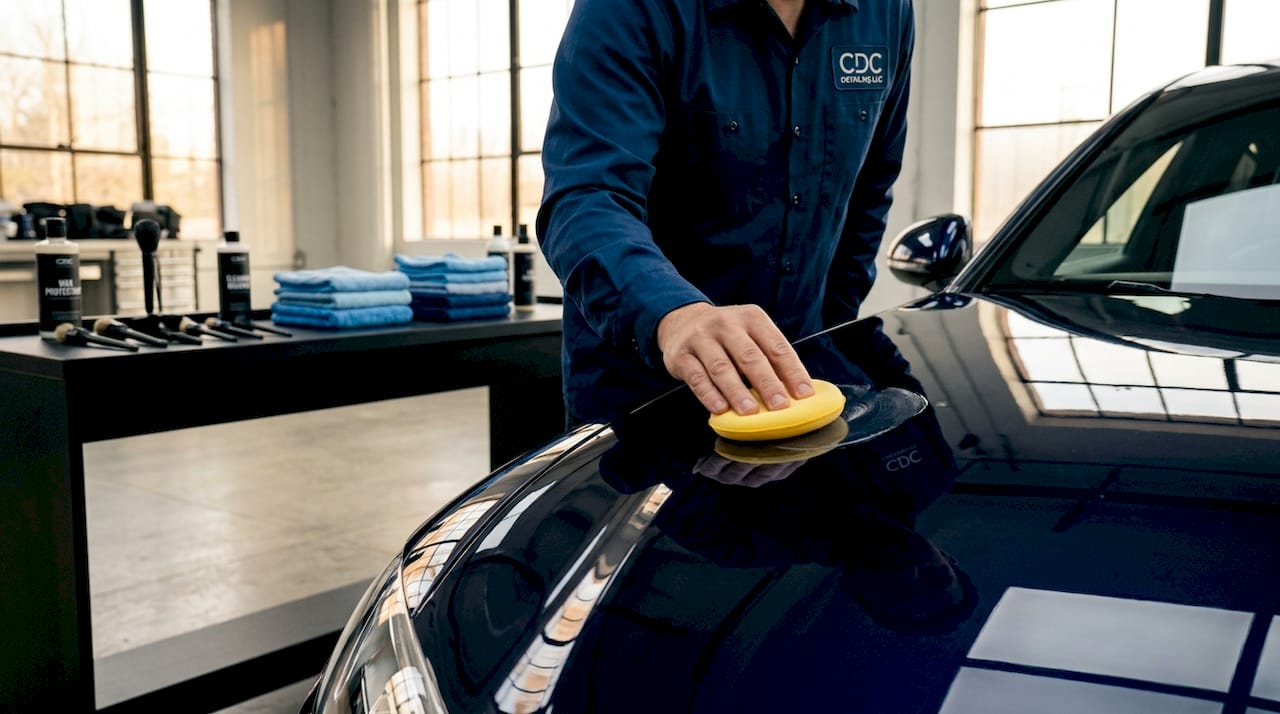
The financial case for regular detailing is straightforward. Well-maintained exteriors command higher resale prices and attract more buyers than neglected vehicles. This is not a cosmetic preference. It reflects the reality that paint damage signals deeper neglect to any informed buyer or dealership appraiser.
Here is a breakdown of the core benefits exterior detailing provides:
- Paint protection: Wax, sealant, or ceramic coating creates a physical barrier against UV rays, rain, salt, and pollution, slowing oxidation and fading.
- Contaminant removal: Clay bar treatment pulls out iron particles, industrial fallout, and road tar that washing leaves behind.
- Resale value preservation: A clean, protected finish signals proper ownership and supports a stronger asking price.
- Safety improvement: Clean headlights, windows, and mirrors directly improve visibility, especially at night or in rain.
- Aesthetic restoration: Polishing removes light scratches and swirl marks, returning depth and gloss to dull paint.
Detailing includes deeper cleaning and protective applications that shield paint and clear coat from UV rays, rain, salt, and pollution in ways that a standard wash simply cannot. This distinction matters because most vehicle owners assume washing is sufficient. It is not. Washing removes surface dirt. Detailing removes what washing leaves behind and then builds a defense layer on top.
How does exterior detailing protect your vehicle’s paint and finish?
Paint protection is the technical core of exterior detailing, and it works through a sequence of steps that address damage at progressively deeper levels. Contaminants like iron particles, brake dust, and industrial fallout bond to clear coat over time. Left in place, they cause oxidation, micro-pitting, and eventually rust at the metal layer beneath.
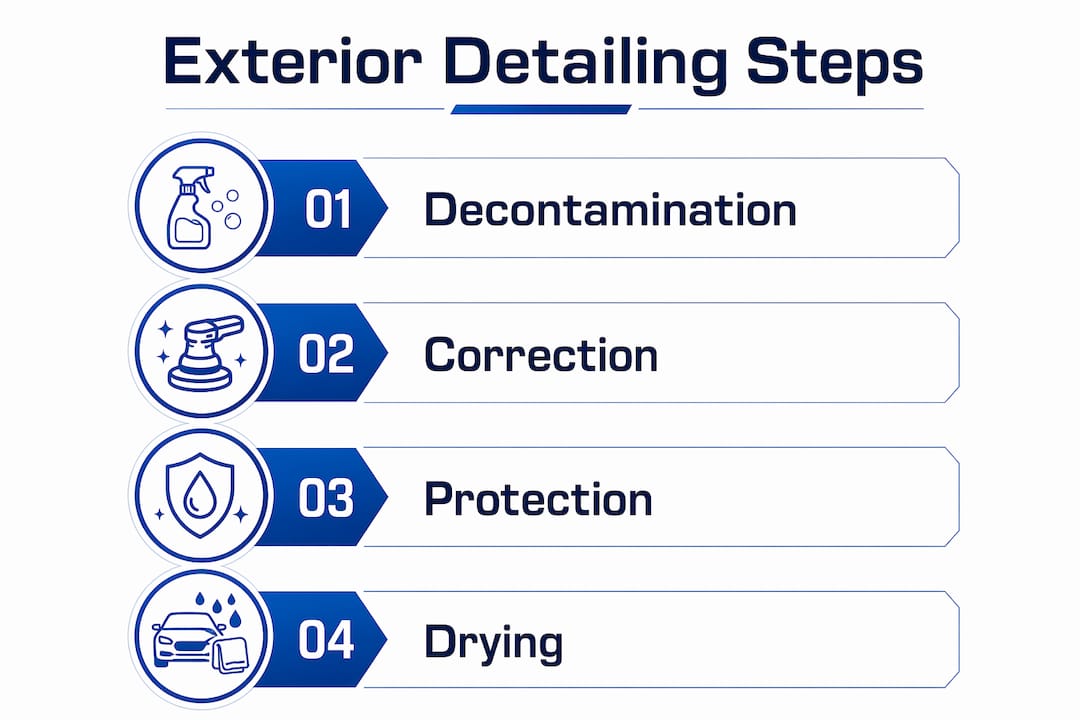
The detailing process addresses this through three primary stages: decontamination, correction, and protection. Decontamination uses a clay bar or iron remover to strip bonded particles from the surface. Correction uses machine polishing with compounds and finishing polishes to remove swirl marks, light scratches, and oxidation. Protection applies a wax, paint sealant, or ceramic coating to seal the corrected surface against future damage.
| Stage | Method | What it addresses |
|---|---|---|
| Decontamination | Clay bar, iron remover | Bonded particles, brake dust, fallout |
| Correction | Machine polish, compound | Swirl marks, light scratches, oxidation |
| Protection | Wax, sealant, ceramic coating | UV rays, moisture, salt, pollution |
One step that most car owners underestimate is drying. Water left to evaporate on the car leaves mineral deposits that form water spots, which are difficult to remove and can cause swirl marks when polishing. This means improper drying after washing actively undoes the protection a detail provides.
Pro Tip: Always dry your vehicle with a clean microfiber towel in a shaded area immediately after washing. Drying in direct sunlight accelerates mineral deposit formation and increases the risk of surface scratching.
Using microfiber towels and drying in shaded conditions prevents the mineral deposits and swirl marks that degrade paint quality over time. Professional detailers treat this step as seriously as the polishing stage, and for good reason. The difference between detailing and a car wash becomes most visible here, where technique and product quality determine whether your paint improves or sustains new damage during the process.
How often should you detail your car’s exterior?
Detailing frequency is not a fixed schedule. It depends on where you drive, how you store your vehicle, and what level of protection you want to maintain. Typical recommendations range from every 3 to 6 months, but that baseline shifts significantly based on your environment. More frequent detailing is necessary in harsh climates or urban settings where contaminant exposure is higher.
Use these factors to determine the right schedule for your vehicle:
- Climate and weather exposure: Vehicles in coastal areas face salt air corrosion. Cars in northern states accumulate road salt during winter. Both require detailing at least every 3 months during high-exposure seasons.
- Urban versus rural driving: Urban driving exposes paint to industrial fallout, exhaust residue, and brake dust at higher rates than rural roads.
- Parking conditions: Outdoor parking under trees accelerates sap and bird dropping accumulation. Garage-stored vehicles can extend intervals to 4 to 6 months.
- Visible signs of wear: Dullness, fading, water beading failure, or visible stains are signals that protection has degraded and detailing is overdue.
- Protective coating type: Vehicles with ceramic coatings maintain protection longer than those with standard wax, which typically lasts 2 to 3 months before reapplication is needed.
Preventative maintenance through detailing reduces oxidation, corrosion, and fading over time, which directly lowers long-term repair costs. Waiting until damage is visible means paying for correction rather than prevention. The cost difference between a routine detail and a full paint correction or respray is substantial.
What parts of your car does exterior detailing cover besides paint?
Exterior detailing is not limited to paint. A thorough service addresses every external surface, and each component benefits from specific cleaning and protection methods. This comprehensive approach is what separates professional detailing from a surface-level wash.
Detailing includes cleaning and protecting wheels, tires, trim, rubber seals, and windows, which guards against cracking, fading, and corrosion across the entire vehicle. Each of these areas degrades through different mechanisms, and each requires a targeted product or technique.
- Wheels and wheel wells: Brake dust is highly corrosive and bonds to wheel surfaces quickly. Dedicated wheel cleaners dissolve iron particles that standard soap cannot remove, preventing pitting and finish degradation.
- Tires: Tire dressing restores a clean, dark appearance and protects rubber from UV-induced cracking and browning caused by ozone exposure.
- Plastic trim and moldings: Unprotected black plastic trim fades to gray within months of sun exposure. Trim restorer or ceramic trim coating locks in color and prevents further oxidation.
- Rubber seals and weatherstripping: Rubber dressing keeps door and window seals supple, preventing cracking that leads to water leaks and wind noise.
- Glass surfaces: Proper glass cleaning removes water spots, road film, and wiper residue. Applying a hydrophobic glass sealant like Rain-X or a professional equivalent improves visibility in rain by causing water to bead and sheet off at speed.
Clean headlights deserve specific attention. Oxidized plastic headlight lenses reduce light output significantly, which is a direct safety concern on unlit roads. Headlight restoration, a standard part of many exterior detailing packages, removes yellowing and restores clarity without replacing the entire assembly.
Key takeaways
Exterior detailing protects paint, preserves resale value, and prevents long-term damage by removing contaminants and applying protective coatings that basic washing cannot provide.
| Point | Details |
|---|---|
| Detailing goes beyond washing | Clay bar treatment, polishing, and protective coatings address damage that soap and water leave behind. |
| Contaminants cause permanent damage | Bird droppings, tree sap, and road salt etch into clear coat and must be removed and sealed regularly. |
| Resale value depends on paint condition | A well-maintained exterior commands higher prices and signals proper ownership to buyers. |
| Frequency depends on environment | Coastal, urban, and winter-road vehicles need detailing every 3 months; garaged vehicles can extend to 6 months. |
| Detailing covers more than paint | Wheels, tires, trim, seals, glass, and headlights all require specific care to prevent cracking, fading, and corrosion. |
Why I think most car owners are protecting the wrong thing
Most vehicle owners focus on the interior. They vacuum regularly, use seat covers, and keep the dashboard clean. The exterior gets a wash when it looks dirty. That approach is backwards, and I have seen the results of it hundreds of times.
Paint damage is cumulative and largely invisible until it crosses a threshold. By the time you notice fading, dullness, or rust bubbling under the clear coat, the damage has been building for months or years. A detail at that stage is no longer maintenance. It is correction, and correction costs significantly more.
The misconception I hear most often is that a regular car wash provides adequate protection. It does not. Washing removes loose surface dirt. It does not remove bonded contaminants, it does not restore oxidized paint, and it does not apply any protective layer. Professional techniques and products provide a deeper clean and longer-lasting protection than any DIY wash or drive-through service can deliver.
I also think the DIY versus professional debate misses the point for most people. If you have the right products, the right tools, and the time to do it properly, DIY detailing is a legitimate option. But most car owners do not have a dual-action polisher, a proper clay bar kit, or the technique to use them without creating new swirl marks. In those cases, professional detailing is not a luxury. It is the only way to get the job done without making things worse.
Treat exterior detailing as investment protection rather than cosmetic upkeep, and the math changes completely. You are not spending money to make your car look nice. You are spending money to avoid a far larger expense later.
— Charles
Protect your vehicle’s exterior with Cdcautodetailing

Cdcautodetailing provides professional mobile exterior detailing services across South Jersey, bringing expert-level paint protection directly to your driveway. The team uses professional-grade clay bars, machine polishers, and high-quality sealants and coatings to deliver results that protect your paint and preserve your vehicle’s value. Whether your car needs a full decontamination and polish or a protective coating to guard against the next season of road salt and UV exposure, Cdcautodetailing has a service built for it. Explore the full range of exterior detailing services available, or learn more about advanced paint protection options like ceramic coating for long-term defense against environmental damage.
FAQ
Why is exterior detailing important for my car?
Exterior detailing removes bonded contaminants, restores paint clarity, and applies protective coatings that prevent oxidation, fading, and corrosion. It preserves both the appearance and resale value of your vehicle over time.
How is exterior detailing different from a regular car wash?
A car wash removes loose surface dirt. Detailing uses clay bar treatment, machine polishing, and sealant or wax application to address embedded contaminants and provide lasting paint protection that washing cannot deliver.
How often should I get my car’s exterior detailed?
Most vehicles benefit from detailing every 3 to 6 months. Vehicles exposed to coastal salt air, road salt in winter, or heavy urban pollution should be detailed closer to every 3 months to maintain adequate protection.
Does exterior detailing actually protect paint from UV damage?
Wax, paint sealant, and ceramic coatings each create a physical barrier between your clear coat and UV rays, slowing oxidation and color fading. Without this layer, UV exposure degrades clear coat within months in high-sun climates.
Can exterior detailing improve my car’s resale value?
A well-maintained exterior directly supports a higher resale price. Buyers and dealership appraisers assess paint condition as a primary indicator of overall vehicle care, making regular detailing one of the most financially sound maintenance habits you can build.