
What are the best window tints for UV protection in vehicles?
The most effective window tints for UV protection block 99% or more of UVA and UVB radiation. Ceramic and nano-ceramic films sit at the top of that list, and they do it regardless of how dark or light the tint appears. Clear ceramic film at 70% VLT blocks the same UV as a near-opaque limo tint. The technology in the film does the work, not the darkness.
Here is what to look for when choosing a film:
- Ceramic or nano-ceramic film: Blocks nearly all UVA and UVB; best heat rejection; no signal interference; long lifespan
- Carbon film: Blocks most UV; good durability; no signal interference; no metallic sheen
- Metallic film: High UV rejection; reflective appearance; can interfere with GPS and mobile signals
- Dyed film: Entry-level UV protection; degrades faster; UV performance decreases noticeably with time
The Skin Cancer Foundation awards its Seal of Recommendation only to films that independently verify 99%+ UVA and UVB blockage. That seal is the clearest third-party signal that a product delivers on its UV claims. SunTek’s ceramic series, for example, carries that designation.
Legal compliance matters too. Every U.S. state sets its own visible light transmission (VLT) limits for side, rear, and windshield windows. Confirming local regulations before installation keeps you protected and street-legal.
How does window tint protect from UV rays, and what else does it do?
Factory glass is not doing the job most drivers assume. The front windshield blocks about 94% of UVA, but the driver’s side window blocks only 71%. That gap is why drivers accumulate asymmetrical UV damage on their left arm and face over years of daily commuting.
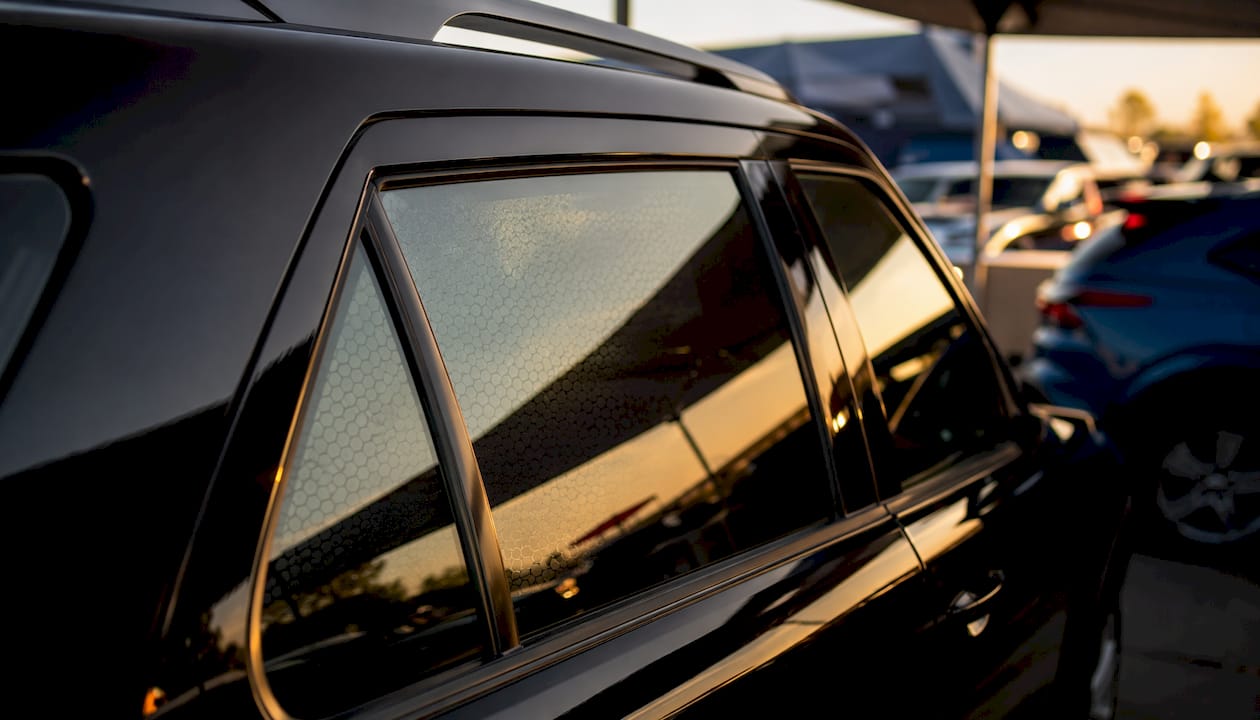
Window tint works by adding a layer of polyester film embedded with UV inhibitors. That layer absorbs or reflects UV radiation before it reaches the cabin. The key distinction: UV rejection is a property of the film’s chemistry, not its color. A clear ceramic film performs identically to a dark one on UV.
Beyond skin protection, quality films deliver several measurable benefits:
- Heat rejection: Ceramic films block a significant portion of infrared heat, keeping cabin temperatures lower without air conditioning working as hard
- Glare reduction: Less sun glare means less eye strain on long drives
- Interior preservation: UV rays fade dashboards, leather, and upholstery; blocking them slows that deterioration significantly
- Safety: Some films add shatter resistance, holding glass together on impact
One important caveat: UV protection only works when windows are fully closed and the film is intact. A cracked or peeling film reduces protection, and an open window eliminates it entirely.
| Benefit | What it means for you |
|---|---|
| UV blockage (99%+) | Reduces cumulative skin damage and skin cancer risk |
| Infrared heat rejection | Cooler cabin, lower A/C load |
| Glare reduction | Better visibility, less eye fatigue |
| Interior UV shielding | Slows fading of dash, seats, and trim |
| Shatter resistance | Added safety in collisions |
How do the main window tint technologies compare on UV protection?
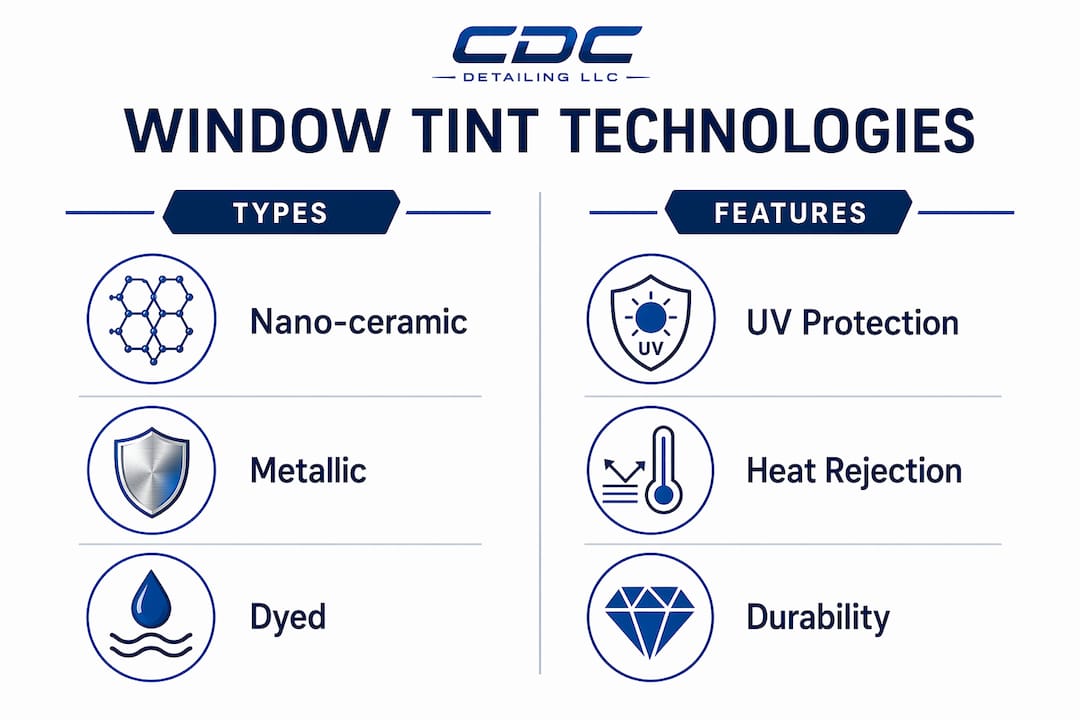
Three film technologies dominate the automotive market: ceramic, metallic, and dyed. Their UV performance, heat rejection, and longevity differ enough that the choice genuinely matters over the life of the film.
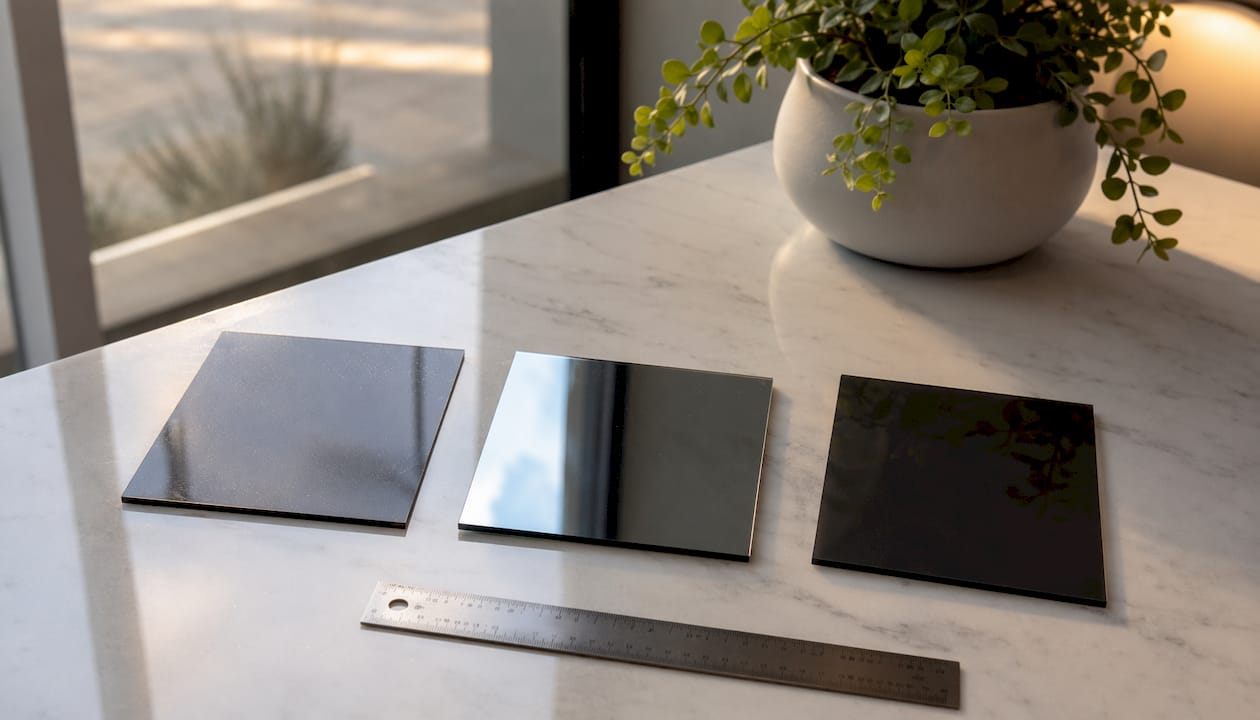
Nano-ceramic films outperform both dyed and metallic types on every meaningful metric: UV rejection, heat rejection, optical clarity, and lifespan. They also avoid the signal interference problem that makes metallic films a dealbreaker for most drivers today.
| Film type | UV protection | Heat rejection | VLT range | Durability/warranty |
|---|---|---|---|---|
| Nano-ceramic | Nearly complete | Significant infrared | Any (clear to dark) | Long lifespan; commonly includes extended warranties |
| Carbon | High | Moderate | Any | Medium lifespan |
| Metallic | High | Moderate (reflective) | Any | Medium lifespan |
| Dyed | Variable; degrades | Low | Any | Short lifespan before UV drop-off |
Tint World offers product lines across these technology tiers, with certified expert installation and industry warranties that cover fading, peeling, and UV performance. For drivers who want a nationwide network with proven installation standards, Tint World is a reliable starting point.
The Skin Cancer Foundation does not install tint, but its Seal of Recommendation is the most credible external validator in this space. Films carrying that seal have submitted independent data proving 99%+ UVA and UVB blockage. When evaluating any film brand, checking for that seal removes the guesswork.
CDC Detailing LLC specializes in high-grade ceramic window tint with certified installation and verified 99%+ UV protection. For vehicle owners in South Jersey who want a mobile service with long-term warranties and films that meet health-organization standards, CDC Detailing LLC is the strongest fit in this comparison.
How do you choose the right tint shade without breaking state law?
The single biggest misconception in window tinting is that darker means better UV protection. It does not. UV protection is independent of tint darkness; a clear ceramic film at 70% VLT blocks as much UV as a 5% limo tint. Shade selection is really about privacy, glare control, and staying within your state’s legal limits.
VLT percentage measures how much visible light passes through the film. Lower VLT means darker tint. Every state sets minimum VLT levels for different windows, and those limits vary considerably. Some states allow 20% VLT on rear side windows; others require 35% or higher. Windshields are the most restricted, with most states permitting only a narrow tinted strip at the top.
Factors to weigh when choosing a shade:
- State VLT minimums: Check your state’s specific limits for front side, rear side, and rear windows before selecting a shade
- Windshield rules: Most states prohibit tinting the main windshield area; a clear ceramic film is the legal way to get UV protection there
- Privacy vs. visibility: Darker shades improve privacy and reduce glare but can reduce nighttime visibility
- Medical exemptions: Many states issue exemptions for conditions like lupus that require reduced sun exposure; ask your installer about the process
- Rear window flexibility: Rear windows typically allow darker tints, giving you more options for passengers and cargo privacy
Pro Tip: If you want maximum UV protection on your windshield without violating the law, ask your installer about clear ceramic windshield film. It blocks 99% of UV with no visible darkening and is legal in virtually every state.
Always confirm local tinting laws before your appointment. An installer who does not ask about your state’s regulations is a red flag.
What should you look for in a window tint installer?
Installation quality directly determines how long UV protection lasts. A poorly applied film bubbles, peels, and loses UV performance far sooner than its rated lifespan. Certified expert installation is not a marketing phrase; it reflects training in surface preparation, film handling, and adhesive curing that most DIY attempts skip.
When evaluating an installer, check for:
- Certified technicians: Look for installers trained and certified by film manufacturers or industry associations
- Film brand transparency: A trustworthy installer names the specific film brand and series, not just “ceramic tint”
- Warranty coverage: Quality installations come with warranties covering fading, bubbling, peeling, and UV performance, often for 10+ years
- Health organization endorsements: Installers using films with the Skin Cancer Foundation’s Seal of Recommendation are working with independently verified products
- Customer reviews: Look for consistent mentions of clean edges, no bubbles, and long-term durability, not just overall star ratings
- Service transparency: A good installer explains VLT options, state legal limits, and what the warranty actually covers before you sign anything
Avoid any shop that cannot tell you the film’s UV rejection percentage or refuses to provide warranty documentation in writing.
CDC Detailing LLC’s approach to premium UV window tint
CDC Detailing LLC uses high-grade ceramic films that deliver verified 99%+ UV protection across all VLT levels, from clear windshield film to darker side and rear applications. Every installation is handled by certified technicians who follow manufacturer-specified surface prep and curing protocols, which is what keeps the film performing at spec for the full warranty period.
What sets CDC Detailing LLC apart for South Jersey vehicle owners:
- Mobile service: Installation comes to your location, eliminating the shop wait
- Certified installers: Technicians trained on the specific films they apply, not generalists
- Verified UV performance: Films used meet the 99%+ UV blockage standard aligned with Skin Cancer Foundation criteria
- Long-term warranties: Coverage against fading, peeling, bubbling, and UV degradation
- Full-service context: Window tinting is part of a broader premium detailing offering that includes ceramic coatings and paint protection film
Pro Tip: Ask your installer to show you the film’s technical data sheet before installation. It should list UV rejection percentage, infrared rejection rate, and warranty terms. If they cannot produce it, choose a different shop.
For a deeper look at what professional tinting delivers beyond UV protection, the difference between a certified install and a budget shop becomes clear fast.
What does proper window tint installation actually involve?
A quality installation starts well before the film touches the glass. The installer cleans every window surface thoroughly, removing dust, oils, and any existing adhesive residue. Contamination trapped under the film causes bubbles and early adhesion failure, both of which compromise UV performance.
The film is cut to exact window dimensions, applied wet with a slip solution, then squeegeed flat to remove air and excess liquid. Edges are trimmed precisely to avoid lifting. After application, the adhesive needs time to cure fully, which is why most installers advise keeping windows closed for three to five days. Opening them too early can shift the film before the bond sets.
Temperature matters during installation. Extreme cold slows adhesive curing; extreme heat can cause the film to stretch unevenly. Professional shops control for this; garage or parking-lot DIY installs often cannot. The result of a rushed or poorly controlled install is visible within weeks: haze, bubbles, or lifting edges that let UV through.
How do you maintain window tint to keep UV protection effective?
The film’s UV rejection holds for its rated lifespan only if the film stays intact and clean. Damage from improper cleaning is the most common way drivers unknowingly reduce their protection.
Use ammonia-free cleaners exclusively. Ammonia breaks down the film’s adhesive layer and causes discoloration in dyed films. Standard glass cleaners like Windex contain ammonia and should never touch tinted windows. Products labeled “tint-safe” or “ammonia-free” are the right choice.
A few maintenance habits that preserve performance:
- Soft microfiber cloths only: Abrasive materials scratch the film surface, creating haze that reduces optical clarity over time
- Inspect edges regularly: Lifting or peeling edges let UV in and signal adhesion failure; address them early before the film separates further
- Avoid sharp objects near windows: Scraping ice or debris off tinted glass cuts through the film
- Keep windows closed after washing: Water forced under a lifting edge accelerates delamination
- Check film condition annually: Dyed films in particular lose UV performance as they age; a professional inspection catches degradation before it becomes a health issue
Quality ceramic films maintain their 99% UV rejection for the full 10+ year lifespan when cared for properly. Lower-grade dyed films degrade faster, and the UV drop-off is not always visible to the naked eye.
Cdcautodetailing brings mobile ceramic tinting to South Jersey
If you want the UV protection this article covers without driving to a shop and waiting, Cdcautodetailing offers a direct alternative. The mobile service comes to your home or workplace across South Jersey, installs high-grade ceramic window tint with certified technicians, and backs every job with a long-term warranty.
Cdcautodetailing’s window tinting service uses films that meet the 99%+ UV blockage standard, the same threshold used by the Skin Cancer Foundation for its Seal of Recommendation. The difference from a standard shop is the mobile format and the full-service context: window tinting, ceramic coatings, and paint protection film are all available from one certified team. For vehicle owners who want verified UV protection installed correctly and conveniently, that combination is worth a look at what mobile detailing delivers.
Key Takeaways
Ceramic window film blocking 99%+ of UVA and UVB rays is the most effective UV protection upgrade a vehicle owner can make, and tint darkness has no bearing on that protection level.
| Point | Details |
|---|---|
| Factory glass falls short | Side windows block as little as 71% of UVA, making aftermarket film necessary for real protection. |
| Ceramic film leads on UV | Nano-ceramic films block 99%+ UV and 40–60% of infrared heat, with lifespans of 10+ years. |
| Darkness does not equal protection | UV rejection comes from film technology, not VLT; a clear ceramic film blocks as much UV as dark tint. |
| Certification matters | The Skin Cancer Foundation’s Seal of Recommendation confirms independent verification of 99%+ UV blockage. |
| Cdcautodetailing for South Jersey | CDC Detailing LLC offers certified mobile ceramic tint installation with verified 99%+ UV protection and long-term warranties. |