
Busy mornings in South Jersey can turn stressful when an unexpected car odor lingers during your daily drive. Unpleasant smells from old spills, gym clothes, or pet hair can quickly make any commute uncomfortable, especially for families and professionals always on the go. By understanding the core principles behind effective car odor removal, you gain the tools to identify, eliminate, and prevent stubborn odors, keeping your vehicle fresh and healthy for everyone who rides inside.
Table of Contents
- What Is Car Odor Removal? Key Principles
- Types of Car Odors and Their Causes
- How Professional Odor Removal Works
- DIY Techniques and Safety Precautions
- Common Mistakes and Effectiveness Compared
Key Takeaways
| Point | Details |
|---|---|
| Identify Odor Sources | Understanding and locating the source of car odors is crucial for effective treatment and prevention. |
| Professional Detailing Techniques | Utilizing advanced cleaning and neutralizing methods can achieve more thorough and long-lasting odor removal compared to DIY approaches. |
| Regular Maintenance | Implementing a routine maintenance schedule and promptly addressing spills can prevent odors from becoming deeply embedded in vehicle interiors. |
| Documentation of Odors | Keeping track of specific odors and their characteristics can help in formulating the most effective removal strategy. |
What Is Car Odor Removal? Key Principles
Car odor removal represents a comprehensive process of eliminating unpleasant smells and restoring a fresh interior environment in vehicles. The primary goal is to identify, neutralize, and prevent odor-causing agents that can compromise your driving experience.
Understanding car odors requires recognizing their diverse origins. Sources of vehicle odors typically include:
- Spilled food and beverages
- Cigarette smoke residue
- Pet dander and hair
- Mold and mildew from moisture
- Sweaty workout clothes
- Chemical off-gassing from new materials
The fundamental principles of car odor removal involve a systematic approach targeting multiple potential contamination sources. This means not just masking smells, but comprehensively cleaning and treating vehicle interiors to eliminate odor-causing bacteria, fungi, and organic compounds.
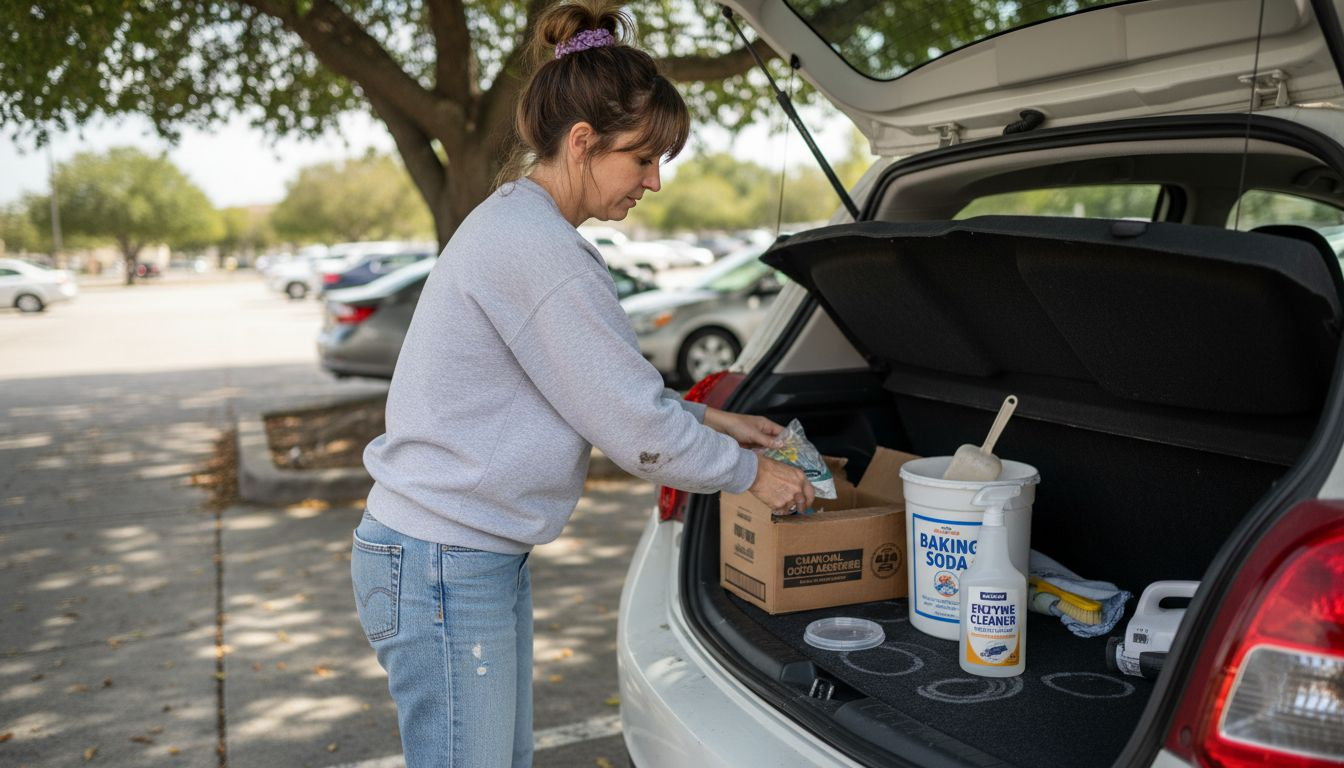
Effective odor management requires understanding that smells are complex molecular interactions. Professional detailing techniques go beyond surface cleaning, implementing targeted odor control strategies that address root causes through physical, chemical, and biological methods.
Key Principles of Car Odor Removal:
- Identify the specific odor source
- Remove organic matter and debris
- Deep clean all interior surfaces
- Sanitize ventilation systems
- Use appropriate neutralizing agents
- Implement preventative maintenance
Pro tip: Always address vehicle odors promptly, as lingering smells can become deeply embedded in fabrics and hard-to-reach areas, making future removal significantly more challenging.
Types of Car Odors and Their Causes
Vehicle interiors can develop a wide range of odors, each signaling different underlying issues that require specific attention. Common car odors manifest through various sensory experiences, providing critical diagnostic information about your vehicle’s condition.
Understanding these odor types helps vehicle owners diagnose potential mechanical or environmental problems:
- Musty/Moldy Odors: Often indicate water leaks or clogged air conditioning drainage systems
- Sour/Sweaty Smells: Typically result from spilled liquids, dirty gym clothes, or accumulated perspiration
- Chemical/Fuel-Like Odors: May signal engine problems or emission system malfunctions
- Food Residue Smells: Caused by forgotten food items, spills, or improper cleaning
Specific Odor Indicators and Their Potential Causes:
- Burning Rubber: Potentially indicates belt misalignment or brake system issues
- Sweet Syrupy Smell: Often points to coolant system leaks
- Rotten Egg Odor: Could signify catalytic converter problems
- Gasoline Smell: Might suggest evaporative emission system faults
Automotive odor diagnostics reveal that each unique smell provides valuable insights into your vehicle’s health. These olfactory signals can reveal hidden mechanical issues before they escalate into more significant problems.
Most odors stem from organic matter accumulation, microbial growth, mechanical malfunctions, or environmental contamination. Recognizing these sources allows for targeted cleaning and maintenance strategies that preserve your vehicle’s interior quality and driving experience.
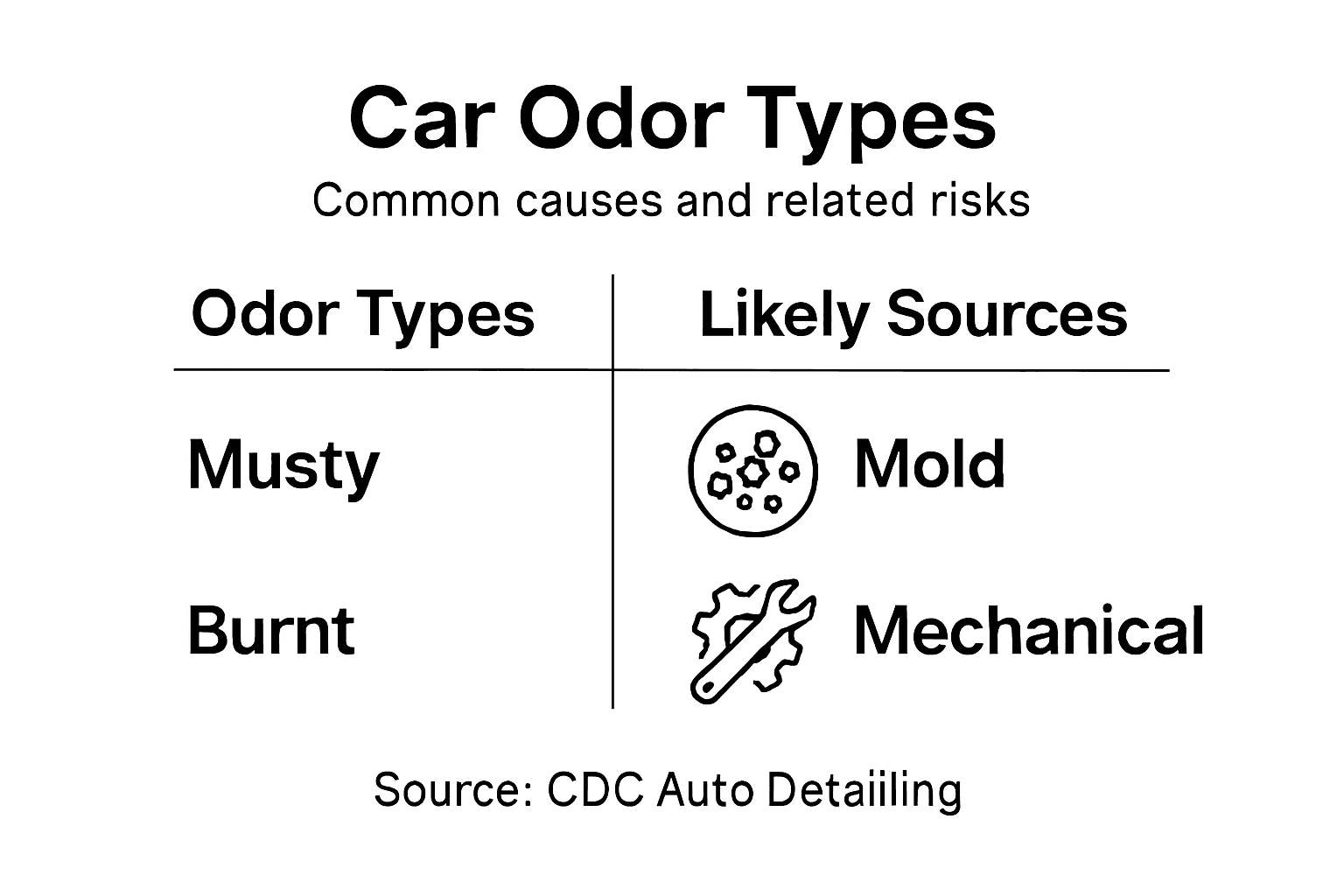
Pro tip: When encountering persistent or unusual vehicle odors, document the smell’s characteristics and consult a professional automotive technician to prevent potential long-term damage.
Here’s a quick reference comparing common car odors, their likely sources, and possible risks:
| Odor Type | Likely Source | Potential Risk |
|---|---|---|
| Musty/Moldy | Water leak, clogged drain | Mold growth, allergies |
| Chemical/Fuel-Like | Engine issues, fuel leak | Fire hazard, health risk |
| Rotten Egg | Emission system, exhaust | Pollution, vehicle damage |
| Food Residue | Spills, forgotten foods | Bacteria, persistent smell |
| Burning Rubber | Belt/brake issue | Mechanical failure risk |
| Sweet Syrupy | Coolant leak | Engine overheating |
How Professional Odor Removal Works
Professional odor removal represents a sophisticated scientific approach that goes far beyond simple surface cleaning. Advanced odor elimination technologies employ multiple strategic methods to capture, neutralize, and permanently remove offensive vehicle interior odors.
The primary professional techniques for comprehensive odor management include:
- Activated Carbon Adsorption: Captures volatile organic compounds
- Wet Scrubbing: Chemically neutralizes odor-causing molecules
- Biological Treatments: Breaks down organic odor sources
- Ozone Treatment: Oxidizes and eliminates molecular contaminants
- Enzymatic Cleaning: Targets specific organic matter
Professional Odor Removal Process:
- Comprehensive vehicle interior inspection
- Identify specific odor sources
- Select appropriate removal technique
- Apply targeted treatment
- Verify complete odor elimination
- Implement preventative measures
Sophisticated odor control methods involve precise scientific approaches that address odors at their molecular level. Professional technicians utilize specialized equipment and techniques that go beyond consumer-grade solutions, ensuring complete and long-lasting odor removal.
Understanding the complexity of odor molecules allows professionals to develop tailored strategies that address the root cause of unpleasant smells. These methods involve careful analysis of the vehicle’s interior environment, identifying specific contaminants, and applying precisely targeted treatments that neutralize odors without damaging sensitive interior materials.
Pro tip: Always request a detailed explanation of the odor removal process from professionals, ensuring they can articulate the specific techniques they will use for your vehicle’s unique situation.
The following table summarizes key differences between DIY and professional car odor removal methods:
| Aspect | DIY Approach | Professional Service |
|---|---|---|
| Effectiveness | Moderate, may miss hidden odors | High, addresses root causes |
| Convenience | Time-consuming, hands-on | Quick, handled by experts |
| Cost | Low, mainly cleaning supplies | Higher, specialized equipment |
| Safety | Depends on product knowledge | Follows strict protocols |
DIY Techniques and Safety Precautions
Vehicle odor removal requires strategic cleaning approaches and careful safety considerations. DIY car odor elimination demands a systematic and methodical approach to ensure both effectiveness and personal safety.
Essential DIY odor removal techniques include:
- Deep Interior Cleaning:
- Vacuum all surfaces thoroughly
- Shampoo carpets and fabric seats
- Clean hard surfaces with appropriate cleaners
- Ventilation Strategies:
- Open windows during and after cleaning
- Use fans to circulate fresh air
- Allow complete air exchange
- Natural Odor Absorbers:
- Activated charcoal
- Baking soda
- White vinegar
- Coffee grounds
Safety Precautions for DIY Odor Removal:
- Wear protective gloves
- Use non-toxic, vehicle-safe cleaning agents
- Work in well-ventilated areas
- Avoid mixing different chemical cleaners
- Read all product labels carefully
- Test cleaning solutions on small areas first
Homeowner odor control strategies emphasize the importance of regular maintenance and immediate spill cleanup. Prompt action prevents odor molecules from penetrating deep into vehicle fabrics and surfaces.
Professional-grade results require attention to detail and understanding of how odors develop and persist. By combining thorough cleaning techniques with careful product selection, vehicle owners can effectively manage and eliminate unwanted interior smells without compromising their health or vehicle’s interior quality.
Pro tip: Create a consistent cleaning routine and address spills immediately to prevent stubborn odors from becoming established in your vehicle’s interior.
Common Mistakes and Effectiveness Compared
Vehicle odor removal requires strategic approaches and understanding of common pitfalls that can undermine cleaning efforts. Car odor elimination mistakes often stem from superficial treatments that fail to address underlying causes.
Common Mistakes in Odor Removal:
- Merely masking odors with air fresheners
- Neglecting hidden areas like under seats
- Using inappropriate or harsh cleaning chemicals
- Ignoring HVAC system contamination
- Failing to replace cabin air filters
- Not addressing spills and stains promptly
Effectiveness Comparison:
- Temporary Solutions (Low Effectiveness):
- Air fresheners
- Spray deodorizers
- Scented clips
- Moderate Solutions (Medium Effectiveness):
- Surface cleaning
- Basic vacuuming
- Consumer-grade cleaners
- Comprehensive Solutions (High Effectiveness):
- Professional deep cleaning
- HVAC system sanitization
- Complete interior detailing
Odor control strategies emphasize the importance of identifying and eliminating odor sources rather than simply covering them up. Understanding the root cause allows for targeted, more effective treatments that provide long-lasting results.
Successful odor removal requires a multifaceted approach that combines thorough cleaning, proper ventilation, and targeted treatment of specific contamination sources. Vehicle owners must be willing to invest time and effort in comprehensive cleaning techniques that address both visible and hidden areas.
Pro tip: Document the specific type and location of odors before beginning treatment to develop the most effective removal strategy.
Restore Your Car’s Freshness with Professional Odor Removal Solutions
Unpleasant vehicle odors can disrupt your driving comfort and may signal hidden issues such as mold or mechanical problems. This article highlights the importance of identifying specific odor sources and using deep cleaning and targeted treatments rather than temporary masking. Whether dealing with musty smells, pet dander, or chemical odors, taking prompt and effective action is key to maintaining a healthy and enjoyable car interior.
At CDC Auto Detailing, we specialize in comprehensive mobile car detailing services across South Jersey that address these exact challenges. Our expert team applies advanced cleaning and odor removal techniques that go beyond surface treatments to eliminate odors at their source. From thorough interior cleaning to ventilation system sanitization, our premium services deliver long-lasting freshness and protect your vehicle’s value.

Don’t let stubborn odors reduce your car’s comfort and appeal. Visit CDC Auto Detailing today to schedule your professional odor removal service. Experience the convenience of at-home care with trusted experts committed to restoring freshness and enhancing your driving experience now.
Frequently Asked Questions
What are the common sources of car odors?
Common sources of car odors include spilled food and beverages, cigarette smoke residue, pet dander and hair, mold and mildew from moisture, sweaty workout clothes, and chemical off-gassing from new materials.
How can I effectively remove odors from my car interior?
Effective car odor removal involves identifying the specific odor source, removing organic matter and debris, deep cleaning all surfaces, sanitizing ventilation systems, and using appropriate neutralizing agents.
What methods do professionals use for car odor removal?
Professionals utilize multiple techniques for odor removal, including activated carbon adsorption, wet scrubbing, biological treatments, ozone treatment, and enzymatic cleaning, ensuring comprehensive and long-lasting results.
What DIY techniques can help eliminate car odors?
DIY techniques include deep cleaning the interior by vacuuming surfaces, using natural odor absorbers like baking soda and activated charcoal, and allowing for proper ventilation during the cleaning process.
Recommended
- Interior detailing for pet owners: How to deal with hair and odors – CDC Detailing
- 7 Key Signs Your Car Needs Detailing Now for Best Results
- 7 Clear Signs You Need Professional Detailing Help
- How to Clean Auto Upholstery Naturally for Lasting Results
- How to Store Perfume for Lasting Fragrance Quality
- Indoor Humidity Control: Protecting Comfort and Health – HVAC Service and Repair | Louisville, KY | Project Heating & Cooling