
Most American vehicles lose thousands in resale value simply due to neglected interiors. For busy South Jersey drivers, keeping upholstery spotless can feel almost impossible between work, family, and outdoor adventures. Making smart, natural cleaning choices not only protects your car’s surfaces but also safeguards your health, saving time, money, and frustration in the long run.
Table of Contents
- Step 1: Prepare Upholstery And Gather Safe Cleaning Supplies
- Step 2: Vacuum Thoroughly To Remove Loose Dirt And Debris
- Step 3: Apply Natural Cleaning Solution To Treat Stains
- Step 4: Scrub Upholstery Gently For Deep Cleaning
- Step 5: Blot And Dry Surfaces To Prevent Water Damage
- Step 6: Inspect Results And Repeat Steps For Persistent Stains
Quick Summary
| Key Takeaway | Explanation |
|---|---|
| 1. Gather Safe Cleaning Supplies | Use natural ingredients like baking soda and vinegar for effective, non-toxic cleaning. |
| 2. Vacuum Thoroughly Before Cleaning | A comprehensive vacuum removes loose debris, setting the groundwork for deeper cleaning. |
| 3. Test Solutions Before Application | Always test cleaning solutions on hidden upholstery areas to ensure compatibility. |
| 4. Blot, Don’t Rub, Moisture | Blotting removes water efficiently, preventing damage and mold growth in upholstery. |
| 5. Inspect and Repeat for Stains | Systematically check results; repeat treatments if stains persist for thorough cleaning. |
Step 1: Prepare Upholstery and Gather Safe Cleaning Supplies
Cleaning your car’s upholstery naturally requires strategic preparation and selecting the right non toxic supplies. By gathering safe ingredients and setting up your workspace correctly, you will protect both your vehicle’s interior and your health during the cleaning process.
Start by thoroughly vacuuming the upholstery to remove loose dirt, dust, and debris. Pay special attention to crevices, seams, and hard-to-reach areas where particles accumulate. For fabric seats, use a soft brush attachment to prevent fabric damage. Leather and vinyl surfaces need gentler treatment with specialized vacuum nozzles. Gathering safe cleaning ingredients involves assembling natural supplies like baking soda, castile soap, white vinegar, and microfiber cloths. Recommended tools include spray bottles, soft-bristled brushes, and clean white towels for blotting and wiping.
Before applying any cleaning solution, test it on a small inconspicuous area to ensure the fabric tolerates the treatment. Some upholstery materials are more delicate and might react differently to natural cleaners. Always work in a well-ventilated space and wear protective gloves to prevent skin irritation.
Pro Tip: Keep a dedicated set of cleaning microfiber cloths for automotive use to prevent cross-contamination and maintain professional-level cleaning standards.
The following table summarizes safe cleaning tools and their benefits for different upholstery materials:
| Cleaning Tool | Best For | Primary Benefit |
|---|---|---|
| Microfiber cloth | All surfaces | Lint-free cleaning, avoids scratches |
| Soft-bristled brush | Fabric seats | Lifts dirt without damaging fibers |
| Natural fiber scrub pad | Cloth/vinyl | Deeper clean with gentle abrasion |
| Specialized vacuum nozzle | Leather/vinyl | Removes debris without surface scuffs |
Step 2: Vacuum Thoroughly to Remove Loose Dirt and Debris
Preparing your car’s upholstery for a deep natural cleaning starts with comprehensive dirt removal. A thorough vacuuming will extract loose particles and create a clean foundation for subsequent treatments.
Systematic vacuuming techniques are critical for effective dirt extraction. Begin by selecting the appropriate upholstery attachment matching your seat material fabric or leather. Use slow overlapping strokes to maximize dirt collection. Focus on high traffic areas like seat cushions and edges where debris tends to accumulate. Move your vacuum attachment methodically across surfaces using consistent gentle pressure. Pay special attention to seams, crevices, and corners where dust and small particles hide.
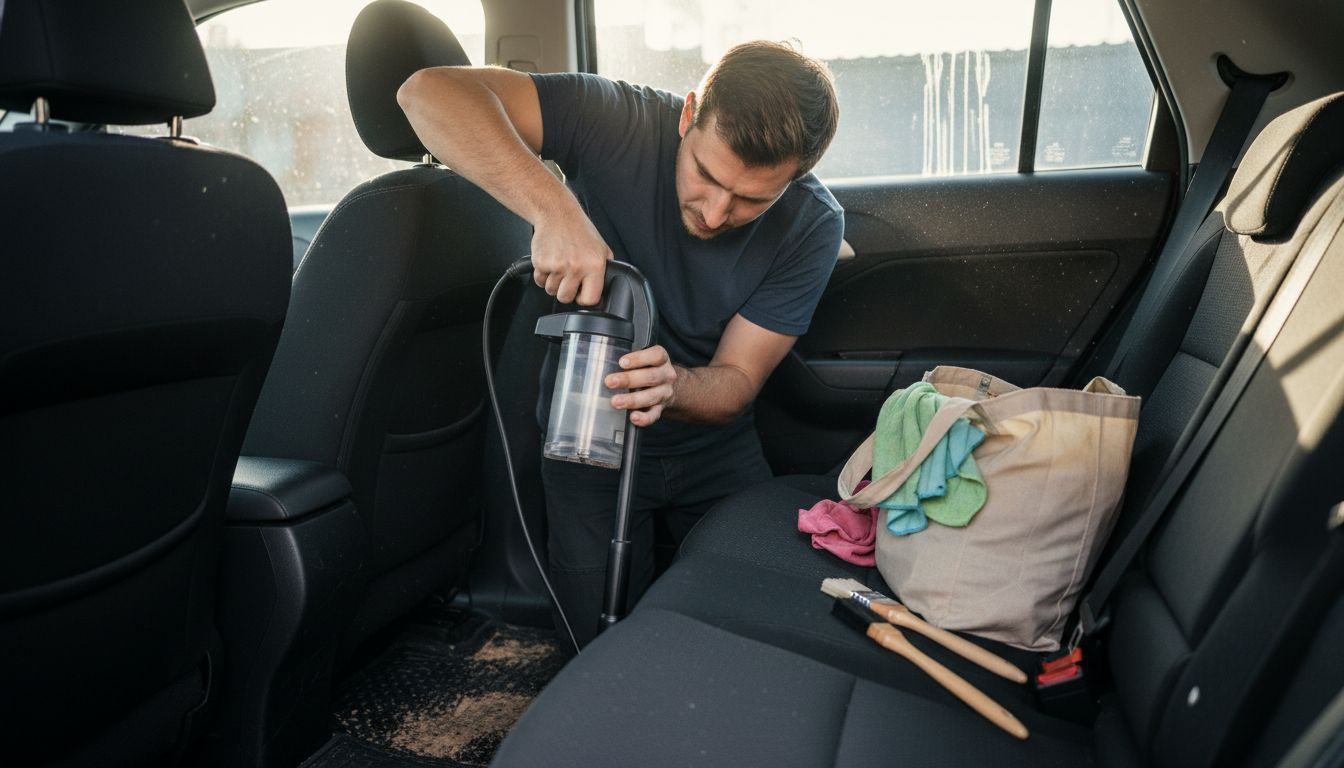
For optimal results, adjust your vacuum cleaner’s suction level based on the upholstery material. Delicate fabrics require lower suction to prevent potential damage, while sturdy surfaces can handle more intense cleaning. Work systematically from top to bottom and side to side to ensure complete coverage. Run the vacuum attachment multiple times over each section to capture embedded particles effectively.
Pro Tip: Invest in a vacuum with a HEPA filter to capture microscopic dust particles and allergens more effectively during your cleaning process.
Step 3: Apply Natural Cleaning Solution to Treat Stains
Addressing stains on your vehicle’s upholstery requires a strategic approach using natural cleaning solutions that effectively break down dirt without damaging delicate fabrics. Your goal is to target specific stains while preserving the integrity of your car’s interior surfaces.
Sustainable stain removal techniques involve creating targeted natural cleaning mixtures. For general stains, combine baking soda with apple cider vinegar to create a powerful cleaning paste. Mix one tablespoon of baking soda with two tablespoons of vinegar until it forms a smooth consistency. Gently apply the mixture directly onto the stained area using a soft white cloth, working from the stain’s outer edges toward the center to prevent spreading. Allow the solution to sit for 5 to 10 minutes, depending on the stain’s intensity.
Different stain types require specific natural treatment approaches. Protein based stains like food or sweat respond well to enzyme free solutions with vinegar and water. Oil based stains need baking soda to absorb excess grease before cleaning. Always blot stains instead of rubbing, which can push dirt deeper into fabric fibers and potentially cause permanent damage. Test any cleaning solution on a hidden area first to ensure color fastness and fabric compatibility.
Here’s a quick reference comparing natural cleaning solutions for different stain types:
| Stain Type | Recommended Natural Solution | Key Ingredient Action |
|---|---|---|
| Protein-based | Vinegar and water mixture | Breaks down organic residue |
| Oil-based | Baking soda pre-treatment | Absorbs oils before cleaning |
| General stains | Baking soda + vinegar paste | Lifts dirt and neutralizes odors |
| Sweat/body oils | Gentle castile soap in water | Removes body oils while protecting fabric |
Pro Tip: Keep a small spray bottle with white vinegar and water mixture in your car for quick spot treatments and immediate stain intervention.
Step 4: Scrub Upholstery Gently for Deep Cleaning
Deep cleaning your vehicle’s upholstery requires a delicate balance of thorough scrubbing and careful technique to remove dirt without damaging fabric fibers. Your goal is to lift embedded grime while preserving the integrity of your car’s interior surfaces.
Eco friendly scrubbing techniques involve using soft natural fiber tools and controlled mechanical action. Select a soft white microfiber cloth or a natural fiber scrub pad designed for delicate surfaces. Work in small circular motions using light to moderate pressure, focusing on one section at a time. Avoid aggressive scrubbing that could fray or damage fabric threads. Instead, use consistent gentle movements that allow your cleaning solution to penetrate and lift dirt effectively. For stubborn stains, allow your natural cleaning solution to sit for a few minutes before gently working it into the fabric.
Pay special attention to different fabric types and their unique cleaning requirements. Leather upholstery needs a softer touch with minimal moisture, while cloth seats can tolerate slightly more vigorous cleaning. Always test your scrubbing technique on a hidden area first to ensure the fabric responds well. Move systematically across surfaces, overlapping your cleaning strokes to ensure complete coverage without creating uneven patches or potential fabric damage.
Pro Tip: Rotate your cleaning cloth frequently to prevent redistributing dirt and maintain a clean scrubbing surface throughout the cleaning process.
Step 5: Blot and Dry Surfaces to Prevent Water Damage
Successful auto upholstery cleaning hinges on proper moisture management to prevent potential fabric damage, mold growth, and unpleasant odors. Your primary objective is to remove excess moisture quickly and efficiently without saturating the fabric.
Water repellent fabric care requires strategic blotting techniques that minimize water absorption. Use clean white cotton towels or microfiber cloths to gently press and absorb moisture from the upholstery. Work from the outer edges of the damp area toward the center to prevent spreading moisture. Avoid rubbing or scrubbing, which can push water deeper into fabric fibers and potentially cause permanent damage. Instead, use a light pressing motion with fresh dry sections of your towel, rotating to a clean area frequently to maximize absorption.
Consider the specific fabric type when drying your vehicle’s upholstery. Leather surfaces require minimal moisture and should be dried immediately using soft absorbent towels. Cloth and fabric seats can tolerate slightly more moisture but still need careful attention. Position fans or open windows to enhance air circulation and speed up the drying process. If possible, park your vehicle in a well ventilated area with indirect sunlight to help evaporate remaining moisture without risking fabric discoloration.
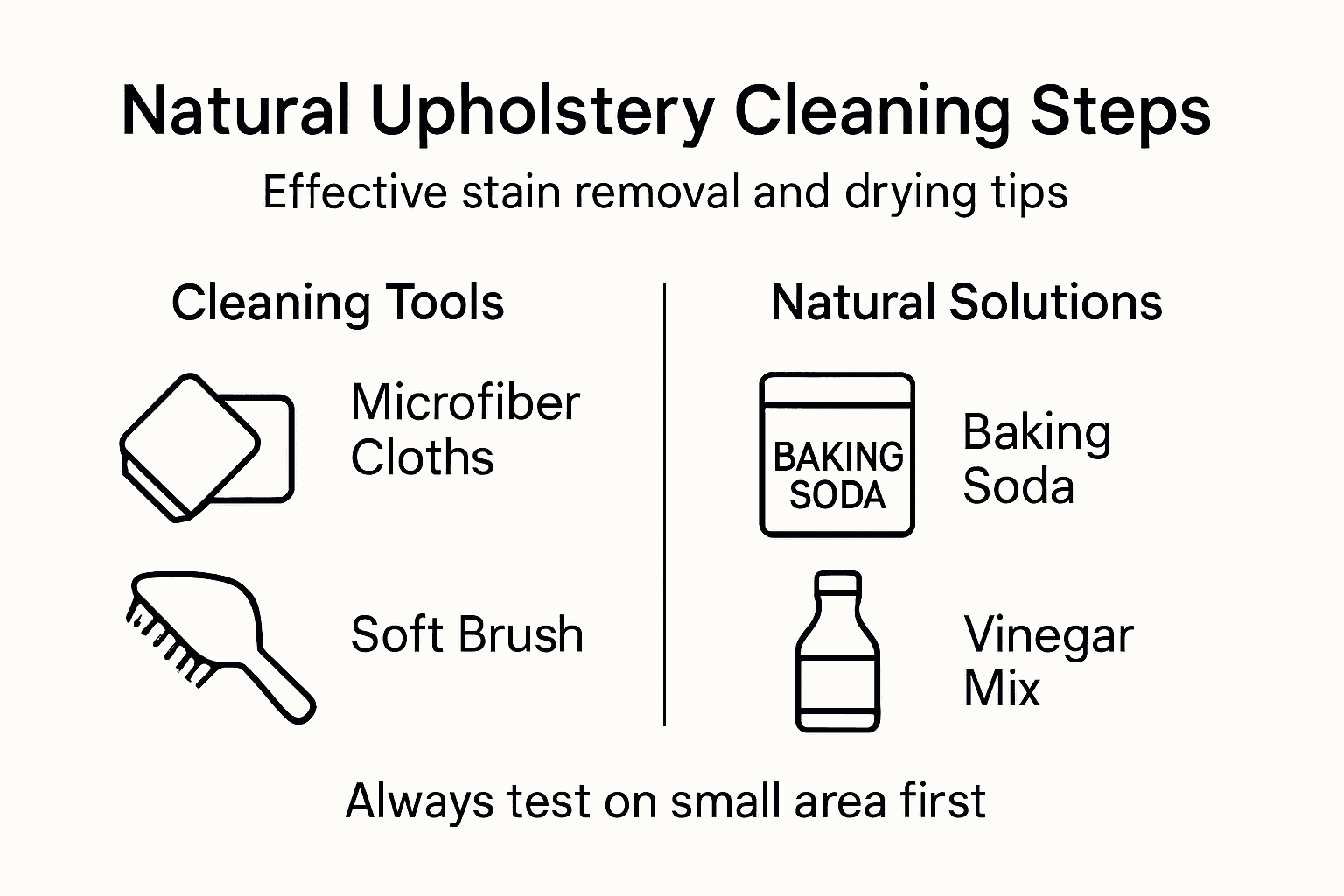
Pro Tip: Keep a dedicated stack of white microfiber towels in your car for quick moisture absorption and preventing potential water damage during cleaning.
Step 6: Inspect Results and Repeat Steps for Persistent Stains
Successfully cleaning auto upholstery requires careful evaluation and strategic follow-up to ensure complete stain removal. Your final task is to critically assess the cleaning results and determine whether additional treatment is necessary.
Cleaning science techniques emphasize systematic inspection after initial cleaning efforts. Examine the treated surfaces under good lighting, checking for remaining discoloration or residual stain marks. If stubborn stains persist, prepare to repeat your natural cleaning process. Focus on applying your cleaning solution more precisely this time, allowing slightly longer dwell time for the solution to penetrate deeply. Work methodically by reapplying your natural cleaning mixture in thin layers, giving each application time to break down embedded dirt.
Different stain types require unique approaches during repeat treatments. Protein based stains might need enzyme free solutions with increased sitting time, while oil based stains could require additional baking soda application to absorb remaining grease. Remember that some deeply set stains might need multiple cleaning cycles to achieve complete removal. Always test your repeated cleaning technique on a small hidden area first to ensure fabric integrity and color stability.
Pro Tip: Document your stain removal process with before and after photographs to track your cleaning progress and identify the most effective techniques for future treatments.
Bring Professional Care to Your Natural Upholstery Cleaning Routine
Cleaning your car upholstery naturally can be time-consuming and requires careful attention to detail with safe tools and solutions. If you are struggling with stubborn stains, managing moisture without damage, or simply want to elevate your interior care, professional help can make a real difference. The article highlights key challenges like gently scrubbing without fabric harm and preventing water damage — common pain points for vehicle owners who want lasting, healthy results.

Experience hassle-free, expert interior detailing with CDC Auto Detailing in Pitman, New Jersey. Our mobile service uses premium techniques and eco-conscious products to protect your upholstery while deeply cleaning and revitalizing your ride. Don’t wait for hard-to-remove stains or moisture issues to worsen. Visit our appointment page to schedule your professional service today and enjoy spotless, naturally refreshed car interiors without the stress.
Frequently Asked Questions
How do I prepare my upholstery for natural cleaning?
To prepare your upholstery for natural cleaning, start by thoroughly vacuuming to remove loose dirt and debris from the surfaces. Use the appropriate vacuum attachment for your upholstery material and pay special attention to seams and corners where dirt tends to accumulate.
What natural ingredients are best for cleaning auto upholstery?
The best natural ingredients for cleaning auto upholstery include baking soda, white vinegar, and castile soap. Combine these ingredients to create effective cleaning solutions that can tackle various stains without harming your vehicle’s interior.
How do I treat stubborn stains on my car’s upholstery?
To treat stubborn stains, apply a paste made from baking soda and vinegar directly onto the stain, working from the outside toward the center. Let the mixture sit for 5 to 10 minutes to penetrate the stain before blotting it away with a clean cloth.
What is the correct method for scrubbing my upholstery?
Gently scrub your upholstery using a soft cloth or natural fiber scrub pad, moving in small circular motions with light pressure. Focus on one area at a time, and avoid aggressive scrubbing to prevent damaging the fabric fibers.
How can I properly dry my upholstery after cleaning?
After cleaning, dry your upholstery by gently blotting the area with a clean, dry towel and using a fan or open windows to increase air circulation. Aim to remove excess moisture promptly to prevent mold growth and unpleasant odors by ensuring the area is fully dry within an hour or two.
How do I know if my upholstery cleaning was successful?
Inspect your upholstery under good lighting after cleaning to check for any remaining stains or discoloration. If stains persist, prepare to repeat the cleaning process, allowing more time for the solution to penetrate the fabric for effective results.