
Ceramic coatings really do reduce maintenance and shield paint from chemicals, UV rays, and light staining, but they are not scratch-proof, permanent, or maintenance-free. The most persistent ceramic coating myths oversell the product past what the chemistry can deliver. How long it lasts and how well it performs comes down to product grade, surface prep, and how the owner treats the car afterward. Below are the misconceptions that cause the most damage, the science behind why they’re wrong, and what to actually do instead.
TL;DR:
- Proper prep and paint correction are essential, as skipping these steps significantly reduces coating performance and early failure risk.
- The expected lifespan of professional ceramic coatings ranges from 2 to 9 years, depending on product quality, maintenance, and installation quality.
- Regular washing with pH-neutral products every 1 to 2 weeks is necessary, as coatings do not prevent dirt, grime, or mineral deposits from bonding to the surface.
- Coatings resist only light scratches and chemical stains; impact damage and deeper scratches require paint protection film or repair.
- Features like graphene additives and “lifetime” warranties often lack independent testing; verify claims with third-party data and thoroughly read warranty conditions.
Table of Contents
- The Most Common Ceramic Coating Myths, Debunked
- How Ceramic Coatings Actually Work
- Ceramic Coating vs. Paint Protection Film: What Protects What
- What a Proper Ceramic Coating Prep and Install Should Look Like
- How to Maintain a Coated Car and What Actually Shortens Its Life
- Decoding Ceramic Coating Marketing Buzzwords
- What Ceramic Coating Actually Costs and When It’s Worth It
- What Owners Get Wrong Most Often
- Get a Professional Ceramic Coating Install Done Right
- Sources
- FAQ
The Most Common Ceramic Coating Myths, Debunked
Dealership finance offices and online forums both traffic in ceramic coating misconceptions, and some of them lead to real paint damage. Here are the twelve that cause the most confusion, in the order they usually trip up new owners.
- “You never have to wash the car again.” Coatings shed dirt faster, but road grime, bird droppings, and mineral deposits still bond to the surface over time.
- Wash every 1 to 2 weeks depending on climate and driving conditions.
- “It’s scratch-proof.” A cured coating adds a hard, sacrificial layer, but it sits only a few microns thick and can’t stop a key, a fingernail, or a car wash brush.
- Use gentle washing methods such as touchless washes or hand washing with soft microfiber mitts.
- “It’s chemical-proof.” Coatings resist bug acid, tree sap, and bird droppings far better than bare paint, but nothing sold to consumers is fully immune to strong acids or alkaline cleaners left to sit.
- Rinse off contaminants promptly to prevent damage.
- “It lasts forever.” Even premium multi-layer systems degrade under UV exposure and oxidation. The Upscale Detailz breakdown of professional installs puts realistic ranges at 2 to 9 years, not indefinitely.
- Book a maintenance inspection annually.
- “It’s self-cleaning.” Hydrophobic beading helps water sheet off, but dust and grime still need a wash. Beading is a side effect of the coating, not a cleaning function.
- Maintain regular washing routines even if water beads well on the surface.
- For rock chip and impact protection, use paint protection film (PPF) rather than relying on coatings marketed as “self-healing.”
- “It fills in existing scratches.” A coating is a thin clear layer, not a filler. Scratches that were there before application are still there after.
- Perform paint correction before applying the coating to ensure defects are addressed.
- “DIY kits perform like professional installs.” Consumer sprays and wipe-on products lack the cross-linking density of professional-grade coatings and typically fail within months.
- Consider DIY kits as temporary protective solutions between professional applications.
- “Graphene automatically means better performance.” It’s often a marketing label added to a standard SiO2 formula with little independent testing to back the claims.
- Request third-party test data to verify claims rather than relying solely on marketing terms like “graphene.”
- “Washing in direct sunlight is fine as long as you rinse fast.” Heat causes soap and water to flash-dry, leaving mineral spotting on a coated surface just as easily as on bare paint.
- Wash the car in shaded areas or early morning and dry promptly with a clean microfiber towel.
- “All coatings are basically the same product.” Formulations vary widely in silica concentration, cross-link density, and layer count, which is exactly why prices range from $30 DIY bottles to installs costing well over $1,000.
- Evaluate coatings based on their ingredient chemistry and warranty conditions, not only on price.
- “Skipping paint prep is fine if the coating is good enough.” Coating over swirl marks, contamination, or old wax locks in every flaw and blocks proper adhesion.
- Ensure installers perform necessary decontamination and correction steps without skipping.
How Ceramic Coatings Actually Work
Most ceramic coatings are liquid polymers built on silicon dioxide (SiO2) or titanium dioxide (TiO2) chemistry. During application, the product goes through a sol-gel reaction that forms a glass-like network bonding chemically to the clear coat rather than just sitting on top of it, according to how automotive ceramic coating works.
That bonded layer is thin, usually 1 to 5 micrometers. A rock chip carries far more kinetic energy than a coating that thin can absorb, which is exactly why coatings were never designed to stop impacts.
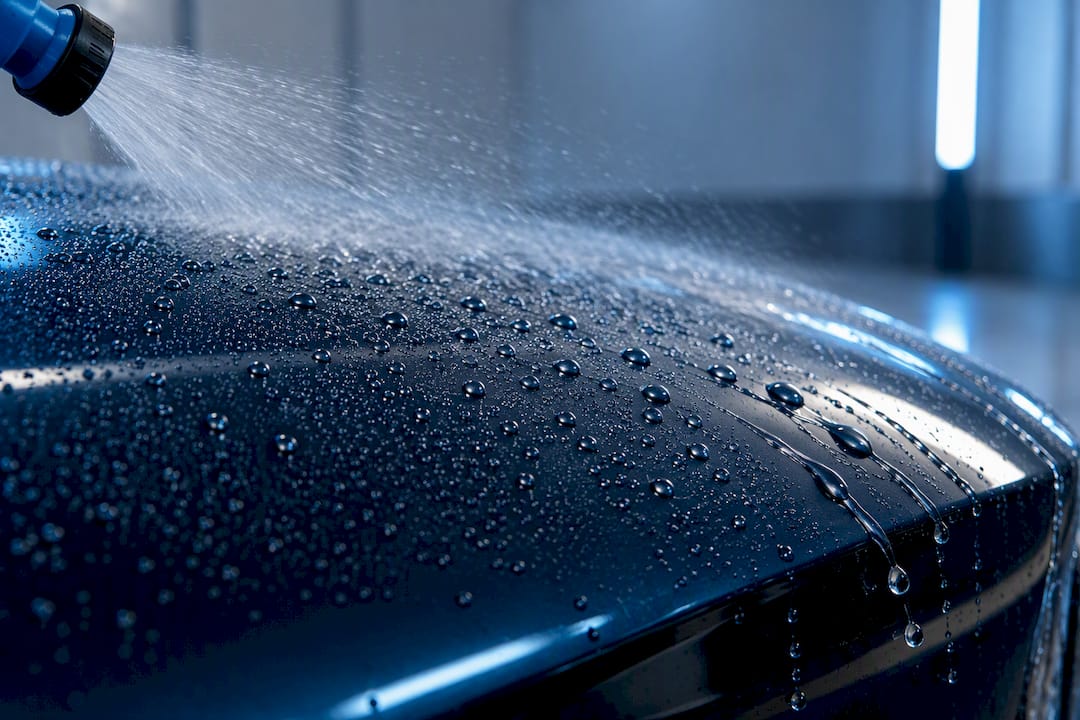
Hydrophobic behavior comes from the coating’s high water contact angle, which makes water bead and roll rather than sheet flat across the panel. That same beading has nothing to do with mineral content in the water itself, so hard water spots and etching still show up on coated paint if droplets sit and evaporate.
The “9H” rating you see on packaging refers to pencil hardness, a scratch-resistance test using graded pencil leads, not real-world impact resistance. It tells you the cured film resists a pencil tip. It says nothing about what happens when a shopping cart hits the door.
Ceramic Coating vs. Paint Protection Film: What Protects What
Coatings and paint protection film solve different problems, and confusing the two is one of the costlier ceramic coating misconceptions. Coatings excel against chemical staining, UV fading, and oxidation, and they make washing easier. PPF is the product built to absorb rock chips, road debris, and light impacts because it has real thickness and, on many films, a self-healing top layer that recovers from marring under heat.
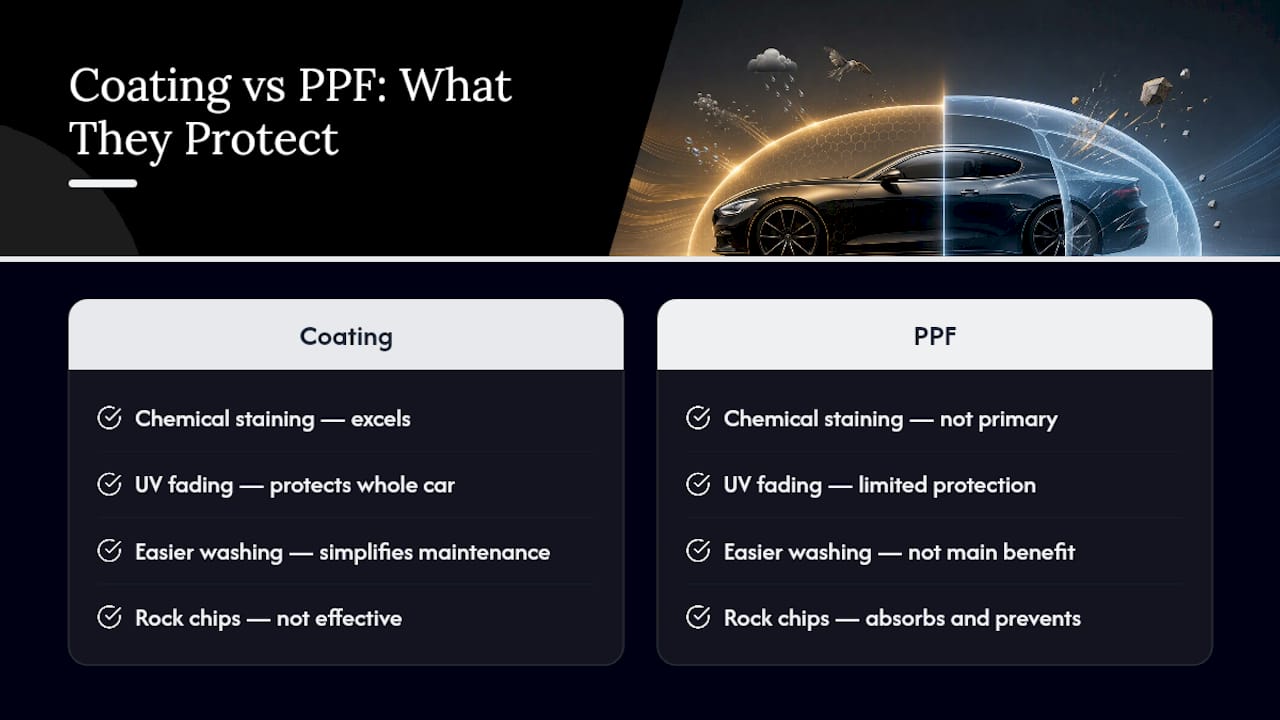
That’s why front-end PPF paired with a full-vehicle coating is such a common combination. If rock chips on the hood and bumper are the concern, PPF is the answer. If UV protection and easier maintenance across the whole car are the goal, coating does that job at a lower cost.
What a Proper Ceramic Coating Prep and Install Should Look Like
A rushed installation is the single biggest reason coatings underperform. Professional detailers consistently trace early failures back to skipped decontamination and correction rather than any flaw in the coating chemistry, according to the professional breakdown from Upscale Detailz. Before any product touches the panel, a proper install includes:
- A thorough wash to remove loose dirt and grime
- Iron and fallout removal to strip embedded contaminants
- Clay bar or chemical decontamination for bonded residue
- Paint correction or polishing to address swirl marks and light scratches
- An IPA or panel wipe to strip oils before the coating bonds
- Application in a controlled, dust-free environment
Curing matters just as much as prep. Many manufacturers and installers recommend waiting several days before the first wash, and some guidance around fresh paint jobs calls for waiting 7 to 10 days before coating at all so unstable compounds in new clear coat don’t get trapped underneath.
Watch for red flags: an install booked in under two hours, vague or nonexistent warranty terms, or no mention of paint correction. Removing a poorly bonded coating later usually requires the same kind of professional polishing techniques used to correct paint in the first place.
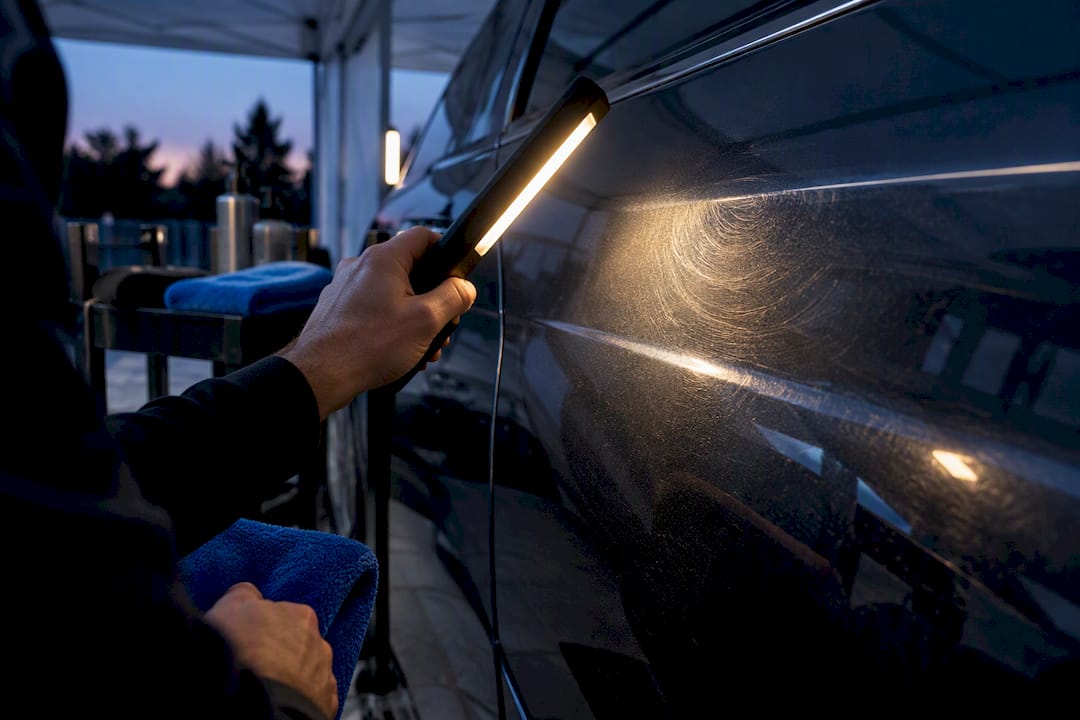
Pro Tip: Ask any installer for a written inspection report with photos of paint defects before they start. If they can’t produce one, that’s usually a sign they skipped the correction step entirely.
How to Maintain a Coated Car and What Actually Shortens Its Life
A coating is not a substitute for washing. It’s a maintenance multiplier, not a maintenance eliminator. SCRS has flagged mineral deposits, etching, and swirl marks as the leading real-world failure points for coated paint, and improper washing can cause damage that requires mechanical correction to fix.
A safe routine follows a short sequence:
- Use the two-bucket wash method with a grit guard to avoid dragging dirt back across the paint.
- Choose pH-neutral shampoos formulated for coated surfaces.
- Skip automatic car washes with rotating brushes; they’re the fastest way to introduce swirl marks.
- Dry with a clean microfiber towel or a lubricated drying aid to prevent water spotting.
Longevity varies by tier. DIY consumer coatings often hold up for only a few months. Professional single-coat systems typically run 2 to 5 years, and multi-layer professional systems can reach 5 to 9 years with regular maintenance and inspection. Abrasive washing, ignored mineral deposits, harsh degreasers, and skipped decontamination are the habits that shrink those numbers fastest, regardless of which tier you bought.
Decoding Ceramic Coating Marketing Buzzwords
Graphene gets added to plenty of formulas as a headline word, but independent testing showing a meaningful performance boost over standard SiO2 coatings is thin. Ask for third-party data before paying a premium for it.
9H hardness measures resistance to a pencil tip, not a rock chip. It’s a real number, but it doesn’t translate to impact protection the way marketing implies.
“Lifetime” warranties usually come loaded with fine print: mandatory annual inspections, specific wash products, or exclusions for environmental damage. Read the conditions, not the headline word.
Self-healing coatings rely on elastomeric additives that let superficial marring soften under heat. That’s a real but limited effect, distinct from the thicker, true self-healing top layer built into PPF, which recovers from deeper marring the same way.
What Ceramic Coating Actually Costs and When It’s Worth It
Pricing splits into clear tiers. DIY kits run cheapest but need reapplication often. Dealership add-ons sit in the low to mid range and frequently skip real prep. Professional studio installs cost more but include correction and decontamination. PPF on the front end paired with full-vehicle coating sits at the top of the range.
The best return goes to long-term owners, show car enthusiasts, and anyone parking in heavy sun exposure. Before buying, ask exactly what prep is included, whether an inspection report comes with the install, and what a maintenance plan looks like after year one.
What Owners Get Wrong Most Often
Most owners don’t fail because they picked the wrong coating. They fail because they treat the coating like a force field instead of a maintenance tool. The real value of understanding ceramic coating facts isn’t trivia. It’s knowing when to wash, when to book correction, and when a rock chip means it’s time for PPF instead. Use this as a checklist before booking any service or trying a DIY route: ask about prep, ask about warranty conditions, and ask what happens after year one.
— Charles
Get a Professional Ceramic Coating Install Done Right
Skipping decontamination and correction is the single biggest reason coatings fail early, and professional installers aim to close that gap for vehicle owners. Ceramic coating packages typically include prep work many rushed installs skip, and mobile scheduling can offer convenient appointment options.

Cdcautodetailing’s ceramic coating packages span the 3 Year Package, 5 Year Package, and 8 Year Package, each priced around the correction work and coating tier your paint actually needs. Booking usually includes wash, decontamination, and correction steps, plus guidance on maintenance intervals after curing. If rock chips on the front end are your bigger concern, paint protection film is available to pair with a coating for full coverage. Ready to see which package fits your car? Check the current detail packages and book a time that works for your schedule.
Sources
- SCRS corrects common industry misconceptions on ceramic coatings
- How Does Automotive Ceramic Coating Work? The Science Behind It
- 10 Ceramic Coating Myths Debunked by a Professional | Upscale Detailz
FAQ
Why don’t car manufacturers apply ceramic coating at the factory?
Factory paint lines are built for speed and consistency, not the multi-step decontamination and correction that a coating needs to bond properly. Automakers also can’t guarantee the paint has fully cured before the car ships, and applying too early risks trapping unstable compounds under the coating, one reason industry guidance recommends waiting after any fresh paintwork.
Are ceramic coatings actually scratch-proof?
No. Coatings resist light marring and add a sacrificial hard layer, but they sit only a few microns thick and can’t stop a key, a fingernail, or a rock chip. For impact protection, paint protection film is the correct product, not a coating.
How long does a professional ceramic coating actually last?
Professional single-coat systems typically last 2 to 5 years, while multi-layer professional systems can reach 5 to 9 years with regular maintenance. DIY consumer kits usually last only a few months by comparison.
Do I still need to wash a car with ceramic coating?
Yes. Coatings make dirt and grime easier to rinse off, but they don’t stop contaminants from landing on the paint. Washing every 1 to 2 weeks with pH-neutral products keeps the coating performing as intended.
What does Cdcautodetailing charge for a ceramic coating package?
Cdcautodetailing’s ceramic coating packages include the 3 Year Package at 1000-1200 USD, the 5 Year Package at 1500-1700 USD, and the 8 Year Package at 2200-2400 USD, all one-off pricing.