
Keeping a fleet of vehicles clean and well maintained is a constant challenge for South Jersey businesses. One missed detail can lead to unhappy customers, safety issues, or even damage that hurts resale value. You want your vehicles to look professional and run smoothly every day, but achieving this requires more than just the occasional car wash.
This step-by-step guide lays out reliable methods that go beyond surface cleaning. You’ll discover practical routines used by industry experts—from inspecting for hidden damage and debris to decontaminating with the safest chemicals. These proven strategies help you maintain a fleet that stays safe, compliant, and appealing inside and out.
Get ready to learn the specific checklists and cleaning techniques that make a real difference. You will save time, reduce problems, and build customer trust with every vehicle you put on the road.
Table of Contents
- Inspect Vehicle Exterior For Damage And Debris
- Wash And Decontaminate All Outer Surfaces
- Clean And Sanitize The Interior Cabin
- Detail High-Touch Points And Controls
- Check And Clean Cargo Or Storage Areas
- Review Compliance And Final Quality Assurance
Quick Summary
| Key Message | Explanation |
|---|---|
| 1. Schedule Regular Inspections | Conduct weekly exterior inspections to catch damage early and maintain a professional image. |
| 2. Prioritize Decontamination | Use soap and appropriate chemicals to prevent rust and contamination from impacting vehicle longevity. |
| 3. Clean High-Touch Points Daily | Regularly disinfect frequently contacted surfaces to minimize the spread of germs and ensure driver safety. |
| 4. Maintain Clean Cargo Areas | Regularly clean cargo spaces to protect goods and avoid liability, enhancing customer satisfaction. |
| 5. Implement Final Quality Checks | Conduct thorough inspections post-cleaning to ensure compliance with standards and maintain professionalism. |
1. Inspect Vehicle Exterior for Damage and Debris
Your fleet’s first impression depends on what people see from the outside. A damaged or debris-covered vehicle signals neglect, which can hurt your company’s reputation and customer confidence in South Jersey’s competitive market.
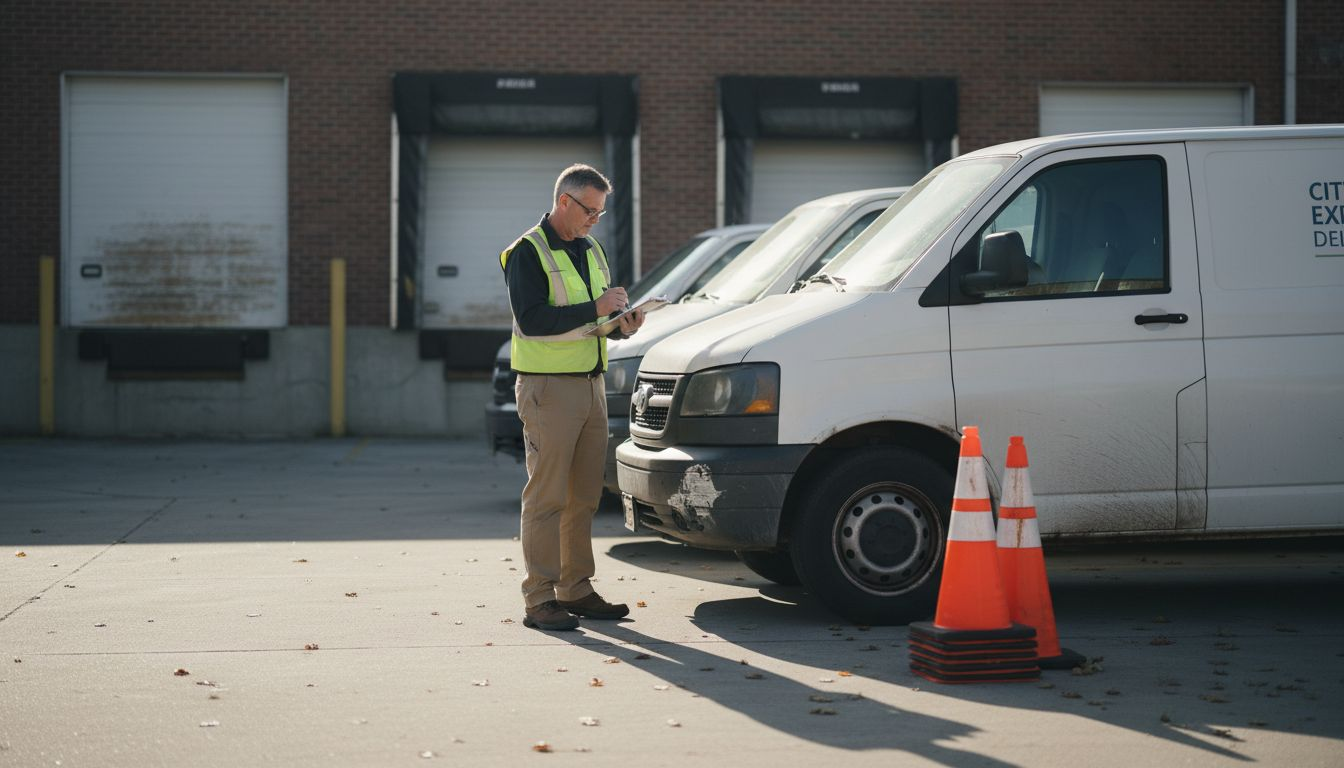
Start by walking completely around each vehicle in good lighting. This full visual inspection catches problems that might be missed from a driver’s seat. Look for dents, scratches, chips, and broken glass before they worsen or become safety hazards.
Exterior damage falls into categories you need to address differently:
- Paint damage: Chips and scratches expose bare metal, which leads to rust if left untreated
- Body damage: Dents and creases affect aerodynamics and can worsen over time
- Glass issues: Cracks in windshields or windows compromise visibility and safety
- Trim and hardware: Loose mirrors, broken lights, or missing trim pieces look unprofessional
Debris accumulation is just as important as physical damage. Mud, dirt, leaves, and road salt cling to your vehicles daily in South Jersey’s climate. This buildup accelerates paint degradation and corrodes metal components faster than you’d expect.
According to comprehensive vehicle maintenance checklists, weekly exterior inspections should include checking tire condition, windshield wipers, mirrors, and lighting systems alongside damage assessment. These elements work together to keep your fleet roadworthy and professional-looking.
Payroll attention to areas where damage hides easily. Check behind the wheels for debris, inspect door seals where salt accumulates, and look under the bumpers where mud cakes on. Fleet managers often miss these spots, but customers notice immediately.
A single damaged vehicle in your fleet reflects poorly on your entire operation. Start with the highest-mileage vehicles that get the hardest use.
Documentation matters too. Take photos of any damage you find, note the date and location, and track repairs. This creates accountability and prevents small issues from becoming expensive problems.
Pro tip: Schedule your exterior inspections during the same day each week so they become routine, and assign the same person to inspect the same vehicles to catch recurring problems before they escalate.
2. Wash and Decontaminate All Outer Surfaces
Washing your fleet vehicles isn’t just about making them look clean. You’re removing contaminants that damage paint, corrode metal, and harbor bacteria that could affect your drivers and customers. South Jersey’s salt air and industrial fallout make this step non-negotiable.
The process starts simple but requires the right approach. Begin with soap and water to remove visible dirt, mud, and debris from all outer surfaces. This initial cleaning step is critical because it removes the bulk of contamination before you move to stronger treatments.
After the soap wash, the decontamination phase begins. This is where you eliminate what soap alone can’t remove. According to guidelines on surface disinfection methods, proper decontamination uses chemical agents like alcohol solutions to eliminate remaining contaminants that regular washing misses.
Your cleaning sequence matters significantly:
- Rinse the vehicle thoroughly with clean water first
- Apply soap solution and scrub all surfaces with microfiber cloths or soft brushes
- Rinse again completely to remove all soap residue
- Apply decontamination solution to eliminate stubborn contaminants
- Final rinse with fresh water to prevent chemical residue
Different surfaces need different attention. Windows, mirrors, and painted areas respond well to standard washing, but wheels and undercarriage require specialized decontamination. Road salt and brake dust accumulate in hard-to-reach spots where bacteria can grow.
Safety matters when using chemical disinfectants. Always ensure proper ventilation when applying any decontamination solutions. Your team should wear protective gloves and eye protection, especially when working with alcohol-based products. Never mix different cleaning chemicals, as this creates dangerous reactions.
Proper decontamination protects your vehicles and your team’s health simultaneously. Clean vehicles last longer and perform better.
Timing your wash schedule prevents buildup. Weekly washing in South Jersey prevents salt accumulation that causes rust. Vehicles exposed to heavy road salt should be washed more frequently than those operating in lighter conditions.
Pro tip: Wash vehicles in the morning or evening when temperatures are cooler to prevent soap and water from drying too quickly, which can leave spots and streaks on painted surfaces.
3. Clean and Sanitize the Interior Cabin
Your vehicle’s interior is where drivers spend hours daily. A clean cabin improves morale, prevents illness, and signals professionalism to anyone who rides in your fleet. South Jersey’s humid climate makes sanitization especially critical for controlling odors and mold.
Start with thorough vacuuming of all carpeted and fabric surfaces. This removes dirt, debris, and allergens that accumulate between cleaning cycles. Pay special attention to under the seats, floor mats, and crevices where contaminants hide.
Seats require targeted care depending on their material. Leather seats need specific cleaners and conditioners to prevent cracking and fading. Fabric seats respond well to upholstery shampoo and steam cleaning. Vinyl surfaces simply need mild detergent and water with a soft cloth.
Hard surfaces demand attention too. Dashboards, steering wheels, door panels, and cup holders collect dust and bacteria. Using deep-cleaning methods for vehicle interiors ensures you address all surfaces with appropriate products.
Your interior cleaning sequence should follow this order:
- Vacuum all carpeted areas and fabric seats
- Wipe down the dashboard and steering wheel
- Clean windows and mirrors with glass cleaner
- Sanitize door handles, armrests, and high-touch surfaces
- Clean and condition leather or vinyl
- Empty and sanitize cup holders and storage compartments
- Treat carpets with deodorizer if needed
Sanitization goes beyond cleaning. High-touch surfaces like door handles, steering wheels, and seat belts harbor bacteria and viruses. Use hospital-grade disinfectant on these areas to protect your drivers and passengers. Let disinfectant sit for the recommended contact time before wiping.
Odor prevention keeps your fleet smelling fresh. Regular vacuuming removes trapped food particles and spills that cause bad smells. Opening windows when parked and using ventilation during summer prevents moisture buildup that leads to mold.
A clean interior cabin is your fleet’s best marketing tool. Passengers form immediate impressions based on cleanliness.
Schedule interior cleaning weekly for active vehicles. High-mileage routes need more frequent attention than occasional-use vehicles. Document each cleaning to ensure consistency across your entire fleet.
Pro tip: Use microfiber cloths for all interior surfaces because they trap bacteria and require less chemical product, saving money while providing superior cleaning compared to traditional cloths.
4. Detail High-Touch Points and Controls
High-touch surfaces are bacteria and virus magnets in any vehicle. Your drivers and passengers handle door handles, steering wheels, and control buttons constantly throughout the day. Neglecting these areas compromises both health and the professional image of your fleet.
High-touch points require more aggressive cleaning than general interior surfaces. These are areas where hands make direct contact multiple times daily. One infected person can contaminate an entire vehicle in minutes, spreading illness through your entire team.
Identify all the surfaces your drivers and passengers actually touch:
- Door handles on all doors
- Steering wheel and horn pad
- Gear shift lever or automatic transmission button
- Light switches and controls
- Window switches and door lock buttons
- Steering wheel control buttons
- Armrests and grab handles
- Air conditioning and climate controls
- Dashboard buttons and knobs
- Emergency brake and brake pedal
Cleaning these points follows a two-step process. First, use hospital-grade disinfectants that are EPA-approved for killing germs. Second, allow proper contact time before wiping. Don’t skip this step, as spraying and immediately wiping reduces effectiveness.
The protocol matters significantly. Thorough cleaning with soap removes organic material that disinfectants struggle against. Then apply your disinfectant and let it sit for the manufacturer’s recommended time, usually 30 seconds to 10 minutes depending on the product.
Protect your team during this process. Wear gloves and eye protection when applying disinfectants, especially in poorly ventilated spaces. Ensure adequate airflow and never mix different cleaning chemicals together. Read product labels carefully for safety information.
High-touch surfaces demand daily attention in commercial fleets. One missed cleaning cycle puts your entire operation at risk.
Frequency matters more than perfection. Daily disinfection of high-touch points beats weekly deep cleaning. Brief cleanings prevent accumulation of pathogens that deeper cleaning struggles to eliminate. Build this into your morning or evening vehicle preparation routine.
Documentation proves compliance. Record what you cleaned, when, and with which products. This creates accountability and helps you identify patterns if illness spreads through your fleet.
Pro tip: Keep disinfectant wipes in each vehicle so drivers can quickly sanitize steering wheels and gear shifts between shifts, reducing the disinfection workload during scheduled cleanings.
5. Check and Clean Cargo or Storage Areas
Cargo and storage areas are often the forgotten zones in fleet vehicle cleaning. These spaces accumulate dirt, debris, and contaminants that damage goods, create safety hazards, and signal unprofessionalism. For South Jersey fleet managers hauling products or equipment, clean cargo areas directly impact customer satisfaction and compliance.
Start by removing everything from the cargo or storage space. This reveals the full extent of what needs cleaning and prevents overlooking hidden debris. Items left behind can shift during transport, damaging goods or becoming hazards to your drivers.
Once empty, sweep out all loose debris thoroughly. Dirt and dust settle in corners and crevices where they cause rust and contamination. Use a stiff broom to loosen stubborn material, then vacuum to capture fine particles that sweeping misses.
Washing comes next in your cargo area cleaning sequence:
- Spray down cargo space with soap and water
- Scrub walls and floor with a stiff brush
- Pay special attention to corners and crevices
- Rinse thoroughly until all soap residue is gone
- Allow to dry completely before reloading
Cargo area cleaning procedures emphasize sanitization with appropriate solutions after washing. This step kills bacteria and prevents mold growth in damp environments. Use food-safe sanitizers if your fleet carries food products, or appropriate disinfectants for other cargo types.
Inspect for structural problems while cleaning. Look for rust spots, cracks, or damage that compromises cargo security. Catch these issues early before they worsen and create liability problems. Document any damage you find for repairs.
Drying is critical before reloading cargo. Moisture trapped in the cargo area promotes rust, mold, and product damage. Open doors and allow air circulation for at least 30 minutes after washing. Run the vehicle or use fans if weather doesn’t cooperate.
Clean cargo areas protect your goods and reputation simultaneously. Damaged products lead to angry customers and lost business.
Schedule cargo area cleaning weekly for active vehicles. High-use vehicles hauling perishables or sensitive materials need more frequent attention. Document each cleaning to show customers and regulatory bodies that you maintain professional standards.
Pro tip: Line cargo areas with removable plastic or rubber mats to catch dirt and spillage, making weekly cleaning faster and protecting the cargo floor from permanent staining.
6. Review Compliance and Final Quality Assurance
You’ve completed all five cleaning steps, but your work isn’t finished yet. Final quality assurance separates professional fleet operations from mediocre ones. This review step ensures every vehicle meets your standards and complies with industry regulations before returning to active service.
Visual inspection is your most powerful tool at this stage. Walk around and through each vehicle with fresh eyes, looking for anything you might have missed during cleaning. Spot checks catch streaks, smudges, and incomplete work that passengers will definitely notice.
Quality assurance follows a systematic approach that prevents errors and ensures consistency. Visual inspection practices for cleaned equipment confirm that surfaces are clean to accepted standards, providing documented evidence that your fleet meets professional cleanliness benchmarks.
Create a final inspection checklist that mirrors your cleaning steps:
- Exterior surfaces are free of dirt, streaks, and water spots
- Windows and mirrors are crystal clear
- Interior is vacuum and debris-free
- High-touch points show no visible contamination
- Cargo areas are clean and dry
- No unpleasant odors remain
- All equipment functions properly
Document your findings meticulously. Take photos of vehicles that pass inspection. Record any vehicles requiring additional work. This documentation proves compliance to customers and regulatory bodies if questions arise later.
Address deficiencies immediately rather than deferring them. A vehicle that fails quality assurance shouldn’t return to service until corrected. This prevents complaints, maintains your reputation, and avoids liability issues.
Involve your cleaning team in quality review processes. When they know their work will be inspected thoroughly, they focus on details. Positive feedback for excellent work motivates continued high performance.
Quality assurance isn’t an optional step, it’s your accountability system. It transforms cleaning from a task into a professional standard.
Establish acceptance criteria before cleaning begins. Everyone should know exactly what clean means in your operation. Vague standards lead to inconsistent results and customer dissatisfaction.
Track trends in inspection results over time. If certain vehicles consistently fail specific inspections, investigate why. Maybe they need more frequent cleaning or have maintenance issues affecting cleanliness.
Pro tip: Assign quality assurance to a different person than the one who cleaned the vehicle, as independent eyes catch mistakes that the original cleaner might overlook due to familiarity.
Below is a comprehensive table summarizing the steps, strategies, and key takeaways for maintaining a professional and safe fleet of vehicles as discussed throughout the article:
| Main Aspect | Steps or Key Actions | Benefits/Outcomes |
|---|---|---|
| Inspect Vehicle Exterior | Conduct visual inspections under good lighting, assess paint, body, glass, and hardware. Ensure debris is removed. | Prevents further damage and upholds reputation. |
| Regular Washing and Decontamination | Follow a systematic cleaning process, including rinsing, soaping, decontaminating, and thoroughly rinsing again. | Removes contaminants and prevents corrosion. |
| Interior Cleaning and Sanitization | Vacuum thoroughly, target all surfaces using appropriate products, and disinfect high-touch surfaces. | Promotes health, professionalism, and longevity. |
| Detailing High-Touch Points | Identify and disinfect door handles, steering wheels, controls, and high-contact surfaces regularly. | Reduces disease transmission and improves hygiene. |
| Clean Cargo Areas | Remove items, sweep and clean surfaces, and sanitize cargo spaces before allowing drying. | Maintains cleanliness and ensures cargo safety. |
| Final Quality Assurance | Conduct visual inspections, use a checklist, and address any deficiencies promptly. | Ensures consistent high standards are met. |
Elevate Your Commercial Fleet Cleaning with Professional Mobile Detailing
Maintaining a spotless and sanitized commercial vehicle fleet in South Jersey demands time, precision, and expert care. The article highlights key challenges such as thorough exterior damage inspection, deep decontamination, interior sanitization, and rigorous high-touch point cleaning that protect your fleet’s safety and reputation. If you want to eliminate the stress of managing these detailed cleaning steps while ensuring your vehicles look pristine and perform at their best, expert help is just a click away.
Discover how CDC Auto Detailing specializes in comprehensive mobile car detailing services tailored for commercial and fleet vehicles. From paint protection to high-grade sanitization and interior deep cleaning, their South Jersey-based team offers convenient, on-site solutions that save you time while boosting your fleet’s professional image. Take control of your vehicle care and enjoy peace of mind knowing every high-touch point and cargo area receives expert attention. Schedule your fleet service now at CDC Auto Detailing and experience the difference of premium, hassle-free detailing designed to meet your commercial needs.
Frequently Asked Questions
What are the essential steps in a complete commercial vehicle cleaning checklist?
A complete commercial vehicle cleaning checklist includes inspecting the vehicle exterior for damage, washing and decontaminating all outer surfaces, cleaning and sanitizing the interior cabin, detailing high-touch points and controls, checking and cleaning cargo or storage areas, and performing a final quality assurance review. Follow these steps systematically to ensure your fleet remains professional and safe.
How often should I wash and decontaminate my commercial vehicles?
You should wash and decontaminate your commercial vehicles weekly to prevent the accumulation of dirt and contaminants. For vehicles exposed to road salt or heavy use, consider increasing the frequency to every few days to maintain their condition.
What high-touch points should I focus on when cleaning a vehicle?
Focus on surfaces like door handles, the steering wheel, gear shift, window controls, and dashboard buttons. Regularly clean these points daily to minimize the spread of germs and ensure a safe environment for drivers and passengers.
How can I effectively document the cleaning process?
Create a checklist to document each cleaning step you perform, noting the date, time, and the person responsible. Take photos of completed tasks to maintain accountability and track patterns over time, ensuring compliance with your cleaning standards.
Why is final quality assurance important after cleaning vehicles?
Final quality assurance ensures that every vehicle meets your cleanliness standards and is in proper condition before returning to service. Conduct a thorough visual inspection and create a final checklist to address any deficiencies immediately, enhancing customer satisfaction and safety.
What should I do if I discover damage during my vehicle inspection?
Immediately document any damage you find and assess whether it needs repair before the vehicle returns to service. Addressing issues swiftly prevents small problems from escalating and maintains your fleet’s professional image.