
Working on a client’s driveway in South Jersey means more than just making vehicles shine—it also means taking responsibility for everyone’s safety. From chemical exposure to slip risks, detailing professionals face real hazards each day. Establishing strong, clearly documented safety protocols protects not just your technicians, but also your reputation and bottom line. This guide breaks down practical systems and tools designed to help mobile detailing businesses deliver safer, higher quality service clients can trust.
Table of Contents
- Defining Detailing Safety Protocols In Auto Care
- Types Of Safety Risks In Detailing Services
- Personal Protective Equipment And Chemical Safety
- Vehicle And Surface Protection Procedures
- Compliance, Liability, And Avoiding Common Mistakes
Key Takeaways
| Point | Details |
|---|---|
| Establish Documented Safety Protocols | Implementing clear safety protocols is essential to minimize risks and ensure consistency across operations in auto detailing. |
| Prioritize Personal Protective Equipment (PPE) | Ensure technicians utilize the appropriate PPE to significantly reduce the likelihood of injuries during detailing services. |
| Manage Client Communication Effectively | Clear communication about procedures and limitations fosters trust and mitigates liability issues with clients. |
| Continuous Training and Assessment | Regular training and a proactive approach to risk assessment are vital for maintaining safety standards and preventing accidents. |
Defining Detailing Safety Protocols in Auto Care
Detailing safety protocols are the documented procedures and practices that protect both your technicians and clients during every service. They’re not just checklists on a wall—they’re actionable systems that reduce accidents, prevent chemical injuries, and ensure every job runs smoothly from start to finish.
In South Jersey’s mobile detailing industry, safety protocols become even more critical. Your team works in residential driveways, commercial parking lots, and diverse weather conditions. You handle chemical solutions, operate equipment on unfamiliar properties, and interact with clients who need reassurance that their vehicles (and their families nearby) are in safe hands.
What Safety Protocols Actually Include
True detailing safety protocols cover multiple dimensions of your operation:
- Chemical management: Handling, storing, and disposing of detailing products safely
- Equipment operation: Proper use of pressure washers, buffers, and other tools
- Personal protective equipment (PPE): Required gear for technicians during each service
- Client communication: Clear expectations about work areas, vehicle handling, and access
- Emergency procedures: Steps to take if accidents or chemical exposures occur
- Vehicle handling: Techniques to prevent damage during the detailing process
A documented safety protocol transforms reactive problem-solving into proactive risk prevention.
Why Formal Safety Standards Matter
You might think “my team knows how to work safely.” But without documented protocols, safety depends on individual judgment—which varies from day to day and technician to technician. Formal standards like OSHA regulations ensure consistency across your entire operation.
International frameworks like occupational health and safety management systems provide structured approaches to identifying risks, implementing controls, and continuously improving. These aren’t bureaucratic exercises—they’re practical blueprints that successful detailing businesses use to prevent costly accidents, liability claims, and employee turnover.
When your South Jersey clients see documented safety practices, they trust you more. When your technicians know exactly what’s expected, they work with confidence.
Safety Protocols Protect Your Bottom Line
One chemical exposure incident can cost thousands in medical bills, legal fees, and lost productivity. One vehicle damage claim destroys customer trust and triggers insurance complications. One preventable accident sidelines a skilled technician when you need them most.
Proper safety protocols reduce these financial and operational disasters dramatically. They also improve employee retention—techs stay longer when they feel protected and respected.
Pro tip: Document your safety procedures in a simple one-page reference card that every technician carries during jobs; review it together weekly to catch gaps before problems arise.
Types of Safety Risks in Detailing Services
Detailing work exposes your team to multiple hazards simultaneously. On a single job, a technician might handle harsh chemicals, stand on wet surfaces, operate electrical equipment, and lift heavy materials—all within a few hours. Understanding these risks is the foundation for building effective safety protocols.
South Jersey’s mobile detailing crews face unique challenges. You’re working in unfamiliar environments, often without controlled shop conditions. Weather changes rapidly. Clients may have pets, children, or elderly family members nearby. These variables make risk identification even more critical.
The Major Risk Categories
Most detailing accidents fall into predictable categories:
- Chemical exposure: Contact with cleaning solutions, degreasers, and protective coatings
- Slips, trips, and falls: Wet surfaces, hoses, cords, and uneven terrain
- Ergonomic strain: Repetitive motions, awkward postures, and manual lifting
- Electrical hazards: Wet conditions near power outlets and equipment
- Equipment injuries: Pressure washers, buffers, and polishing machines
- Vehicle-related accidents: Getting struck by vehicle doors or pinched by moving parts
Hazard identification and assessment must happen continuously—not just during initial training.
Chemical Exposure: Your Most Frequent Risk
Detailing products do their job precisely because they’re powerful. That same power makes them dangerous when mishandled. Your technicians absorb chemicals through skin contact, inhalation, and sometimes accidental ingestion.
Common culprits include acid-based wheel cleaners, caustic degreasers, and solvent-heavy polishes. Even “safe” products become hazardous in poorly ventilated spaces or without proper protective equipment.
Physical Hazards on Job Sites
Wet driveways, tangled hoses, and power cords create slip and fall risks. Pressure washers deliver enough force to cause serious injuries. Polishing equipment can catch loose clothing or hair. Lifting 40-pound buckets repeatedly strains backs and shoulders.
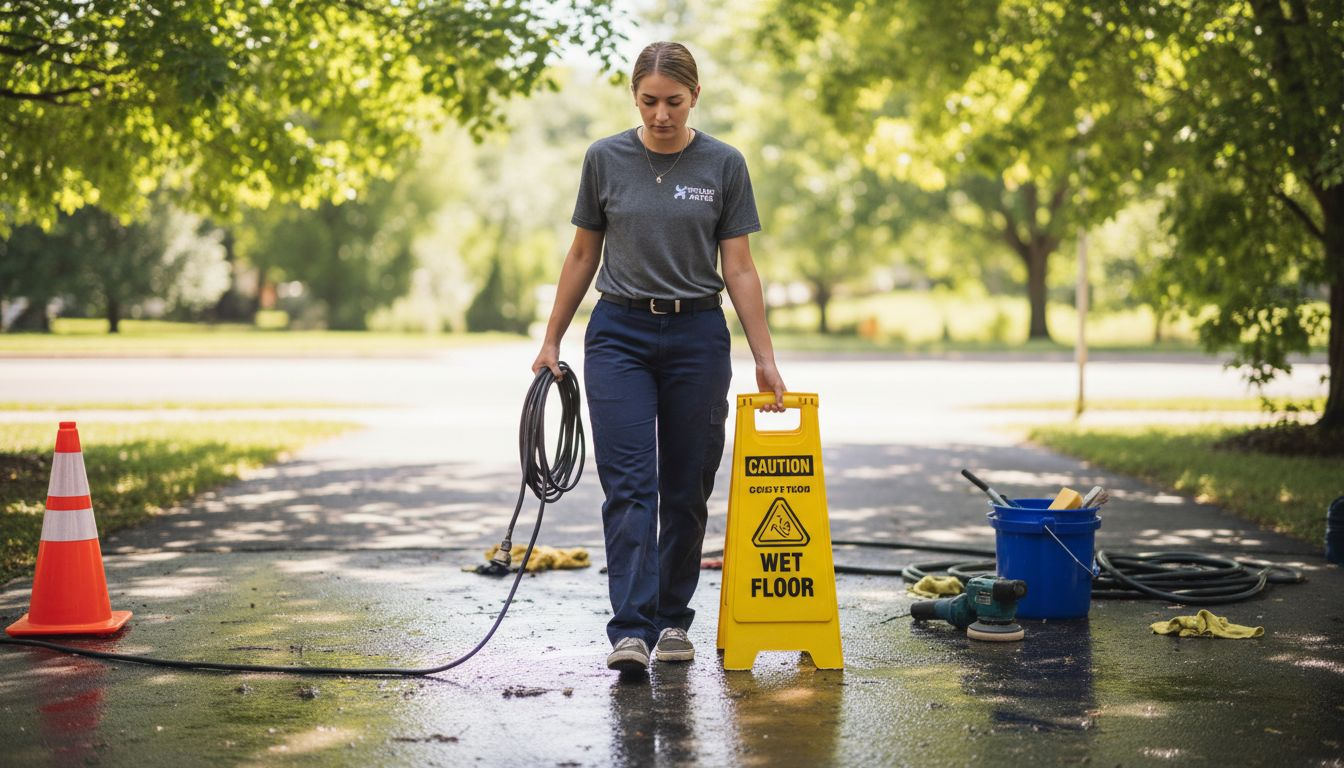
These aren’t dramatic risks—they’re the everyday injuries that sideline technicians and trigger workers’ compensation claims.
Environmental and Client-Related Risks
You work outdoors in all weather. Rain, heat, and cold affect grip, visibility, and concentration. Uneven surfaces, gravel, and debris complicate footing. Nearby traffic poses collision risks for your vehicle and team.
Clients sometimes interfere with work—asking technicians to move vehicles unsafely or requesting shortcuts that skip protective steps. Managing client expectations prevents these pressure situations.
Manual handling, machinery exposure, and chemical risks require active management through safety systems and inspections.
Pro tip: Create a pre-job site assessment checklist that technicians complete before starting—evaluate weather, surface conditions, nearby hazards, and client access points to identify risks before they become incidents.
Here’s how key safety risks in auto detailing compare in terms of frequency, impact, and prevention:
| Risk Type | Frequency on Job | Potential Impact | Effective Prevention |
|---|---|---|---|
| Chemical exposure | Very common | Skin/eye injuries, illness | PPE, proper ventilation |
| Slips, trips, and falls | Common | Sprains, fractures | Housekeeping, footwear |
| Equipment injuries | Occasional | Cuts, abrasions, bruises | Training, equipment guards |
| Ergonomic strain | Moderate | Back, shoulder pain | Correct lifting, rotation |
| Vehicle-related damage | Moderate | Costly repairs, liability | Inspection, communication |
Personal Protective Equipment and Chemical Safety
Personal protective equipment (PPE) is your first line of defense between your technicians and the hazards they encounter daily. Without it, even routine detailing jobs become dangerous. With proper PPE, most chemical and physical injuries become preventable.
But here’s the reality: PPE only works when your team actually wears it—and wears it correctly. A glove sitting in the van doesn’t protect anyone. A respirator worn incorrectly leaves gaps where vapor still reaches lungs.
Essential PPE for Detailing Work
Different jobs require different protection levels. Your chemical safety program should specify which PPE matches which tasks:
- Nitrile or latex gloves: Protect hands during chemical handling and contact with coated surfaces
- Chemical splash goggles: Shield eyes from spray and splashes during application
- Face shields: Provide broader facial protection when mixing or applying aggressive cleaners
- Respirators: Required when working with solvent-based products or in poorly ventilated spaces
- Safety-toed shoes: Protect feet from dropped equipment and puncture hazards
- Long-sleeved clothing: Creates a barrier between skin and chemical splashes
Proper selection, training, and enforcement of PPE depends on understanding the specific chemical hazards your team encounters.
Gloves: Your Most Critical PPE Item
Nitrile gloves stop most detailing chemicals from contacting skin. But material thickness matters. Thin gloves—the kind you grab cheaply—puncture easily and offer minimal protection. Heavy-duty nitrile or butyl rubber gloves provide better barrier protection, especially with aggressive degreasers.
Technicians often skip gloves because they feel bulky or reduce sensitivity. Your job is making them understand: ten minutes of reduced grip sensation beats weeks of chemical burns or skin irritation.
Eye and Respiratory Protection
Chemical splash goggles protect from splashes but don’t seal against vapor. If your technician is applying a solvent-based ceramic coating indoors or in low-ventilation areas, safety goggles and respirators become mandatory.
Respirator fit is critical. Many technicians wear them incorrectly—over beards, without sealing around the nose, or with expired cartridges. Annual fit testing and refresher training prevent these mistakes.
Making PPE Non-Negotiable
Your detailing business succeeds when safety becomes habit, not an afterthought. Require PPE before every job. Check it visually. Replace damaged items immediately. Stock extras in every vehicle so technicians never lack equipment.
Clients also respond to visible safety practices. When they see your team wearing goggles and gloves, they trust your professionalism and care for their vehicles.
Pro tip: Maintain a PPE inventory checklist in each mobile unit and conduct a 30-second equipment review before leaving for every job—damaged or missing items get replaced before the technician arrives at the client’s site.
Use this table as a reference for selecting personal protective equipment (PPE) for various detailing tasks:
| Task Type | Required PPE | Main Protection Focus |
|---|---|---|
| Chemical application | Gloves, goggles | Skin and eye safety |
| Pressure washing | Waterproof boots | Slip and impact hazards |
| Interior vacuuming | Dust mask, gloves | Dust/particle inhalation |
| Heavy lifting | Support belt, gloves | Back and hand security |
Vehicle and Surface Protection Procedures
Protecting your client’s vehicle during detailing is non-negotiable. One careless scratch, chemical burn, or stain during your service destroys trust and creates liability. Your procedures must prevent damage before it happens—not apologize for it afterward.
Every surface requires different handling. Dashboard plastics, leather seats, clear coat finishes, and chrome trim all respond differently to chemicals and techniques. Using the wrong product on the wrong surface causes permanent damage that no amount of explanation fixes.
Exterior Surface Protection
Your exterior detailing starts with protection, not aggression. Many technicians jump straight to aggressive polishing or heavy-duty degreasers. That’s how swirl marks and dulled finishes happen.
Proper procedure follows this sequence:
- Pre-wash: Rinse with low-pressure water to remove loose dirt and debris
- Contact wash: Use two-bucket method with pH-balanced automotive soap, never dish detergent
- Decontamination: Apply clay bar or chemical decontaminant to remove embedded particles
- Inspection: Examine for damage, paint thickness variations, or problem areas before proceeding
- Drying: Use microfiber towels to prevent water spotting and mineral deposits
- Protection: Apply appropriate waxes, sealants, or ceramic coatings based on client needs and surface condition
Rushed exterior work creates visible defects that persist until the client pays for correction.
Interior Surface Care
Interiors require gentler handling than many technicians realize. Leather conditioners, carpet cleaners, and dashboard treatments all have specific applications and concentrations. Wrong product choice strips protective coatings or leaves oily residue.
Interior protection includes:
- Vacuuming: Remove all loose debris before applying any liquid products
- Material-specific cleaners: Use leather-appropriate products on leather, fabric cleaners on upholstery
- Protective conditioning: Apply protectants designed for plastics, leather, and fabric surfaces
- Air quality: Avoid chemical odors that linger or indicate improper ventilation
Your technicians must understand that cleaning with mild, automotive-specific products preserves vehicle finishes and protects client investment over years.
Equipment and Tool Selection
The right tool matters as much as the right product. Using a rotary buffer instead of a dual-action polisher on delicate clear coats causes damage. Applying wheel cleaner with a stiff brush instead of soft applicator damages wheel finishes.
Invest in quality microfiber towels, applicator pads, and brushes designed specifically for automotive detailing. Cheap alternatives snag, scratch, and leave fibers behind.
Client Communication About Protection
Before you start, walk clients through what you will and won’t do. Explain why certain areas need gentle handling. Set expectations about what products you use and why. This prevents surprises and manages liability if any unexpected damage occurs.
Pro tip: Take a quick “before” photo of problem areas on every vehicle—scratches, water spots, or worn finishes—and show clients these photos before beginning work to establish baseline condition and protect against liability disputes.
Compliance, Liability, and Avoiding Common Mistakes
Compliance isn’t just about following rules. It’s about protecting your business, your team, and your reputation. One lawsuit can bankrupt a mobile detailing operation faster than you can fix a swirl mark.
Liability exposure in detailing comes from multiple directions: client property damage, technician injuries, chemical exposure incidents, and equipment-related accidents. Each requires different protection strategies.
Understanding Your Legal Exposure
Your business liability extends beyond obvious damage. If a technician gets injured due to inadequate safety training, you’re exposed. If a client’s vehicle sustains damage during your service, you’re liable. If environmental regulations around chemical disposal aren’t followed, fines and penalties accumulate quickly.
Compliance programs that balance cost with risk reduction protect your bottom line while demonstrating professionalism to clients.
Documentation: Your Best Defense
Write everything down. Document client agreements, service conditions, vehicle condition before and after, chemical products used, and safety incidents. This paper trail proves you followed proper procedures if disputes arise.
Your documentation should include:
- Client contracts: Clearly define scope of work, liability limits, and customer responsibilities
- Service records: Log every product used, technique applied, and time spent on each vehicle
- Safety protocols: Written procedures that prove you trained staff on hazard identification and risk control
- Incident reports: Detail any accidents, chemical exposures, or property damage immediately
- Inspection photos: Before-and-after images establish vehicle condition baseline
Clear contracts outlining scope, fees, and liability limits reduce litigation and financial exposure.
Insurance: Your Critical Safety Net
General liability insurance covers client property damage. Workers’ compensation covers technician injuries. Professional liability protects against claims of negligence or failure to perform.
But here’s what many detailing owners miss: appropriate professional indemnity insurance proportional to your risks means reviewing your coverage annually. As your service offerings expand—ceramic coatings, paint protection film, fleet services—your risk profile changes. Your insurance should too.
Underinsured businesses discover this truth the hard way.
Common Mistakes That Create Liability
Most detailing accidents aren’t accidents at all. They’re predictable consequences of cutting corners:
- Skipping PPE: Technicians exposed to chemicals without proper gear
- Rushing inspections: Missing pre-existing damage that gets blamed on your work
- Vague client communication: Clients expect perfection when you never discussed realistic limitations
- No written procedures: Staff improvise instead of following proven safety steps
- Inadequate training: New technicians learn by watching instead of systematic instruction
Each creates liability exposure that insurance may not fully cover.
Building a Compliance Culture
Compliance succeeds when it’s embedded in daily operations, not treated as bureaucracy. Your team follows safety protocols because they understand why they exist. Clients trust you because your documentation and communication set clear expectations.
This takes effort. But the alternative—defending yourself in court—takes far more.
Pro tip: Create a simple one-page liability waiver that clients sign before service begins, clearly stating pre-existing vehicle conditions, scope of work limitations, and that your team will use industry-standard safe practices—this document protects you while setting realistic client expectations.
Safeguard Your Vehicle and Team with Proven Safety and Premium Detailing Services
Every vehicle owner and professional detailer knows the risks that come with auto detailing. The challenge is clear: balancing powerful chemical use, expert vehicle care, and strict safety protocols to protect both your car and the technicians. At CDC Auto Detailing, we understand the critical importance of documented safety procedures and skilled service to avoid chemical exposure, equipment injuries, and vehicle damage highlighted in the article “Detailing Safety Protocols: Protecting Clients and Techs”. Our South Jersey mobile detailing crew follows rigorous safety standards while delivering superior interior and exterior care with products like ceramic coatings and paint protection film.
Discover peace of mind knowing your vehicle is in trusted hands that prioritize health and safety at every step. Visit CDC Auto Detailing to explore our full range of mobile auto care services and detailed safety protocols. Schedule your appointment today and experience expert detailing combined with industry-leading protection procedures. Protect your investment and safeguard your loved ones by choosing a professional team committed to excellence and responsibility.
Learn more about our service offerings and safety commitment by browsing our detailing services page and how we maintain high safety standards on every job. Take control of your vehicle care with CDC Auto Detailing now.
Frequently Asked Questions
What are the key safety protocols in auto detailing?
True detailing safety protocols include chemical management, proper equipment operation, wearing personal protective equipment (PPE), clear client communication, emergency procedures, and careful vehicle handling to prevent damage during services.
Why are documented safety standards important in detailing?
Documented safety standards ensure consistency, reduce the risk of accidents, protect your team and clients, and foster trust. They provide clear guidance for technicians, making safe practices a habit rather than relying on individual judgment.
What types of personal protective equipment (PPE) are essential for detailing work?
Essential PPE includes nitrile or latex gloves for hand protection, chemical splash goggles to shield eyes from sprays, respirators for working with solvent-based products, and safety-toed shoes to protect feet from equipment drops.
How can I manage chemical exposure risks in detailing?
To manage chemical exposure risks, ensure that technicians wear appropriate PPE, work in well-ventilated areas, and follow proper handling, storage, and disposal procedures for all chemical products used in detailing.
Recommended
- Why Auto Detailing Safety Protocols Protect Your Car
- 7 Essential Car Detailing Safety Tips for Busy Professionals
- Master the Mobile Detailing Appointment Workflow Easily
- 7 Essential Detailing Best Practices for 2025 Success
- Sicurezza nel noleggio attrezzature: come tutelare imprese edili | NoleggioQui
- Rol de la Seguridad en Taxis: Clave para Viajar Tranquilo – Mallorcab