
TL;DR:
- Multi-stage polishing achieves 95-100% defect removal, unlike single-stage’s 60-80%.
- It involves multiple steps using finer compounds, taking over 20 hours, and removing more clear coat.
- Professional expertise is essential to avoid paint damage, with proper measurement and technique.
Most vehicle owners assume a single quick polish will fix swirl marks, scratches, and dull paint. It won’t. A single-stage treatment typically removes only 60-80% of visible defects, which means you’re driving away with paint that still looks tired under direct sunlight. Multi-stage polishing is a completely different game, and if you own a premium vehicle or want show-quality results right here in South Jersey, understanding how it works could save your paint and your money.
Table of Contents
- What is multi-stage polishing?
- Multi-stage vs single-stage: Key differences
- When is multi-stage polishing worth it?
- The risks and realities: Why expertise matters
- Our take: The truth about getting pro results in South Jersey
- Ready for flawless paint? Book your South Jersey multi-stage polish
- Frequently asked questions
Key Takeaways
| Point | Details |
|---|---|
| Superior defect removal | Multi-stage polishing removes up to 99% of defects for showroom-quality results. |
| Expertise is essential | Professional detailers reduce risks and ensure safe, long-lasting paint correction. |
| Protection prolongs finish | Always seal your freshly polished paint with ceramic coating or paint protection film. |
| Not every car needs it | Multi-stage polishing is usually best for premium or heavily damaged vehicles. |
What is multi-stage polishing?
Multi-stage polishing is a structured, step-by-step paint correction process that uses progressively finer polishing compounds and machine pads to remove defects, refine the surface, and maximize gloss. Think of it like sanding wood: you start coarse to remove the damage, then work finer to smooth, then finish ultra-fine to reveal the true grain. Your car’s paint works the same way.
The process typically runs in three stages:
- Stage 1 (Cut/Compound): The most aggressive step. Uses a firm pad and heavy-cut compound to remove deep scratches, oxidation, and significant swirl marks.
- Stage 2 (Polish/Refine): A medium-grade polish with a softer pad removes haze and micro-scratches left behind from Stage 1.
- Stage 3 (Finishing/Jeweling): The finest compound and pad combination brings out maximum clarity, gloss, and depth in the paint.
Each stage builds on the last. Skipping straight to a finishing polish when you have deep defects is like putting a coat of paint over a cracked wall. It looks better for a moment, but the problems remain underneath.
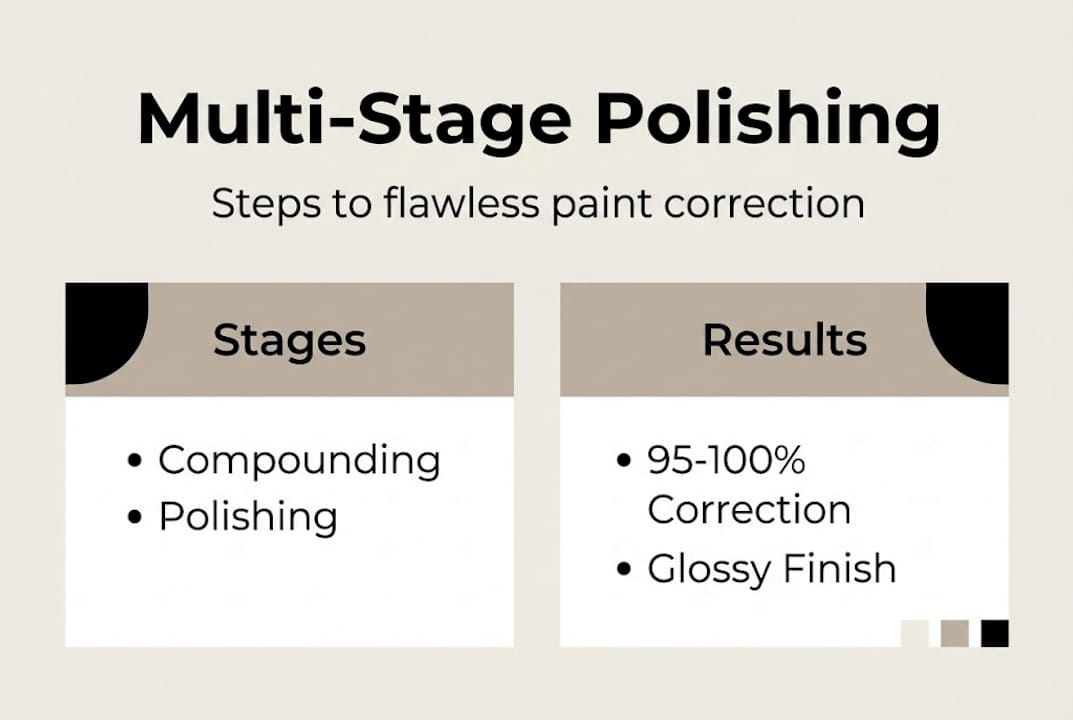
The results are dramatic. Multi-stage achieves 95-100% defect removal compared to 60-80% for single-stage treatments, with a full correction taking 20 or more hours. Each compounding session removes 3-6 microns of clear coat, which means precision matters.
For this reason, multi-stage paint correction demands expert execution. A professional will monitor the paint curing process and test every panel before committing to a full correction pass.
The bottom line: Multi-stage polishing is not a luxury detail upgrade. It is the only method capable of restoring a vehicle’s paint to near-perfect condition when real damage is present.
If you want to understand what local detailing services in South Jersey can realistically achieve with this process, the difference in outcome versus a quick single-stage buff is significant.
Multi-stage vs single-stage: Key differences
Single-stage polishing uses one compound and one pad to address all defects in a single pass. It’s faster, less expensive, and works well for vehicles with light surface scratches and minimal paint damage. Multi-stage polishing addresses the full spectrum of paint defects from light swirls to deep oxidation by layering progressively refined steps.
Here’s a clear side-by-side comparison:
| Factor | Multi-stage | Single-stage |
|---|---|---|
| Defect removal | 95-100% | 60-80% |
| Time required | 20+ hours | 4-8 hours |
| Clear coat removed | 3-6 microns per stage | 1-2 microns |
| Cost | Higher | Lower |
| Future correction risk | Higher (more clear coat used) | Lower |
| Best use case | Show cars, premium vehicles, heavy damage | Daily drivers, light defects |
As the data shows, multi-stage is ideal for perfection on show cars and heavily damaged paint, but it is time and cost intensive and uses more clear coat, which limits how many future corrections your vehicle can safely handle. Single-stage is perfectly sufficient for light defects on daily drivers.
The choice comes down to your vehicle’s current condition and your ownership goals:
- Choose multi-stage if: Your vehicle has deep swirl marks, heavy oxidation, scratches visible in direct sunlight, or you want show-grade results before a sale or concours event.
- Choose single-stage if: Your paint is generally clean with minor surface hazing, you want a cost-effective refresh, or your vehicle is a daily driver that takes on road grime regularly.
Vehicle owners across South Jersey mobile detailing coverage areas often ask us which approach fits their situation. The honest answer is that most daily drivers don’t need the most aggressive correction available. A skilled detailer with local expertise will assess your paint honestly before recommending anything.
When is multi-stage polishing worth it?
The real question most owners face: Is a multi-stage polish right for your vehicle, or is single-stage good enough?
Here’s a practical framework to help you decide:
- Inspect your paint in direct sunlight. Light surface haze is a single-stage job. Visible swirl marks, deep scratches, or dull oxidized sections signal that multi-stage correction is warranted.
- Consider the vehicle’s purpose. Vehicles heading to car shows, being listed for sale at a premium price, or belonging to collectors benefit most from a full multi-stage correction.
- Think about how long you plan to keep the car. If you’re holding onto it for five-plus years, the investment in multi-stage correction, followed by ceramic coating protection, pays off over time.
- Ask about paint thickness. Balancing defect removal with clear coat preservation is critical. Multi-stage achieves 95%+ correction on damaged premium vehicles, but measuring paint thickness first ensures you have enough clear coat remaining for the job.
For South Jersey owners looking at premium detailing in Marlton or surrounding areas, your vehicle’s history matters too. Repainted panels, single-stage factory paints on older cars, or soft paints common on European luxury vehicles require extra care and a lighter approach.
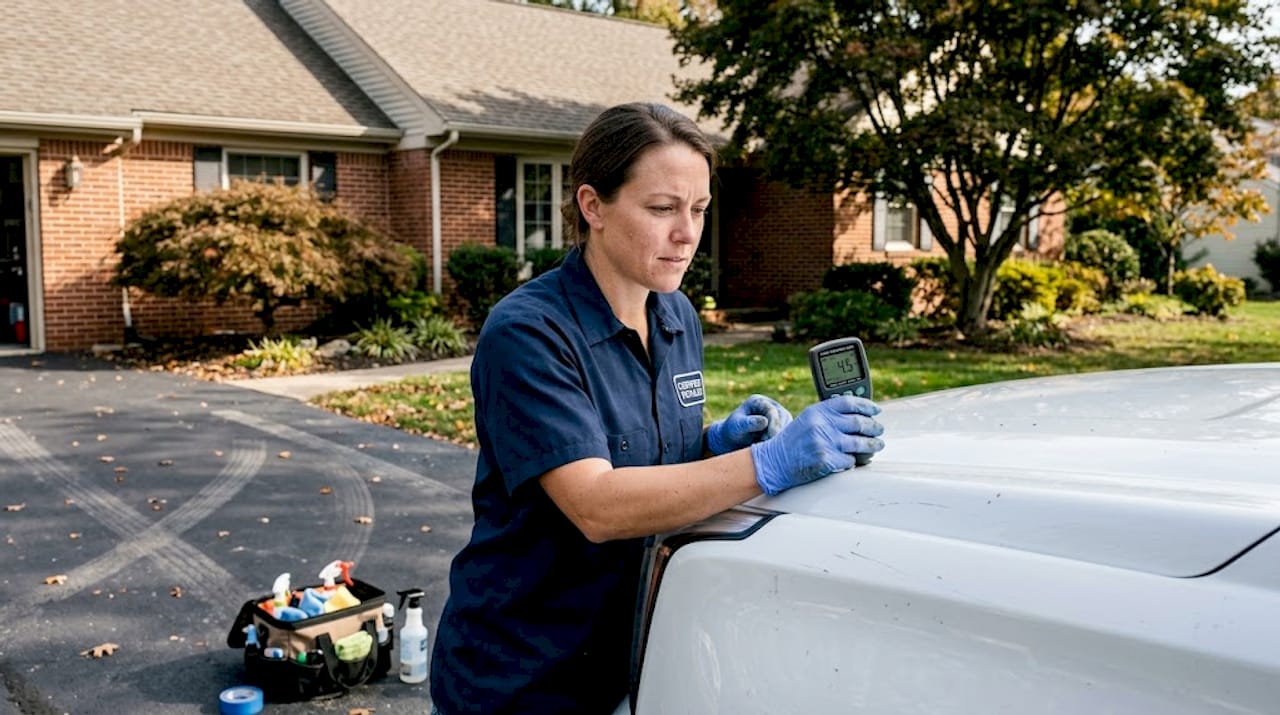
Pro Tip: Always request a paint thickness gauge (PTG) reading and a test spot in an inconspicuous area before approving any multi-stage work. This is not optional. It is the professional standard, and any reputable detailer will offer it without hesitation.
The risks and realities: Why expertise matters
If you’re weighing a DIY approach or shopping for detailers, you need to understand the risks and why expertise is non-negotiable.
Multi-stage polishing with a machine polisher is not a beginner’s task. When done incorrectly, the results can be worse than the original defects. Common DIY and inexperienced-technician mistakes include:
- Holograms: Swirl-like patterns left behind by incorrect pad and compound combinations or poor technique. They’re often only visible in direct light but impossible to ignore once you know they’re there.
- Burn-through: Applying too much heat or pressure cuts through the clear coat entirely, exposing the base coat or primer underneath. This requires a full respray to fix.
- Uneven correction: Without LED lighting inspection and test spots, you can remove defects inconsistently, leaving blotchy areas across panels.
- Excessive clear coat removal: Pushing too hard on already-thin panels or edges reduces the paint’s lifespan, leaving you with fewer future correction options.
Expert-level correction requires PTG readings pre-correction to avoid burn-through on thinner edges. Test spots under LED lighting are standard practice. DA (dual-action) polishers are significantly safer than rotary tools for most correction work because they generate less friction and heat.
The risks multiply on soft paints, dark-colored vehicles, repainted panels, and older single-stage finishes. Prioritizing professionals for mobile services in South Jersey ensures PTG testing and genuine expertise, avoiding the costly mistakes that DIY polishing can cause.
For a closer look at why DIY polishing kit risks are underestimated, the equipment alone is only part of the equation. Technique, experience, and paint knowledge are what separate a safe correction from a panel-ruining mistake.
Pro Tip: After any multi-stage correction, always protect the freshly corrected paint with a ceramic coating or paint protection film. Without protection, environmental contaminants will start reintroducing defects within weeks. The correction is only as good as what follows it.
If you live anywhere in South Jersey, the Pitman detailing experts at CDC Auto Detailing offer professional-grade correction with proper PTG testing and protection services to back it up.
Our take: The truth about getting pro results in South Jersey
Stepping back, here’s what years of hands-on detailing experience in South Jersey have taught us: multi-stage polishing is sometimes oversold. Not every vehicle needs a three-stage correction. Recommending the most aggressive process to every customer isn’t expertise. It’s just maximizing the invoice.
The smarter approach is matching the correction method to what the vehicle’s paint actually needs. A well-maintained daily driver with light swirling doesn’t need three stages and 20+ hours of machine polishing. A single-stage treatment followed by a quality ceramic coating often delivers 90% of the visual impact at a fraction of the clear coat cost.
Here’s the uncomfortable truth: every polishing session uses up clear coat you can’t replace. Treating your vehicle aggressively now might mean fewer safe correction options down the road. Choosing local experts who understand restraint and precision is just as important as choosing experts who can execute the most aggressive correction. The best detailer for your car is the one who tells you what you need, not just what’s possible.
Ready for flawless paint? Book your South Jersey multi-stage polish
If you want show-grade results with maximum protection, here’s how to take the next step.
At CDC Auto Detailing, we bring professional-grade multi-stage polishing directly to your driveway across South Jersey. Our process starts with a PTG assessment, includes a test spot, and finishes with your choice of long-term protection.

Browse our auto detailing examples to see what a proper correction looks like before and after. For the strongest long-term protection after polishing, our ceramic coating service and paint protection film options are built to lock in your results for years. Book your appointment today and let your paint speak for itself.
Frequently asked questions
How long does multi-stage polishing take?
A thorough multi-stage polish takes 20 or more hours to complete for best results. Rushing the process compromises the quality of defect removal at each stage.
Does multi-stage polishing damage the paint or clear coat?
When properly measured, each compounding session removes 3-6 microns of clear coat, which is safe in limited sessions but reduces paint lifespan over repeated corrections. This is why paint thickness readings before every job matter.
What protection should follow multi-stage polishing?
Applying a ceramic coating or paint protection film is strongly recommended after polishing. The correction removes defects, but protection locks in the finish and prevents new contamination from undoing the work.
Why shouldn’t I DIY multi-stage polishing?
DIY attempts commonly result in holograms or clear coat damage because the process requires specialized tools, PTG readings, and test spot evaluation that go beyond what a beginner setup provides.