
TL;DR:
- Paint correction permanently removes surface defects by mechanically polishing the clear coat.
- It offers long-lasting results and enhances vehicle value better than temporary products like wax.
- Proper correction requires skilled technicians following a multi-step process for optimal and safe results.
Most car owners grab a bottle of wax or a scratch-removal product at the auto parts store when they notice swirl marks or light scratches on their vehicle. It feels like the smart, fast fix. But here’s the uncomfortable truth: those products don’t actually fix anything. They mask defects temporarily, filling in imperfections with oils and fillers that wash away after a few weeks. If you want your car’s paint to genuinely look better, last longer, and hold its value, you need to understand what paint correction actually does and why it’s in a completely different category from a quick product wipe-down.
Table of Contents
- What is paint correction and why does it matter?
- How paint correction works: the step-by-step process
- Paint correction vs. other options: what makes it different?
- How paint correction boosts and protects your car’s value
- Our take: why paint correction is often undervalued
- Ready to experience the benefits of paint correction?
- Frequently asked questions
Key Takeaways
| Point | Details |
|---|---|
| Paint correction explained | Paint correction removes imperfections and restores your car’s original gloss, setting it apart from basic waxing or polishing. |
| Process is precise | A multi-step approach ensures long-lasting results and prepares your vehicle for advanced protection. |
| Value goes beyond looks | Proper paint correction boosts resale value, extends the life of your paint, and makes future cleanings easier. |
| Professional matters | Skilled technicians deliver safer, longer-lasting results compared to DIY or quick fixes. |
What is paint correction and why does it matter?
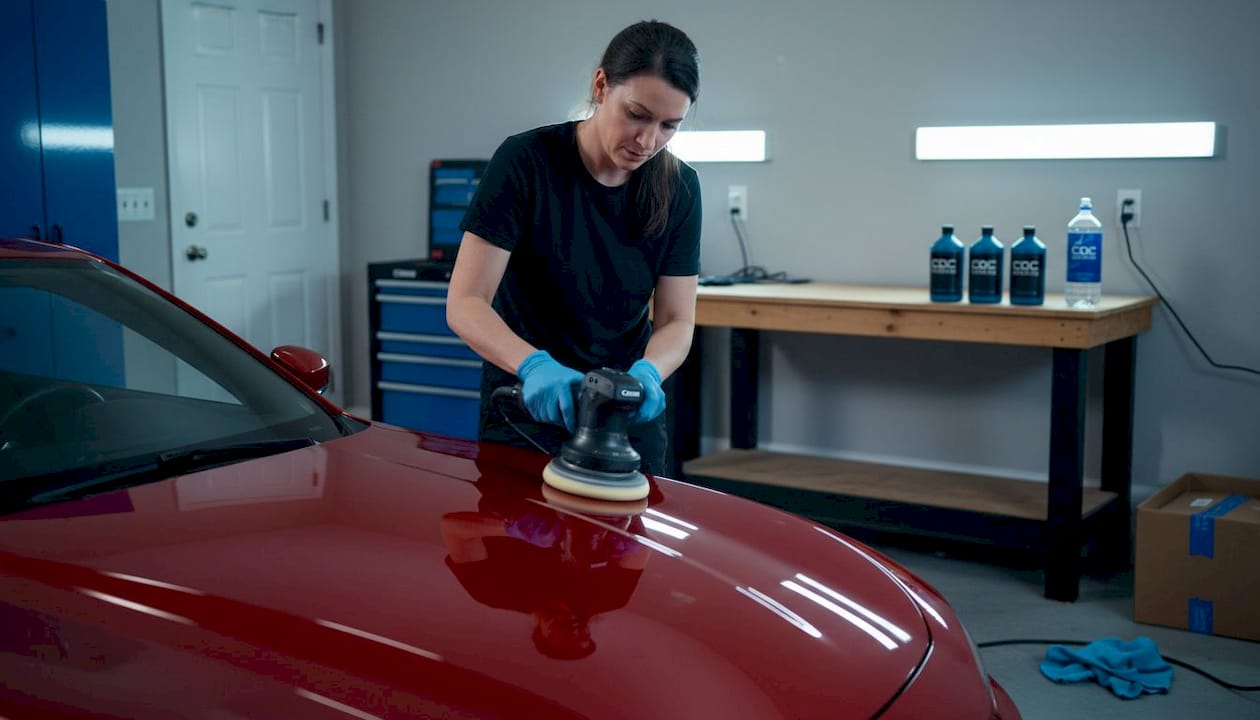
Paint correction is the process of permanently removing defects from your vehicle’s clear coat through mechanical polishing. That means using a machine polisher with progressively finer compounds and pads to actually level the surface of the paint, not coat over it. The result is a smooth, reflective surface that looks the way it did when the car rolled off the showroom floor, sometimes even better.
This is a fundamental difference from waxing or applying a paint sealant. Both of those products sit on top of the paint. They add a thin, temporary layer that gives a glossy appearance but leaves the defects completely intact underneath. When that protective layer wears off, which it will, your scratches and swirl marks are still exactly where they started.
Common defects that paint correction addresses include:
- Swirl marks caused by incorrect washing or automatic car washes
- Light scratches that haven’t penetrated through the clear coat
- Water spot etching from mineral deposits in rain or sprinkler water
- Buffer trails left by inexperienced polishing attempts
- Oxidation and fading caused by UV exposure over time
- Holograms from improper machine polishing
As the team at CDC Auto Detailing explains, paint correction restores and protects car shine by removing swirls, scratches, and defects, not hiding them beneath a product layer.
| Defect type | Cause | Correctable with polishing? |
|---|---|---|
| Swirl marks | Car washes, dry wiping | Yes |
| Light surface scratches | Keys, brushes, debris | Most cases, yes |
| Water spot etching | Mineral deposits | Usually yes |
| Deep scratches (to primer) | Sharp impacts | No, requires repainting |
| UV fading and oxidation | Sun exposure over years | Often yes |
Pro Tip: If you’ve applied wax or a store-bought scratch filler to your paint and then try to polish it later, the residue can interfere with the correction process. Always disclose any previous product applications to your detailer so they can properly prepare the surface.
For South Jersey vehicle owners dealing with year-round sun, road salt from winter driving, and summer humidity, paint defects build up faster than most people expect. The sooner you address them with proper correction, the less material needs to be removed from the clear coat, which is always a finite resource.
How paint correction works: the step-by-step process
Understanding how the process works from start to finish helps you see exactly why paint correction delivers results that no product off a shelf ever can. It’s not magic. It’s a sequence of deliberate, skilled steps performed by someone who understands both the chemistry of automotive paint and the mechanics of machine polishing.
Here’s how a professional paint correction typically unfolds:
-
Pre-wash and decontamination. Before anything touches the paint with a machine, the vehicle is thoroughly washed to remove loose dirt, road grime, and contaminants. A clay bar or decontamination spray is used to pull bonded particles like iron deposits and tar out of the paint surface. Skipping this step means polishing abrasives can drag embedded particles across the clear coat and cause new scratches.
-
Paint thickness measurement. A paint depth gauge is used to check the thickness of the clear coat across different panels. This tells the technician how much material can safely be removed before the paint is compromised. Panels that have been repainted may have less clear coat to work with and need extra care.
-
Defect mapping and assessment. Under strong lighting, and often a paint inspection light, the technician identifies every type of defect and its severity across each panel. This determines which compounds, pads, and polishing stages will be needed.
-
Compounding (heavy stage). This is the most aggressive step, using a cutting compound with a foam or microfiber pad to remove deeper scratches and heavy swirl marks. This stage takes the most time and generates the most heat, requiring constant monitoring of panel temperature.
-
Polishing (refinement stage). A finer polish with a softer pad follows to eliminate any haze, buffer trails, or micro-scratches left by the compounding stage. This is where the true clarity and depth of the paint begins to emerge.
-
Final inspection. Every panel is inspected again under lighting to catch any missed defects or areas that need a touch-up pass. Nothing moves forward until the surface meets the technician’s standard.
-
Protection application. Once correction is complete, the bare clear coat is vulnerable and needs immediate protection, either a wax, sealant, or ideally a ceramic coating for long-term durability.
“The difference between a good paint correction and a bad one comes down to preparation, patience, and the technician’s ability to read the paint.” This is something we see firsthand with every vehicle we work on at CDC Auto Detailing.
Paint correction technicians use specific cleaning, assessment, and polishing methods for optimal results, and each step matters. One rushed pass with the wrong pad can introduce new damage that takes twice as long to remove.
Pro Tip: Ask your detailer whether they test their products on a small section first before treating the full panel. This test spot approach is standard practice for any professional with real expert training and shows they respect your vehicle’s paint.
Paint correction vs. other options: what makes it different?
Now that the process of paint correction is clear, it helps to see how it lines up against other common appearance services. Knowing when to use which service saves you money and sets the right expectations for your results.
Here’s a direct comparison of the main options:
| Method | Removes defects? | How long does it last? | Best suited for |
|---|---|---|---|
| Wax | No | 4 to 8 weeks | Maintenance on corrected paint |
| Paint sealant | No | 3 to 6 months | Temporary protection between details |
| Paint correction | Yes | Years, with protection | Restoring paint before coating or sale |
| Ceramic coating | No (applied after correction) | 2 to 5 years | Long-term protection on corrected paint |
| Paint protection film | No (applied after correction) | 5 to 10 years | Physical protection from chips and abrasion |
The most important thing to understand is that wax and sealant are maintenance tools, not correction tools. They belong after paint correction, not instead of it. Applying wax to a scratched surface is like painting over a cracked wall. It looks better briefly, but the underlying problem remains.
As noted by the professionals at CDC Auto Detailing, paint correction removes flaws from the paint rather than just covering them. This distinction means that the investment you put into correction actually changes the physical condition of your vehicle’s surface, not just its temporary appearance.
When to choose each method:
- Wax or sealant: Your paint is already in good condition after a correction, and you want to maintain the results between appointments.
- Paint correction: Your vehicle has visible swirl marks, water spots, or light scratches, or you want to prepare it for a ceramic coating.
- Ceramic coating: You want the longest-lasting protection after correction without the maintenance burden of waxing every few weeks.
- Paint protection film (PPF): You want physical impact resistance on high-risk areas like the hood, mirrors, and bumper.
For those exploring services in South Jersey, understanding the relationship between paint correction and ceramic coating is key. A ceramic coating applied over uncorrected paint will lock in all those scratches and swirl marks permanently. Correction must come first.
How paint correction boosts and protects your car’s value
Beyond making your car look great, paint correction carries real financial and protective benefits that many vehicle owners underestimate. Whether you drive a daily commuter or a weekend show car, the condition of your paint sends a message to everyone who sees it.
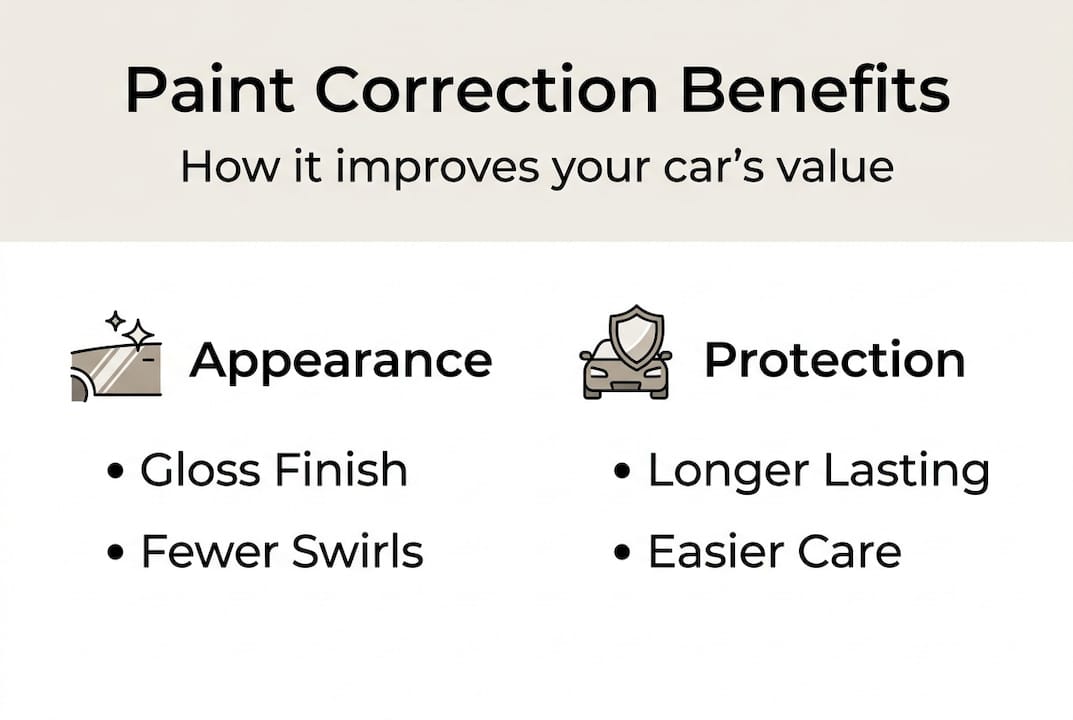
For car sellers and those approaching trade-in: First impressions dominate. A car with dull, swirled paint tells a buyer or appraiser that the vehicle wasn’t cared for, even if the mechanical systems are flawless. Corrected paint signals an attentive owner and supports a higher asking price or trade-in appraisal. Proper paint correction can increase a vehicle’s perceived value and make it significantly easier to resell.
| Owner type | Key benefit of paint correction |
|---|---|
| Daily driver | Removes built-up swirls and keeps paint healthy |
| Car enthusiast | Achieves show-quality clarity and depth |
| Pre-sale/trade-in | Maximizes perceived value and buyer confidence |
| New vehicle owner | Removes dealer-installed swirl marks before coating |
| High-mileage vehicle owner | Restores faded paint and extends the vehicle’s life |
Benefits for different owner scenarios:
- New car buyers often find their vehicle already has swirl marks from the dealership’s washing equipment. Correction right away, followed by a ceramic coating, locks in that factory fresh look.
- Daily drivers in South Jersey accumulate paint damage faster than they realize from road debris, automatic car washes, and improper drying techniques. Periodic correction keeps the clear coat healthy and prevents compounding damage.
- Enthusiasts preparing for shows know that depth, gloss, and clarity can only be achieved by removing defects, not covering them. No amount of wax recreates corrected, polished paint.
- Anyone approaching resale within the next six to twelve months benefits enormously from correction because the return on investment through a higher sale price often exceeds the cost of the service.
Paint correction also plays a critical role in preparing the surface for protective coatings. A ceramic coating needs to bond directly to the clear coat to achieve full hardness and hydrophobic performance. Defects trapped beneath the coating reduce bonding quality and appearance. When you restore car shine through proper correction first, you get dramatically better results from any coating or film applied afterward.
Our take: why paint correction is often undervalued
Most car owners think of paint correction as a luxury, a nice-to-have service for enthusiasts and collectors. We respectfully disagree. After working with vehicles across South Jersey, we’ve seen what happens when surface defects are ignored for years. What starts as light swirl marks from a car wash becomes oxidized, hazed paint that requires aggressive correction and removes significantly more clear coat to fix. The longer you wait, the more invasive the solution has to be.
DIY paint correction attempts are another issue we see regularly. Store-bought dual-action polisher kits, without proper technique, create buffer trails and uneven cuts that are sometimes worse than the original defects. Paint correction is one of those skills where the tool is only 20% of the result. The remaining 80% is training, technique, and experience reading the paint.
We also see owners apply ceramic coatings on top of uncorrected paint, expecting the coating to hide the problems. It doesn’t. It seals them in. This is why automotive paint correction is a foundational service for vehicle longevity, not just for looks. Educated owners who understand this make smarter investments and get dramatically better outcomes from every detailing service they purchase. Why paint correction matters goes well beyond cosmetics. It’s about protecting the vehicle you’ve already invested in.
Ready to experience the benefits of paint correction?
If you’ve learned one thing from this article, it’s that real paint correction goes far beyond anything you can get from a shelf product or a quick wash. It restores, protects, and genuinely improves your car’s condition and value.

At CDC Auto Detailing, we bring professional mobile paint correction directly to your driveway across South Jersey, no need to drop your vehicle off or wait around. Once correction is done, we can walk you through your best protection options, from ceramic coatings to paint protection film. Explore our auto detailing services to see the full range of what we offer, learn how auto detailing works, and find out why mobile detailing delivers premium results on your schedule. Contact us today to book your appointment.
Frequently asked questions
How long does paint correction typically last?
Paint correction can last for years, especially with proper aftercare and added protection like ceramic coatings or paint protection film. The durability of correction depends heavily on how well the vehicle is maintained and washed after the service.
Is paint correction safe for all types of car paint?
When performed by a trained professional, paint correction is safe for factory paints and most repainted surfaces. Proper technique is essential to ensure the clear coat is not over-polished or damaged during the process.
Can paint correction fix all scratches and blemishes?
Paint correction can fix most surface defects that remain within the clear coat, but deep scratches that reach the primer or bare metal may require touch-up paint or panel repainting. Most surface defects are well within the reach of a skilled technician using the right compounds.
Should I get a ceramic coating after paint correction?
Yes, applying a ceramic coating right after paint correction is the best way to lock in the results and protect the surface from future damage. Paint correction preps surfaces for ceramic coatings, ensuring maximum bonding strength and a flawless final appearance.