
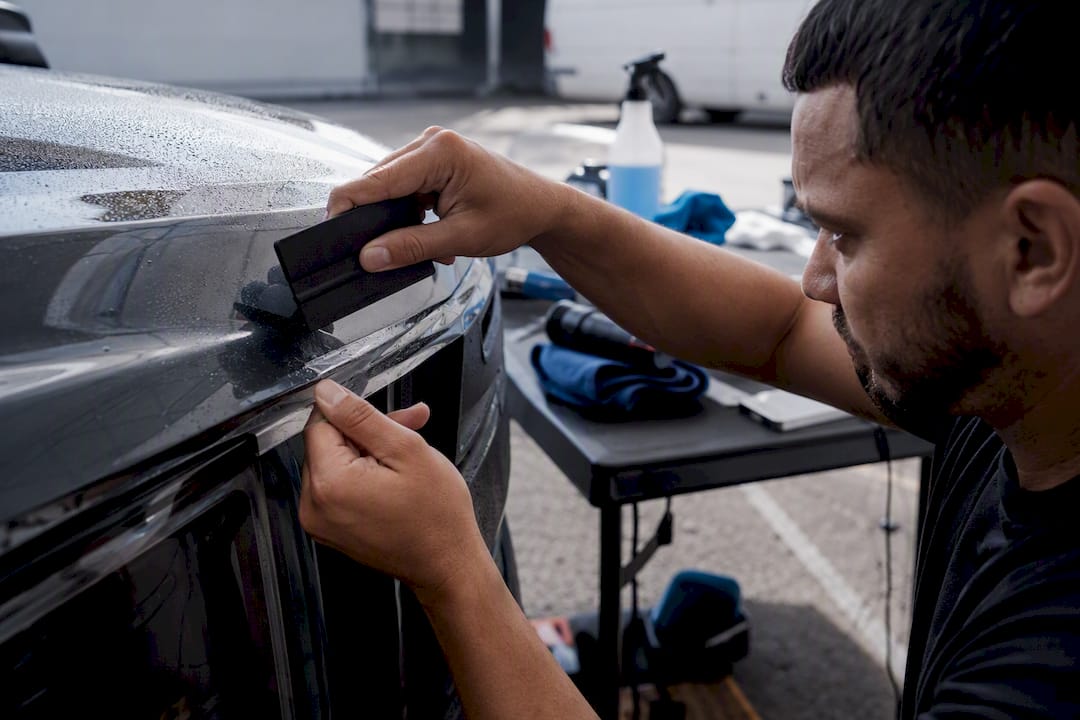
PPF is worth it for most trucks that see highway gravel, off-road trails, or daily hauling. The upright grille, taller ride height, and constant tire sling put more stone chips on a truck’s front end than on a sedan’s, so the smart first move is protecting the impact zones, not wrapping the whole vehicle. Start here:
- Hood leading edge
- Front bumper
- Side mirrors
- Front fenders
Ceramic coating pairs well with paint protection film for trucks, adding gloss and easier washing on top of the physical shield PPF provides. Get the impact zones covered first. Everything else is a budget and priorities decision.
Key Takeaways
PPF protects trucks best when coverage starts at the hood leading edge, bumper, mirrors, and fenders, and pairing it with ceramic coating on top extends both protection and ease of maintenance.
| Point | Details |
|---|---|
| Prioritize impact zones first | Cover the hood leading edge, bumper, mirrors, and front fenders before considering full-vehicle wraps. |
| Match package to use case | Partial-front suits commuters; full-vehicle coverage fits off-road, towing, or show trucks. |
| Stack PPF with ceramic coating | Apply PPF first, then ceramic on top for gloss, hydrophobic benefits, and easier cleaning. |
| Expect 7 to 10 years of life | Climate, mileage, and installation quality all affect how long premium film lasts. |
| Vet installers before booking | Check portfolios, references, and warranty handling to avoid visible edges and yellowing. |
| Book a mobile install | Cdcautodetailing provides mobile PPF installation and fleet-documented coverage across South Jersey. |
Table of Contents
- What Is PPF for Trucks and Why Does It Matter?
- Where Should You Put PPF on a Truck First?
- How Does PPF Compare to Ceramic Coating?
- How Much Does PPF Cost on a Truck?
- What Does Professional PPF Installation Involve?
- How Long Does Truck PPF Actually Last?
- What Are the Common PPF Regrets?
- What Does a Professional PPF Install Look Like at CDC Auto Detailing?
- What Film Grades Work Best for Truck Panels?
- How Should PPF Removal and Reinstallation Be Handled?
- What Makes Trucks Harder to Protect Than Cars?
- Does Off-Road or Commercial Use Change What Film You Need?
- Will PPF Work on My Truck’s Paint Finish?
- When Do I Tell Truck Owners PPF Is Worth It?
- Get Your Truck’s PPF Installed Right the First Time
- Where to Learn More About Truck PPF
- Frequently Asked Questions
- Sources
What Is PPF for Trucks and Why Does It Matter?
Paint protection film is a clear, thermoplastic polyurethane layer applied directly to a truck’s painted surfaces, absorbing impacts before they reach the clear coat. Most premium films include a self-healing topcoat that uses heat, sun or warm water to smooth out light swirls and scratches on its own, according to technical breakdowns of PPF materials.
Trucks take more abuse than passenger cars for a simple reason: geometry. A taller front end and higher ride height put the hood, bumper, and fenders directly in the path of kicked-up gravel, and dually or towing rigs add tire sling from trailers and heavier loads. Highway commuters and off-road drivers both see accelerated chipping compared to a sedan on the same road.
When you’re comparing film options, look past the marketing copy and check three things:
- Thickness — expressed in mil, thicker films generally resist deeper impacts.
- Warranty length — many manufacturers back premium film for around 10 years against yellowing and cracking.
- Topcoat features — self-healing and hydrophobic properties aren’t just buzzwords; they determine how the film looks five years in.
Manufacturer data on high-impact truck panels illustrates examples of films used on hoods and bumpers, giving a useful benchmark for what “premium” actually means, as detailed in truck-specific PPF coverage guides. A thin, no-name film with no stated warranty is a different product entirely, even if it looks identical on the shelf.
Where Should You Put PPF on a Truck First?
Coverage decisions come down to where a truck actually gets hit, and the data on impact zones is consistent across the industry. The hood leading edge, front bumper, side mirrors, and front fenders absorb the overwhelming majority of stone chips and road debris, which is why truck PPF specialists treat these panels as the non-negotiable starting point regardless of budget.
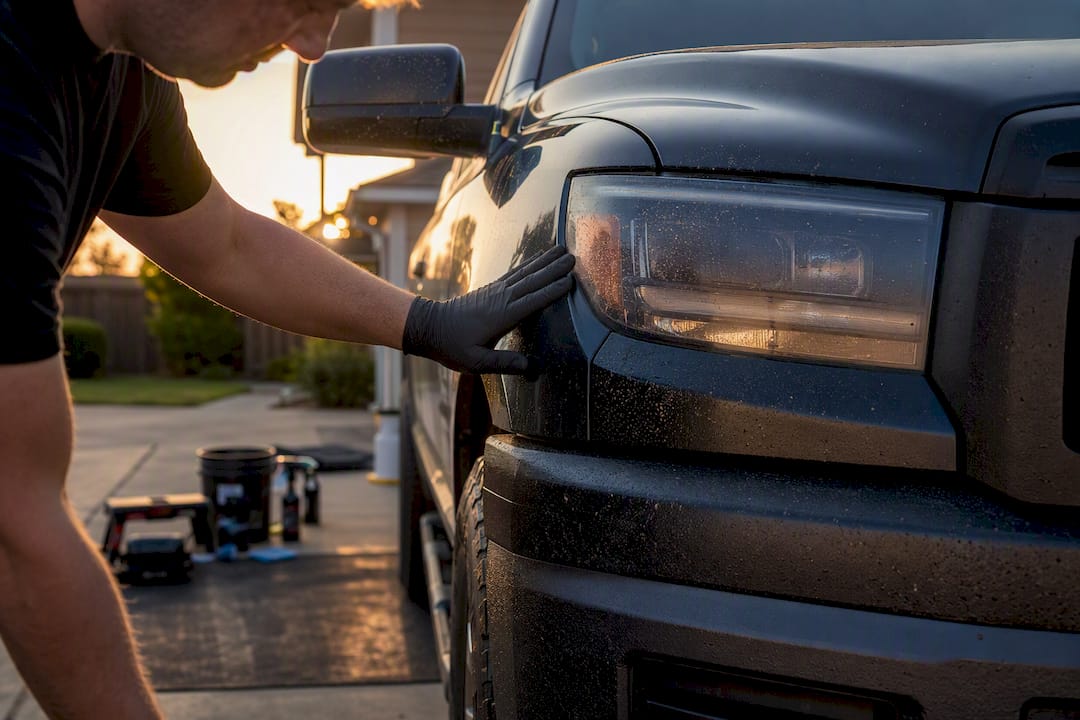
Beyond that starting point, the choice is between partial-front, full-front, and full-vehicle packages:
| Package | What’s Covered | Best For |
|---|---|---|
| Partial-front | Hood leading edge, bumper, mirrors | Budget-conscious daily drivers, light highway use |
| Full-front | Full hood, full bumper, fenders, mirrors, headlights | Regular highway commuters, light towing |
| Full-vehicle | Every exterior panel | Off-road trucks, show trucks, long-term owners |
Partial-front packages cost less and cover the panels that take the most damage, but they can leave a visible seam line partway up the hood if the installer doesn’t blend it well. Full-front coverage wraps the entire hood and bumper edge-to-edge, which eliminates that seam concern and adds fender and headlight protection, for a higher price.
Full-vehicle coverage makes sense in specific situations rather than as a default upgrade:
- Heavy off-road use where rocker panels and rear quarters take hits, too
- Show trucks or collector vehicles where resale value depends on factory paint condition
- Owners planning to keep the truck 10+ years who want to avoid any repaint down the road
For most daily drivers, a targeted front package delivers the best value rather than paying for panels that rarely take a hit.
How Does PPF Compare to Ceramic Coating?
PPF and ceramic coating solve two different problems, and confusing them leads to disappointed buyers. PPF is a physical, sacrificial layer, several mil of urethane film that absorbs an actual impact and can be replaced if it fails. Ceramic coating is a chemical layer, a hard, glossy shell bonded to the paint or to the film itself, that repels water and makes washing dramatically easier.
Installers typically apply PPF first, then a ceramic topcoat over it, because that order gives you the durability of the film with the slickness and gloss of a coating. Applying ceramic coating over PPF rather than trying to coat bare paint underneath the film keeps both layers doing their job without interference.
In practice, this stacking changes daily life with the truck:
- Bugs and tar release with a rinse instead of a scrub
- Water sheets off instead of spotting, even on a dusty tailgate
- Light scratches on the film heal themselves; the ceramic layer just keeps things glossy in between
The combination is the practical first line of defense against small repeated impacts, paired with a second layer that keeps maintenance simple, a pairing backed by comparisons of how PPF and ceramic coating each protect trucks.
Pro Tip: If your truck has a matte or satin finish, confirm your installer uses a ceramic product rated for matte paint. A glossy topcoat on a matte hood will change the finish permanently, and there’s no undoing it once cured. Matte-specific ceramic coating guidance covers exactly this kind of finish compatibility issue.
How Much Does PPF Cost on a Truck?
Price scales with coverage, film grade, and how much hand-cutting a shop has to do around body lines, headlights, and badges. A partial-front package sits at the low end. Full-front coverage costs more because it wraps the entire hood and bumper edge-to-edge instead of stopping at a seam. Full-vehicle wraps cost the most by a wide margin, since every panel needs templating, cutting, and installation time.
Thicker film and wrapped edges (where the film tucks under a panel edge instead of ending on a visible line) both add labor and material cost, but they also cut down on the lift and peeling that ruins cheaper installs over time.
The real ROI math isn’t just the sticker price. Weigh it against:
- Repainting a chipped hood or bumper, which often costs more than the film did
- Resale value tied to original factory paint instead of a respray
- Warranty coverage that a reputable installer backs for years, not months
A partial-front or full-front package usually pencils out better for daily drivers than a full wrap, since the panels most likely to need a repair are exactly the ones already covered.
What Does Professional PPF Installation Involve?
A proper install follows a consistent sequence, and skipping steps is where most bad jobs start.
- Wash and decontamination — the panel gets fully stripped of wax, tar, and embedded grit before anything touches it.
- Templating — plotter-cut patterns matched to the truck’s exact body lines, or a hand-cut template for less common panels.
- Wet installation — the film goes on with a slip solution so it can be positioned precisely before it sets.
- Heat and steam finishing — a heat gun or steamer activates the adhesive and lets the film conform to curves and body lines.
- Edge blending — edges get tucked, wrapped, or trimmed so there’s no lifted lip catching dirt or fingers.
Manufacturer guidance points to installation temperatures around 70°F to 79°F for proper adhesive activation, which is one reason shop installs outperform driveway attempts, climate control matters more than most first-time buyers expect.
Small pieces like door cups, mirror caps, and edge guards are reasonable DIY territory, and DIY installation guides walk through those safely. Full hoods and bumpers are a different story. Pre-cut DIY kits exist for specific truck models, but stretching film around a curved hood edge without lifting it takes practiced hands.
Pro Tip: If a shop installs your truck outdoors or in an unheated garage in winter, ask how they’re controlling temperature. Cold film doesn’t stretch cleanly, and that’s how you end up with edge lift six months later.
How Long Does Truck PPF Actually Last?
Premium film professionally installed and properly maintained typically holds up for 7 to 10 years, though climate, mileage, and how often the truck sees gravel roads or heavy sun exposure all shorten that window.
Day-to-day care is straightforward: hand wash or touchless wash, skip abrasive polishes and compounds directly on film, and avoid automated brush washes that can catch a lifted edge. Look for signs it’s time to repair or replace a panel rather than wait:
- Yellowing along the edges, especially on the hood
- Visible lift or bubbling at a seam
- Deep tears or gouges the self-healing topcoat can’t smooth out
Coastal salt air and heavy off-road use both accelerate wear compared to a garage-kept commuter truck.
What Are the Common PPF Regrets?
The complaints that show up most often trace back to two things: cheap film and rushed installs. Visible edges on partial-front jobs, yellowing film within a year or two, and bubbling at seams are the recurring themes in owner feedback, and nearly all of them point back to installer skill rather than the film itself, according to reporting on custom truck PPF experiences.
Before booking anyone, check:
- Portfolio — close-up photos of edges and seams, not just wide shots
- References — actual past customers you can ask about how the film held up after a year
- Removal policy — what happens if a panel needs to come off for bodywork later
- Warranty handling — who covers a defect, the installer or the film manufacturer
PPF is a poor value for one specific owner: the low-mileage urban commuter who garages the truck and rarely sees a highway. That truck simply doesn’t generate enough impact exposure to justify the cost.
What Does a Professional PPF Install Look Like at CDC Auto Detailing?
Cdcautodetailing runs mobile PPF installs across South Jersey, which means the truck doesn’t need to leave the driveway for the prep, templating, and film application to happen right. For panels that need tighter environmental control, a mobile setup can bring temperature and contamination management to the job site rather than forcing every install into a fixed shop.
That workflow shows up in fleet work, too. Handling multiple commercial vehicles means documenting coverage and warranty terms consistently so a fleet manager isn’t guessing which truck got which package a year later, a standard built out through fleet detailing experience.
- Full prep and decontamination before any film goes on
- Plotter-matched or precision hand-templating per panel
- Documented coverage for warranty follow-up
A truck’s front end takes more abuse in one gravel-road commute than most sedans see in a year. Installing film without controlling the environment first is how you end up doing the job twice.
What Film Grades Work Best for Truck Panels?
Not all PPF is built the same, and truck panels have specific demands that make film grade matter more than on a passenger car. Entry-level films run thinner, often lack a true self-healing topcoat, and tend to yellow faster under the kind of sun exposure a truck bed or hood sees daily.
Mid-grade and premium films, generally in the 6 to 8 mil range, hold up better against the deeper gouges a gravel road or job site kicks up. The self-healing topcoat matters most on a truck’s leading edges, where light swirls from brush and debris accumulate faster than on a car that mostly sees paved commutes.
Gloss and matte-finish film options both exist, and matching the film’s finish to your truck’s factory paint matters. A glossy film over a factory matte hood will change the look of the panel, sometimes permanently if the adhesive bonds to a textured clear coat.
Some manufacturers also offer black or tinted PPF for accent panels, headlights, or badges on trucks with a blacked-out aesthetic. These specialty films tend to run thinner than clear protective film, so they’re better suited to low-impact trim pieces than the hood or bumper.
For a work truck that sees gravel lots and job sites regularly, prioritize thickness and self-healing performance over cosmetic finish options. For a show truck, gloss-matching and finish consistency across panels carries more weight in the decision.
How Should PPF Removal and Reinstallation Be Handled?
Removing PPF the right way protects the paint underneath, which is the entire point of installing film in the first place. A trained installer applies gentle heat to soften the adhesive, then peels the film back slowly at a low angle rather than yanking it straight up, which can pull clear coat with it if the paint has any pre-existing weak spots.
Reinstallation after removal follows the same prep sequence as a first-time install: full decontamination, inspection of the bare panel for any chips or corrosion the film was covering, and fresh templating rather than reusing the old film. Old film should never go back on; adhesive degrades once removed, and the self-healing topcoat won’t perform the same the second time around.
Timing matters for removal, too. Film pulled off in cold weather is more likely to leave adhesive residue behind, which then requires solvent cleanup that can risk the clear coat if done aggressively. Warmer, controlled conditions make for a cleaner removal, the same reason installation has a recommended temperature window.
If you’re removing film to sell the truck or trade it in, budget time for a full panel inspection underneath. Years of film coverage sometimes hide minor stone chips that occurred before the film went on, and those need addressing before new film or a sale.
What Makes Trucks Harder to Protect Than Cars?
Trucks present a genuinely different protection challenge than sedans or SUVs, and it starts with sheer surface area. A full-size truck hood alone can be significantly larger than a compact car’s, which means more material, more seams to manage, and more opportunity for an installer to get an edge wrong.
Ride height compounds the exposure problem. A truck’s higher front end sits closer to the trajectory of kicked-up gravel and debris than a low sedan, and that geometry doesn’t change no matter how careful the driver is. Add towing, where trailer tires sling debris directly at the rear quarter panels and tailgate, and a truck accumulates chip risk from angles a passenger car never encounters.
Bed rails, tailgates, and box-panel creases also complicate installation. These are areas with tight folds and hardware cutouts that demand more precise templating than a smooth door panel. A rushed installer working around a tailgate handle or bed rail seam is exactly where the visible-edge complaints mentioned earlier tend to originate.
The practical takeaway: don’t assume a sedan-style partial wrap translates directly to a truck. Coverage plans built specifically for truck geometry, prioritizing the hood, bumper, and fender exposure this article has emphasized throughout, account for these size and shape differences in a way generic package pricing sometimes glosses over.
Does Off-Road or Commercial Use Change What Film You Need?
How a truck gets used changes the protection math significantly. Off-road trucks take rock strikes and brush scratches at all body heights, not just the front end, which is part of why full-vehicle coverage makes more sense for a trail rig than for a pavement-only commuter.
Commercial and fleet trucks face a different pressure: constant exposure paired with a business need to keep the vehicle looking presentable for clients. A landscaping or delivery truck that’s on the road eight hours a day accumulates chip damage fast, and repainting a commercial vehicle repeatedly eats into a fleet’s operating budget in a way a single consumer repaint never would.
Heavy hauling adds tire sling from trailers directly onto rear quarters and tailgates, an area passenger-focused PPF packages often skip entirely. If your truck tows regularly, factor rear-quarter coverage into the package decision rather than defaulting to a front-only plan built for commuter use.
For fleet operators managing multiple trucks, consistency matters as much as coverage. Documenting exactly which package went on which vehicle, and when, keeps warranty claims straightforward down the line, the same standard that applies to any fleet detailing program.
Will PPF Work on My Truck’s Paint Finish?
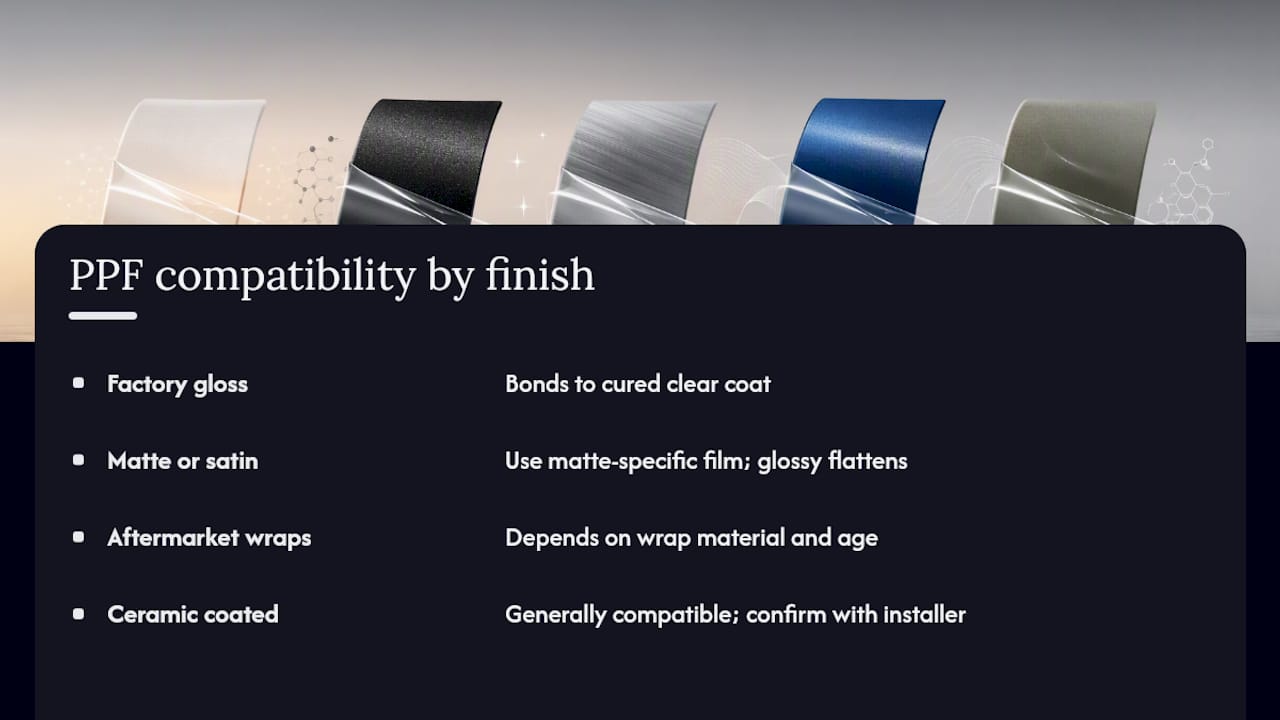
Most factory truck finishes, standard gloss clear coat, take PPF without any special preparation beyond the usual decontamination wash. The film’s adhesive is designed to bond to a properly cured, contaminant-free clear coat, which is what the overwhelming majority of trucks roll off the lot with.
Matte and satin finishes need more care. These factory finishes achieve their look through a textured clear coat, and a glossy PPF applied directly over that texture can flatten or alter the matte appearance permanently once the adhesive cures. Matte-specific film exists for this reason, and matching finish to finish avoids an expensive surprise.
Aftermarket wraps present their own compatibility question. PPF can go over a vinyl wrap in some cases, but adhesion and long-term durability depend heavily on the wrap’s own material and age. A fresh, high-quality wrap generally takes film better than one that’s already a few years into sun exposure and starting to shrink or lift at edges.
Ceramic-coated paint underneath new PPF is generally fine, since the film’s adhesive bonds to the coating’s hard shell without issue, though this is worth confirming with your installer given some coating formulations differ. When in doubt about a specific finish, factory matte, satin, wrapped, or coated, ask the installer directly before scheduling rather than assuming standard clear-coat rules apply.
When Do I Tell Truck Owners PPF Is Worth It?
PPF earns its cost on trucks that actually get used, highway miles, gravel roads, towing, job sites. The front-impact zones matter most because that’s where the damage concentrates, which is exactly why this article starts and ends there. If your truck fits that use case, the next step is simple: get a real inspection of your panels and a coverage recommendation instead of guessing at a package online.
Get Your Truck’s PPF Installed Right the First Time
Cdcautodetailing installs PPF as a mobile service across South Jersey, so your truck gets professional-grade film application without a shop drop-off eating into your week. That matters most on trucks, where hood size and body creases demand precise templating, the kind of work that goes wrong fast when it’s rushed in a driveway with the wrong tools.
Cdcautodetailing’s paint protection film service covers everything from a targeted front package to full-vehicle wraps, with warranty terms explained upfront rather than buried in fine print. Fleet operators get the same attention: documented coverage per vehicle, built on the same fleet detailing standards that keep commercial trucks looking sharp between jobs. Pair the film with a ceramic coating for easier washing and a deeper gloss on top of the protection.
To get a quote, have your truck’s model, mileage, and primary use (commuting, towing, off-road, fleet) ready. That’s enough for Cdcautodetailing to recommend the right coverage and book an installation window that fits your schedule.
Where to Learn More About Truck PPF
- TruckCustom.com’s guide to high-impact PPF zones covers panel-by-panel coverage priorities and manufacturer temperature guidance.
- Wikipedia’s paint protection film entry explains the material science behind self-healing topcoats and thickness standards.
- New Image Paint Protection’s lifespan breakdown details warranty expectations and factors that shorten film life.
- Lacuna USA’s truck protection guide walks through partial-front versus full-vehicle trade-offs.
Frequently Asked Questions
Is PPF worth it for a daily driver truck?
Yes, if the truck sees regular highway miles or gravel roads. A low-mileage, garage-kept commuter truck sees far less benefit from the investment.
Can I install PPF myself on my truck?
Small pieces like door cups and mirror caps are reasonable DIY projects. Full hoods and bumpers require precise templating and heat work that’s difficult to get right without practice.
Does PPF turn yellow over time?
Lower-quality film can yellow within a year or two, especially at the edges. Premium film with a proper topcoat typically resists yellowing for close to its full warranty period.
Should I put ceramic coating over PPF or under it?
Over it. PPF goes on first as the physical protective layer, then ceramic coating applies on top for gloss and easier cleaning.
How much of my truck should I cover with PPF?
Start with the hood leading edge, bumper, mirrors, and front fenders. Expand to full-front or full-vehicle coverage based on how the truck is actually used, towing, off-roading, or long-term ownership plans.
Sources
- Paint protection film – Wikipedia
- How Long Does PPF Film Last? – New Image Paint Protection
- How to protect your truck? Ultimate Lacuna PPF guide