
Selecting the right paint protection for your vehicle can feel overwhelming with so many options promising different benefits. Paint protection film, ceramic coatings, and hybrid approaches each offer distinct advantages depending on your priorities and driving conditions. This guide breaks down the main types of paint protection available in South Jersey, explaining key criteria like durability, self-healing technology, and warranty coverage to help you make an informed decision. Whether you prioritize physical armor against road debris or chemical defense against environmental contaminants, understanding these differences ensures you invest in the protection that truly matches your needs.
Table of Contents
- Understanding Paint Protection Criteria For Vehicles
- Paint Protection Film (Ppf): Physical Armor For Your Vehicle
- Ceramic Coatings: Chemical Shield And Ease Of Maintenance
- Comparing Paint Protection Film And Ceramic Coatings
- Choosing The Right Paint Protection For Your Vehicle In South Jersey
- Premium Mobile Paint Protection Services In South Jersey
Key takeaways
| Point | Details |
|---|---|
| PPF offers superior physical protection | Self-healing thermoplastic urethane films absorb impacts and come with warranties up to 10 years. |
| Ceramic coatings provide chemical defense | Ultra-thin glass-like layers resist UV damage, oxidation, and contaminants while creating hydrophobic surfaces. |
| Professional installation matters most | Certified installers and proper technique often outweigh film brand quality for long-term performance. |
| Pricing varies by coverage area | Partial front coverage starts around $600 while full-body protection can exceed $8,000 depending on product quality. |
| Combining both types maximizes protection | Pairing PPF with ceramic coating delivers comprehensive physical and chemical defense for premium results. |
Understanding paint protection criteria for vehicles
Before diving into specific product types, you need a framework for evaluating paint protection options critically. The most important criteria include durability measured in years, self-healing performance against minor scratches, optical clarity that maintains a factory-fresh appearance, yellowing resistance over time, comprehensive warranty coverage, and installer certification from recognized manufacturers. These factors separate premium solutions from budget alternatives that may disappoint within months.
Physical protection and chemical protection represent two distinct but complementary categories. Physical barriers like paint protection film absorb impacts from road debris, while chemical shields such as ceramic coatings resist environmental damage from UV rays, bird droppings, and industrial fallout. Neither type alone addresses every threat your vehicle faces, which is why many South Jersey vehicle owners combine both approaches for complete coverage.
Local environmental factors significantly influence your choice. South Jersey roads expose vehicles to salt spray near coastal areas, road debris from highway travel, and harsh winter conditions that accelerate paint degradation. Your typical driving patterns matter too. Daily highway commutes increase rock chip risk, favoring thicker physical protection, while vehicles parked outdoors benefit more from UV and chemical resistance.
Professional installation quality often outweighs the specific film brand you select. Even premium products fail when applied incorrectly, developing edge lift, bubbles, or contamination that compromises protection and appearance. Verify that installers hold current certifications from major manufacturers and offer transferable warranties registered to your vehicle identification number. This documentation protects your investment and adds verifiable value at resale.
Pro Tip: Request to see completed installations on similar vehicles before committing to any installer, and confirm warranty terms cover both product defects and installation errors for maximum protection.
Consider these evaluation points when comparing vehicle paint protection options:
- Thickness and impact absorption capability
- Self-healing technology activation method
- Hydrophobic water-shedding performance
- UV stability and yellowing resistance timeline
- Warranty duration and transferability terms
- Installer certification and training credentials
Paint protection film (PPF): physical armor for your vehicle
Paint protection film represents the gold standard for physical paint defense. This transparent thermoplastic urethane film protects surfaces by absorbing impacts and blocking harmful UV rays that fade paint over time. Premium PPF typically measures 8 to 10 mils thick, substantially thicker than any coating, which allows it to absorb stone chips, key scratches, and minor abrasions that would otherwise damage your clear coat permanently.
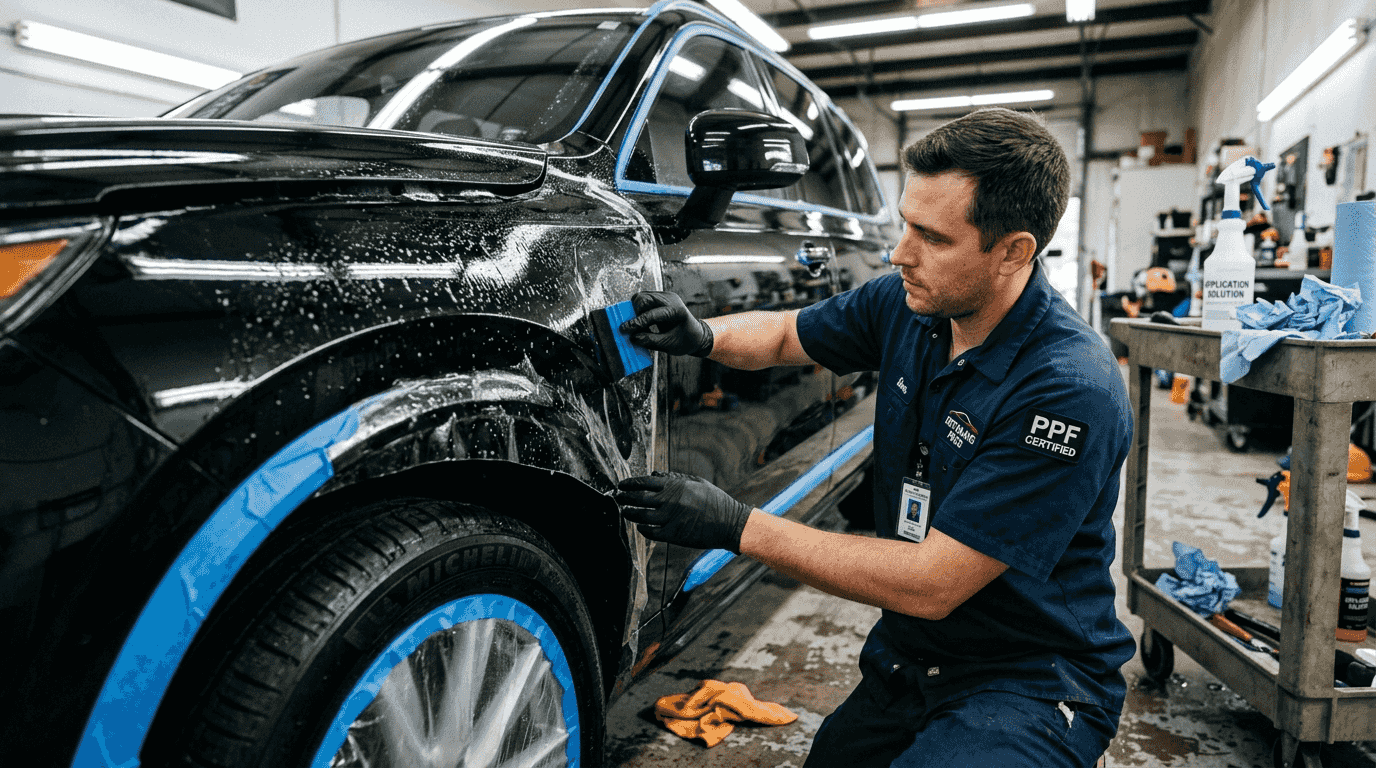
The self-healing polymer surface layer distinguishes quality PPF from basic alternatives. When exposed to heat from sunlight or warm water, microscopic scratches and swirl marks disappear as the polymer molecules realign. This technology keeps your vehicle looking freshly detailed even after months of regular washing and daily driving. The effect works on surface-level damage but cannot repair cuts that penetrate through the film thickness.
XPEL Ultimate Plus is rated best overall with self-healing capability and a 10-year warranty, setting the benchmark other manufacturers chase. SunTek Ultra and 3M Pro Series offer comparable performance at slightly different price points, each with proprietary self-healing formulations and comprehensive warranty programs. The differences between top-tier brands matter less than proper installation technique and ongoing maintenance.
Coverage options and pricing vary significantly based on how much of your vehicle you protect. Partial front coverage protecting the hood, fender, bumper, and mirrors typically starts around $600 to $1,500. Full front coverage adding headlights and rocker panels ranges from $1,500 to $3,000. Complete vehicle wraps delivering maximum protection run $5,000 to $8,000 or more depending on vehicle size and film quality.
Pro Tip: Focus PPF investment on high-impact zones like the front bumper, hood leading edge, and door edges where damage occurs most frequently, then add ceramic coating elsewhere for cost-effective comprehensive protection.
Key PPF advantages include:
- Absorbs impacts that would chip or scratch paint
- Self-heals minor surface damage with heat exposure
- Maintains optical clarity without yellowing for years
- Protects against UV fading and oxidation
- Removes cleanly without damaging underlying paint
| Coverage Type | Protected Areas | Typical Cost Range |
|---|---|---|
| Partial Front | Hood, fenders, bumper, mirrors | $600 to $1,500 |
| Full Front | Adds headlights, rockers, A-pillars | $1,500 to $3,000 |
| Track Package | Front plus rocker panels and rear fenders | $3,000 to $5,000 |
| Full Body | Complete vehicle coverage | $5,000 to $8,000+ |
Consider professional PPF installation from certified technicians who prep surfaces properly, use computer-cut patterns for precise fit, and apply films in controlled environments free from dust and contaminants.
Ceramic coatings: chemical shield and ease of maintenance
Ceramic coatings take a fundamentally different approach to paint protection. These ultra-thin chemical barriers bond covalently with clear coat, creating a permanent glass-like layer typically measuring just 2 microns thick. While they provide virtually no impact resistance, ceramic coatings excel at chemical and environmental defense that keeps your paint looking brilliant with minimal maintenance effort.
The bonding process creates exceptional resistance to UV damage, oxidation, bird droppings, bug splatter, tree sap, and industrial fallout. These contaminants cannot penetrate or etch the ceramic layer the way they attack unprotected clear coat. The result is paint that maintains its depth and gloss for years rather than fading and dulling within months of exposure.
Hydrophobic surfaces repel water and contaminants, making regular washing dramatically easier and more effective. Water beads up and rolls off treated surfaces, carrying dirt and grime away rather than allowing it to bond. This property prevents water spots from etching into your paint and reduces the frequency of washing needed to maintain a clean appearance. Your vehicle stays cleaner longer between details.
Unlike PPF, ceramic coatings provide almost no impact resistance. A rock chip penetrates the coating as easily as it would unprotected paint, and the coating cannot self-heal physical damage. This limitation makes ceramic coating alone insufficient for vehicles facing significant road debris exposure. The coating protects chemically and environmentally, not physically, which is why many owners pair it with PPF on high-impact areas.
Ceramic coatings deliver superior environmental protection and dramatically reduce maintenance effort, but they complement rather than replace physical protection from films on vulnerable surfaces.
Ceramic coating benefits include:
- Permanent chemical bond with factory clear coat
- Exceptional UV and oxidation resistance
- Hydrophobic water-shedding properties
- Resistance to chemical etching from contaminants
- Enhanced gloss and depth of color
- Reduced washing frequency and effort
Quality ceramic coatings require professional application in controlled environments. Surface preparation involving paint correction to remove existing defects is essential, as the coating locks in whatever condition exists underneath. Professional-grade products like Ceramic Pro, Gtechniq, and Modesta offer superior durability and performance compared to consumer spray coatings that last only months.
Learn more about ceramic coatings protection and how professional application ensures optimal bonding and longevity.
Comparing paint protection film and ceramic coatings
Understanding the direct differences between PPF and ceramic coatings clarifies which solution fits your specific needs and priorities. PPF offers superior physical protection while ceramic coatings excel at chemical and environmental defense, making them complementary rather than competing technologies. Many vehicle owners combine both for comprehensive coverage that addresses every paint threat.
The thickness difference explains their performance characteristics. PPF at 8 to 10 mils thick absorbs impacts and self-heals surface damage, while ceramic coatings at 2 microns provide a chemical barrier without meaningful impact resistance. Rock chips penetrate ceramic coating easily while PPF absorbs the same impact without damage. This fundamental distinction drives protection strategy.
| Feature | Paint Protection Film | Ceramic Coating |
|---|---|---|
| Primary Protection | Physical impacts and abrasion | Chemical and environmental damage |
| Thickness | 8 to 10 mils | 2 microns |
| Self-Healing | Yes, with heat activation | No |
| Hydrophobic Properties | Moderate | Excellent |
| Impact Resistance | Excellent | Minimal |
| Typical Warranty | 5 to 10 years | 2 to 5 years |
| Cost Range | $600 to $8,000+ | $500 to $2,000 |
Cost structures differ significantly between the two options. PPF pricing scales with coverage area, making partial front protection affordable while full-body wraps represent substantial investments. Ceramic coating costs depend primarily on product quality and paint correction requirements, with professional-grade applications ranging from $500 for basic packages to $2,000 for premium multi-layer systems. Both require professional installation for optimal results.
Maintenance requirements also vary. PPF needs occasional cleaning with pH-neutral products and benefits from annual inspections to check edge adhesion. Ceramic coatings require specific maintenance products to preserve hydrophobic properties and may need booster applications every 12 to 24 months depending on the product system. Neither option eliminates the need for regular washing, but both reduce the effort required.
Key distinctions to consider:
- PPF protects against physical damage, ceramic coating against chemical damage
- Self-healing works only with PPF, not ceramic coatings
- Ceramic coatings provide superior water-shedding properties
- PPF offers longer warranties but higher upfront costs
- Combining both delivers comprehensive protection
Explore ceramic coatings benefits and paint protection film advantages to understand how each technology addresses specific paint threats.
Choosing the right paint protection for your vehicle in South Jersey
Your decision should reflect your specific driving conditions, budget constraints, and protection priorities. South Jersey vehicle owners face unique challenges including coastal salt exposure, highway debris, harsh winter road treatments, and intense summer UV radiation. Matching protection type to your actual exposure delivers better value than generic recommendations.
Focus on premium mobile providers in South Jersey with trained, certified installers who bring professional-grade products and expertise directly to your location. Certified installations with Carfax Verified Warranties link protection to your vehicle identification number, creating documented value that transfers to future owners and supports resale pricing. This verification distinguishes professional installations from uncertified work.
Consider your typical driving patterns carefully. Daily highway commutes expose your vehicle to constant rock chip risk from trucks and construction zones, making PPF essential for front-end protection. Vehicles parked outdoors or near industrial areas benefit more from ceramic coating’s chemical resistance against environmental fallout and UV damage. Urban drivers facing tight parking and door dings might prioritize PPF on vulnerable door edges and handles.
Budget for coverage area and product quality rather than trying to protect everything with entry-level products. Partial PPF coverage on high-impact zones combined with full-vehicle ceramic coating often delivers better overall protection than budget PPF everywhere. Mobile services offering PPF and ceramic coating with Elite Dealer certification ensure professional results with manufacturer-backed warranties.
Pro Tip: Schedule paint protection installation on new vehicles before the first wash to ensure perfect paint condition, or invest in paint correction to remove existing defects before applying any protection that locks in current condition.
Decision factors to evaluate:
- Primary threat exposure: physical impacts versus chemical damage
- Coverage area budget and protection priorities
- Installer certification and warranty terms
- Mobile service availability for convenience
- Resale value documentation requirements
- Maintenance commitment and product longevity
Learn how to book mobile detailing services and explore paint protection film options that match your specific vehicle protection needs and budget.
Premium mobile paint protection services in South Jersey
Protecting your vehicle investment requires expertise, quality products, and meticulous application that mobile services can deliver right to your location. CDC Auto Detailing provides expert mobile PPF and ceramic coating services throughout South Jersey, using premium products with certified installers who ensure long-lasting protection. Our flexible scheduling maximizes convenience for busy vehicle owners who refuse to compromise on quality.
We understand that your time matters as much as your vehicle’s appearance. Our mobile service eliminates the hassle of dropping off your car and arranging alternative transportation. Instead, our certified technicians bring professional-grade equipment and controlled application environments directly to your home or office. Every installation includes comprehensive warranty coverage and detailed aftercare guidance to maintain optimal protection for years.
Our professional paint protection film services feature computer-cut patterns for precise fit and self-healing technology that keeps your vehicle looking flawless. Pair PPF with our premium ceramic coating service for complete protection against both physical and chemical threats. Schedule your consultation today through our easy mobile detailing booking system and experience the difference professional mobile protection makes.
CDC Auto Detailing combines certified expertise with premium products and true mobile convenience, delivering paint protection that preserves your vehicle’s appearance and value for years to come.
FAQ
What is the best type of paint protection for harsh road conditions?
PPF provides superior physical protection against rock chips and road debris, making it ideal for harsh conditions. The thick thermoplastic urethane film absorbs impacts that would otherwise chip or crack your paint permanently. Focus coverage on the front bumper, hood, and fenders where debris strikes most frequently.
How long does paint protection film typically last?
Premium PPF comes with warranties up to 10 years and maintains clarity and self-healing properties throughout that period. Actual longevity depends on maintenance quality, environmental exposure, and installation technique. Properly maintained film often exceeds warranty duration without yellowing or losing adhesion.
Can ceramic coatings be applied over paint protection film?
Yes, ceramic coatings safely layer over PPF to enhance chemical protection and hydrophobic properties. This combination delivers comprehensive defense, with PPF handling physical impacts and ceramic coating providing chemical resistance and easier maintenance. Many installers recommend this pairing for maximum protection.
What factors affect the cost of paint protection film installation?
Pricing depends on coverage area and film quality, ranging from $600 for partial front protection to over $8,000 for full-body coverage. Vehicle size, paint condition requiring correction, and installer expertise also influence total cost. Premium self-healing films with longer warranties command higher prices than basic alternatives.