
Most paint protection film lasts 2 to 5 years for budget PVC, 5 to 8 years for mid-range TPU, and 7 to 12 years for premium ceramic-topped TPU. Replace it once optical clarity fades, adhesion fails at the edges, or self-healing stops working, whichever comes first. Installation quality and upkeep significantly affect these lifespan estimates, often more than the brand of film.
TL;DR:
- PPF lifespan varies from 2 to 5 years for budget PVC, 5 to 8 years for standard TPU, and 10 to 12 years for premium ceramic-coated TPU.
- Installation quality, climate, and maintenance habits have a greater impact on longevity than the film’s material grade itself.
- Signs of wear include yellowing, loss of self-healing, cracking, and edge lift, which require prompt inspection and potential repair or replacement.
- Proper cleaning with pH-neutral shampoos, avoiding power washers on edges, and adding ceramic coating can extend PPF durability.
- Warranty claims generally cover manufacturing defects, but actual lifespan depends heavily on environmental factors and installation standards.
Table of Contents
- What Is PPF Lifespan, and Why Do the Ranges Vary So Much?
- What Factors Actually Determine How Long PPF Lasts?
- What Are the Warning Signs That PPF Needs Replacing?
- How Do You Maintain PPF to Get the Most Years Out of It?
- How Should You Read PPF Warranties and Durability Claims?
- What Do Installers Actually Check, and When Is Repair Enough?
- A Simple Three-Step Way to Decide: Inspect, Maintain, or Replace
- Get Your PPF Inspected or Replaced by CDC Auto Detailing
- Where to Verify These Durability Claims Yourself
- Sources
What Is PPF Lifespan, and Why Do the Ranges Vary So Much?
PPF lifespan is the number of years a film keeps its clarity, self-healing properties, and adhesion before it needs replacing, not the number of years it’s simply still stuck to the car. That distinction trips up a lot of owners who assume a “10-year warranty” means their film will look showroom fresh for a decade. It doesn’t always work that way, and the gap between marketing durability and real-world paint protection film durability comes down to material grade, installation, and climate.
Entry-level PVC film is thinner, usually without a self-healing topcoat, and tends to yellow and haze faster under UV exposure. Expect 2 to 5 years of solid performance before edges lift or the surface dulls.
Mid-range TPU (thermoplastic polyurethane) is the standard most installers use today. It runs thicker, typically 6 to 8 mils, and includes a basic self-healing topcoat that shrugs off minor swirls with heat. Realistic service life sits at 5 to 8 years, according to industry guides drawing on installer field data.
Premium TPU with a ceramic-infused topcoat is where the numbers get impressive. Some products now carry 10 to 12 year warranties, and lab testing has shown strong optical retention even past the five-year mark. Avery Dennison’s own performance guarantee confirms some SPF products are rated for that same 10 to 12 year window, though it’s explicit that the number shifts based on climate zone and how the film was installed.
A few practical notes on tier differences:
- PVC (budget): thinner, prone to yellowing, no real self-healing, shortest lifespan.
- Standard TPU: thicker, basic self-heal, good middle ground for most daily drivers.
- Premium ceramic-topcoat TPU: best UV resistance, strongest self-heal, longest warranty periods.
- Matte finish film: needs specific matte-safe cleaners; using the wrong product can leave a gloss finish or strip texture. Partner resources like Diamondbrite’s guide to matte paint protection cover this in more depth.
Comparing gloss, matte, and satin PPF examples side by side makes the tier tradeoffs a lot easier to visualize than reading spec sheets alone.
What Factors Actually Determine How Long PPF Lasts?
The film itself is only part of the equation. Four categories decide whether you land at the low end or high end of any manufacturer’s stated range.
- Film chemistry and topcoat technology. TPU with a ceramic-infused topcoat resists yellowing and UV degradation noticeably better than plain PVC or uncoated TPU. The topcoat is also what drives self-healing: heat from sunlight or warm water lets the film flow back over light scratches.
- Installation quality. This is arguably the single biggest lever. Poor edge-wrapping, over-stretched film, or rushed curing time cause premature edge lift and bubbling within the first year or two, regardless of how good the film itself is. Industry installation guides repeat this point often enough that it’s basically consensus: a mediocre film installed perfectly will usually outlast a great film installed poorly.
- Environmental exposure. Intense UV, coastal salt air, and heavy road salt in winter climates all accelerate topcoat breakdown. A car garaged in Arizona sun ages differently than one parked outdoors in a Jersey Shore driveway, even with identical film.
- Usage and maintenance habits. Frequent automated car washes with brushes, harsh solvent cleaners, and neglecting the edges during washing all shave years off service life.
Pro Tip: Ask your installer specifically about their edge-wrapping technique before booking. Film wrapped tightly around body lines and door jambs resists lifting far longer than film simply cut flush at the panel edge.
Curing time matters more than most owners realize, too. Film needs 48 to 72 hours minimum before exposure to water or extreme temperature swings, and skipping that window is a common reason edges fail early. If you’re weighing DIY installation against professional work, this is the exact spot where DIY attempts to tend to go wrong.
What Are the Warning Signs That PPF Needs Replacing?
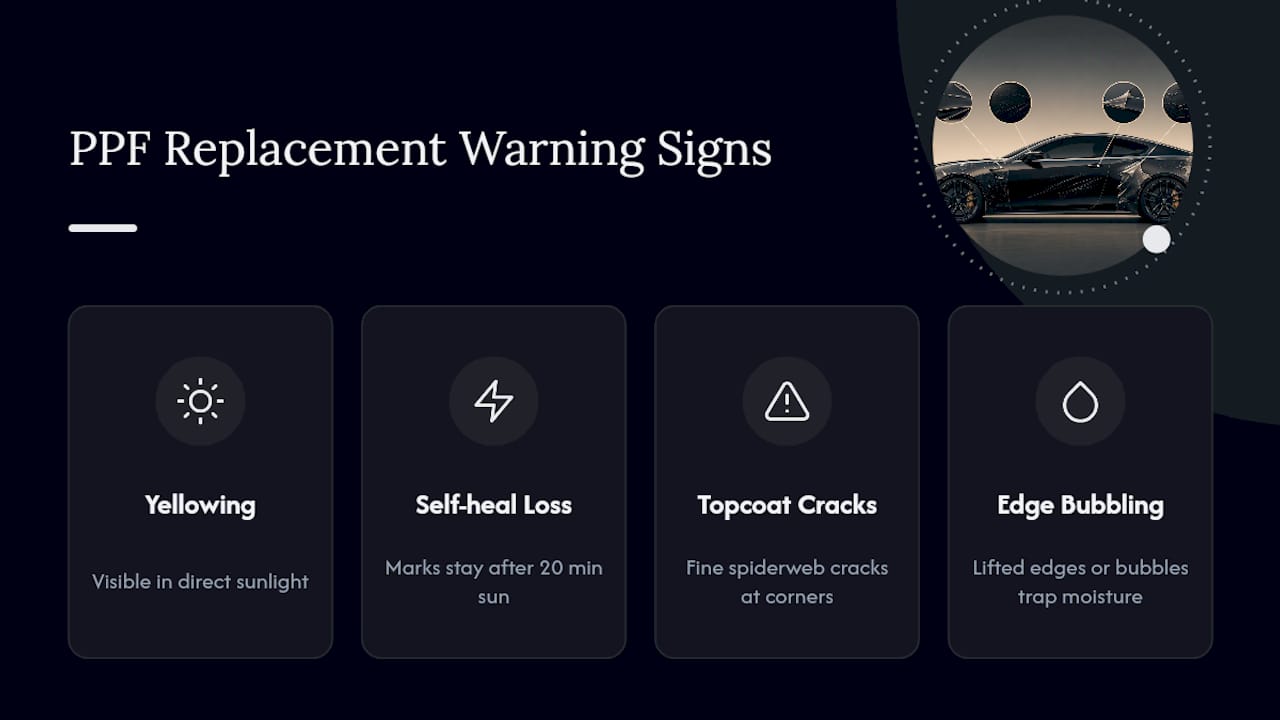
Four signals tell you it’s time, and none of them require a professional eye to spot.
Yellowing and hazing. Look at the film under direct sunlight, not garage lighting. On white or silver cars, yellowing is obvious fast. On black or dark paint, it shows up as a hazy, slightly cloudy look rather than a color shift. Either way, once it’s visible, it won’t reverse.
Loss of self-healing. Run a fingernail lightly across a swirl mark, then leave the car in the sun for 20 minutes. If minor marks used to vanish and now stay put, the topcoat has lost its heat-reactive properties.
Topcoat cracking. Fine spiderweb cracking, especially near high-flex areas like bumper corners, means the film has gotten brittle. This tends to show up earlier on budget PVC than on TPU.
Edge lift and bubbling. Check every panel edge, door handle cutout, and mirror wrap point. Lifting edges trap dirt and moisture, which accelerates adhesive failure underneath the rest of the panel.
When documenting a problem for warranty review, photograph the issue in daylight, note the date of installation, and get a close-up plus a wide shot showing the panel location. Installers reviewing a claim need to see exactly where and how severe the damage is, not just a general description.
How Do You Maintain PPF to Get the Most Years Out of It?
Good maintenance can stretch film toward the upper end of its expected range. Bad habits push it toward the lower end fast, even on premium ceramic-topcoat products.
- Wash weekly to monthly with a pH-neutral car shampoo. Avoid dish soap, degreasers, or anything with solvents that strip the topcoat.
- Hand wash or touchless wash only. Automated brush washes are one of the fastest ways to introduce micro-scratches and lift edges.
- Skip the power washer on edges and seams. High-pressure water forced under a panel edge is a direct path to lift and bubbling.
- Book a professional inspection annually. A trained eye catches early edge lift or hazing before it turns into a full-panel problem.
- Add a ceramic coating over the PPF. This is one of the higher-value moves an owner can make. A ceramic topcoat adds a hydrophobic, sacrificial layer that takes the brunt of UV and contamination instead of the film underneath, and professionals commonly report an extra 2 to 4 years of usable life from the combination.
Pro Tip: Never polish a matte PPF finish. Standard polish and wax products are designed to add gloss and will permanently alter a matte film’s texture, leaving visible shiny patches that can’t be undone.
One more thing worth knowing: 3M’s own product data sheet for its Scotchgard PPF Pro Series notes a shelf life of around 18 months in original packaging, separate entirely from installed service life. That distinction matters if you’re buying film in advance or dealing with a shop that’s had rolls sitting in inventory for a while. Routine care advice, including which cleaning products are safe on film, is covered in more detail in this guide to preserving your car’s finish.
How Should You Read PPF Warranties and Durability Claims?
Manufacturer warranty language is where a lot of confusion starts. A “10 year warranty” almost never means 10 years of guaranteed flawless clarity. It typically covers manufacturing defects, and coverage often excludes damage from improper washing, chemical exposure, or accidents.
Zone-based durability claims exist because UV intensity, humidity, and pollution vary wildly by region. Avery Dennison’s durability tables explicitly note reduced expected life in high-heat, high-altitude, or heavily polluted areas, which is why a film rated for 10 years in a mild climate might realistically deliver less in a hot, humid one.
A few things worth checking or saving at installation:
- Installation date and installer name, since warranty clocks typically start the day film goes on, not the day you bought your car.
- Proof of purchase and film product name, needed if you ever file a claim.
- Transferability terms, since some warranties don’t transfer if you sell the car.
- Climate exclusions, so you know upfront whether your region falls outside the manufacturer’s best-case estimate.
What Do Installers Actually Check, and When Is Repair Enough?
A proper inspection focuses on three things: edge condition, adhesion across flat panels, and topcoat clarity. Edges get checked first because that’s where failure almost always starts. If lifting is limited to a small section, a localized re-tuck or patch repair usually solves it. Full-panel replacement becomes necessary once yellowing, cracking, or bubbling spreads across a wide area, since patching a discolored film next to clear film looks worse than leaving it alone.
One thing worth doing before any new PPF installation: address paint or headlight condition first. Restoring hazy headlights before wrapping them saves you from sealing existing damage under film for years. Annual inspections, paired with a ceramic topcoat option at install time, tend to be the two moves that separate film that looks good at year eight from film that needed replacing at year four.
A Simple Three-Step Way to Decide: Inspect, Maintain, or Replace
Start with inspection: check edges, clarity, and self-healing response under sunlight. If everything looks and behaves normally, move to maintenance, meaning a proper wash routine and maybe a ceramic topcoat. Replace only when clarity, adhesion, or self-healing has genuinely broken down, not just when the calendar hits your warranty’s stated year. Think of PPF as ongoing maintenance for your paint, not a one-time cosmetic upgrade, and call a professional once you spot lifting or haze rather than waiting to see if it spreads. Ask them directly whether it’s a localized repair or a full-panel job before agreeing to either.
— Charles
Get Your PPF Inspected or Replaced by CDC Auto Detailing
If your film is showing edge lift, haze, or you’re just not sure which side of its lifespan you’re on, a professional look beats guessing. Certain providers offer PPF inspection, replacement, and ceramic topcoat application as a package, so you may avoid scheduling separate appointments for each step.

During a typical visit, expect a panel by panel check of edges and clarity, a straight answer on whether you need a localized repair or full replacement, and a recommendation on whether a ceramic topcoat makes sense for your climate and driving habits. For a full walkthrough of what a professional install involves from prep to cure time, this installation overview covers the process end to end. Ready to get your film checked or replaced? Visit CDC Auto Detailing’s PPF service page to book an inspection or installation appointment.
Where to Verify These Durability Claims Yourself
Manufacturer PDFs beat marketing copy every time you’re checking a durability claim, since they list the exclusions competitors’ sales pages leave out.
- Avery Dennison’s ICS Performance Guarantee for zone-based durability tables and climate exclusions.
- 3M’s Scotchgard PPF Pro Series data sheet for shelf life versus installed service life distinctions.
- Industry guides like YW Film’s durability breakdown for how ceramic topcoat testing translates into real-world warranty periods.
Read the exclusions section on any warranty PDF before assuming your region matches the best-case number quoted on a sales page.
Sources
- ICS Performance (Avery Dennison) — Paint Protection Films performance guarantee
- How Long Does Paint Protection Film Last? (KSB Window Film)
- How Long Does PPF Last? A Complete Guide (YW Film)