
The fastest way to prevent sun fade in a car interior is to stop UV and heat before they reach the surfaces at all. Use a windshield sunshade every time you park in direct sun. Pair it with quality UV-blocking window film, and protect vinyl, leather, and fabric with a bonded interior coating or scheduled UV protectant. For lasting results, professional tinting and an interior ceramic coating from a detailing shop outperform any single retail product on its own.
TL;DR:
- Using a reflective windshield sunshade every time you park significantly reduces UV and heat exposure that cause interior fading and cracking.
- Combining high-quality window film that blocks 99% of UV radiation with professional ceramic coatings provides the most durable protection against sun damage.
- Reapplication of fabric protectants every one to three months and regular cleaning with proper products extend the lifespan of interior UV defenses.
- Protecting leather with conditioners and avoiding harsh cleaners prevents accelerated deterioration, while fabric and plastic trim respond best to SiO2-based protectants.
- Managing cabin temperature through shading, ventilation, and infrared-rejecting window film slows heat-induced damage, especially in hot climates.
Table of Contents
- Quick Checklist to Reduce Sun Damage Right Now
- What Actually Happens to Your Interior in the Sun?
- Building a Layered Defense: Film, Coatings, and Covers
- How Do You Protect Leather, Vinyl, Fabric, and Screens Differently?
- How Often Should You Reapply Sun Protection?
- What If Sun Damage Has Already Started?
- How Regular Cleaning Habits Help Prevent Sun Fade
- Why Cabin Temperature Control Matters for Fading
- Do Seat Covers and Dashboard Covers Actually Help?
- Why a Maintenance Mindset Beats a One-Time Fix
- Book Professional Sun Protection for Your Interior
- Sources
- FAQ
Quick Checklist to Reduce Sun Damage Right Now
You don’t need to overhaul your routine to see results this week. A few cheap, fast habits cut UV and heat exposure immediately, before you spend a dime on coatings or tint.
- Windshield sunshade, every single park. Choose a reflective, foil-backed shade sized to your windshield, not a generic universal one that leaves gaps.
- Park in shade or a garage when you can. Even partial shade from a building or tree reduces peak cabin temperature noticeably.
- Orient your car nose-away from direct afternoon sun if shade isn’t available, so the dashboard gets less direct hit.
- Use a lightweight full car cover or seat covers for vehicles parked outside for days at a time, like during vacation or storage.
- Apply a UV protectant to dash and door panels after cleaning, before the next hot stretch.
Pro Tip: Keep the sunshade in the driver’s door pocket, not the trunk. The ones that end up unused are always the ones buried under gear you’d have to dig for.
What Actually Happens to Your Interior in the Sun?
Sun damage isn’t one thing. It’s two separate attacks happening at once, and understanding both explains why a single product never solves the whole problem.
Ultraviolet radiation breaks chemical bonds in dyes and plastics, which is why colors bleach and fabrics lose saturation over time. Heat works differently: it accelerates the loss of natural oils in leather and vinyl, leaving them stiff, cracked, and brittle long before the color even fades. A dashboard baking at very high temperatures does more structural damage in one summer than mild UV exposure does over several years.
Damage shows up first on the upper dash, the tops of door panels, seat bolsters, and the steering wheel, which is the logic: these surfaces face the sky and take the most direct, sustained exposure. The windshield is the single biggest gap in most owners’ defenses, since factory glass filters some UV but nowhere near what aftermarket film achieves, and it’s typically the largest expanse of unprotected glass on the car.
Building a Layered Defense: Film, Coatings, and Covers
No single product handles both UV and heat completely, which is why detailers recommend stacking defenses rather than picking one. Quality automotive window film blocks about 99% of ultraviolet radiation, and better ceramic films also cut infrared heat transmission, tackling both problems at once. Because the windshield usually stays untinted due to local visibility laws, a reflective shade fills that gap on every side film can’t legally cover. Check your state’s visible light transmission limits before tinting side and rear glass, since legal minimums vary.
- Window film: prioritize UV-block percentage first, then heat rejection (TSER) where legal limits allow. Our guide to UV protection ratings breaks down what the numbers actually mean.
- Windshield shade: get one with reflective, insulated backing, fold it the same way each time, and store it flat to keep the fit tight.
- Interior ceramic coatings bond to surfaces and can last months rather than weeks, unlike consumer sprays that need frequent reapplication.
- Fabric protectors repel liquids and slow UV fading on carpet and cloth seats, but should never touch leather.
- Seat covers and dash mats add a physical barrier for cars parked outside for extended stretches.
Clean surfaces thoroughly before applying any protectant. Dust, body oils, and old residue block proper bonding, which is the fastest way to waste a product that would otherwise last months. Our step-by-step interior cleaning guide covers the prep work in detail.
Pro Tip: Apply protectants on a cloudy day or in the shade. Direct sun flash-dries the product before it can bond properly, cutting its lifespan short.
How Do You Protect Leather, Vinyl, Fabric, and Screens Differently?
Treating every surface the same way is one of the most common mistakes owners make, and it’s often what causes the damage a protectant was supposed to prevent.
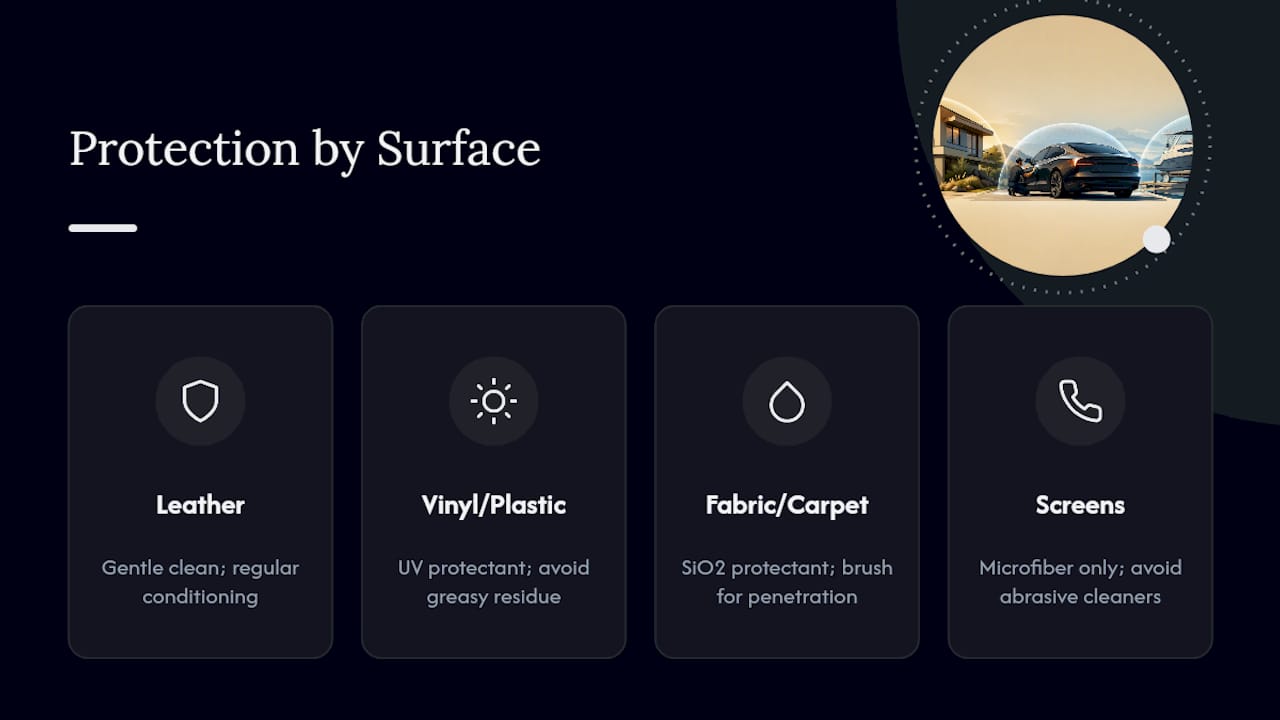
Leather needs gentle cleaning and regular conditioning, not harsh detergents or silicone-heavy products that leave a greasy film and clog the leather’s pores over time. Vinyl and hard plastic trim respond well to UV-blocking protectants, but skip anything that leaves a slick, greasy residue since it attracts dust and looks worse within days. Fabric and carpet benefit from SiO2-based protectants like the Chemical Guys Fabric Protection Kit, which bond with individual fibers rather than sitting on the surface, and brushing the product in multiple directions improves penetration and durability. Screens and glossy trim need soft microfiber cloths only. Abrasive cleaners haze the coating, and a shade over the dash reduces the direct glare that speeds up screen degradation. Our partner guide to dashboard cleaning covers safe products for glossy trim in more detail.
How Often Should You Reapply Sun Protection?
Protection isn’t a one-time job. Different products wear at different rates depending on exposure, abrasion, and climate.
| Product Type | Reapplication Interval | Notes |
|---|---|---|
| Fabric protector (Adam’s, Chemical Guys) | 1 to 3 months | Faster in high-abrasion seats or intense sun |
| Standard spray UV protectant (vinyl/plastic) | 2 weeks in high sun | Shorter interval in desert or coastal climates |
| Interior ceramic coating | Several months | Professional application extends durability significantly |
| Scotchgard fabric/carpet protector | Every 3 months or after cleaning | Never use on leather or plastic |
Run a monthly check: confirm the shade is actually being used, look for early fading on the dash, and feel for tacky residue that signals a product has broken down. Before summer hits, inspect your window film for peeling or bubbling, since damaged film loses most of its UV-blocking benefit.
What If Sun Damage Has Already Started?
Once fading or cracking shows up, the priority shifts from prevention to stopping further progression. Add shade and film immediately if you haven’t already, since continued exposure only worsens existing damage.
- Condition leather regularly to slow cracking and remove surface contaminants that trap heat.
- Use leather conditioners and plastic rejuvenators for mild fading, understanding they restore appearance more than they reverse structural damage.
- Try fabric dye or color-matched touch-up products for light discoloration, but expect limited results on deep fading.
- Book a professional for deep dash cracking or seats that have gone brittle. At that stage, prevention would have been far cheaper than correction.
How Regular Cleaning Habits Help Prevent Sun Fade
Dust and grime accumulate faster than most owners realize, and that layer of debris does more than make your car look neglected. Dust particles trap heat against surfaces and create tiny abrasive contact points that grind against dash and trim materials every time the car hits a bump. Combined with UV exposure, that friction accelerates the microscopic surface breakdown that shows up later as dullness and fine cracking.
A weekly wipe-down with a microfiber cloth and a mild, pH-neutral interior cleaner removes that grit before it does damage. Skip anything with harsh solvents or ammonia on vinyl and touchscreens, since those ingredients strip factory UV inhibitors baked into the plastic and leave the surface more vulnerable to sun exposure than before you cleaned it.
For fabric seats and carpet, vacuum weekly and address spills immediately rather than letting them sit under UV exposure, which can set stains permanently and weaken fibers faster than clean fabric would fade on its own. Use a soft brush attachment rather than a stiff one that can fray fibers already weakened by sun exposure.
Gentle, consistent cleaning also gives you a chance to catch early warning signs, a slightly chalky dash finish or the first hint of color loss on a seat bolster, while you can still slow it down with a protectant rather than facing a repair job. Cleaning isn’t a substitute for shade, tint, or coatings, but it’s the maintenance habit that makes every other protective layer actually work as intended.
Why Cabin Temperature Control Matters for Fading
Heat does damage that UV protection alone can’t stop, which is why temperature management deserves its own place in any prevention plan. A closed car sitting in direct sun on a 90°F day can see dashboard surfaces climb well past 150°F, and that thermal cycling, hot during the day, cooling at night, stresses plastics and leather in a way that steady exposure wouldn’t.
Cracking the windows slightly when parked, if security allows, lets some heat escape and reduces the peak cabin temperature the interior has to endure. Parking with the windshield facing away from direct afternoon sun also cuts the intensity of heat buildup on the dashboard specifically, since that surface absorbs more direct radiant heat than side panels typically do.
Ventilated seat covers and reflective sunshades work together here. The shade blocks the radiant heat from ever reaching the dash, while cracked windows or a quick blast of air conditioning before driving clears the trapped heat that’s already built up. Running the AC for the first few minutes of a drive, with windows briefly down to vent hot air, protects both the materials and anyone who has to sit in that oven-like cabin.
For owners in consistently hot climates, ceramic window film adds a measurable advantage here beyond UV blocking. Reducing infrared heat transmission through the glass keeps the whole cabin cooler, which slows the oil loss in leather and vinyl that causes brittleness long before visible fading appears.
Do Seat Covers and Dashboard Covers Actually Help?
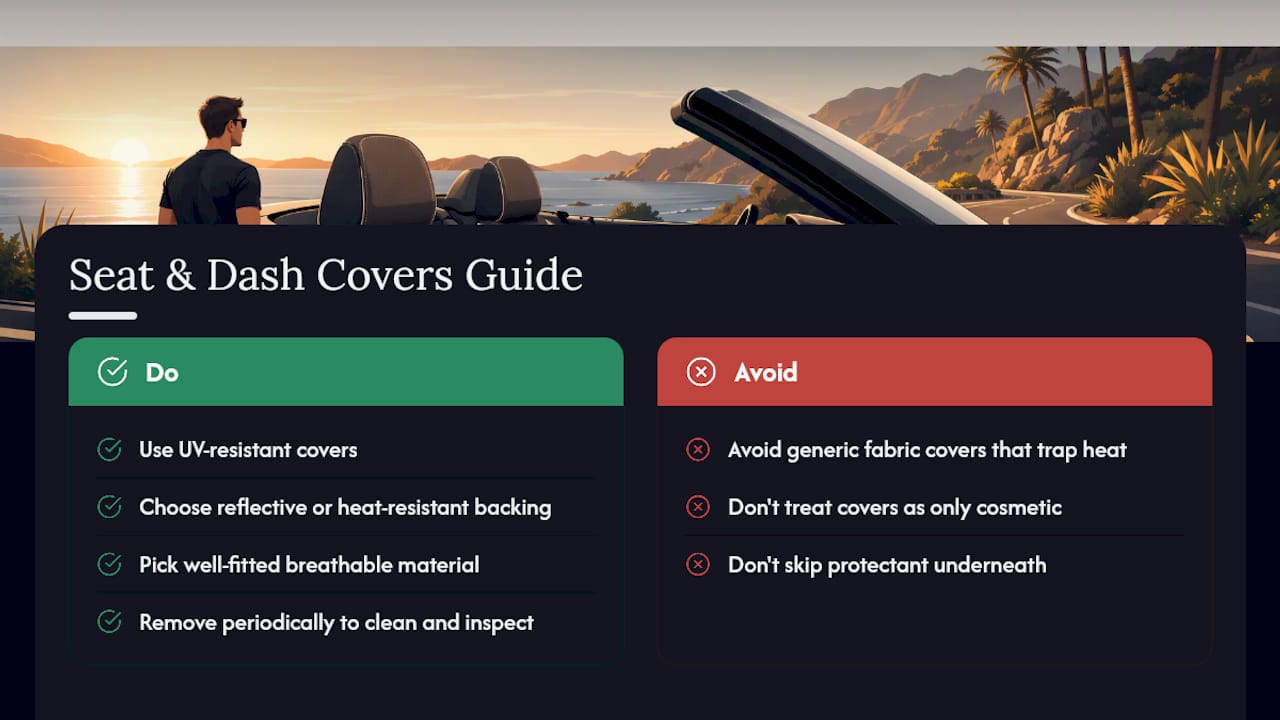
Seat covers and dashboard covers are the most underrated tools in interior sun protection, mostly because owners think of them as cosmetic rather than protective. A dash cover placed over factory vinyl or plastic blocks direct UV and radiant heat from ever touching the original surface, functioning almost like a sacrificial layer that takes the wear so your factory dash doesn’t have to.
Seat covers do something similar for cloth or leather seating, especially useful for cars that spend long stretches parked outside without a garage option. A well-fitted cover made from breathable, UV-resistant material shields seat bolsters, the first spot to show wear, from the direct sun exposure that causes bolster fading faster than any other seat surface.
The benefit compounds over time. A dash cover or seat cover doesn’t just block today’s sun. It means the protectant or conditioner you apply underneath lasts longer, since it’s not fighting constant UV exposure between applications. For fleet vehicles or cars used for rideshare and commercial work, where interior wear translates directly into resale value, this combination of covers plus protectants is often the most cost-effective defense available.
Choose covers designed specifically for UV resistance rather than generic fabric covers, since some materials actually trap heat against the surface they’re meant to protect. Look for reflective or heat-resistant backing, and remove covers periodically to clean and inspect the surface underneath for early signs of damage.
Why a Maintenance Mindset Beats a One-Time Fix
Most owners treat interior protection like a single purchase. Buy the spray, apply it once, move on. That’s backwards. The cars that actually hold their color and texture for a decade belong to owners who treat shade use, tinting, and protectant application as an ongoing habit rather than a box to check.
The layered approach works because each piece covers a gap the others leave open. Film handles UV through glass. A shade covers the windshield gap that legal tint limits create. Coatings and protectants defend the surfaces that heat and UV still reach despite the first two layers. Skip any one piece and you’re relying on the others to do more work than they’re built for, which is exactly how dashboards end up cracked at 60,000 miles instead of 150,000. Some detailers build their interior protection packages around that same logic: inspection first, then the combination of tint, coating, and conditioning that actually fits how a specific car gets used and parked.
— Charles
Book Professional Sun Protection for Your Interior
Retail sprays and shades handle the daily habits, but they can’t match what professional tinting and a bonded ceramic coating do for long-term protection. Some professional detailers install UV-blocking window film and apply interior ceramic coatings designed to outlast consumer sprays, giving drivers a defense that holds up through full summers of direct sun without monthly reapplication.

A typical appointment starts with an inspection of your dash, seats, and existing tint, followed by a recommended package based on how and where you park. Interior ceramic coatings cure over a short window after application, and our team walks you through care during that period so the bond sets properly. Whether you need window tinting, an interior coating, or both working together, book an estimate through our ceramic coating service page and get a plan built around your actual driving and parking habits.
Sources
- Protecting your dashboard and interior from sun damage with film | EuroLuxe Detailing
- How to use Scotchgard™ Auto Carpet Water Shield
FAQ
How Can I Protect My Car Interior From Sun Damage?
Use a windshield sunshade every time you park in direct sun, install quality UV-blocking window film, and apply a bonded interior coating or scheduled UV protectant to vinyl, leather, and fabric surfaces. Combining all three layers covers gaps that any single product leaves open.
What Is the Best UV Protectant for Car Dashboards?
There’s no single “best” product for every dash. UV-blocking vinyl protectants work well for daily upkeep, while a professional interior ceramic coating from a shop like Cdcautodetailing offers longer-lasting protection with fewer reapplications for owners facing daily high sun exposure.
How Do I Fix Sun Damage on a Car Interior?
Stop further progression first with shade and UV film, then try leather conditioners or plastic rejuvenators for mild fading and cracking. For deep dash cracking or heavily brittle seats, a professional detailer can restore what DIY products can’t fully repair.
How Often Should I Reapply Fabric Protector in My Car?
Fabric protectors like Adam’s typically last 1 to 3 months, while Scotchgard recommends reapplication every three months or after any deep cleaning. High sun exposure and heavy seat use shorten that window.
Does Window Tint Really Reduce Interior Fading?
Yes. Quality automotive film blocks about 99% of ultraviolet radiation, and ceramic films add infrared heat rejection on top of that, addressing both causes of interior fading at once.