
For most New Jersey drivers, a professional ceramic coating combined with paint protection film on high-impact panels, backed by a regular salt-removal wash routine, is the most effective defense against road salt damage. New Jersey’s road crews rely heavily on salt and brine to keep highways clear, and that treatment lingers on vehicle surfaces far longer than most owners realize. Protection reduces the risk of etching and corrosion significantly, but it only works alongside consistent maintenance, not instead of it.
TL;DR:
- Applying a ceramic coating can significantly reduce salt and moisture adherence, but regular rinsing is necessary to maintain its effectiveness.
- Paint protection film on high-impact areas like front bumpers and rocker panels provides durable physical barriers against chips and corrosion.
- A combination of full ceramic coating and front-clip PPF offers a practical and cost-effective way for most drivers to protect their vehicles during NJ winters.
- Regular cleaning every 7 to 10 days, especially on lower panels and underbody, is essential to prevent salt residue from causing micro-scratches and rust.
- Full vehicle PPF lasts between 10 to 15 years with proper maintenance, while ceramic coatings can protect for multiple years, making them a worthwhile investment over wax.
Table of Contents
- How road salt and brine damage your car’s paint
- Ceramic coating vs PPF vs wax for winter protection
- Which panels to protect first and how much coverage to buy
- Winter maintenance that actually extends protection life
- What protection costs and how long it actually lasts
- How a South Jersey mobile detailer applies coating and PPF for salt protection
- A pragmatic recommendation for most NJ drivers
- How CDC Detailing helps you get protected before the next storm
- Sources
- FAQ
How road salt and brine damage your car’s paint
New Jersey’s winter road treatment is aggressive by design. NJDOT used more than 238,000 tons of rock salt during a recent winter season, and much of that ends up sprayed directly onto vehicles traveling behind plows and salt trucks. Salt brine is hygroscopic, meaning it draws in and holds moisture, so once it lands on your paint or underbody, it keeps the surface wet longer than plain water would. That trapped moisture is what turns a cosmetic nuisance into a corrosion problem.
The state also pre-treats roads before storms hit. NJDOT maintains statewide storage for over 1,000,000 gallons of anti-icing liquids across dozens of facilities, and brine applied ahead of a storm can remain on the road surface for days depending on traffic and weather. That persistence matters for commuters on busy corridors, since their vehicles pick up repeated doses of salt spray before a single wash cycle.
Once salt is on the paint, grit embedded in the residue causes micro-scratches every time it shifts or gets wiped. Left alone, it etches clear coat and works into seams, wheel wells, and underbody metal where corrosion takes hold fastest.
- Watch for dull or cloudy spots on lower panels after highway driving.
- Check wheel wells and rocker panels for white crusty residue buildup.
- Inspect door seams and the underbody for early rust discoloration.
A single winter’s worth of NJDOT brine application can leave salt residue on roads for days at a time, which is why lower panels and wheel wells see disproportionate damage compared to the roof or upper doors.
Ceramic coating vs PPF vs wax for winter protection
The three main protection options work in different ways, and understanding that difference helps you spend your money where it counts.
Ceramic coatings bond chemically to the clear coat, creating a hardened, hydrophobic layer that makes water and salt slide off rather than cling. That bond typically holds up for multiple years, and CDC Detailing’s own explanation of ceramic coating protection through NJ winters covers how the layer reduces the frequency of deep cleaning needed after a storm. Coatings do not stop a stone chip or a deep scratch. They stop the slow chemical damage that comes from salt sitting on paint.
Paint protection film works differently: it is a physical urethane barrier, not a chemical treatment. Premium PPF lines resist rock chips directly and often carry 10 to 15 year limited warranties against yellowing and cracking. Many premium films are self-healing for light scuffs, and that impact resistance is exactly what makes PPF the right call for the front bumper, hood edge, and rocker panels, the areas that take direct salt spray and road debris at highway speed.
Wax and sealants are the budget option, and they are not nothing. A fresh wax layer gives a sacrificial barrier that buys a few weeks of easier salt rinse-off before it wears away. For a driver who only needs to get through one season without spending much, wax is acceptable. It is not a substitute for coating or film if the car sees years of NJ winters.
- Daily highway commuters benefit most from PPF on the front clip, since they absorb the most direct salt spray.
- Street-parked vehicles need ceramic coating’s hydrophobic effect to reduce how long brine sits on paint overnight.
- Fleet vehicles and high-mileage drivers see the strongest return on combining both, since corrosion repair costs scale with mileage.
Pro Tip: If your car is street-parked and you can only afford one upgrade this year, prioritize the coating over the film. It protects the whole car’s finish, not just impact zones.
Which panels to protect first and how much coverage to buy
Not every panel takes the same beating. Front bumpers, hoods, rocker panels, and wheel wells absorb most of the salt spray thrown up by tires, and detailing professionals consistently flag these as the priority zones for protection. Badges and lower door edges trap sludge that holds moisture against the paint, so they deserve attention too.
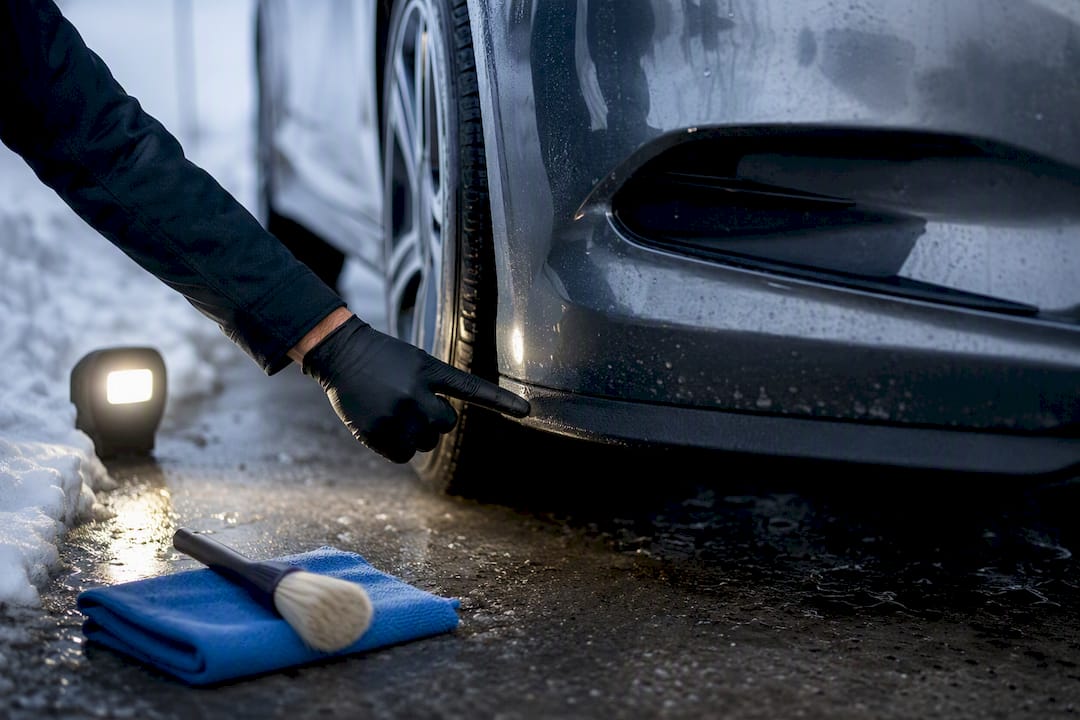
Full-vehicle PPF covers every exterior panel and gives the most complete protection, but it costs considerably more than protecting just the high-impact zones. Partial or front-clip PPF, covering the hood, front bumper, mirrors, and rocker panels, catches the majority of salt and road debris damage at a lower price point. For most daily drivers in South Jersey, front-clip coverage paired with a full ceramic coating is the practical middle ground.
Before booking any installer, ask these questions:
- What paint prep and decontamination happens before the coating or film goes on?
- Which film or coating product line will be used, and what is its documented warranty period?
- Is the warranty against yellowing, cracking, or lifting, and does it require proof of maintenance?
- How long does the vehicle need to cure before it can get wet or be driven in salt conditions?
Winter maintenance that actually extends protection life
Coatings and film only perform as promised if you keep salt from sitting on them for weeks at a time.
- Rinse the car every 7 to 10 days during active salt season, focusing on lower panels and the underbody, not just the visible paint.
- Use a pH-neutral wash product on coated surfaces since harsh degreasers strip hydrophobic protection faster than normal wear.
- Get an underbody and wheel-well rinse at a touchless or self-serve bay monthly, since trapped sludge is what drives frame and suspension corrosion.
- Schedule a mid-season inspection of coating and film condition around January, checking for lifting edges or dulled hydrophobic response.
- After any major storm, rinse the car within a few days, inspect for new chips, and photograph anything that looks like fresh damage.
CDC Detailing’s own guide on winter maintenance for ceramic-coated vehicles walks through safe wash products in more detail, and their underbody salt removal checklist covers the TDS checks worth running before rust ever becomes visible.
Pro Tip: Keep a simple phone photo log of your lower panels every few weeks. It makes spotting new etching or chip damage far easier than relying on memory.
What protection costs and how long it actually lasts
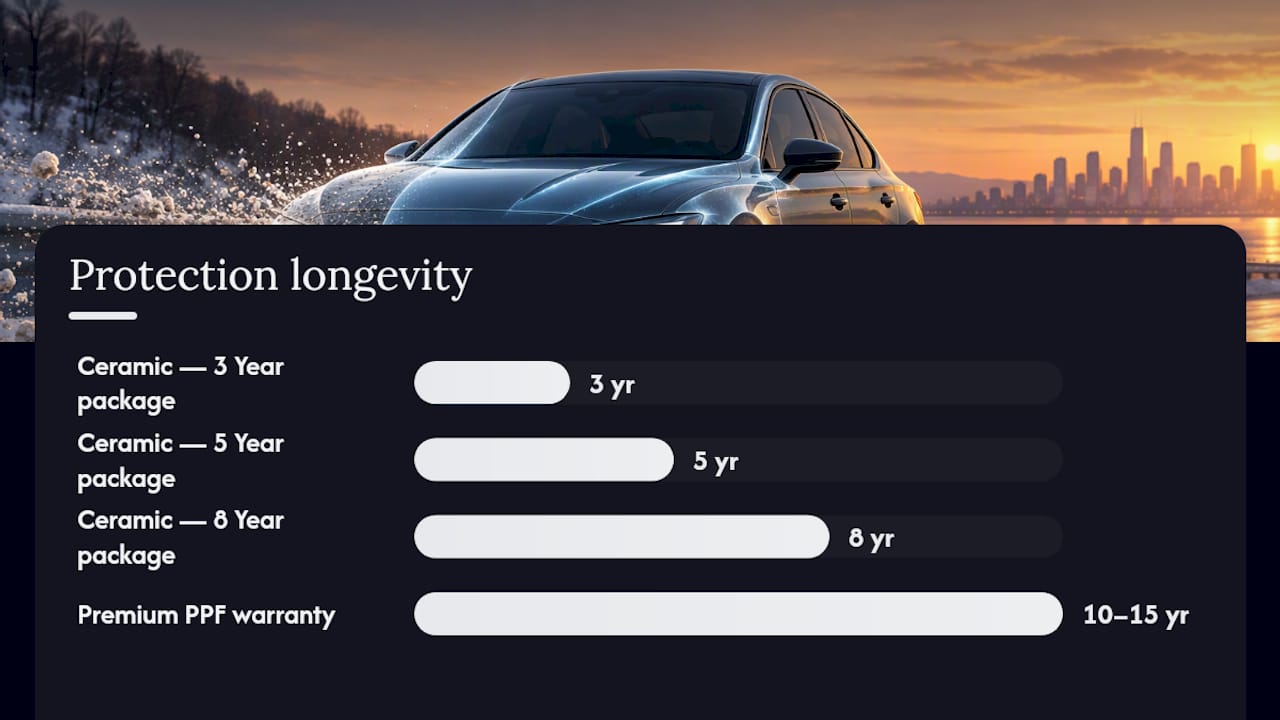
Ceramic coating packages typically scale with the length of protection and the prep work involved. CDC Detailing’s own 3 Year Package runs 1,000 to 1,200 dollars, a 5 Year Package runs 1,500 to 1,700 dollars, and an 8 Year Package runs 2,200 to 2,400 dollars, with pricing driven largely by paint condition and how much correction work is needed before application.
Premium PPF often carries warranties in the 10 to 15 year range against yellowing and cracking, though coverage terms vary by film manufacturer and installer. A legitimate warranty should specify what triggers a claim and require documented maintenance, not just a sales receipt.
- Wax protection lasts weeks, not months, and needs reapplication multiple times per season.
- Ceramic coatings hold their hydrophobic effect for multiple years with proper care.
- Corrosion repair on rusted rocker panels or frame rails routinely costs more than the coating or film that would have prevented it.
How a South Jersey mobile detailer applies coating and PPF for salt protection
Some South Jersey mobile detailers build their winter protection process around decontamination first: clay and iron removal to strip embedded contaminants before any coating or film touches the paint. Proper cure time follows application, since ceramic coatings and PPF both need controlled conditions to bond correctly, which is part of why the company emphasizes prep over speed.
- Detailing providers often offer ceramic coating tiers, paint protection film installations on front clips or full vehicles depending on exposure and budget, and detail packages that bundle protective services with interior and exterior detailing for comprehensive care.
That combination of thorough prep and targeted lower-panel focus is the same approach detailed in the spring exterior detailing guide, which picks up where winter protection leaves off.
A pragmatic recommendation for most NJ drivers
For most South Jersey drivers, a full ceramic coating paired with front-clip PPF and a disciplined rinse schedule is the sensible call. It costs more upfront than wax, but it holds up through repeated salt exposure instead of needing constant reapplication. Fleet operators, high-mileage commuters, and EV owners with exposed underbody components should weigh full-vehicle PPF more seriously, since their corrosion risk compounds faster.
— Charles
How CDC Detailing helps you get protected before the next storm
CDC Detailing brings the coating and film work described above directly to your driveway in South Jersey, so you are not losing a weekend sitting in a shop waiting room. Their ceramic coating packages cover 3, 5, and 8 year protection tiers, and their Paint Protection Film service handles both front-clip and full-vehicle coverage depending on how much exposure your daily driving involves.

- Book online through the detail packages page to see Bronze through Gold tiers alongside protective add-ons.
- Mobile service means the technician comes to your home or office, with prep, application, and cure guidance handled on-site.
- Fleet and high-mileage vehicle owners can also review fleet washing services for recurring protection needs.
Schedule a consultation through CDC Detailing’s booking form to get a coating or film plan matched to how and where you drive this winter.
Sources
- NJDOT winter operations — expenditures and winter practices
- Ceramic coating vs wax for car in winter — Haffners
FAQ
Do they use road salt in New Jersey?
Yes, New Jersey relies heavily on rock salt and brine for winter road treatment. NJDOT used more than 238,000 tons of rock salt in a recent winter season alone, with pre-treatment brine applied to major roads ahead of storms.
What states are in the salt belt for cars?
The salt belt generally refers to states across the Northeast, Midwest, and Mid-Atlantic that use heavy road salt applications each winter, and New Jersey falls within that region. Vehicles registered or regularly driven in these states face elevated corrosion risk compared to states that rarely use salt.
How can I protect my car from road salt?
The most effective combination is a professional ceramic coating for chemical protection plus paint protection film on impact-prone panels like the front bumper and rocker panels. Pair either with a consistent rinse schedule during salt season, since even the best coating or film performs better when salt is not left sitting on it for weeks.
How long until salt rusts on a car?
There is no fixed timeline, since it depends on how long brine or salt residue sits against bare or damaged paint and metal. Because brine can remain on treated roads for days and is hygroscopic, vehicles with existing chips or scratches can see corrosion begin within a single season if salt is not rinsed off regularly.