
For many drivers juggling work, family, and errands around South Jersey, squeezing a quality car wash into a packed schedule can feel impossible. Protecting your vehicle while minimizing environmental impact matters, but traditional washing is time-consuming and wasteful. With waterless car wash technology, you get a resource-conscious alternative that cleans, polishes, and protects your paint—no hoses, no wastewater, and finished in as little as 15 to 30 minutes. Discover how this modern approach fits your lifestyle while maintaining your vehicle’s shine.
Table of Contents
- Defining Waterless Car Wash Technology
- Types Of Waterless Car Wash Products
- How Waterless Car Washes Work
- Benefits And Limitations For Car Owners
- Comparing Waterless And Traditional Car Washes
Key Takeaways
| Point | Details |
|---|---|
| Waterless Car Wash Efficiency | Waterless car wash eliminates the need for water, saving over 100 liters per wash and reducing cleaning time to 15-30 minutes. |
| Environmental Benefits | This method prevents wastewater runoff, protecting local waterways from chemical pollution and reducing overall water consumption. |
| Product Varieties | Various waterless products include basic sprays, protective coatings, and biodegradable formulas, each designed for specific cleaning needs. |
| Ideal Usage | Waterless washing is perfect for regular maintenance on clean vehicles, whereas heavily soiled cars may require traditional washing or hybrid methods. |
Defining waterless car wash technology
Waterless car wash is a cleaning method that removes dirt and grime from your vehicle without using traditional water rinsing. Instead of hoses and water spray, this approach relies on specially formulated cleaning solutions and microfiber towels to safely lift contaminants from your paint.
The technology works through specialized chemical formulations containing surfactants, emulsifiers, and polymers. These ingredients lower surface tension, break down oils, and encapsulate dirt particles so they suspend away from your paint surface. When you wipe the solution onto your car with a microfiber towel, the encapsulated dirt lifts cleanly without causing swirl marks or scratches.
Here’s what makes this different from traditional washing:
- Uses no water for rinsing, reducing consumption by over 100 liters per wash
- Completes in 15–30 minutes compared to traditional washes taking 45+ minutes
- Works anywhere without hoses, drainage systems, or water access requirements
- Leaves a protective layer on your paint as a bonus benefit
- Prevents wastewater runoff that carries pollutants into local waterways
For South Jersey car owners, waterless washing is particularly valuable. Whether you’re managing a tight schedule in Pitman or dealing with water restrictions in drier seasons, this method adapts to your life. You can have your vehicle cleaned at home, at work, or anywhere convenient.
Waterless car wash technology delivers a resource-conscious alternative that doesn’t sacrifice cleaning power or results.
The approach differs from traditional detailing in scope and depth. While professional detailing services address interior care, paint protection, and comprehensive restoration, waterless washing focuses specifically on exterior cleaning using this water-free method.
It’s worth noting that extremely dirty vehicles—those with heavy mud or salt buildup from winter driving—may benefit more from a hybrid approach combining waterless methods with light rinsing. The technology shines for regular maintenance and touch-ups between deeper detail services.
The protective layer left behind isn’t a replacement for ceramic coatings or paint protection film, but it does enhance your vehicle’s appearance immediately after cleaning.
Pro tip: Schedule waterless washes every two weeks between detailed services to maintain your vehicle’s shine and protect your investment without wasting water or time.
Types of waterless car wash products
Waterless car wash products come in several distinct categories, each designed to tackle different cleaning needs and vehicle conditions. Understanding the options helps you choose what works best for your vehicle and situation.
The primary product type is waterless wash spray, a concentrated formula you spray directly onto your vehicle’s surface. These sprays contain surfactants and lubricants that encapsulate dirt particles and lift them safely for removal with microfiber towels. The lubricants prevent scratching while cleaning, making this method safe even for delicate or freshly painted surfaces.
Advanced waterless formulations go beyond basic cleaning. Modern products include:
- Protective coatings: Add wax or sealant layers that enhance shine and durability
- Biodegradable ingredients: Reduce environmental impact while maintaining cleaning power
- Anti-corrosion agents: Protect against salt damage, crucial for South Jersey winters
- Brightening compounds: Restore faded paint and enhance color depth
- Disinfectants: Kill bacteria and odor-causing microbes on surfaces
Some premium formulations contain nonionic surfactants, silicone oil, carnauba wax, and specialized micro powders that work together to clean, protect, and condition your paint in one application. These products are phosphate-free and non-toxic, making them safer for your family and local waterways.
Recycled water systems represent another eco-friendly category. These systems filter and reuse water to supplement traditional washing, reducing overall water consumption while maintaining cleaning effectiveness.
The best waterless product for your vehicle depends on how dirty it is and what finish you want to achieve.
For regular maintenance between professional detailing appointments, basic waterless sprays work perfectly. For vehicles with heavier buildup or those needing extra protection, premium formulations with protective layers deliver better results.
Product concentration varies too. Some require dilution with water, while others work straight from the bottle. Concentrated formulas offer better value and flexibility for fleet or commercial use.
When selecting a waterless product, check whether it’s compatible with existing coatings or paint protection film. Following proper detailing best practices ensures you maximize the product’s benefits and protect your investment.
Pro tip: Test any new waterless product on a small, inconspicuous area first to ensure it works well with your vehicle’s paint finish before applying it to the entire surface.
Here’s a summary of key waterless car wash product types and their unique benefits:
| Product Type | Primary Purpose | Best For |
|---|---|---|
| Basic waterless spray | Cleans, lifts dirt safely | Routine maintenance |
| Spray with protective layer | Adds wax/sealant for shine | Enhanced appearance |
| Biodegradable formula | Eco-friendly, safe runoff | Environmentally conscious |
| Anti-corrosion additive | Guards against salt and rust | Winter/salt-prone regions |
| Recycled water system | Reduces total water use | Commercial/fleet operations |
How waterless car washes work
Waterless car washing operates on a simple but sophisticated principle: encapsulating dirt so it lifts safely without water. The process combines chemistry and technique to clean your vehicle thoroughly while protecting your paint.
The foundation is a specially formulated spray containing surfactants and lubricating polymers. When you spray this solution onto your vehicle’s surface, the surfactants work to decrease surface tension and emulsify oily residues. This allows contaminants to separate from the paint rather than cling to it.
Here’s the step-by-step process:
- Spray the waterless solution generously onto a section of your vehicle
- Allow the formula 30-60 seconds to penetrate and encapsulate dirt particles
- Use a clean microfiber towel to gently wipe the panel in one direction
- Flip to a fresh section of the towel for the next panel
- Repeat across your entire vehicle, panel by panel
- Use a finishing towel for final buff and shine
The microfiber towels are critical. Their fine fibers trap encapsulated dirt particles while the lubricants in the spray prevent scratching and swirl marks. Unlike traditional washing where dirt particles can scratch as they slide across paint, waterless cleaning safely suspends and removes them.
Waterless car washes clean, polish, and protect your paint in a single workflow without needing water, drainage, or runoff.
This method produces zero runoff, making it ideal for driveways, parking lots, and areas without water access. Traditional washing uses 150-500 liters and creates polluted wastewater. Waterless washing eliminates that entirely.
The process takes 15-30 minutes for most vehicles, depending on size and condition. During winter months in South Jersey, when salt spray accumulates on vehicles, waterless washing prevents that buildup from sitting on your paint while you’re between professional mobile detailing appointments.
For regular maintenance, this method works exceptionally well. For heavily soiled vehicles with caked-on mud or salt, a light pre-rinse followed by waterless washing gives optimal results. The key is working systematically and using fresh microfiber sections to avoid redistributing dirt.
The protective layer left behind enhances shine and provides temporary water beading, though this isn’t a substitute for ceramic coating or paint protection film.
Pro tip: Always fold your microfiber towel into fresh sections between each panel—using dirty areas of the towel defeats the purpose and risks creating swirl marks.
Benefits and limitations for car owners
Waterless car washing offers real advantages for South Jersey vehicle owners, but it’s not a one-size-fits-all solution. Understanding both sides helps you decide when to use this method versus traditional washing.
Benefits you’ll actually experience:
The most obvious advantage is water conservation. A single traditional wash uses 100-150 liters of water. Waterless washing uses zero. Over a year of bi-weekly washes, you save thousands of gallons while reducing your environmental footprint.
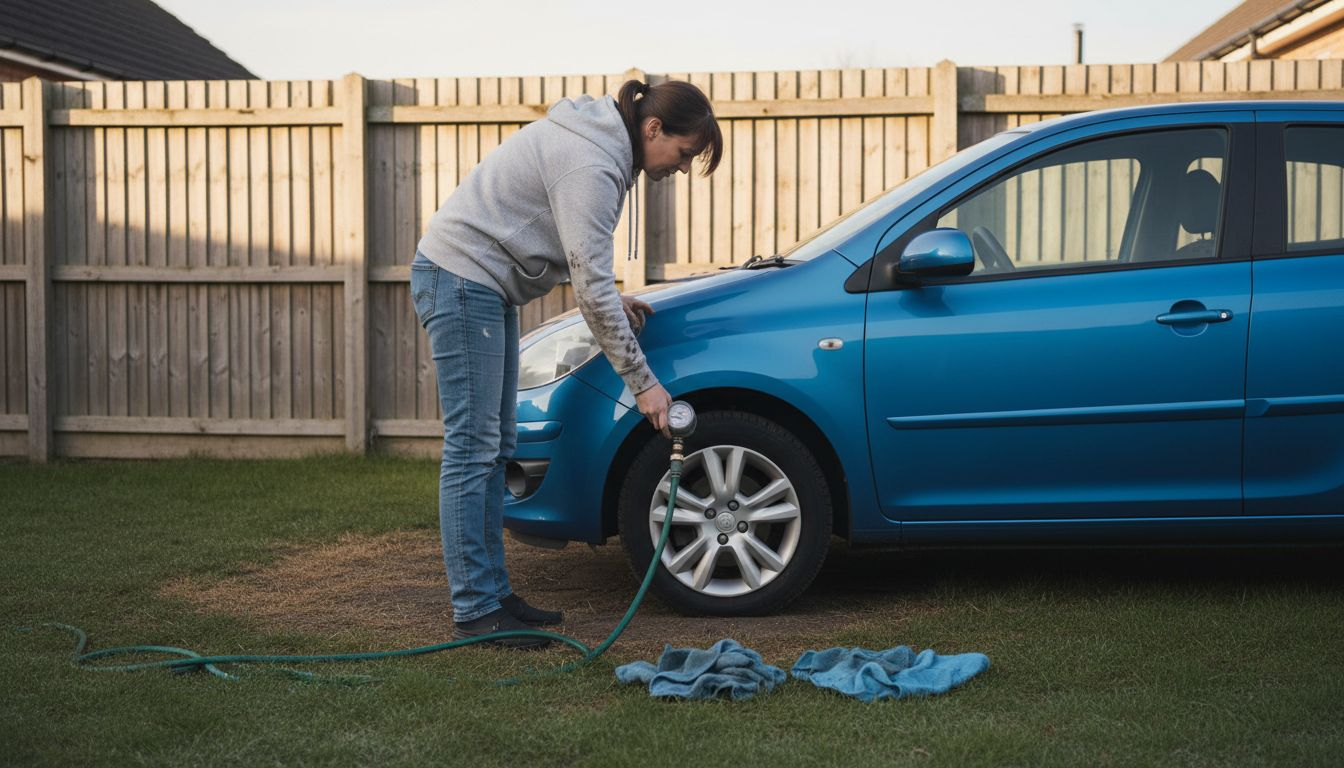
Time is another major win. Most waterless washes take 15-30 minutes compared to 45+ minutes for traditional methods. For busy professionals juggling schedules in South Jersey, this time difference matters significantly.
Convenience rounds out the core benefits. You can wash your vehicle anywhere—your driveway, parking lot, or office—without needing water access or drainage. Mobile detailing services often rely on waterless technology precisely because of this flexibility.
Waterless washing also produces zero runoff or wastewater, protecting local groundwater and storm drains from chemical pollution.
Limitations to consider:
Cost is the biggest hurdle. Waterless products run more expensive per wash than traditional methods. For budget-conscious owners, this adds up over time.
Effectiveness drops significantly on heavily soiled vehicles. Dirt accumulation from road salt, mud, or brake dust requires either a pre-rinse or traditional washing. Winter months in New Jersey create this challenge frequently.
Proper technique matters more than with traditional washing. Using dirty towel sections or incorrect wipe patterns risks swirl marks. This learning curve can frustrate first-time users.
The protective layer left behind isn’t permanent. It enhances shine temporarily but won’t replace ceramic coatings or paint protection film for long-term durability.
Waterless washing excels for regular maintenance between deeper detail services but struggles with extreme dirt buildup.
For most South Jersey car owners, the ideal approach combines both methods: waterless washing for routine upkeep every two weeks, and professional detailing quarterly for comprehensive restoration.
Pro tip: Use waterless washing during dry seasons when your vehicle stays relatively clean, then switch to traditional or mobile detailing methods after winter when salt and grime accumulation peaks.
Comparing waterless and traditional car washes
Choosing between waterless and traditional car washing methods comes down to understanding their fundamental differences. Each approach excels in different situations, and knowing when to use each one keeps your vehicle looking sharp.
Water consumption tells the biggest story. Traditional washing uses 150-500 liters of water per vehicle through multiple stages: pre-rinsing, shampooing, rinsing again, drying, and sometimes glass and wax treatments. Waterless washing uses zero liters. Over twelve months of regular washing, that’s thousands of gallons saved per vehicle.
Infrastructure requirements differ dramatically. Traditional car washes need water access, drainage systems, and wastewater management to handle chemical runoff. Waterless methods produce zero wastewater runoff, making them viable anywhere—your driveway, parking lot, or office.
Here’s how they stack up side by side:
| Factor | Traditional Wash | Waterless Wash |
|---|---|---|
| Water Usage | 150-500 liters | Zero liters |
| Time Required | 45+ minutes | 15-30 minutes |
| Setup Location | Fixed facility | Anywhere |
| Wastewater | Chemical runoff | None |
| Cost Per Wash | Lower | Higher |
| Heavy Dirt Removal | Excellent | Limited |
| Everyday Maintenance | Good | Excellent |
Environmental impact favors waterless methods. Traditional washes generate polluted runoff containing detergents and chemicals that flow into storm drains and groundwater. Waterless washing eliminates this pollution entirely while reducing your overall water consumption.
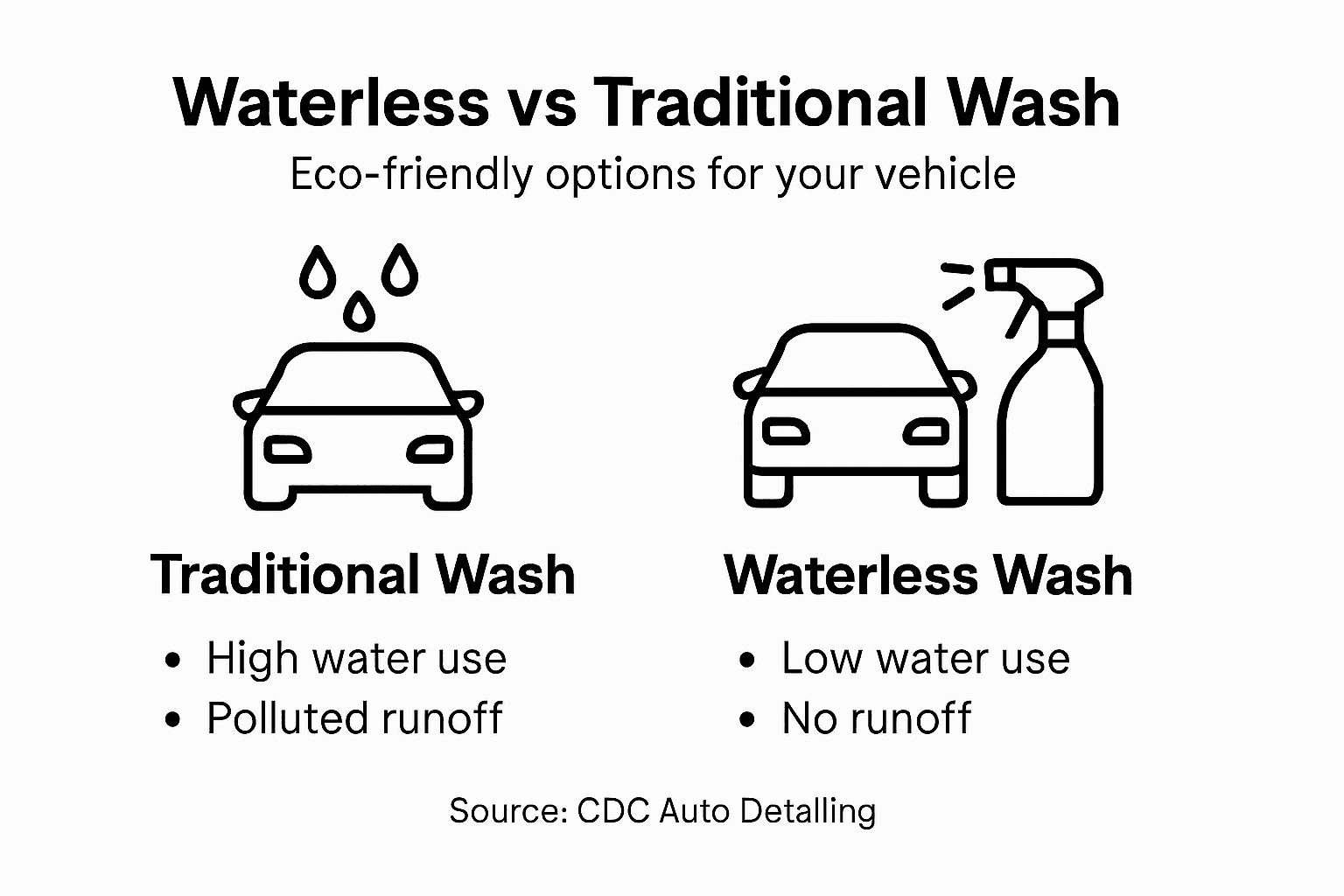
Cost presents a real trade-off. Traditional washing costs less per service, making it budget-friendly for frequent users. Waterless products cost more per application, though you save money on water bills over time.
Effectiveness depends on vehicle condition. For routine weekly or bi-weekly maintenance on relatively clean vehicles, waterless washing delivers superior convenience and environmental benefits. For heavily soiled vehicles covered in mud or road salt after winter driving, traditional washing or hybrid approaches combining light pre-rinsing with waterless methods work better.
The best choice isn’t choosing one method exclusively—it’s using both strategically based on seasonal needs and vehicle condition.
For South Jersey car owners, a hybrid approach makes sense. Use waterless washing during dry seasons for regular maintenance, then switch to traditional or professional mobile detailing during winter when salt and grime accumulate heavily.
This breakdown highlights when to choose waterless, traditional, or hybrid washing techniques:
| Situation | Recommended Method | Reason for Choice |
|---|---|---|
| Light weekly dust/dirt | Waterless | Quick cleaning, no water needed |
| Heavy mud or road salt | Traditional/Hybrid | Better dirt removal, salt flush |
| Apartment parking lot | Waterless | No hose or drain access required |
| Winter maintenance | Hybrid | Pre-rinse salt, then waterless finish |
| Preparing for show/event | Professional Detail | Deep clean, paint restoration |
Pro tip: Schedule waterless washes every two weeks during spring and fall, then shift to professional detailing monthly during winter to handle salt damage and heavy contamination before it compounds.
Experience Premium Eco-Friendly Car Care with CDC Auto Detailing
Waterless car wash technology presents a smart, eco-conscious way to keep your vehicle spotless without wasting water or risking paint damage. If you want to save time, reduce your environmental footprint, and enjoy professional-quality results designed for South Jersey weather and road conditions, CDC Auto Detailing offers mobile services tailored just for you. We understand the challenges of maintaining your car’s shine between deep cleanings and can help you incorporate waterless washing into your routine safely and effectively.
Ready to protect your vehicle with gentle yet powerful cleaning methods that fit your busy schedule? Visit our website to explore our complete range of mobile detailing options including expert exterior care, advanced paint protection, and convenient appointment booking. Learn more about how we combine waterless techniques with professional detailing to keep your car looking its best all year. Don’t wait until road salt or grime dulls your finish–schedule your service today and experience the CDC Auto Detailing difference. Discover the best in eco-friendly car care at CDC Auto Detailing.
Frequently Asked Questions
What is waterless car wash technology?
Waterless car wash technology cleans vehicles without using water for rinsing. It uses specially formulated cleaning solutions and microfiber towels that safely lift dirt and grime from the vehicle’s surface.
How does a waterless car wash work?
A waterless car wash works by applying a solution that contains surfactants and lubricating polymers. These ingredients encapsulate dirt particles, allowing them to be wiped away safely without water, thereby preventing scratches and swirl marks.
What are the benefits of using waterless car wash products?
The benefits include significant water conservation—saving over 100 liters per wash, time efficiency as it takes only 15-30 minutes, convenience of washing anywhere, zero wastewater runoff, and leaving a protective layer on your vehicle’s paint.
Are waterless car wash products effective for heavily soiled vehicles?
While waterless car wash products excel for regular maintenance, they may not be as effective on heavily soiled vehicles. For those types of vehicles, a hybrid approach that combines light rinsing with waterless methods is recommended.