
Stepping into a car that feels like an oven after hours in the South Jersey sun is a hassle every local driver knows. Window tinting goes far beyond curb appeal, providing heat reduction and UV protection that help keep interiors cooler and more comfortable. Professional tinting can block up to 99 percent of harmful ultraviolet rays and significantly cut heat buildup, making your daily commute and weekend drives safer and more enjoyable. Discover how expert mobile detailing services deliver lasting benefits for your vehicle and peace of mind for you.
Table of Contents
- Window Tinting Basics And Common Myths
- Types Of Car Window Tint Films Explained
- Benefits: Uv Protection, Privacy, Heat Reduction
- Legal Requirements For Window Tint In South Jersey
- Comparing Tint Costs And Installation Methods
- Mistakes To Avoid With Window Tinting
Key Takeaways
| Point | Details |
|---|---|
| Functional Benefits of Window Tinting | Window tinting offers significant advantages including UV protection, heat reduction, and enhanced privacy, improving overall comfort and safety in your vehicle. |
| Types of Window Tint Films | Understanding the characteristics of different tint films—such as Dyed, Metalized, Hybrid, Carbon, and Ceramic—allows for informed decisions based on performance, aesthetics, and budget. |
| Legal Compliance | Familiarize yourself with local tinting regulations, as non-compliance can lead to fines. Always consult a professional installer to ensure adherence to legal standards. |
| Cost and Installation Considerations | Window tint costs vary widely based on type and complexity; investing in professional installation often saves money in the long run by avoiding mistakes and ensuring quality. |
Window Tinting Basics and Common Myths
Window tinting is more than just a cosmetic upgrade for your vehicle. Advanced tinting technologies offer significant practical benefits that many car owners overlook. Professional window tinting provides crucial protection against harmful ultraviolet rays, reduces interior heat, enhances privacy, and improves overall driving comfort.
Contrary to popular misconceptions, not all window tints are created equal. High-quality ceramic films can block substantial heat at lighter shades, debunking the myth that darker tints always provide better protection. Professional installation ensures that the tinting process does not damage your vehicle’s glass, with quality films potentially lasting over a decade when properly maintained. Some people mistakenly believe window tinting is purely aesthetic, but it serves critical functional purposes.
The benefits of window tinting extend far beyond appearance. Blocking up to 99% of UV rays significantly reduces potential skin damage and prevents interior fading of upholstery, dashboard, and other surfaces. Additionally, tinted windows can improve safety by holding shattered glass together during accidents, providing an extra layer of protection for vehicle occupants.
Pro tip: Always consult local regulations regarding window tinting limits, as legal darkness levels vary by state and can result in potential fines if not properly understood.
Types of Car Window Tint Films Explained
Choosing the right window tint film can significantly impact your vehicle’s comfort, protection, and appearance. Window tint film technologies have evolved dramatically, offering car owners a range of options to suit different needs and budgets. Understanding the characteristics of each tint type helps you make an informed decision that balances performance, aesthetics, and cost.
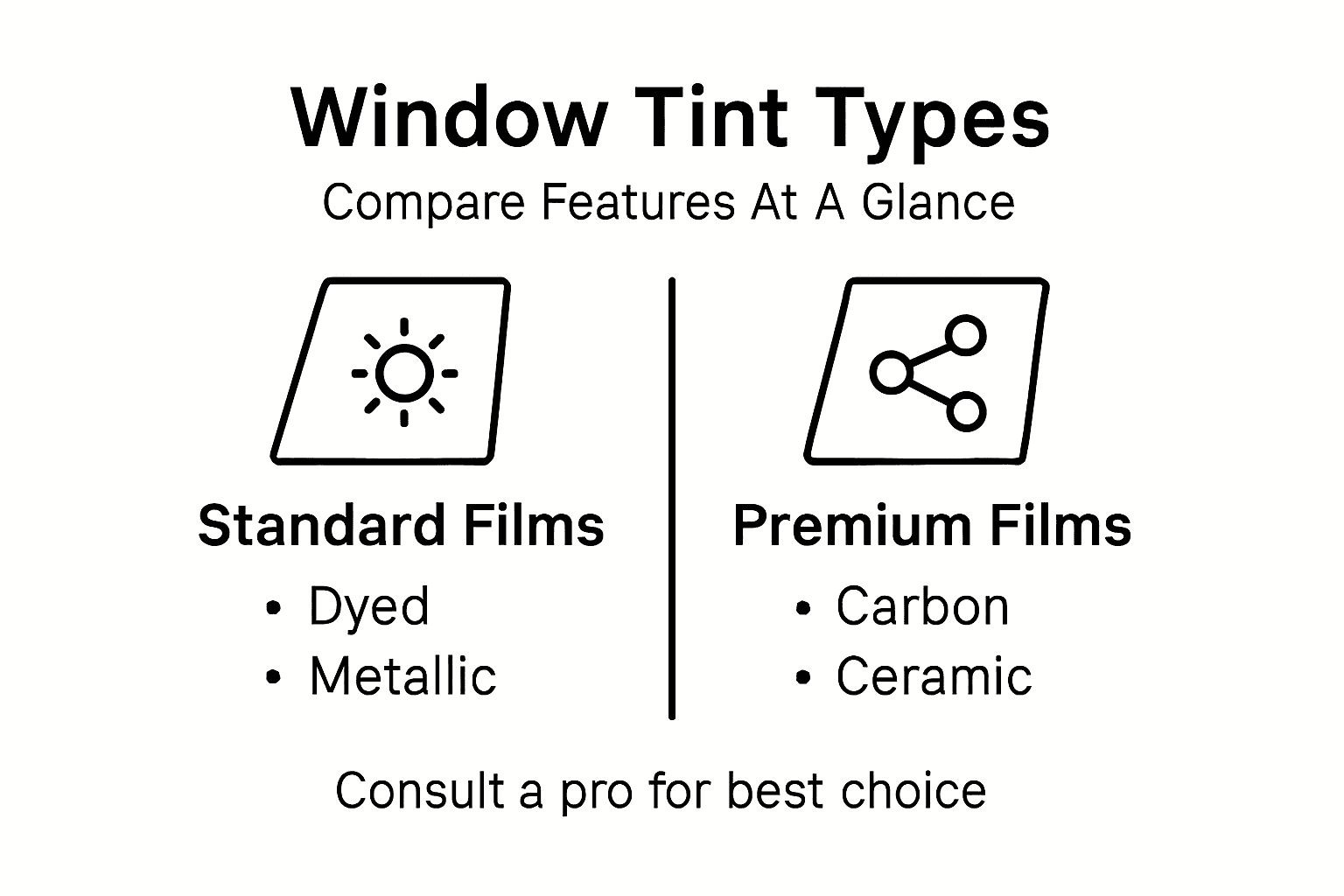
Six primary window tint film types dominate the market, each with unique advantages. Dyed film is the most affordable option, enhancing vehicle appearance with a classic dark look but providing limited heat and UV protection. Metalized tints offer improved strength and heat rejection, though they can potentially interfere with electronic signals like GPS and mobile communications. Hybrid films cleverly combine dyed and metallic technologies, delivering balanced performance with reduced signal interference.
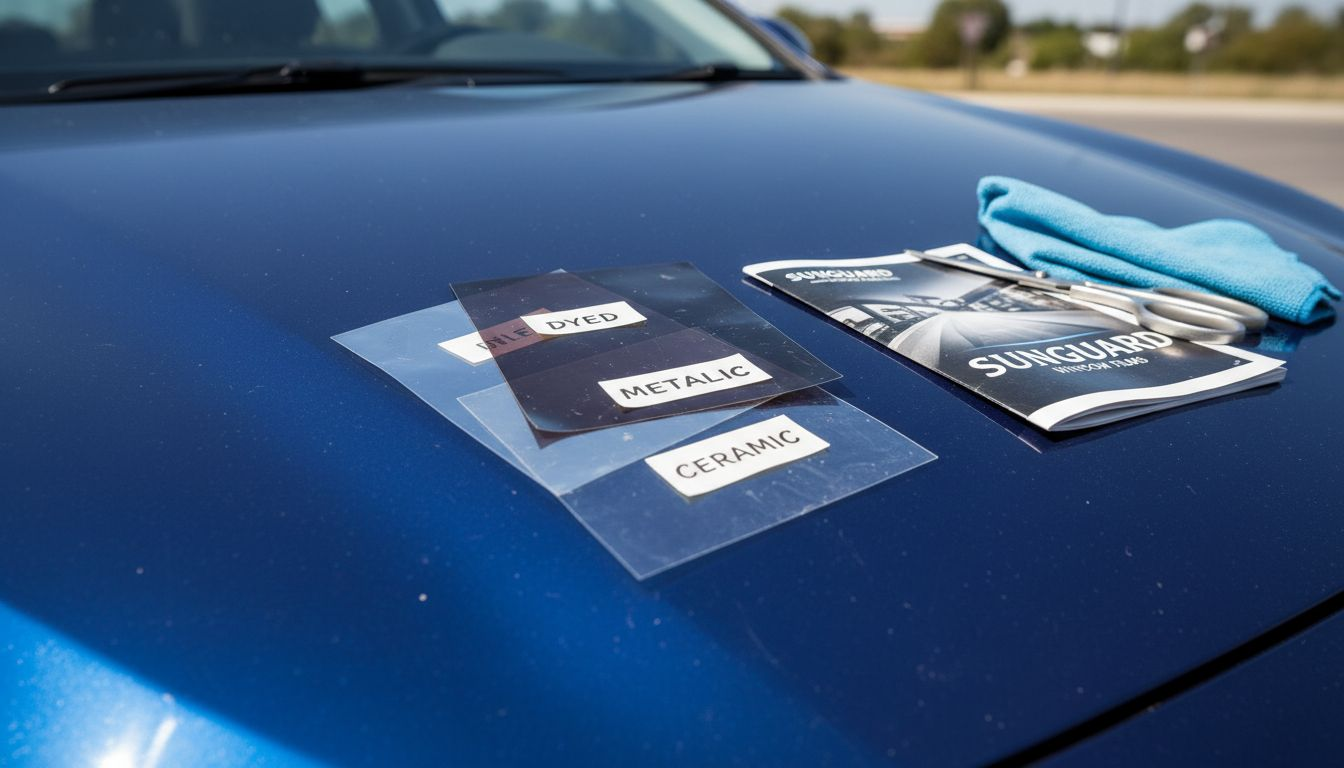
Carbon and ceramic tints represent the premium end of window film technology. Carbon tints absorb heat effectively without signal disruption and provide excellent durability. Ceramic films stand out as the top-tier option, delivering superior heat rejection, maximum UV protection, exceptional clarity, and long-lasting performance. For those seeking minimal visual change, clear protective films can enhance UV blocking without darkening windows, offering a practical solution for drivers prioritizing protection over aesthetics.
Pro tip: Always consult a professional installer to determine the best window tint film for your specific vehicle and local legal restrictions.
Here’s a side-by-side summary of the main types of window tint films and their key characteristics:
| Film Type | Heat Rejection | UV Protection | Impact on Electronics |
|---|---|---|---|
| Dyed | Limited | Basic | No effect |
| Metalized | Moderate to high | Moderate | May interfere |
| Hybrid | Balanced | Good | Minimal interference |
| Carbon | High | Very high | No interference |
| Ceramic | Superior | Maximum (up to 99%) | No interference |
| Clear Protective | Low | High | No effect |
Benefits: UV Protection, Privacy, Heat Reduction
Window tinting offers far more than a sleek aesthetic upgrade for your vehicle. Window tinting provides comprehensive protection that addresses multiple critical concerns for car owners. By blocking harmful ultraviolet radiation, reducing interior heat, and enhancing privacy, tinted windows transform your driving experience into a more comfortable and secure environment.
Ultraviolet protection stands out as a primary benefit of professional window tinting. Quality window films can block up to 99% of dangerous UV rays, which significantly reduces skin damage risk and prevents premature aging. This protection extends beyond personal health, safeguarding your vehicle’s interior from sun-related deterioration. Upholstery, dashboard materials, and trim components remain vibrant and intact, preventing cracking, fading, and unnecessary wear that can dramatically decrease your vehicle’s resale value.
Heat reduction represents another crucial advantage of window tinting. By reflecting solar energy and limiting heat absorption, tinted windows create a noticeably cooler interior environment. This means less reliance on air conditioning, improved fuel efficiency, and enhanced driving comfort during hot South Jersey summers. The privacy aspect further complements these benefits, limiting external visibility and creating a more secure environment that deters potential theft and protects personal belongings from prying eyes.
Pro tip: Select a professional window tinting service that offers UV-blocking ceramic films for maximum protection and optimal heat rejection.
Legal Requirements for Window Tint in South Jersey
Understanding New Jersey’s window tinting regulations is crucial for car owners seeking to customize their vehicle’s appearance and protection. The state maintains strict guidelines that balance vehicle aesthetics with safety considerations, requiring careful navigation of legal requirements to avoid potential fines and traffic violations.
New Jersey’s window tinting laws are particularly specific about where and how tints can be applied. Windshields and front side windows are strictly prohibited from any tinting, with exceptions only granted through medical exemptions. Rear side windows and rear windshields offer more flexibility, allowing any level of tint darkness. However, vehicles with tinted rear windows must be equipped with dual side mirrors to ensure proper visibility and meet safety standards. Obtaining a medical exemption requires detailed physician certification and Motor Vehicle Commission approval, with documentation that must be carried in the vehicle for potential law enforcement inspection.
Violations of these window tinting regulations can result in significant financial penalties. First-time offenders may face fines up to $1,000, with subsequent violations carrying increasingly severe consequences. Local law enforcement throughout South Jersey actively enforces these regulations, making it essential for vehicle owners to understand and comply with state guidelines. Professional window tinting services can provide valuable guidance in selecting legal tint options that meet both aesthetic desires and regulatory requirements.
Pro tip: Always consult a certified window tinting professional who understands local New Jersey regulations to ensure your vehicle remains fully compliant.
Comparing Tint Costs and Installation Methods
Understanding window tinting cost factors is crucial for South Jersey car owners looking to invest in quality window protection. Pricing varies dramatically based on vehicle size, tint quality, and installation complexity, with options ranging from budget-friendly to premium solutions that offer superior long-term value.
Window tint pricing typically breaks down into three primary categories. Dyed films represent the most economical option, starting around $100-$250 and providing basic aesthetic enhancement. Metallic and carbon films occupy the mid-range price point, costing between $200-$500 and offering improved heat rejection and durability. Ceramic tints represent the premium tier, ranging from $400-$800, delivering exceptional heat reduction, UV protection, and visual clarity. Vehicle size significantly impacts total cost, with larger SUVs and trucks requiring more material and labor, consequently increasing the final price.
Installation methods present another critical consideration for car owners. Professional installations, while more expensive, guarantee precise application, legal compliance, and often include warranties against bubbling, peeling, or improper fitting. DIY kits might seem cost-effective initially but frequently result in subpar results that require costly professional correction. Mobile installation services offer convenience but may charge slightly higher rates to compensate for travel and on-site setup. Factors like shop location, technician expertise, and specific vehicle requirements can further influence overall pricing and quality.
Pro tip: Request quotes from multiple professional installers and compare not just price, but warranty coverage and past customer reviews to ensure the best value.
Mistakes to Avoid With Window Tinting
Window tinting requires careful consideration, and understanding common installation errors can save car owners significant time and money. Inexperienced individuals often make critical mistakes that compromise the quality, appearance, and legal compliance of their vehicle’s window tint.
One of the most frequent errors is selecting inappropriate tint darkness without considering local regulations and driving safety. New Jersey’s strict window tinting laws require specific visible light transmission percentages, and choosing an overly dark tint can result in expensive fines or mandatory removal. Improper surface preparation represents another significant pitfall, where dust, dirt, or debris trapped during installation leads to unsightly bubbles and uneven application. This problem is particularly common with DIY tinting kits that lack professional-grade cleaning and application tools.
Low-quality tint materials pose another substantial risk for vehicle owners. Cheap films often fade quickly, peel at the edges, or create distorted visibility, ultimately costing more in repeated installations than investing in high-quality professional tinting. Professional installers use premium materials designed to withstand South Jersey’s varied climate conditions, ensuring durability and consistent performance. Additional mistakes include attempting complex installations without proper training, failing to consider window curvature, and not allowing sufficient curing time after installation, which can compromise the tint’s long-term effectiveness.
Pro tip: Always request a warranty and detailed consultation before window tinting to ensure you understand the specific requirements and potential limitations of your chosen tint.
To help you avoid costly errors, here’s a quick comparison of common window tinting mistakes and their consequences:
| Mistake | Consequence | Prevention Tip |
|---|---|---|
| Ignoring legal restrictions | Fines or forced removal | Check state laws before tinting |
| Poor surface prep | Bubbles and uneven tint | Ensure thorough cleaning before install |
| Using low-quality materials | Peeling and fading | Choose professional-grade film |
| DIY on curved windows | Visible gaps, improper fitting | Hire an experienced installer |
| Inadequate curing time | Premature tint failure | Follow aftercare instructions fully |
Elevate Your Ride with Expert Window Tinting in South Jersey
If you are ready to protect your vehicle from harsh UV rays, reduce interior heat, and enhance privacy while staying fully compliant with New Jersey’s window tinting laws, CDC Auto Detailing offers the trusted solution you need. We understand the challenges of choosing the right tint film type, legal restrictions, and professional installation quality that the article highlights. Our expert mobile window tinting service in Pitman, New Jersey combines premium ceramic films with flawless application to deliver superior UV protection, heat reduction, and a sleek appearance that lasts.
Don’t risk costly fines or poor results from DIY tints. Choose CDC Auto Detailing to experience the convenience of at-home service backed by customer trust and proven expertise. Visit our professional window tinting services page now to schedule an appointment and protect your vehicle with South Jersey’s leading mobile auto care specialists.
Frequently Asked Questions
What are the primary benefits of window tinting for cars?
Window tinting offers benefits such as protecting against harmful UV rays, reducing interior heat, enhancing privacy, and improving overall driving comfort.
How long does window tint typically last after professional installation?
When properly maintained, high-quality window tint films can last over a decade, making them a worthwhile investment for vehicle owners.
Are there different types of window tint films and their benefits?
Yes, there are several types of window tint films, including dyed, metalized, hybrid, carbon, and ceramic films, each offering distinct advantages in terms of heat rejection, UV protection, and durability.
What should I consider before choosing a window tint for my vehicle?
Before choosing a window tint, consider local regulations on tint darkness, the type of film suited for your needs (e.g., UV protection, heat reduction), and whether to hire a professional installer for optimal results.