
Running errands in Cherry Hill or tackling the morning commute across the Walt Whitman Bridge, South Jersey professionals know how quickly sun glare and cabin heat can turn every drive into a hassle. With so many misconceptions out there, it is easy to overlook the real value of window tinting beyond appearances. Quality window tinting blocks heat, shields you from UV rays, and creates much-needed privacy without compromising your clear view of the road. This guide sorts through the confusion so you can confidently choose the right protection and privacy for your busy lifestyle.
Table of Contents
- Window Tinting Basics And Misconceptions
- Types Of Window Tint Films And Their Functions
- How Window Tinting Improves Comfort And Safety
- Legal Requirements For South Jersey Vehicle Tinting
- Pricing, Maintenance, And Professional Installation
- Comparing Tinting To Other Vehicle Protection Measures
Key Takeaways
| Point | Details |
|---|---|
| Window Tinting Benefits | Tinting improves comfort by blocking heat, reducing glare, and providing UV protection for both passengers and interiors. |
| Types of Tint Films | Different tint types, like dyed, carbon, and ceramic, offer varying degrees of protection, cost, and durability, affecting overall vehicle comfort and safety. |
| Legal Compliance in New Jersey | Understanding local laws is crucial, as tinting regulations vary by window location, with strict rules for front windows and windshields. |
| Importance of Professional Installation | Opt for professional installation to ensure high quality, legality, and longevity of the tint, avoiding issues that arise from DIY applications. |
Window Tinting Basics and Misconceptions
Window tinting isn’t just about giving your car a sleek appearance. It’s a practical upgrade that many South Jersey drivers overlook because of misunderstandings about what tinting actually does and whether it’s even legal. The truth is, common window tinting misconceptions have kept plenty of car owners from experiencing real benefits like improved comfort and UV protection. Let’s clear up what window tinting really is and separate fact from fiction.
At its core, window tinting involves applying a thin film to your car’s windows. This film is made from layers of polyester and adhesive that reduce light transmission. Most people think tinting is purely cosmetic, but the actual benefits run much deeper. The film blocks heat, reduces glare from the sun and oncoming headlights, and shields you from ultraviolet rays that fade your interior and damage your skin. Different tint types exist: dyed tint (the most affordable option), metallic tint (which offers better heat rejection), and ceramic tint (the premium choice that blocks the most heat without interfering with electronics). When professionals install quality tint, it lasts between five and ten years depending on climate and care. The installation process matters tremendously. DIY tinting might seem cost-effective, but improper application leads to bubbles, peeling, and compromised performance.
Now for the misconceptions. One major myth is that tinting is illegal in New Jersey. The reality? Window tinting is perfectly legal within regulated limits. New Jersey law allows tint on your back and side windows, though specific darkness levels apply based on your vehicle type. Another widespread belief is that tinted windows reduce your visibility while driving. Actually, quality professional tinting maintains visibility from inside your vehicle while reducing the glare that actually impairs your sight. Some drivers worry that tint prevents air bags from deploying correctly or damages their windows during removal. Neither is true. Modern tint films are designed to be fully removable without harming glass, and safety systems aren’t affected by a thin film on windows. Perhaps the biggest misconception for busy professionals is that tinted windows require high maintenance. Quality tint needs nothing more than your regular car washing routine. Skip the ammonia-based cleaners for the first few weeks after installation, but that’s the only special consideration.
Pro tip: When considering window tinting for your South Jersey vehicle, always request professional installation from a certified provider rather than attempting DIY application, as professional-grade film and proper installation techniques ensure better heat rejection, durability, and a finish free from bubbles or imperfections that compromise both appearance and function.
Types of Window Tint Films and Their Functions
Not all window tints are created equal. Walk into a shop offering tinting services in South Jersey, and you’ll hear terms like ceramic, carbon, and dyed film thrown around. Each type performs differently, costs differently, and lasts differently. Understanding what separates these options matters because choosing the wrong film means settling for less protection, shorter lifespan, or money wasted on premium products you don’t actually need. The good news is that the differences are straightforward once you know what to look for.
Dyed window tint is the most affordable option and works by absorbing solar heat and light through a dye layer. It provides solid privacy and reduces glare, making it popular for budget-conscious drivers. The downside? Dyed film fades over time and doesn’t block as much heat as other types. Metalized tint uses tiny metallic particles to reflect heat away from your vehicle. It blocks more heat than dyed film and lasts longer, but the reflective quality can interfere with cell phone and GPS signals, which is why some states restrict its use on front windows. Carbon tint sits in the middle of the performance and price spectrum. It contains carbon particles that block infrared radiation, keeping your car cooler without the signal interference problems of metalized film. Many professionals recommend carbon as the sweet spot for value.
At the premium end, ceramic tint is the gold standard. Ceramic and carbon tint options offer superior heat rejection without affecting electronic signals, and ceramic specifically provides the highest UV protection available. Ceramic film contains no metal or dye, relying instead on ceramic particles that absorb and block heat more effectively than any other type. Yes, it costs more upfront, but it outlasts other films by years and keeps your interior cooler with less strain on your air conditioning system. Hybrid tint combines dyed and metalized layers to balance affordability with better performance than pure dyed film. Crystalline tint, the newest option, blocks infrared while maintaining maximum visibility, though it’s thicker and slightly more noticeable than other types.
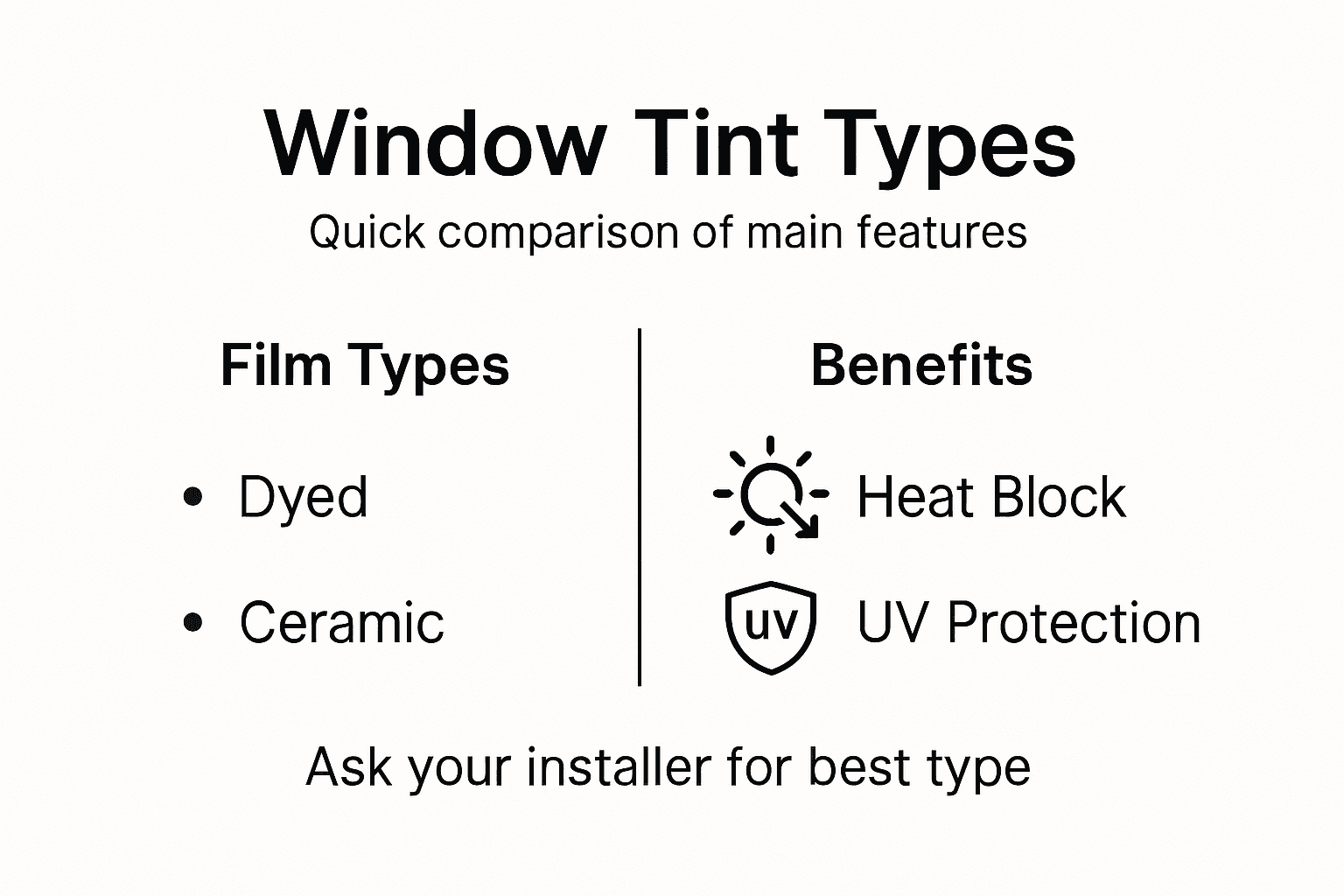
Here’s a concise comparison to help you understand the different types of window tint films available:
| Tint Type | Main Benefit | Longevity | Electronics Interference |
|---|---|---|---|
| Dyed | Privacy & glare reduction | Shortest (fades) | None |
| Metalized | Strong heat rejection | Long-lasting | Possible |
| Carbon | Good heat & UV protection | Very durable | None |
| Ceramic | Highest heat & UV blocking | Longest (premium) | None |
| Hybrid | Balanced protection & price | Moderate | Potential |
| Crystalline | Maximum visibility | Durable | None |
The key differences matter for your situation. If you live in South Jersey where summer heat is intense, ceramic justifies its cost through energy savings and comfort. If you simply want privacy at a reasonable price, dyed or hybrid works fine. If you want professional results without the premium price, carbon delivers excellent performance. Before deciding, consider your climate, how long you plan to keep your vehicle, and whether electronics interference concerns you.
Pro tip: Request samples of different tint types before committing, and ask your installer which film they recommend based on your vehicle type and usage patterns, as professional recommendations account for factors like window size, sun exposure direction, and your daily driving routine that affect real-world performance.
How Window Tinting Improves Comfort and Safety
Sitting in your car on a hot South Jersey summer afternoon without tinted windows feels like sitting inside an oven. Your steering wheel burns your hands, your dashboard cracks from heat stress, and you’re running the air conditioning at full blast just to make the cabin tolerable. Window tinting changes this reality dramatically. Beyond making your drive more pleasant, tinting actually protects your health and safety in ways many drivers never consider. The film works quietly in the background, doing multiple jobs at once to keep you and your vehicle safer.
The most immediate benefit is heat reduction. Tinted windows block infrared radiation before it enters your car, which means your cabin stays significantly cooler even during peak afternoon heat. This cooling effect translates directly to less reliance on your air conditioning system, reducing fuel consumption and engine strain. But cooling is just the beginning. Window tinting reduces glare and eye strain by filtering harsh sunlight that bounces off roads and other vehicles. For busy professionals commuting on busy Jersey highways, this reduction in eye fatigue makes a real difference in alertness and driving safety. Less glare also means better visibility in bright conditions, which directly improves your ability to see potential hazards.
UV protection ranks among the most important safety benefits, though many drivers overlook it. Window tint blocks up to 99 percent of ultraviolet rays that damage your skin and fade your vehicle’s interior. Over time, UV exposure ages your skin and increases skin cancer risk. Inside your car, those same rays bleach leather seats, fade dashboard materials, and crack plastic components. Professional tinting protects against all of this simultaneously. Additionally, during accidents, tinted film holds shattered glass together instead of letting it shower into your cabin or onto the road. This safety feature prevents lacerations and keeps glass debris contained, which also helps protect other vehicles nearby.
Privacy and security matter too, especially when parking in public areas. Darker tinting prevents people from seeing inside your vehicle, which deters theft of valuables and reduces the risk of break-ins. If you’re leaving equipment or packages in your car while running errands around South Jersey, tinting gives you peace of mind knowing passersby cannot see what’s inside.
Pro tip: Ask your tinting professional about the exact UV blocking percentage and heat rejection rating of the specific film they recommend, as these measurements directly correlate to the comfort and protection benefits you’ll experience, and higher ratings justify premium film costs through long-term vehicle preservation and occupant safety.
Legal Requirements for South Jersey Vehicle Tinting
Before you invest in window tinting for your vehicle, you need to understand what New Jersey law actually allows. Many South Jersey drivers assume tinting is either completely banned or completely unrestricted, when the reality is more nuanced. Getting the legal details wrong could result in failing vehicle inspections, receiving citations, or having to have your tint removed. The good news is that New Jersey permits window tinting on specific windows with clear guidelines, and understanding those requirements takes just a few minutes.
New Jersey law allows window tinting on your rear window and rear side windows with virtually no darkness restrictions. This means you can go as dark as you want on these windows without legal consequences. Your front side windows have more limitations. The law requires that your front side windows allow at least 70 percent of light to pass through, which means you cannot use the darkest tints available on these windows. Your windshield has the strictest rules. Tinting on your windshield is generally prohibited except for a non-reflective shade along the top portion. This design protects your visibility while driving and ensures law enforcement can see into your vehicle during traffic stops. If you have a medical condition that makes exposure to sunlight problematic, New Jersey does offer an exception. New Jersey provides medical exemptions for window tinting on your windshield and front side windows when you have a documented medical condition aggravated by sunlight. This process requires physician certification, application submission to the Motor Vehicle Commission, and regular renewal to maintain your exemption status.
To clarify the legal window tinting requirements in South Jersey, use this quick reference:
| Window Location | Legal Tint Limit | Special Exemptions | Safety Rationale |
|---|---|---|---|
| Rear & rear side | Any darkness allowed | None | Privacy without safety issue |
| Front side | ≥70% light transmission | Medical certificate needed | Maintain driver visibility |
| Windshield | Top non-reflective strip | Medical certificate needed | Law enforcement visibility |
When you work with a professional tinting service in South Jersey, they handle these legal requirements as part of their job. Reputable installers know New Jersey law inside and out and will never apply illegal tint to your vehicle. They understand the light transmission requirements, know which windows can be tinted dark, and can explain your options clearly. This is one reason professional installation matters beyond just quality results. A professional protects you from legal complications by ensuring your tint meets state specifications. If you ever need to prove compliance during a vehicle inspection or traffic stop, having professional installation documentation provides that proof. Attempting DIY tinting or using an unlicensed installer puts you at risk of non-compliance without realizing it.
The penalties for illegal tint vary. Law enforcement can issue citations, which cost money in fines. Your vehicle may fail inspection, preventing registration renewal. In extreme cases, you might be required to remove the tint entirely, which costs money and time. More importantly, if you’re involved in an accident and your vehicle has illegal tint, it could complicate insurance claims or legal proceedings. Playing it safe means working with professionals who understand and follow New Jersey regulations.
Pro tip: Before scheduling your window tinting appointment, ask your installer to confirm they use tint that meets New Jersey’s 70 percent light transmission requirement for front side windows and to provide documentation of compliance, ensuring your investment is protected legally and won’t cause registration or inspection problems down the road.
Pricing, Maintenance, and Professional Installation
Window tinting costs vary significantly depending on what you choose and who installs it. For a busy South Jersey professional, understanding pricing helps you make smart decisions without overspending or settling for inferior results. The investment in quality tinting pays dividends through improved comfort, vehicle protection, and long-term durability. However, pricing should never be your only consideration when selecting a tinting service.
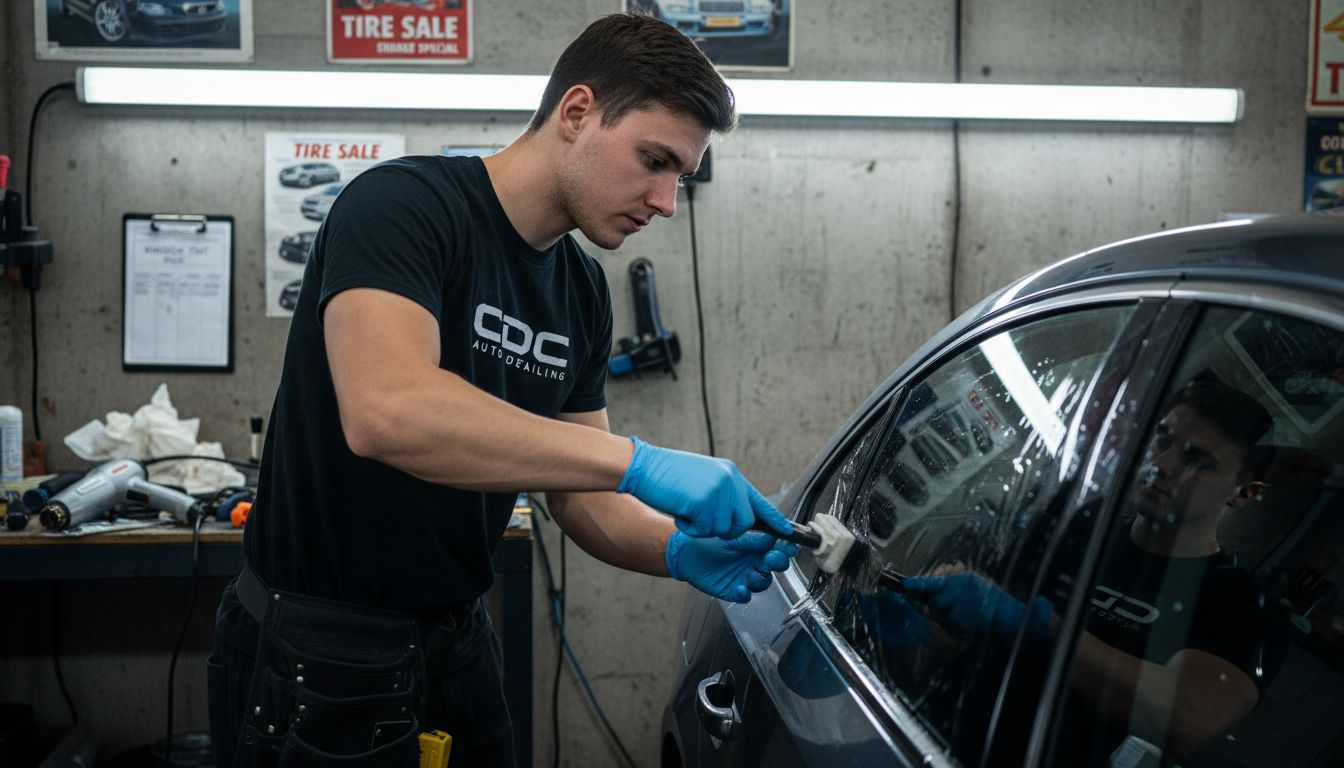
Pricing Factors
Your total cost depends on several variables working together. The film type makes the biggest difference. Basic dyed tint costs the least, typically ranging from $150 to $300 for a standard sedan. Carbon tint runs higher, usually between $300 and $600. Premium ceramic tint, which offers superior heat rejection and UV protection, costs between $500 and $1,200 depending on your vehicle. Window tint pricing varies based on material type and installation complexity, with larger vehicles and unusual window shapes requiring more labor and thus higher costs. A compact sedan costs less to tint than an SUV with panoramic windows. Your vehicle’s glass configuration matters too. Curved windows, tinted factory glass, or multiple window styles complicate installation and increase labor time.
Don’t let price alone drive your decision. The cheapest option might save you money upfront but cost you in the long run. Poorly installed tint bubbles, peels, and fades within two or three years. Quality professional installation means your tint lasts five to ten years, spreading your cost across significantly more time. A professional installer also ensures your tint meets New Jersey legal requirements, protects your vehicle properly, and looks flawless. The labor cost difference between a budget installer and a professional is often less than $100, but the quality difference is dramatic.
Maintenance and Care
One major advantage of professional window tinting is how little maintenance it requires. For the first few weeks after installation, avoid ammonia-based window cleaners, which can damage the adhesive and cause peeling. After that initial period, treat your tinted windows like any other windows. Regular car washing keeps them clean. If you use glass cleaner, choose ammonia-free formulas. Avoid rolling your windows down excessively during the first month, as movement can disturb the film while it’s curing. That’s genuinely it. No special treatments, no expensive products, no complicated procedures. Unlike some vehicle upgrades that demand ongoing attention, quality tint is virtually maintenance-free.
Why Professional Installation Matters
Professional installation protects your investment in multiple ways. A certified installer brings proper tools, quality materials, climate-controlled workspace, and years of experience. They handle delicate glass surfaces correctly, apply film without bubbles or wrinkles, and trim edges perfectly. They understand local legal requirements and apply tint that passes inspection. They back their work with warranties, so if something goes wrong, you have recourse. Most importantly, professionals complete the job efficiently. What might take you an entire weekend and still look imperfect takes them a few hours and looks flawless. For South Jersey professionals with busy schedules, having mobile installation services come to your home or office makes sense. You get quality results without disrupting your workday.
Pro tip: Request a detailed quote that breaks down film type, labor costs, and warranty coverage before committing, and ask your installer how long the curing process takes and what post-installation care instructions apply to your specific film type for optimal results.
Comparing Tinting to Other Vehicle Protection Measures
When protecting your vehicle, you have options. Window tinting is just one tool in a larger toolkit that includes paint protection film, ceramic coatings, and other upgrades. Understanding how tinting compares to these alternatives helps you make informed decisions about where to invest your money. The truth is that these protections work best together, each addressing different threats to your vehicle’s condition and your personal comfort.
Window Tinting vs. Paint Protection Film
These two services often get confused because they both apply protective films to your vehicle, but they protect different surfaces. Paint protection film (PPF) shields your vehicle’s exterior paint from rock chips, road debris, and environmental damage. It’s crucial if you drive frequently on highways where gravel and sand kick up onto your front bumper and hood. Window tinting protects your interior from UV rays, heat, and glare while providing privacy and safety benefits. They complement each other perfectly. A vehicle with both PPF and window tinting has comprehensive protection, but if budget forces you to choose, consider your biggest pain point. If you’re concerned about paint damage from highway driving, PPF matters more. If you struggle with heat and glare during your daily South Jersey commute, window tinting addresses your immediate comfort issue.
Window Tinting vs. Ceramic Coatings
Ceramic coatings protect your vehicle’s exterior paint and glass from oxidation, water spots, and UV damage. They make washing easier and keep your paint glossy longer. Window tinting also protects against UV damage but focuses specifically on interior protection and occupant comfort. One doesn’t replace the other. You could have ceramic coating on your exterior paint while window tinting protects your interior. Many vehicle owners eventually get both because they serve different purposes. Ceramic coatings are primarily about paint preservation and appearance, while window tinting is about comfort and safety.
Window Tinting vs. Other Safety Measures
When comparing window tinting to other vehicle safety enhancements, research shows that window tinting reduces UV exposure, heat gain, glare, and injury risk from shattered glass, providing distinct advantages in occupant comfort and passive safety. However, tinting addresses different safety aspects than features like backup cameras or advanced driver assistance systems. Backup cameras help prevent accidents by improving visibility. Tinting reduces injuries if an accident happens by holding glass together and minimizing cuts. Both matter, but they work on different levels of vehicle safety.
Making the Right Choice
The best protection strategy combines multiple solutions. For South Jersey drivers, a practical approach means starting with window tinting for immediate comfort and UV protection, then adding paint protection film if you drive highways frequently, and eventually considering ceramic coating for overall vehicle preservation. You don’t need everything at once. Prioritize based on your specific challenges and usage patterns. If heat and glare frustrate you daily, tinting comes first. If you’re worried about paint damage from highway miles, PPF comes first. If you want your vehicle to look showroom-new for years, ceramic coating matters more. Most comprehensive protection involves multiple services working together, not choosing one over the others.
Pro tip: When planning your vehicle protection strategy, ask your professional detailer which combination of services makes most sense for your specific vehicle type, climate, and driving habits, since bundling services often qualifies you for package discounts while ensuring your protection investments complement rather than duplicate each other.
Experience Ultimate Comfort and Protection with Professional Window Tinting
If battling harsh South Jersey heat and damaging UV rays during your daily drive has become a struggle, professional window tinting is your solution. This article highlights how the right window tint film reduces glare, blocks up to 99 percent of harmful UV rays, and keeps your vehicle cooler with lasting durability. Whether you want to enhance privacy, improve safety by holding shattered glass together, or simply make your commute more comfortable, choosing the right tint type and expert installation matters.
Discover how our mobile window tinting services at CDC Auto Detailing deliver premium ceramic and carbon tint options tailored for New Jersey regulations and your unique driving needs. Act now to protect your investment and boost your driving comfort by scheduling an appointment today. Learn more about our comprehensive window tinting solutions and why South Jersey drivers trust us for unbeatable quality, convenient mobile service, and professional results.
Frequently Asked Questions
What are the main benefits of window tinting?
Window tinting provides significant benefits, including heat reduction, UV protection, glare reduction, enhanced privacy, and safety improvements in case of accidents.
How long does window tint last?
Quality window tint can last anywhere from five to ten years, depending on the type of film, installation quality, and environmental factors.
What types of window tint films are available?
There are several types of window tint films, including dyed, metalized, carbon, ceramic, hybrid, and crystalline, each offering different levels of protection, longevity, and heat rejection.
Is window tinting legal for my vehicle?
In many areas, window tinting is legal within certain limits. Most states allow tinting on rear and side windows with fewer restrictions, but there are stricter rules for front windows and windshields. Always check local regulations before applying tint.