
Your car’s exterior takes constant abuse from South Jersey’s roads, weather, and environment. Neglecting proper care costs you thousands in resale value and leaves your vehicle looking tired and worn. This comprehensive guide walks you through the complete exterior detailing process, from washing and decontamination to paint correction and protection. You’ll discover professional techniques adapted for South Jersey conditions, learn which products deliver real results, and understand when mobile detailing services provide the best value for maintaining your investment.
Table of Contents
- Understanding The Essentials Of Exterior Car Care
- Preparing Your Car For Premium Exterior Care
- Step By Step Exterior Decontamination Process
- Paint Correction And Protection: Final Steps For Lasting Shine
- Discover Premium Mobile Detailing Services In South Jersey
- Frequently Asked Questions
Key takeaways
| Point | Details |
|---|---|
| Resale value boost | Proper exterior detailing increases vehicle resale value by 10 to 15 percent through enhanced appearance and protection. |
| Complete process | Full exterior care requires washing, chemical decontamination, mechanical decontamination, correction, and protection in sequence. |
| Protection lifespan | Regular decontamination extends ceramic coating and sealant effectiveness by up to 30 percent compared to neglected surfaces. |
| Preparation prevents damage | Thorough surface prep avoids paint scratches and ensures protective coatings bond correctly for maximum durability. |
Understanding the essentials of exterior car care
Your vehicle’s exterior faces relentless assault every day. Road tar, brake dust, tree sap, and industrial fallout bond to your paint, creating a rough surface that dulls shine and accelerates wear. South Jersey’s mix of highway driving, coastal salt air, and urban pollution makes these contaminants particularly aggressive.
Simple car washes remove loose dirt but leave bonded contaminants untouched. These embedded particles create a barrier that prevents protective products from adhering properly. Over time, they etch into clear coat, causing permanent damage that reduces your vehicle’s value and appeal.
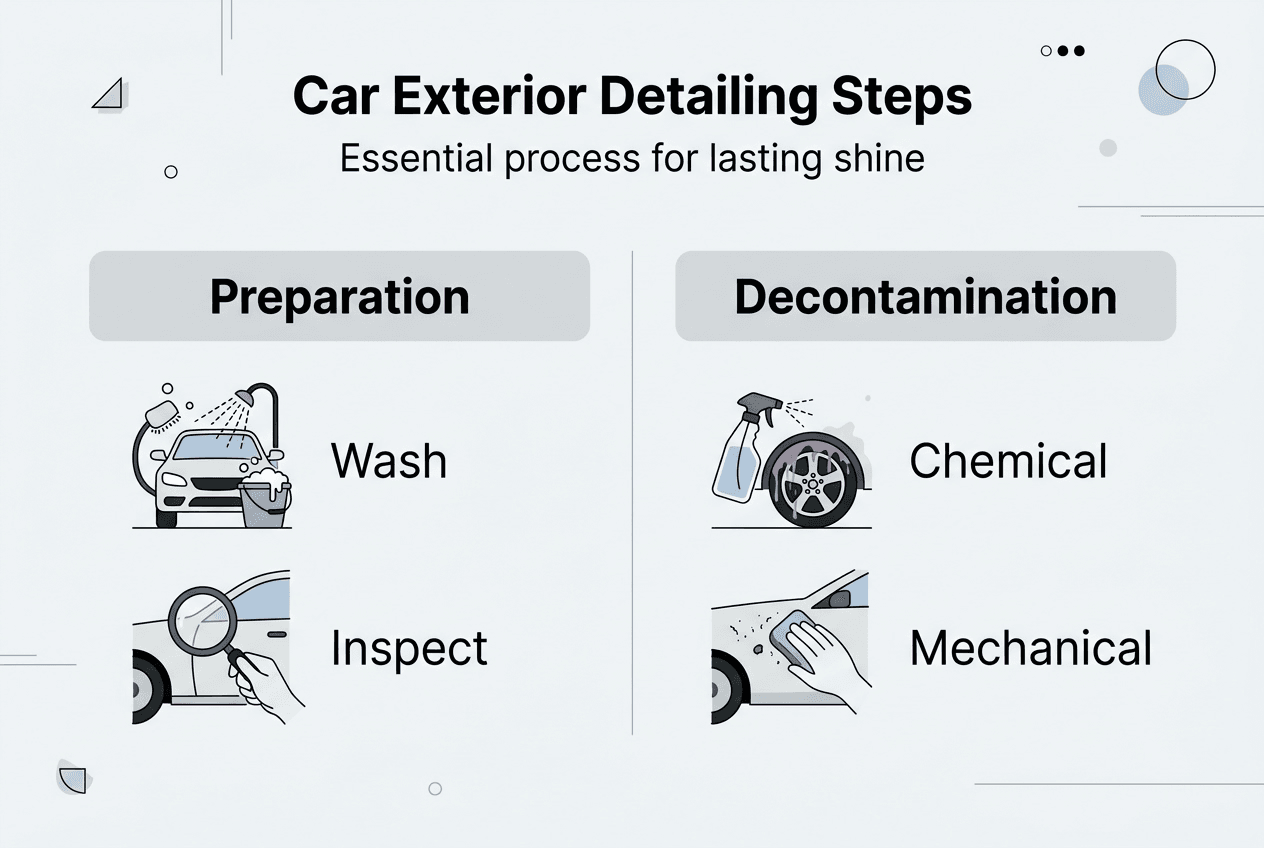
Professional exterior car detailing follows a systematic approach that addresses each layer of contamination and damage. The process builds from foundation to finish: thorough washing, chemical decontamination, mechanical decontamination, paint correction, and protective coating application. Each step prepares the surface for the next, creating conditions for optimal results.
Exterior detailing significantly enhances vehicle resale value by 10 to 15 percent according to industry analysis. Buyers pay premium prices for vehicles that show meticulous care and protection. A flawless exterior signals overall maintenance quality and justifies higher asking prices in competitive markets.
South Jersey vehicle owners face specific challenges that demand attention:
- Highway tar and asphalt residue from frequent Interstate 295 and Route 55 travel
- Brake dust accumulation from stop and go traffic in Pitman, Glassboro, and surrounding areas
- Tree sap and pollen during spring and summer months
- Industrial fallout from manufacturing facilities in the region
- Salt and road chemicals during winter weather events
These contaminants require targeted removal techniques that go beyond standard washing. Chemical and mechanical decontamination work together to eliminate bonded particles without damaging paint. This preparation creates a clean canvas for correction and protection steps that deliver lasting results.
“Paint decontamination transforms how protective coatings perform. A clean surface allows products to bond directly to clear coat, maximizing durability and effectiveness for years of protection.”
Understanding exterior detailing best practices helps you maintain your vehicle between professional services. Regular washing prevents contaminant buildup, while periodic decontamination keeps protective coatings working at peak performance. This knowledge empowers you to make informed decisions about care frequency and service selection.
Preparing your car for premium exterior care
Proper preparation prevents damage and optimizes every subsequent step. Starting with a thorough wash removes loose dirt and grime that could scratch paint during decontamination and correction. This foundation work determines the quality of your final results.
Begin by rinsing your vehicle to remove heavy debris. Use a pH neutral car shampoo with proper wash technique, working from top to bottom in straight lines. Avoid circular motions that create swirl marks. Rinse thoroughly between sections to prevent soap from drying on the surface.
After washing, inspect your paint using the touch test. Run your hand across panels in a plastic bag to amplify surface feel. Smooth paint indicates cleanliness, while roughness reveals bonded contaminants that require removal. Focus on horizontal surfaces like the hood, roof, and trunk where fallout accumulates most heavily.
Common contaminants you’ll encounter include:
- Iron particles from brake dust that appear as small rust spots
- Tar and asphalt that feel sticky or raised
- Tree sap that creates hard, glossy bumps
- Industrial fallout that feels gritty or sandy
- Overspray from paint or construction work
Proper car washing is the foundation of effective paint decontamination by removing loose particles before treatment. Skipping this step forces contaminants across your paint during later processes, creating scratches and swirl marks that require correction.
Choose quality products designed for automotive use. Household detergents strip protective waxes and can damage paint. Automotive shampoos maintain pH balance and include lubricants that reduce friction during washing. Invest in microfiber wash mitts and drying towels that lift dirt away from surfaces rather than grinding it in.
Pro Tip: Use separate wash mitts for wheels and paint. Brake dust contains metal particles that scratch paint if transferred. Keep wheel cleaning tools isolated to prevent cross contamination.
Inspect your vehicle in good lighting conditions. Direct sunlight or bright LED work lights reveal defects that fluorescent garage lighting hides. Look for swirl marks, scratches, water spots, and oxidation that indicate correction needs. Document problem areas so you can verify improvement after treatment.
Prepping your car for detailing establishes realistic expectations for outcomes. Severe damage may require multiple correction steps, while well maintained vehicles need only light polishing. Understanding your paint’s condition helps you plan appropriate treatments and budget accordingly.
Timing matters for preparation work. Avoid washing in direct sunlight or on hot surfaces where water and soap dry too quickly. Early morning or late afternoon provides ideal conditions. If working indoors, ensure adequate ventilation and lighting for thorough inspection and safe product use.
South Jersey’s seasonal changes affect preparation strategy. Spring exterior detailing addresses winter salt and road chemical buildup, while fall preparation removes summer tar and tree sap before winter storage or harsh weather arrives. Adapt your approach to environmental factors for best results.
Step by step exterior decontamination process
Decontamination removes bonded contaminants that washing leaves behind. This two phase process uses chemical and mechanical methods in sequence to eliminate embedded particles without damaging paint. Proper execution creates the clean surface essential for correction and protection steps.
Chemical decontamination comes first. Iron removers dissolve embedded particles that appear as rust spots on your paint. Spray the product on cool, dry surfaces and watch as it changes color, typically from clear to purple or red. This reaction shows iron particles breaking down and lifting from your clear coat.
Allow iron remover to dwell for the manufacturer’s recommended time, usually three to five minutes. Never let it dry on the surface. Rinse thoroughly with strong water pressure to flush dissolved contaminants away. Repeat on heavily contaminated areas until the product stops changing color.
Tar removers tackle sticky, petroleum based contaminants. Apply to affected areas and let the solvent break down the tar. Use a microfiber towel to gently wipe away dissolved residue. Multiple applications may be necessary for heavy buildup. Always follow tar removal with a wash to eliminate solvent residue.
Mechanical decontamination follows chemical treatment. Clay bars or clay mitts physically remove remaining bonded particles through gentle abrasion. This step addresses contaminants that chemicals cannot dissolve, including tree sap, overspray, and industrial fallout.
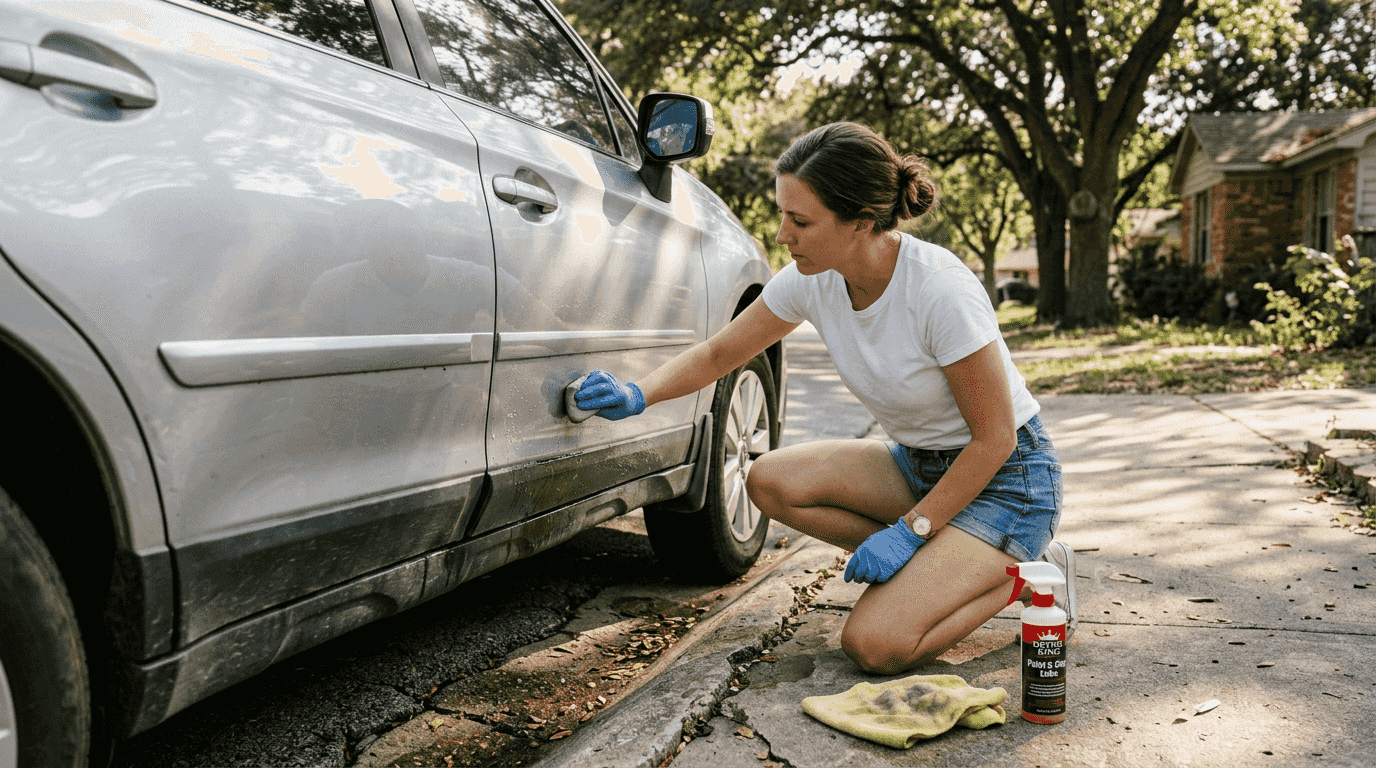
Pro Tip: Always use clay lubricant generously. Insufficient lubrication causes clay to grab paint, creating marring that requires correction. Spray lubricant frequently and keep surfaces wet throughout the process.
The clay bar technique requires light pressure and straight line motions. Fold and knead the clay frequently to expose clean surfaces. When clay glides smoothly without resistance, that section is clean. Move systematically across all painted surfaces, working in two foot sections.
Performing chemical followed by mechanical decontamination in proper sequence optimizes results and minimizes paint stress. Chemical treatment reduces the amount of mechanical work needed, decreasing the risk of marring and speeding the overall process.
Decontamination frequency depends on your driving environment and habits:
| Environment | Recommended Frequency | Key Factors |
|---|---|---|
| Urban/highway commuter | Every 3 months | Heavy brake dust, tar, and industrial fallout exposure |
| Suburban mixed use | Every 4 to 6 months | Moderate contamination from varied driving conditions |
| Garage kept, light use | Every 6 to 12 months | Minimal exposure, protected storage reduces buildup |
| Coastal areas | Every 3 to 4 months | Salt air accelerates contamination and bonding |
Vehicles parked outdoors accumulate contaminants faster than garage kept cars. Tree coverage increases sap and pollen exposure. Highway driving deposits more tar and brake dust than local roads. Adjust your decontamination schedule based on these factors and the touch test results.
Safety considerations matter during decontamination. Work in ventilated areas when using chemical products. Wear gloves to protect skin from iron remover’s acidic properties. Avoid breathing product mist during application. Keep chemicals away from trim, glass, and wheels unless specifically formulated for those surfaces.
Document your decontamination work through before and after photos. Visual records help you track improvement and justify the effort invested. They also provide reference points for determining when your next treatment is due based on contamination accumulation patterns.
Essential exterior detailing practices include regular decontamination as a core maintenance step. This process extends the life of protective coatings, maintains paint clarity, and prevents permanent damage from embedded contaminants. Treating it as routine care rather than occasional deep cleaning delivers superior long term results.
Paint correction and protection: final steps for lasting shine
Paint correction removes surface imperfections that dull your vehicle’s appearance. Swirl marks, light scratches, water spots, and oxidation diminish gloss and clarity. Addressing these defects before applying protection ensures maximum visual impact and coating performance.
Correction uses specialized polishes and machines to level clear coat microscopically. This process removes a thin layer of damaged clear coat, revealing fresh, defect free surface underneath. The result is mirror like reflection and depth that makes paint appear wet even when dry.
Correction levels vary based on paint condition and desired outcome:
- Single stage correction removes light defects and restores good gloss for most vehicles
- Two stage correction eliminates moderate to heavy swirl marks and scratches
- Multi stage correction addresses severe damage, achieving show car perfection
Professional detailers assess paint thickness before correction to ensure adequate clear coat remains. Over correction risks burning through to base coat, causing irreversible damage. Paint depth gauges measure thickness and guide safe correction limits.
Paint correction before protective coating ensures optimal bonding and longevity by creating a smooth, clean surface. Applying protection over defects locks in imperfections and prevents coatings from bonding properly. The combination of correction and protection delivers transformative results that last.
Protective coating options include ceramic coatings, synthetic sealants, and traditional waxes. Each offers distinct benefits and trade offs:
| Protection Type | Durability | Gloss Level | Maintenance | Best For |
|---|---|---|---|---|
| Ceramic coating | 2 to 5 years | Highest | Low | Maximum protection and longevity |
| Synthetic sealant | 6 to 12 months | High | Moderate | Balance of performance and cost |
| Carnauba wax | 1 to 3 months | Very high | High | Traditional warm glow and frequent refresh |
| Hybrid products | 3 to 6 months | High | Moderate | Ease of application with good results |
Ceramic coatings provide the most durable protection available to consumers. These silicon dioxide based products chemically bond to clear coat, creating a hard, hydrophobic layer that repels water, dirt, and contaminants. Applying ceramic coating requires meticulous surface preparation and precise application technique.
Pro Tip: Ceramic coatings cure over several days. Avoid washing or exposing the vehicle to rain for at least 48 hours after application. This curing period allows full chemical bonding for maximum hardness and durability.
Synthetic sealants offer excellent protection at lower cost and easier application. These polymer based products bond to paint and provide strong hydrophobic properties. They lack ceramic coating’s extreme durability but deliver outstanding value for owners who prefer more frequent product changes.
Traditional carnauba waxes create unmatched warmth and depth in paint appearance. Natural carnauba produces a glowing finish that synthetic products struggle to replicate. However, waxes require frequent reapplication and offer less chemical and UV resistance than modern alternatives.
Vehicles prepped with chemical and mechanical decontamination exhibit up to 30 percent longer coating lifespan compared to inadequately prepared surfaces. Contaminants under coatings prevent proper bonding and create failure points where protection breaks down prematurely. Thorough decontamination is non negotiable for lasting results.
Maintenance washing preserves protective coatings and extends their effective life. Use pH neutral shampoos and proper wash techniques to avoid damaging protection. Avoid automatic car washes with harsh chemicals and abrasive brushes. Hand washing with quality products maintains coating integrity between professional services.
South Jersey vehicle owners benefit from professional application expertise and premium product access. Paint correction and ceramic coating services in Pitman deliver results that DIY efforts struggle to match. Professionals have training, tools, and experience to handle complex correction and achieve flawless coating application.
Choosing protection depends on your priorities, budget, and commitment to maintenance. Ceramic coatings suit owners wanting maximum durability and minimal upkeep. Sealants work well for those balancing performance and cost. Waxes appeal to enthusiasts who enjoy frequent detailing and traditional aesthetics. Consider your specific needs when selecting products.
Protective coatings require proper curing and initial care. Follow manufacturer guidelines for post application restrictions. Most products need 24 to 48 hours before water exposure and up to seven days for full hardness. Respecting these requirements ensures coatings reach their full potential and deliver advertised performance.
Discover premium mobile detailing services in South Jersey
Achieving professional level exterior care results requires expertise, specialized equipment, and premium products. Mobile detailing brings these advantages directly to your location in South Jersey, eliminating the inconvenience of shop visits while delivering superior outcomes.

Professional services include comprehensive washing, thorough decontamination, precision paint correction, and expert protective coating application. Technicians assess your vehicle’s specific needs and customize treatments for optimal results. This personalized approach addresses your paint’s unique condition and your protection preferences.
Mobile detailing offers unmatched convenience for busy South Jersey residents. Services come to your home, office, or preferred location, saving you travel time and scheduling hassles. You maintain your routine while professionals transform your vehicle’s appearance and protection.
Understanding how auto detailing works helps you appreciate the value professional services provide. The combination of skill, products, and equipment delivers results that justify the investment through enhanced appearance, protection, and resale value.
Explore paint correction and ceramic coating services near Pitman to discover how premium mobile detailing elevates your vehicle care. Professional application ensures proper technique, optimal product performance, and long lasting protection that maintains your investment for years.
Learn how to book mobile detailing and schedule your service today. Experience the difference that professional expertise and premium products make in your vehicle’s appearance and protection.
Frequently asked questions
How often should I decontaminate my car’s paint to maintain a flawless finish?
Decontamination frequency depends on your driving environment and storage conditions. Vehicles in urban areas with heavy traffic benefit from decontamination every three months due to increased brake dust and industrial fallout exposure. Garage kept cars driven primarily on clean roads can extend intervals to six months or longer. Use the touch test to determine when your paint feels rough and needs treatment regardless of time elapsed.
What’s the difference between chemical and mechanical decontamination, and why are both needed?
Chemical decontamination uses specialized products to dissolve bonded contaminants like iron particles and tar. Mechanical decontamination employs clay bars or mitts to physically remove particles that chemicals cannot dissolve, including tree sap and overspray. Both methods address different contaminant types, and using them in sequence ensures complete surface cleaning. Skipping either step leaves contaminants that interfere with protection bonding and reduce coating lifespan.
Can I perform exterior car detailing myself, or should I hire a professional?
DIY detailing is possible with proper products, tools, and technique knowledge. However, inexperienced attempts risk paint damage through improper pressure, incorrect product use, or inadequate preparation. Professionals bring expertise, specialized equipment, and premium products that deliver superior results with lower damage risk. Mobile detailing adds convenience by bringing services to your location, making professional care accessible without sacrificing your time.
How long do ceramic coatings last, and what maintenance do they require?
Quality ceramic coatings last two to five years depending on product quality, application technique, and maintenance practices. Regular washing with pH neutral shampoos preserves coating integrity and hydrophobic properties. Avoid automatic car washes, harsh chemicals, and abrasive tools that degrade protection. Annual inspections and potential top coat applications extend coating life and maintain peak performance throughout its lifespan.
Does paint correction remove all scratches from my vehicle?
Paint correction removes scratches within the clear coat layer through controlled leveling. Deep scratches penetrating to base coat or primer require touch up paint before correction. Very light surface scratches and swirl marks respond well to single stage correction. Moderate damage needs two stage correction for complete removal. Severe scratches may improve significantly but might not disappear entirely without risking clear coat breakthrough.