
Keeping your car’s interior spotless isn’t just about appearances. Between spilled coffee, pet hair, tracked-in mud from South Jersey roads, and everyday dust, your vehicle’s cabin takes a beating. Regular interior cleaning workflow protects your health by improving air quality, preserves the value of your investment, and delivers a more comfortable driving experience. Mobile detailing brings professional expertise directly to your driveway, eliminating the hassle of traveling to a detail shop while ensuring deep, thorough results.
Table of Contents
- What You Need Before You Start: Prerequisites And Tools
- Core Steps For Interior Cleaning
- Common Mistakes And Troubleshooting
- Expected Results And Benefits Of Interior Cleaning
- Discover Expert Mobile Interior Detailing In South Jersey
- Frequently Asked Questions About Vehicle Interior Cleaning
Key takeaways
| Point | Details |
|---|---|
| Health and longevity | Professional interior cleaning improves air quality, reduces allergens, and extends the lifespan of seats, carpets, and trim. |
| Safe products matter | Eco-friendly, surface-safe cleaners protect delicate materials and reduce degradation by 25% compared to harsh chemicals. |
| Convenience saves time | Mobile detailing delivers deep cleaning, odor removal, and conditioning at your home or workplace, saving hours of effort. |
| Avoid common errors | Oversaturating fabrics increases mold risk by 30%, and harsh chemicals can damage plastics and vinyl within weeks. |
| Value preservation | Regular interior maintenance can increase your vehicle’s resale value by up to 15% while extending material durability. |
What you need before you start: prerequisites and tools
Before diving into interior cleaning, you need the right equipment and a solid plan. Professional results depend on quality tools, safe products, and proper preparation. South Jersey vehicle owners benefit from gathering everything upfront to avoid mid-job interruptions.
Start with a powerful vacuum that includes crevice tools, upholstery brushes, and extension wands. These attachments reach tight spaces between seats, under pedals, and along door pockets where dirt accumulates. Microfiber towels are essential because they trap dust without scratching surfaces. You’ll need at least a dozen clean towels to avoid spreading grime from one area to another.
Choose eco-friendly detailing products designed for automotive interiors. All-surface cleaners should be pH-balanced to protect plastics, vinyl, and leather. Eco-friendly cleaners reduce material degradation by 25% compared to harsh chemicals, making them worth the investment. Include specialized leather conditioners to prevent cracking and vinyl protectants to maintain flexibility. For fabric seats and carpets, a steam cleaner or upholstery shampoo works wonders.
Detailing brushes in various sizes help agitate dirt from textured surfaces like air vents, seams, and cupholders. Soft bristles prevent scratches on delicate trim. A handheld spray bottle makes product application more controlled and efficient.
Essential tool checklist:
- Vacuum with attachments (crevice tool, brush head, extension wand)
- 12+ microfiber towels (separate sets for different tasks)
- All-surface interior cleaner (pH-balanced, eco-friendly)
- Leather conditioner and vinyl protectant
- Upholstery shampoo or steam cleaner
- Detailing brushes (soft bristles, assorted sizes)
- Spray bottles for controlled product application
- Glass cleaner (ammonia-free for tinted windows)
| Tool Type | Primary Use | Key Feature |
|---|---|---|
| Vacuum | Remove loose dirt and debris | Multiple attachments for tight spaces |
| Microfiber towels | Wipe surfaces without scratching | High absorbency, lint-free |
| Eco-friendly cleaner | Clean all interior surfaces safely | pH-balanced, no harsh chemicals |
| Leather conditioner | Protect and moisturize leather | Prevents cracking and fading |
| Detailing brushes | Agitate dirt in crevices | Soft bristles for delicate areas |
Before cleaning, remove all personal items, trash, and floor mats from your vehicle. This gives you full access to every surface and prevents you from missing hidden dirt. Work in a well-ventilated area or keep doors open to allow surfaces to dry properly and prevent moisture buildup that leads to mildew.
Pro Tip: Test any new cleaner on a hidden spot first, like under a seat or inside a door jamb, to ensure it won’t discolor or damage the material.
For a complete breakdown of preparation and workflow, check this Detail King interior cleaning guide.
Core steps for interior cleaning
Once you’re prepared, follow these steps for a thorough, safe interior cleaning. Each stage builds on the previous one, ensuring you don’t spread dirt or damage surfaces.
Step 1: Remove and organize
Take out floor mats, personal items, trash, and anything not permanently attached. This clears your workspace and lets you access every corner. Shake out floor mats outdoors to remove loose debris before cleaning them separately.
Step 2: Vacuum thoroughly
Start from the top and work down. Vacuum the headliner, seats, door panels, dashboard crevices, center console, and carpets. Use attachments to reach between seats, under pedals, and along door sills. Leather conditioning can double leather lifespan, but only if you remove abrasive dirt first with thorough vacuuming. This prevents scratching during the wet-cleaning phase.
Step 3: Clean hard surfaces
Spray eco-friendly all-surface cleaner on a microfiber towel, not directly on surfaces, to control moisture. Wipe down the dashboard, center console, door panels, and steering wheel. Use detailing brushes to agitate dirt in air vents, seams, and textured trim. Follow the step-by-step interior cleaning guide for detailed techniques on each surface type. Wipe away cleaner residue with a dry microfiber towel to prevent streaks.
Step 4: Address fabric seats and carpets
For fabric upholstery, apply upholstery shampoo or use a steam cleaner to loosen embedded dirt and sanitize fibers. Work in small sections, agitating with a soft brush, then extract moisture with a wet vacuum or clean towels. Avoid oversaturating fabric, as excess moisture invites mold. Allow seats and carpets to air dry completely before closing the vehicle.
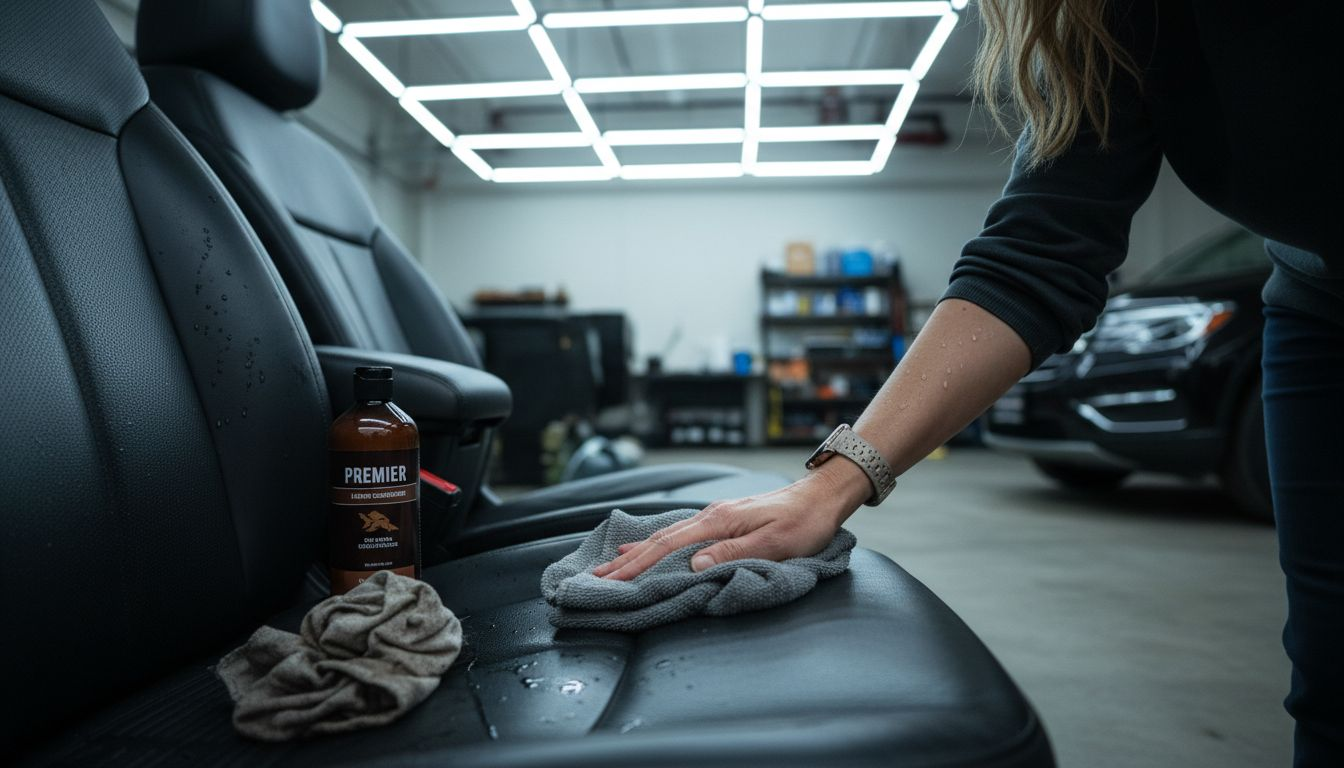
Step 5: Condition leather and vinyl
Clean leather seats with a dedicated leather cleaner using a damp microfiber towel. Gently wipe in circular motions to lift dirt without abrading the surface. Apply leather conditioner evenly with a clean towel, allowing it to penetrate for a few minutes before buffing away excess. Eco-friendly cleaners reduce material degradation by 25% compared to harsh chemicals, which is critical for preserving leather’s natural oils. Treat vinyl surfaces with vinyl protectant to maintain flexibility and prevent cracking.
Step 6: Eliminate odors
Identify odor sources like spills, pet accidents, or mildew. Treat these areas with enzyme-based odor eliminators that break down organic matter rather than masking smells. For persistent odors, ozone treatment or professional odor removal may be necessary. Ensure thorough drying after cleaning to prevent new odors from developing.
Step 7: Protect and finish
Apply protective products to extend the life of your interior. Use UV protectants on dashboards and door panels to prevent sun damage and fading. Condition leather every few months to maintain suppleness. Clean windows with ammonia-free glass cleaner to avoid damaging window tint. Replace floor mats only after they’re completely dry.
Pro Tip: Keep a small detailing kit in your trunk with microfiber towels, all-surface cleaner, and a brush for quick touch-ups between deep cleans.
For mobile detailing professionals in South Jersey, implementing these mobile detailing techniques ensures consistent, high-quality results at every job site.
Interior cleaning process overview:
| Step | Task | Time Estimate |
|---|---|---|
| 1 | Remove items and mats | 5 minutes |
| 2 | Vacuum all surfaces | 15-20 minutes |
| 3 | Clean hard surfaces | 20-30 minutes |
| 4 | Shampoo fabric seats/carpets | 30-40 minutes |
| 5 | Condition leather and vinyl | 15-20 minutes |
| 6 | Treat odors | 10-15 minutes |
| 7 | Apply protectants and finish | 15-20 minutes |
| Total | Full interior detail | 2-3 hours |
Common mistakes and troubleshooting
Even with the right tools and steps, mistakes happen. Knowing what to avoid saves you from damaging your interior or wasting time on ineffective techniques.
Oversaturating fabrics and carpets
Applying too much water or cleaner to fabric seats and carpets is the most common error. Oversaturation increases mold risk by 30%; harsh chemicals degrade plastics within weeks. Excess moisture seeps into foam padding and underlayment, creating a breeding ground for mildew. Use controlled amounts of product and extract as much moisture as possible with a wet vacuum or absorbent towels. Leave windows cracked or doors open until everything dries completely.
Using harsh chemicals on plastics and vinyl
Household cleaners like bleach, ammonia-based products, or abrasive degreasers strip protective coatings from interior plastics. This leaves surfaces dull, brittle, and prone to cracking. Stick to automotive-specific, pH-balanced cleaners designed for interior materials. If a surface looks shinier or darker after cleaning, you’ve likely removed its protective layer.
Skipping the vacuum step
Wet-cleaning before vacuuming turns dry dirt into mud, spreading it across surfaces and grinding it deeper into fibers. Always vacuum thoroughly before applying any liquid cleaner. This removes loose debris and makes wet cleaning far more effective.
Ignoring hidden odor sources
Spraying air freshener without addressing the root cause of odors only masks the problem temporarily. Check under seats, in trunk wells, and within air vents for spills, mold, or trapped debris. Enzyme-based cleaners break down organic odor sources at the molecular level, providing lasting freshness.
Insufficient drying time
Closing doors and windows immediately after cleaning traps moisture inside, promoting mildew growth and musty odors. Allow at least two hours of air circulation before sealing the vehicle. In humid South Jersey summers, extend drying time or use fans to speed the process.
Pro Tip: If you notice water spots on leather after cleaning, you’ve used too much product. Buff immediately with a dry microfiber towel and reduce the amount of cleaner in future applications.
“The biggest mistake I see is people rushing the drying process. Moisture left behind can undo all your hard work by creating mold and odors within days.” – Professional detailer insight
For a comprehensive checklist to avoid these pitfalls, review the interior detailing checklist.
Troubleshooting common issues:
- Streaks on windows: Switch to ammonia-free cleaner and use a clean microfiber towel for final buffing.
- Sticky residue on dashboard: Excess protectant wasn’t buffed away. Wipe with a damp towel and reapply sparingly.
- Lingering odors: Odor source wasn’t fully treated. Re-inspect carpets, seats, and trunk for hidden spills or mold.
- Stiff leather: Conditioner wasn’t applied or absorbed. Reapply a thin layer and allow more penetration time.
For additional guidance on avoiding mistakes, consult resources on common interior cleaning mistakes.
Expected results and benefits of interior cleaning
Investing time or money into professional interior cleaning delivers measurable improvements that go beyond aesthetics. South Jersey vehicle owners who prioritize interior care enjoy healthier, more comfortable, and more valuable vehicles.
Improved air quality and allergen reduction
Dust, pollen, pet dander, and mold spores accumulate in carpets, seats, and air vents over time. Deep cleaning removes these allergens, making your cabin healthier for passengers with asthma or allergies. Steam cleaning fabric surfaces sanitizes them by killing bacteria and dust mites that trigger respiratory issues.
Enhanced comfort and driving experience
A clean interior feels more inviting and reduces stress during your commute. Conditioning leather keeps seats supple and comfortable, while fresh carpets and odor-free air make every trip more enjoyable. Clean windows improve visibility and safety, especially during South Jersey’s rainy seasons.
Preserved resale value
Buyers inspect interiors closely when purchasing used vehicles. Stains, odors, and worn materials signal neglect and justify lower offers. Regular professional detailing maintains your interior’s condition, potentially increasing resale value by up to 15%. Well-maintained leather, clean carpets, and fresh-smelling cabins command higher prices.
Extended material lifespan
UV rays, dirt, and body oils break down interior materials over time. Protective treatments like leather conditioners, vinyl protectants, and UV blockers slow this degradation. Conditioning leather every few months prevents cracking and fading, while treating vinyl stops it from becoming brittle. These small maintenance steps save hundreds of dollars in replacement costs.
Time savings with mobile detailing
Mobile services reduce customer effort by 100%, turnaround time 2-4 hours per vehicle. Instead of spending your weekend cleaning or driving to a detail shop, mobile detailing professionals bring expertise and equipment to your location. You save hours while getting superior results from trained technicians using commercial-grade tools.
Key benefits summary:
- Fresher, healthier air inside your vehicle
- Reduced allergens and bacteria for passengers
- Increased comfort and driving enjoyment
- Up to 15% higher resale value
- Longer-lasting seats, carpets, and trim
- 2-4 hour turnaround with mobile convenience
For South Jersey residents, the benefits of mobile car detailing include flexibility around your schedule and professional-grade results without leaving home. Learn more about efficiency gains through mobile detailing efficiency.
Discover expert mobile interior detailing in South Jersey
Ready to experience these benefits without the effort? CDC Auto Detailing brings professional interior cleaning directly to your driveway or workplace across South Jersey. Our mobile service eliminates travel time while delivering the deep cleaning, conditioning, and odor removal your vehicle deserves.
Our technicians use eco-friendly products and commercial-grade equipment to protect your interior materials while achieving showroom results. From thorough vacuuming and steam cleaning to leather conditioning and UV protection, we handle every detail. Regular mobile detailing preserves your vehicle’s value, extends material lifespan, and keeps your cabin fresh and comfortable year-round.
Scheduling is simple. Choose a time that fits your routine, and we’ll arrive fully equipped to transform your interior in just a few hours. Whether you need a one-time deep clean or recurring maintenance, CDC Auto Detailing makes professional care convenient and affordable for South Jersey vehicle owners. Explore mobile detailing for premium results and discover how auto detailing services explained can benefit your specific vehicle. Book mobile detailing easily today and enjoy a cleaner, healthier ride.
Frequently asked questions about vehicle interior cleaning
What is the best method for deep cleaning car upholstery?
Steam cleaning is the most effective method for deep cleaning fabric upholstery because it sanitizes while loosening embedded dirt. Apply upholstery shampoo, agitate with a soft brush, then extract moisture with a wet vacuum. Always allow complete drying to prevent mold growth.
How often should I have my car’s interior professionally detailed?
Most vehicle owners benefit from professional interior detailing every 3 to 6 months, depending on usage and conditions. High-traffic vehicles, those with pets, or cars exposed to harsh South Jersey weather may need quarterly service. Light maintenance between professional details extends results.
Are eco-friendly cleaning products effective for interiors?
Yes, eco-friendly products designed for automotive interiors are highly effective and safer for materials. They reduce chemical degradation by up to 25% compared to harsh cleaners while delivering excellent cleaning power. pH-balanced formulas protect leather, vinyl, and plastics from long-term damage.
Can mobile detailing services accommodate my busy schedule?
Absolutely. Mobile detailing brings professional service to your home or workplace at a time you choose. Turnaround typically takes 2 to 4 hours, and you can continue with your day while we work. This flexibility saves hours compared to traditional detail shops.
What precautions prevent damage to leather during cleaning?
Always vacuum leather surfaces before wet cleaning to remove abrasive dirt particles. Use pH-balanced leather cleaners and avoid oversaturating. Apply conditioner after cleaning to restore moisture and prevent cracking. Test products on hidden areas first to ensure colorfastness.