
TL;DR:
- Professional window tinting involves applying specialized film to reduce heat, UV exposure, and increase privacy, with costs mainly driven by film type. Ceramic film offers the best long-term value due to its high heat rejection, durability, and UV protection, despite a higher initial price. Vehicle size and shop quality also influence the overall cost, and verifying the film brand and warranty ensures a reliable investment.
Professional window tinting is defined as the application of a specialized film to vehicle glass to reduce heat, block UV radiation, and improve privacy. The cost of professional window tinting ranges from $150 to over $800 for a full vehicle, depending on film type, vehicle size, and shop location. Film type accounts for 60–70% of the price difference between quotes, making it the single most important variable to understand before you book an appointment. This guide breaks down every cost factor so you can budget accurately and avoid overpaying for underperforming film.
How film type drives the cost of professional window tinting
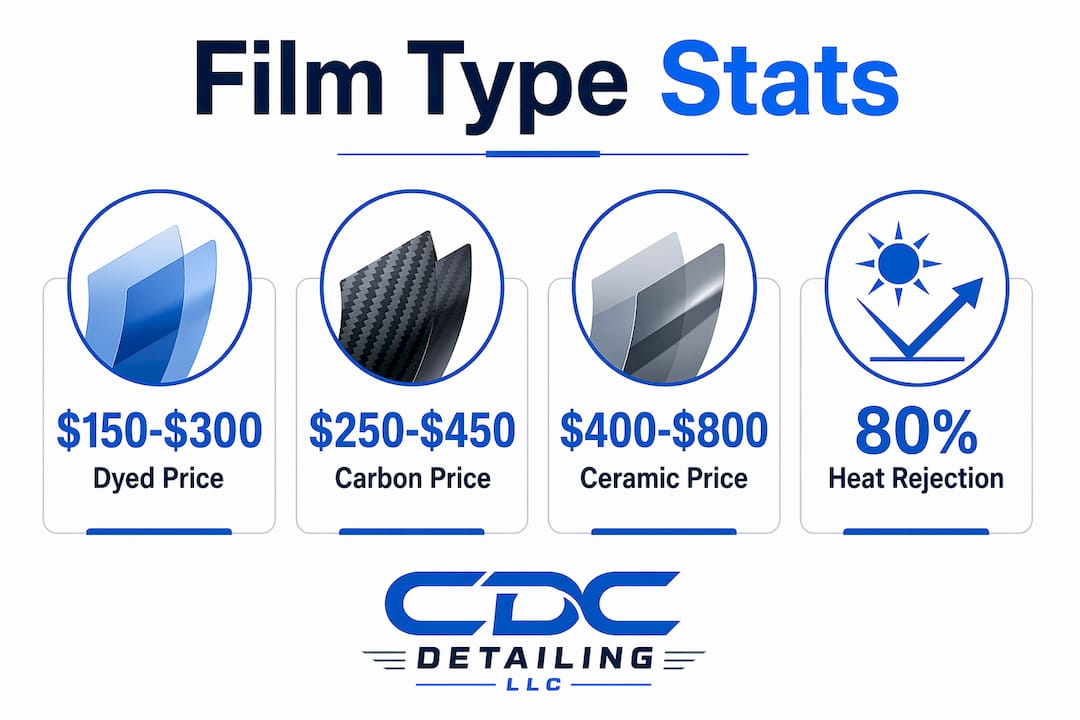
Film type is the primary cost driver in any window tinting estimate. Ceramic film blocks up to 80% infrared heat and lasts over 10 years, while basic dyed film fades within 3–5 years and offers minimal heat rejection. Understanding the four main film tiers helps you compare quotes honestly.
Dyed film sits at the entry level, with professional tint pricing typically running $150–$300 for a full sedan. It absorbs light rather than reflecting it, which limits heat rejection. Color fading is common after a few years of sun exposure, meaning you may pay for a second installation sooner than expected.
Carbon film costs $250–$450 and delivers better heat rejection and a matte finish that holds up longer than dyed options. It does not contain metal, so it will not interfere with GPS, cell signals, or radio reception. For drivers who want a noticeable upgrade without moving to the premium tier, carbon film offers a solid middle ground.
Ceramic film runs $400–$800 or more and is the top performer in heat rejection, UV blocking, and optical clarity. Ceramic tint is the most cost-effective choice over time because its lifespan and performance outpace cheaper alternatives by a wide margin. Nano-ceramic film sits at the very top of this tier, with the highest infrared blocking and the longest expected service life.
The table below compares the four film types across the factors that matter most to vehicle owners.
| Film type | Typical price range | Heat rejection | UV protection | Lifespan |
|---|---|---|---|---|
| Dyed | $150–$300 | Low | Moderate | 3–5 years |
| Carbon | $250–$450 | Moderate | Good | 5–8 years |
| Ceramic | $400–$800+ | High | Excellent | 10+ years |
| Nano-ceramic | $600–$1,000+ | Very high | Excellent | 10+ years |
Pro Tip: Divide the total cost by the expected lifespan in years. A $600 ceramic job at 10 years costs $60 per year. A $250 dyed job at 4 years costs $62.50 per year. Ceramic wins on value every time.
If you want a deeper look at why carbon and ceramic tints outperform entry-level films, the performance gap becomes even clearer when you factor in interior protection and resale value.
How does vehicle size affect window tinting prices?
Vehicle size directly determines how much glass a technician must cover and how complex the installation becomes. SUV and truck owners pay 25–40% more than sedan owners because of greater glass surface area and a higher window count. That price gap is not about labor rates. It reflects the additional film material and time required.
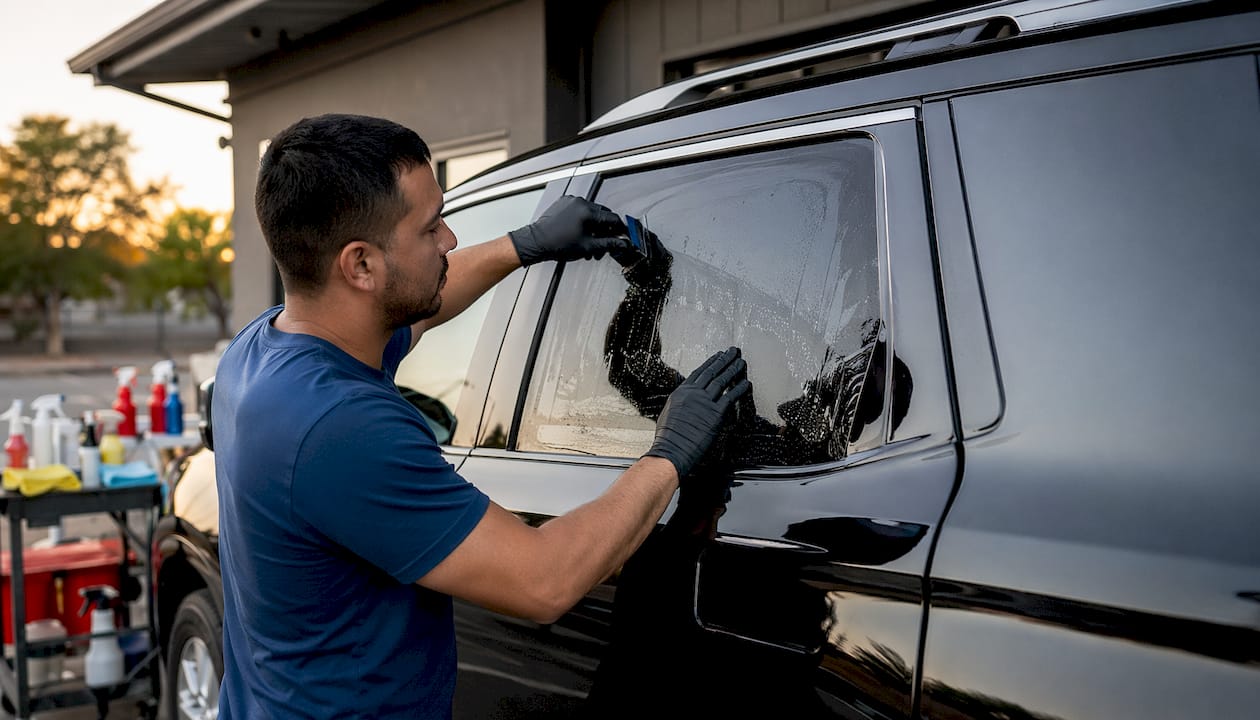
A standard sedan has approximately five windows: two front doors, two rear doors, and a rear windshield. An SUV or minivan typically has 7–10 windows, often including a large panoramic rear section or third-row glass. More windows mean more film cuts, more fitting, and more time on the vehicle.
Curved rear windshields add another layer of complexity. Curved glass incurs a $50–$100 premium per window because the installer must heat-shrink the film to conform to the curve without creasing. Trucks with flat rear glass avoid this surcharge, while SUVs and crossovers with steeply raked rear windows often trigger it.
Here is a typical price range by vehicle class using ceramic film as the baseline:
| Vehicle class | Approximate window count | Typical ceramic tint price |
|---|---|---|
| Compact sedan | 4–5 | $400–$550 |
| Full-size sedan | 5 | $450–$600 |
| SUV / crossover | 7–8 | $550–$750 |
| Minivan | 8–10 | $600–$850 |
| Truck (cab only) | 3–4 | $300–$500 |
Key points to keep in mind when getting window tinting estimates by vehicle type:
- Panoramic sunroofs add $100–$250 to any quote because of their size and curved glass.
- Third-row windows on minivans and large SUVs are often oddly shaped, requiring custom cuts.
- Rear windshield defroster lines require careful film application to avoid damage.
- Requesting a per-window breakdown from your installer helps you spot inflated pricing quickly.
What additional costs affect professional tinting pricing?
Several add-on services can push your final bill well above the base quote. Knowing these costs upfront prevents surprises when the invoice arrives.
Old tint removal is the most common hidden cost. Removing old tint adds $50–$150 to the job, and adhesive that has baked onto the glass for years can push that figure higher. Skipping removal is not an option. New film applied over old film will bubble, peel, and fail quickly. Reputable shops often bundle removal with installation at a slight discount, so ask about package pricing before you commit.
Windshield tinting costs $150–$350 and requires a specialized clear ceramic film that meets visible light transmission laws. Most states require the front windshield to allow at least 70% of light through, so the film used here is nearly invisible but still blocks significant heat and UV radiation. In hot climates, windshield tinting delivers a noticeable reduction in cabin temperature.
ADAS sensor recalibration is a newer cost that many vehicle owners overlook entirely. Vehicles with advanced driver assistance systems, including lane departure warning, automatic emergency braking, and adaptive cruise control, may require sensor recalibration after windshield film is applied. Recalibration costs vary by vehicle make and model but typically run $150–$400 at a dealership or certified shop.
Pro Tip: Ask your installer specifically whether your vehicle requires ADAS recalibration before any windshield film is applied. Skipping this step can disable safety features without triggering a warning light.
Additional cost factors to budget for:
- Sunroof or panoramic roof tinting: $100–$250 depending on size.
- Rush or same-day installation fees at some shops.
- State inspection fees if your tint must be verified for legal compliance.
How does shop quality and location affect tinting prices?
Where you get your tint installed matters as much as what film you choose. Premium metro shops charge 50–60% more than rural independent shops, and that gap reflects real differences in labor cost, equipment, and warranty backing.
Certified installers register manufacturer warranties directly with the film brand on your behalf. Certified installation adds $50–$150 to the price but protects your investment with a written warranty that covers peeling, bubbling, and color change. Without certification, a warranty claim may be denied even if the film itself is defective.
Installation environment also affects quality. Clean room installation reduces defects like dust contamination and bubbles, which are the most common complaints about low-cost tint jobs. Shops with climate-controlled bays and proper heat-forming tools produce a finish that lasts. A shop without these conditions may produce a visually acceptable result initially, but defects often appear within months.
“A low quote for ceramic tint is almost always a red flag. Genuine ceramic film has a real material cost. If a shop quotes ceramic at dyed-film prices, you are likely getting dyed or carbon film misrepresented as ceramic. Always ask for the film brand name and verify it independently before you pay.”
What to verify before booking any tinting service:
- Ask for the film brand name and product line, then look it up.
- Request a written warranty document, not just a verbal promise.
- Check whether the shop is a certified installer for the film brand.
- A skilled installer spends 3–5 hours on a full vehicle job. Any quote promising completion in under 90 minutes deserves skepticism.
- Read recent reviews specifically mentioning film quality, not just customer service.
Key Takeaways
Film type is the single biggest factor in professional window tinting costs, and ceramic film delivers the best long-term value despite its higher upfront price.
| Point | Details |
|---|---|
| Film type drives price | Film type accounts for 60–70% of cost variance; ceramic outperforms dyed and carbon over time. |
| Vehicle size adds cost | SUVs and trucks cost 25–40% more than sedans due to greater glass area and window count. |
| Hidden costs add up | Old tint removal, windshield film, and ADAS recalibration can add $200–$700 to a base quote. |
| Shop quality matters | Certified installers and clean-room environments justify price premiums and protect your warranty. |
| Verify before you pay | Always confirm the film brand, get a written warranty, and expect 3–5 hours for a full install. |
Why I always recommend spending more on the film, not the shop name
After years of working with vehicle owners across South Jersey, the pattern I see most often is this: people shop for the lowest total price and end up paying twice. They get a $200 dyed tint job, it fades and bubbles within two years, and then they pay again for removal and a proper ceramic installation.
The uncomfortable truth about affordable window tinting is that the word “affordable” often means “cheap film.” Labor costs at most shops are relatively consistent. The film is where corners get cut. A shop quoting ceramic at $150 for a full car is not offering you a deal. They are selling you something else and calling it ceramic.
My advice is to allocate your budget toward film quality first. A mid-tier shop with genuine ceramic film will outperform a premium-looking shop using dyed film every single time. Ask for the film brand name before you agree to anything. If the installer hesitates or cannot name the product, walk away.
DIY tinting is another trap I see vehicle owners fall into. The film itself is cheap, but the installation environment in a home garage is almost never clean enough to avoid dust contamination. The result looks fine for a week and then bubbles appear. Professional installation in a controlled environment is not a luxury. It is what makes the film perform as advertised.
Patience matters too. A proper full-vehicle ceramic tint job takes 3–5 hours. If you are in and out in 90 minutes, something was rushed. Good work takes time, and the curing period after installation requires keeping windows up for at least 24–48 hours. Respect that process and the film will last a decade or more.
— Charles
Cdcautodetailing window tinting services in South Jersey
Cdcautodetailing offers professional window tinting across South Jersey, with ceramic and nano-ceramic film options for every vehicle type. Every installation is performed by trained technicians who work with verified film brands and provide written warranty documentation.
Whether you drive a compact sedan or a full-size SUV, Cdcautodetailing builds a tinting package around your vehicle’s glass configuration and your budget. The team handles old tint removal, windshield film, and sunroof applications as part of a complete service. Scheduling is straightforward through the window tinting service page, where you can also review film options and request a quote. For vehicle owners who want quality film, certified installation, and a warranty that actually holds up, Cdcautodetailing is the right call.
FAQ
What is the average cost to tint a full car?
The national average for full vehicle tinting ranges from $150 to over $800, depending on film type and vehicle size. Ceramic film on a sedan typically costs $400–$600.
Why does ceramic tint cost more than dyed film?
Ceramic film uses nano-ceramic particles that block up to 80% of infrared heat and last over 10 years. Dyed film absorbs light rather than rejecting heat and fades within 3–5 years, making ceramic the better long-term investment.
Does vehicle size change the tinting price?
SUVs and trucks cost 25–40% more than sedans because they have more windows and greater glass surface area. Curved rear glass adds a $50–$100 premium per window due to the heat-shrinking labor required.
What hidden costs should I expect with window tinting?
Old tint removal adds $50–$150, windshield film costs $150–$350, and ADAS sensor recalibration can run $150–$400 on newer vehicles. Always ask for a full itemized quote before booking.
How do I know if a shop is using real ceramic film?
Ask for the film brand name and product line, then verify it independently online. Low quotes for ceramic tint almost always indicate dyed or carbon film being misrepresented. A certified installer will provide written warranty documentation tied to the film brand.