
How much does it cost to tint windows on a car?
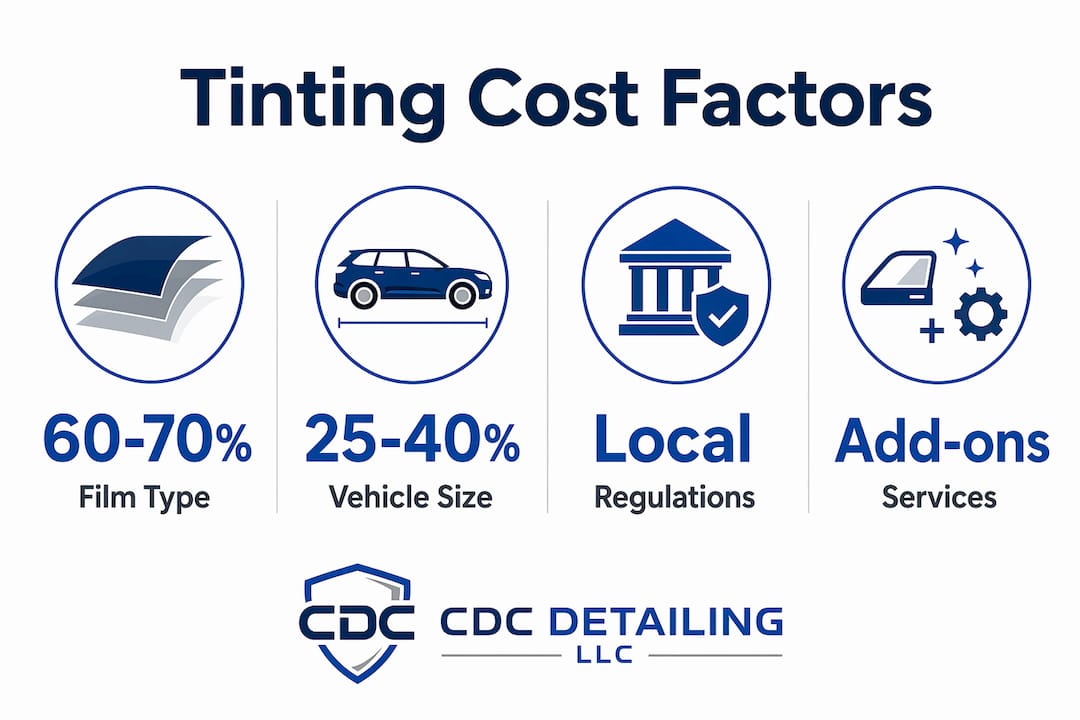
Car window tinting prices in 2026 run from $150 to $800 for a full vehicle, and the spread is almost entirely about the film, not the labor. A dyed film job on a sedan sits at the low end. A ceramic or nano-ceramic install on an SUV pushes toward the top. Most drivers land somewhere in the $250–$600 range depending on their vehicle and how much heat rejection they actually want.
Price estimates vary by vehicle type and film quality, with costs generally increasing for larger vehicles and more premium films.
Beyond the film and vehicle, a few line items can push the total higher:
- Old tint removal: $50–$150 added to the total, more if the adhesive has baked on
- Windshield tint: $150–$350 depending on film type and state visibility rules
- Sunroof or panoramic roof: $75–$200 for a standard sunroof, more for panoramic glass
- Warranty upgrades: premium films often include lifetime warranties; budget films typically do not
1. Vehicle size drives material and labor costs
Vehicle size affects tinting cost by 25–40% compared to a standard sedan. A sedan typically has 6–7 windows; an SUV or crossover has 7–8, which means more film, more cutting, and more installation time. Curved rear glass and steep windshields add complexity on top of that.
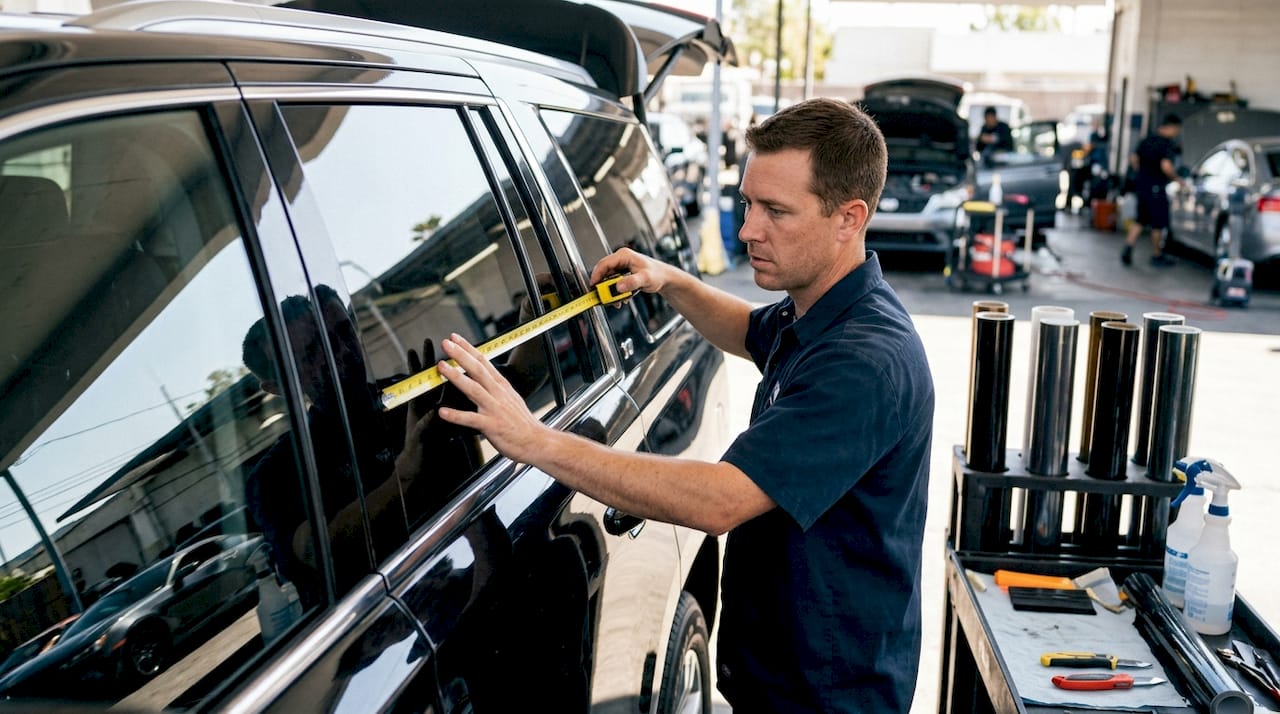
Trucks with crew cabs fall in a similar range to sedans because rear glass is often one large piece rather than multiple panes. Minivans and three-row SUVs hit the highest labor hours of any common vehicle type.
2. Film type is the single biggest price driver
Film type accounts for 60–70% of the total tinting price. Two shops quoting $200 and $600 for the same car are selling completely different products. The labor rate barely moves; the film does all the work on price.
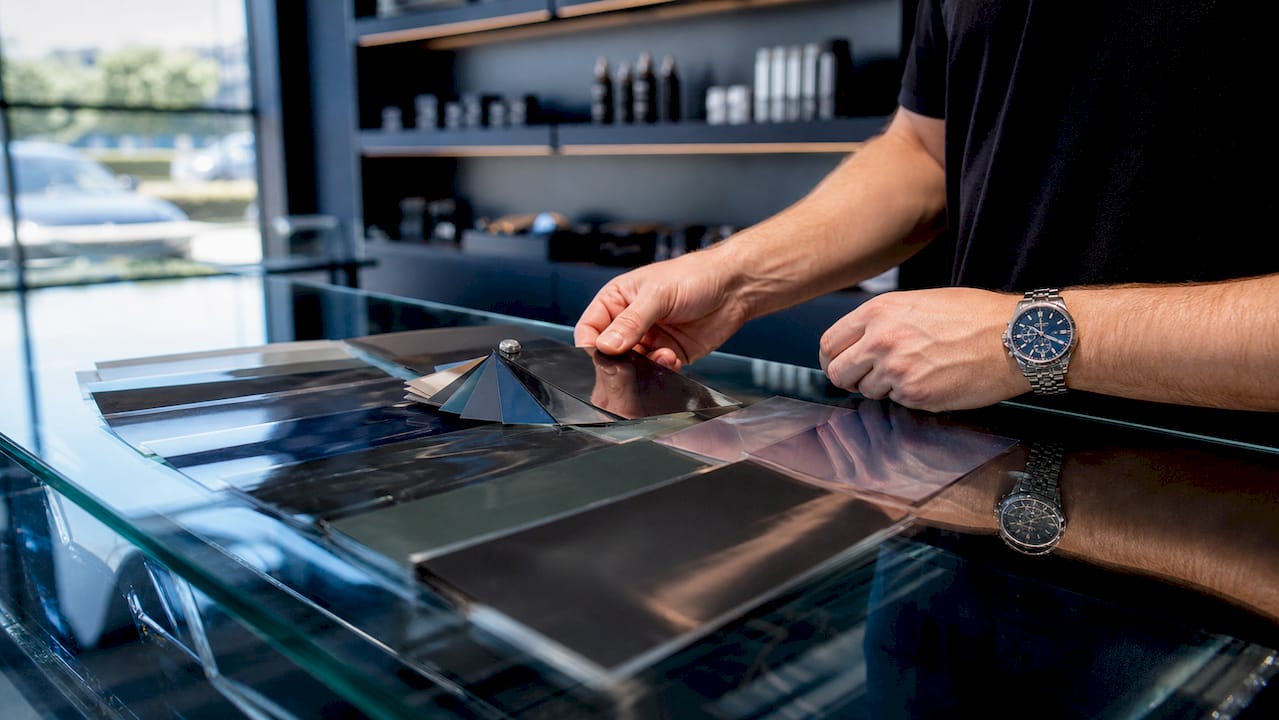
Pro Tip: Always ask the shop for the specific film series or brand name before comparing quotes. A $300 quote using a generic dyed film and a $300 quote using a mid-grade carbon film are not the same job.
Dyed films absorb solar energy rather than rejecting it, which is why they fade faster. Ceramic films use nano-particle technology to reflect infrared heat, which is why they cost more and last longer. That gap in performance is real and measurable at the glass.
3. Installation quality affects long-term value
Professional installation generally leads to better long-term results and fewer issues compared to amateur applications. that amateur applications routinely produce. A poorly applied film on a $400 ceramic job wastes the film’s performance entirely. You end up paying for premium material and getting budget results.
DIY kits often cost nearly as much as professional installation once you factor in wasted rolls from cutting errors, and they come with no warranty or legal compliance guarantee. For most vehicle owners, the math on DIY rarely works out. Learn more about why professional results matter at Cdcautodetailing’s tinting guide.
4. Location and local regulations influence pricing
Regional price variation exists, though it is less dramatic than the film and vehicle factors. Coastal states tend to run 10–20% higher than the national average, driven mainly by higher film costs at local distributors rather than labor differences.
State tint laws also shape which films you can legally install. Legal restrictions on tint darkness vary by state and directly affect film selection. Some films that meet heat rejection goals are too dark to be street-legal on front side windows in certain states, which can push you toward a pricier film that achieves the same performance at a legal visible light transmission level.
5. Add-on services raise the final bill
Windshield tinting and panoramic roof coverage are the two most common upgrades that push totals higher. Windshield tint runs $150–$350 and requires stricter compliance with visibility standards, which limits which films are even usable. Panoramic roofs cost more due to sheer glass area and heat exposure.
Old tint removal is the other common add-on. Degraded film with baked-on adhesive takes significantly longer to remove safely, especially on rear glass with defroster elements where aggressive scraping can cause damage.
6. Comparing tint film types: cost, performance, and lifespan
Every film type involves a real tradeoff between upfront cost, heat rejection, and how long it holds up. Here’s how the main categories compare:
Different film types vary in cost, heat rejection, UV protection, and lifespan, with higher-quality films generally offering greater performance and longevity.
Dyed films block 40–50% UV, while ceramic films reach up to 99%. Metalized films offer solid heat rejection but interfere with GPS and Bluetooth signals, which rules them out for many drivers. Carbon sits at the practical sweet spot for most people: no fading, no signal issues, and a matte finish that holds up for nearly a decade. For vehicle owners in hot climates or anyone planning to keep their car long-term, ceramic and carbon tints represent the better long-run investment.
7. How long does window tint actually last?
Film lifespan varies widely by type and climate. Ceramic films last 7–10+ years with high UV rejection, while dyed films fade in 3–5 years. In high-sun states like Arizona or Florida, dyed film can start turning purple within two to three years.
Signs that a tint needs replacement include:
- Purple or brown discoloration on dyed films, caused by dye breakdown under UV exposure
- Bubbling or peeling at edges, usually from adhesive failure or poor original installation
- Haze or cloudiness that reduces visibility, especially on older metalized films
- Delamination where the film separates from the glass in patches
A few maintenance habits extend tint life considerably. Wait at least three to five days after installation before rolling windows down. Clean tinted glass with ammonia-free cleaners only. Ammonia degrades the film’s adhesive layer over time, which accelerates peeling at the edges.
Get professional window tinting in South Jersey
Cdcautodetailing serves vehicle owners across South Jersey with professional mobile window tinting, ceramic coatings, and full detailing services. If you want tinting done right the first time, with the correct film for your state’s legal limits and your vehicle’s specific glass, book your mobile detailing appointment directly through the site. No shop visit required.
Key Takeaways
Car window tinting costs $150–$800 for a full vehicle in 2026, with film type driving 60–70% of the price difference between quotes.
| Point | Details |
|---|---|
| Typical cost range | Full car tinting runs $150–$800 depending on film type and vehicle size. |
| Film type drives price | Film accounts for 60–70% of total cost; always ask for the specific film series before comparing quotes. |
| Vehicle size adds cost | SUVs and crossovers cost 25–40% more than sedans due to additional windows and glass area. |
| Add-ons raise the total | Old tint removal adds $50–$150; windshield tint adds $150–$350 to the base price. |
| Ceramic lasts longest | Ceramic films last 7–10+ years with up to 99% UV rejection; dyed films fade in 3–5 years. |