
Looking for a way to upgrade your ride and beat the glare on hot New Jersey days? Choosing the right window tint in South Jersey now means understanding strict 2025 laws that focus on how much visible light can pass through your vehicle’s glass, a factor measured by Visible Light Transmittance. With steeper fines and modern enforcement tools, it is more important than ever to pick a solution that brings style and comfort while staying fully legal. Get the facts on local requirements and smart options before you tint.
Table of Contents
- What Are Window Tinting Laws in 2025?
- Types of Window Tint and Legal Classifications
- Understanding Tint Percentages and Visible Light
- Exemptions and Medical Waivers Explained
- Penalties, Compliance, and Tips for 2025
Key Takeaways
| Point | Details |
|---|---|
| Window Tint Regulations Vary by Region | Different jurisdictions have unique requirements for window tinting, including Visible Light Transmittance (VLT) percentages. Always check local laws before applying tints. |
| Types of Tint Films Matter | Window tint films like dyed, metallic, carbon, and ceramic have distinct legal classifications and varying regulations. Choose a film that complies with local laws and meets your needs. |
| Understanding VLT Percentages is Crucial | Typical VLT percentages vary by window position, and non-compliance can lead to fines. Ensure professional installation with accurate VLT documentation. |
| Medical Exemptions Exist | Individuals with certain medical conditions can apply for exemptions to standard tint limits. Proper documentation from healthcare providers is essential for compliance. |
What Are Window Tinting Laws in 2025?
Window tinting laws in 2025 represent a complex regulatory landscape designed to balance vehicle safety, driver visibility, and personal privacy. These regulations specify precise requirements for how much light can pass through vehicle windows, creating standards that protect both drivers and law enforcement interests. Window tint laws now focus intensely on measuring Visible Light Transmittance (VLT), which determines the percentage of light allowed through automotive glass.
The specifics of these laws vary significantly across different regions, with each jurisdiction establishing unique standards for front, rear, and side windows. In New Jersey, for example, regulations typically mandate specific VLT percentages that differ between sedan and commercial vehicles. Most jurisdictions require front side windows to maintain higher light transmission rates compared to rear windows, ensuring driver visibility and safety during daylight and nighttime driving conditions.
Key considerations in 2025 window tinting regulations include not just light transmission, but also reflectivity and color restrictions. Law enforcement agencies have become more sophisticated in measuring window tint compliance, using specialized equipment to verify that vehicle modifications meet exact legal standards. Violations can result in substantial fines, mandatory window tint removal, or even vehicle registration complications.
Pro tip: Always consult local motor vehicle authorities and obtain professional documentation before applying window tints to ensure full compliance with 2025 regulations.
Types of Window Tint and Legal Classifications
Window tint classifications in 2025 have become increasingly sophisticated, with legal standards categorizing films based on their Visible Light Transmittance (VLT) percentages and specific performance characteristics. International window film classifications now provide detailed guidelines that help vehicle owners and installers navigate complex regulatory requirements across different jurisdictions.
The primary legal categories of window tints are typically divided into several key types: dyed films, metallic films, carbon films, and ceramic films. Each type has unique properties that impact its legal classification and permissible usage. Dyed films offer basic UV protection and minimal heat rejection, while ceramic films provide superior heat reduction and clarity without metallic interference. Carbon films represent a middle ground, offering enhanced performance with moderate light transmission that often meets stricter legal standards.
Legal classifications also consider critical factors beyond light transmission, including reflectivity, color, and potential medical exemptions. Some jurisdictions provide specialized tint allowances for individuals with specific medical conditions, creating nuanced regulatory frameworks that balance safety concerns with personal needs. Commercial vehicles, passenger cars, and specialty vehicles often have distinct tint requirements, with front windshield and driver-side window regulations typically being the most restrictive to ensure optimal visibility and law enforcement safety.
Pro tip: Always request a detailed compliance certificate from your window tint installer to ensure your vehicle meets all local regulatory standards for 2025.
Here’s a helpful reference summarizing the main types of window tint films and their legal implications in 2025:
| Tint Type | Legal Benefits | Common Restrictions | Best Use Case |
|---|---|---|---|
| Dyed Film | Basic UV protection, low cost | Fades quicker, limited VLT options | Budget tinting, mild climates |
| Metallic Film | Reflects heat effectively | May interfere with signals | Hot regions, non-GPS vehicles |
| Carbon Film | Blocks IR, no fading | Higher cost, moderate VLT | Performance cars, style-conscious |
| Ceramic Film | Superior clarity, max heat block | Most expensive, strict VLT | Premium vehicles, medical exemptions |
Understanding Tint Percentages and Visible Light
Visible Light Transmission (VLT) represents the critical metric by which window tint regulations are established in 2025, measuring the precise percentage of light that can pass through automotive glass. Tint percentage regulations have become increasingly sophisticated, with different requirements for windshields, front side windows, rear windows, and rear passenger windows.
Typical VLT percentages range from 5% to 90%, with lower percentages indicating darker tints. Front windshields typically allow a minimal tinted strip at the top, usually limited to 4-6 inches, while maintaining a 70% or higher light transmission rate for the remaining glass. Front side windows generally require higher VLT percentages between 50% and 70% to ensure optimal driver visibility and law enforcement safety. Rear and passenger windows often have more lenient regulations, permitting darker tints that can range from 20% to 35% VLT depending on local jurisdiction.
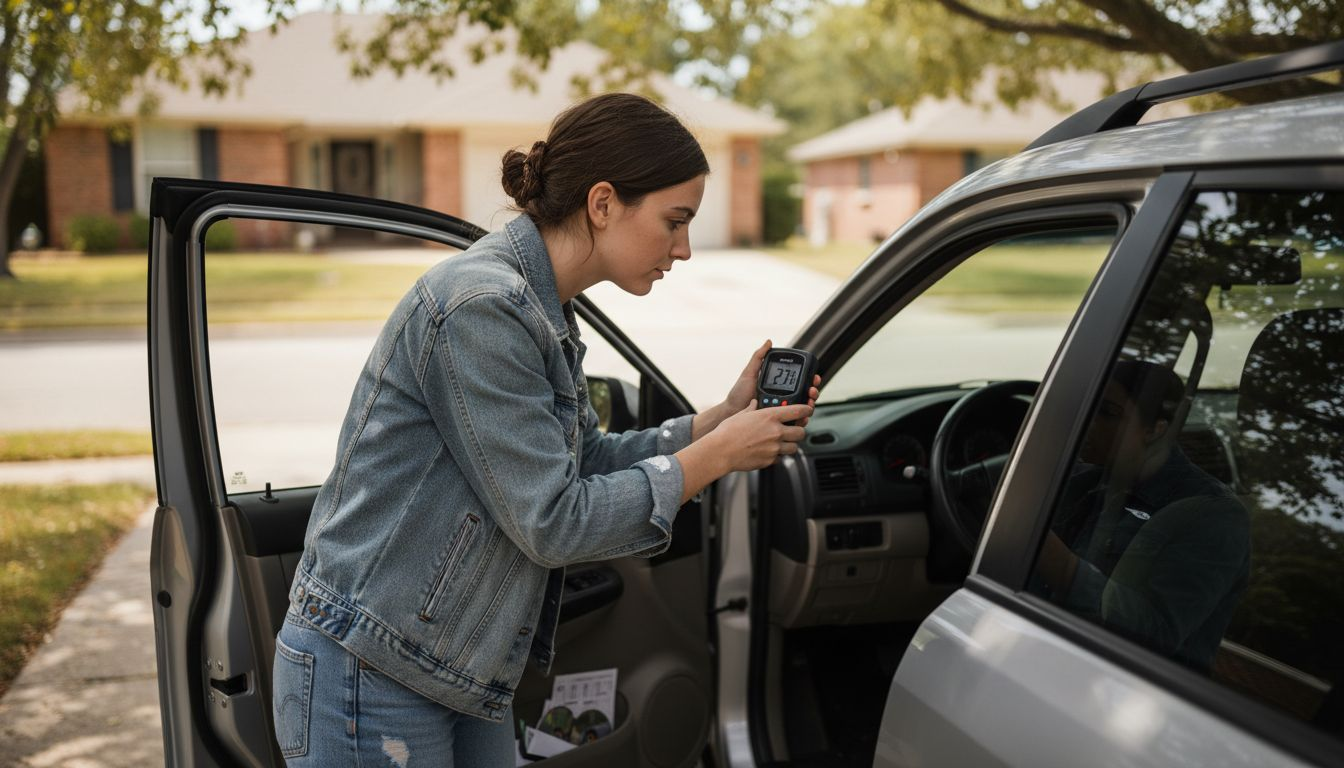
Understanding these percentages is crucial for vehicle owners, as non-compliance can result in significant penalties. Each percentage point represents a meaningful difference in light transmission, heat rejection, and potential legal consequences. Modern enforcement technologies now use advanced light meters to precisely measure VLT, making it essential for drivers to have accurate documentation and professional installation that meets specific regulatory standards.
Pro tip: Request a professional VLT measurement certificate with your window tint installation to ensure complete legal compliance and avoid potential traffic citations.
The table below clarifies typical VLT (Visible Light Transmission) requirements by window position in the U.S. for 2025:
| Window Position | Typical VLT Range | Reason for Regulation |
|---|---|---|
| Front Windshield | 70%-90% | Maximum driver visibility |
| Front Side Windows | 50%-70% | Enhance visibility for enforcement |
| Rear & Back Windows | 20%-35% | Privacy, less visibility concern |
Exemptions and Medical Waivers Explained
Medical exemptions represent a critical pathway for individuals requiring specialized window tinting beyond standard legal limits. Medical waiver provisions in 2025 have become increasingly nuanced, allowing drivers with specific health conditions to obtain specialized window tint permissions that accommodate their unique medical needs.
The documentation requirements for medical exemptions are rigorous and typically involve comprehensive medical documentation from licensed healthcare professionals. Conditions that might qualify include extreme photosensitivity, skin disorders requiring significant UV protection, migraines triggered by intense light exposure, and certain autoimmune disorders that make standard light exposure dangerous. Each jurisdiction maintains distinct protocols, with some states offering temporary waivers while others provide indefinite medical exemptions that require periodic medical recertification.
Navigating medical exemption processes requires careful attention to specific legal frameworks. Different states impose varying standards for documentation, tint darkness allowances, and renewal procedures. Some jurisdictions mandate that medical exemption documentation be kept in the vehicle at all times, with precise specifications about which windows can receive modified tinting. Healthcare providers must typically complete standardized forms detailing the specific medical condition, light sensitivity level, and recommended tint modifications to ensure legal compliance and driver safety.
Pro tip: Consult both your healthcare provider and local motor vehicle department to ensure your medical window tint exemption documentation meets all specific legal requirements for your jurisdiction.
Penalties, Compliance, and Tips for 2025
Window tinting compliance in 2025 has become increasingly complex, with jurisdictions implementing stringent enforcement mechanisms and escalating penalties for violations. Window tint law enforcement now involves sophisticated measurement technologies and multi-tiered penalty structures designed to ensure strict adherence to regulatory standards.
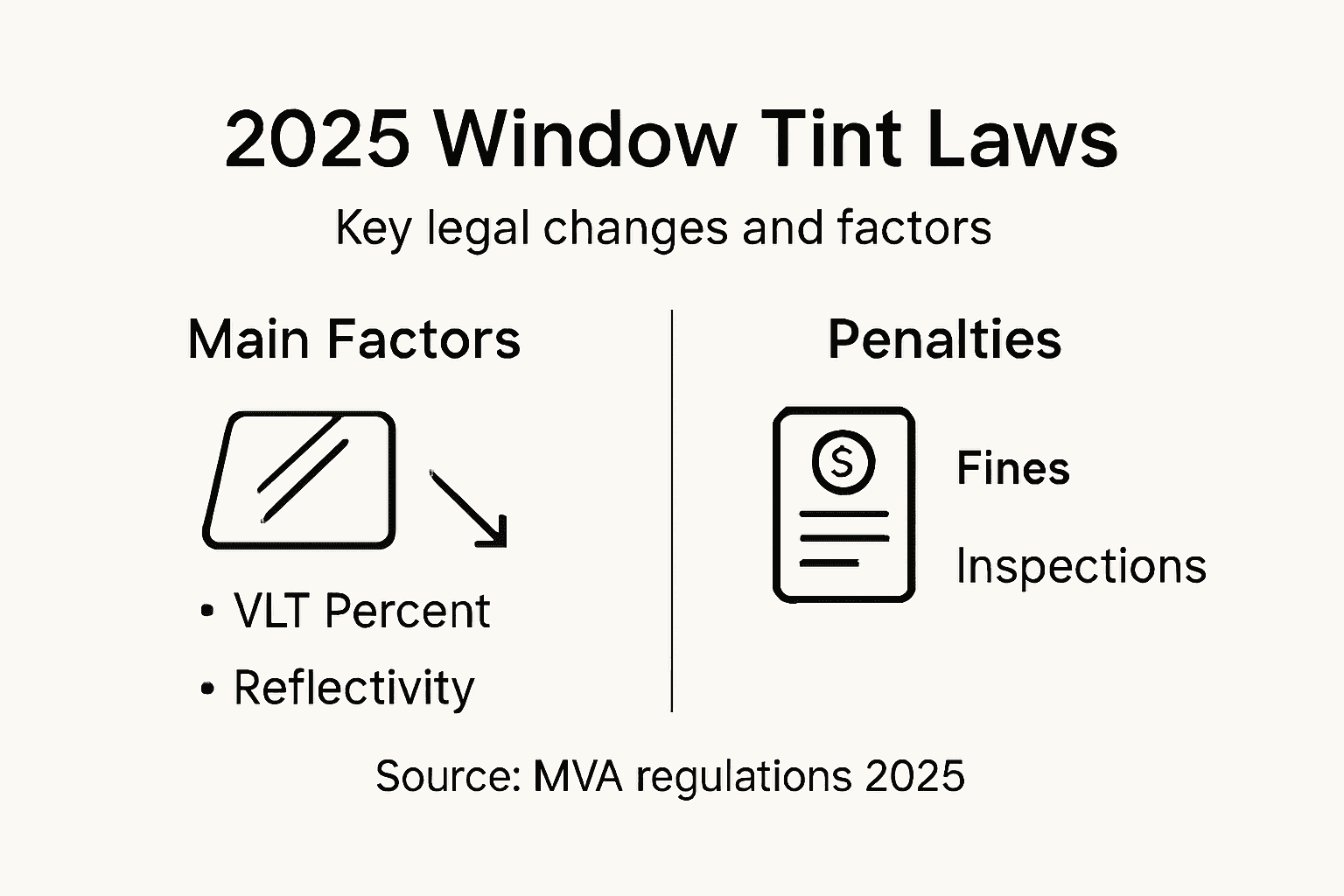
Typical penalties for non-compliance can range from modest fines to more severe consequences, including vehicle inspection failures, registration complications, and potential license suspension. Minor infractions might result in fix-it tickets requiring immediate tint removal or adjustment, while repeated violations can trigger more significant legal repercussions. Law enforcement agencies have increasingly advanced light transmission meters that can precisely measure window tint darkness during routine traffic stops, making accidental non-compliance far more likely to be detected.
To maintain compliance, vehicle owners should adopt proactive strategies such as maintaining detailed documentation of window tint installations, understanding local jurisdiction variations, and working exclusively with certified professional installers. Some jurisdictions require periodic vehicle inspections that specifically evaluate window tint transparency, making it crucial to stay informed about local regulatory changes and potential updates to VLT (Visible Light Transmission) requirements. Professional installers can provide compliance certificates that help document the legal status of window tint applications, serving as critical protection against potential enforcement actions.
Pro tip: Retain all professional installation documentation and request a precise VLT measurement certificate to protect yourself against potential compliance challenges.
Stay Compliant and Protect Your Ride with Expert Window Tinting Solutions
Navigating the complex window tinting laws of 2025 can feel overwhelming. With strict Visible Light Transmittance requirements, medical exemption rules, and heavy penalties on non-compliance, ensuring your vehicle meets regulations is essential to avoid fines and keep your car looking its best. At CDC Auto Detailing, we understand these challenges and offer professional window tinting services that fully comply with New Jersey laws. Our expert installers provide precise VLT measurements and detailed compliance certificates to give you confidence on the road.
Don’t risk costly fines or installation mistakes. Choose CDC Auto Detailing to handle your window tinting with care and expertise. Visit our website now to schedule your appointment or learn more about our premium service options including ceramic coatings and paint protection films. Stay safe, look sharp, and drive worry-free with trusted professionals dedicated to South Jersey vehicle owners.
Frequently Asked Questions
What are the primary factors in window tinting laws for 2025?
Window tinting laws in 2025 focus on critical factors such as Visible Light Transmittance (VLT), reflectivity, and color restrictions to ensure driver visibility and safety while balancing personal privacy.
How do Visible Light Transmission (VLT) percentages affect my window tinting options?
VLT percentages determine how much light can pass through your windows, with lower percentages indicating darker tints. Compliance with VLT regulations is crucial to avoid penalties and ensure optimal visibility.
Are there medical exemptions for window tinting laws in 2025?
Yes, many jurisdictions offer medical exemptions that allow individuals with specific health conditions to obtain window tint permissions beyond standard legal limits, typically requiring detailed documentation from a healthcare professional.
What penalties can I face for non-compliance with window tinting laws?
Penalties for non-compliance can vary but may include fines, vehicle inspection failures, mandatory tint removal, and complications with vehicle registration, especially if law enforcement measures your tint during traffic stops.