
Choosing window tint for your vehicle in South Jersey means navigating a tricky balance between privacy, heat rejection, UV protection, and staying within legal limits. Many owners feel confused about which darkness level keeps them legal while still delivering real comfort. Others worry about picking the wrong film type and wasting money on products that fade or fail inspections. This guide walks you through New Jersey’s tint laws, compares film types, explains mobile installation benefits, and helps you avoid costly mistakes so you can confidently select and install window tint that meets your needs.
Table of Contents
- Understanding Legal Requirements In South Jersey
- Comparing Tint Types And Their Benefits
- Benefits Of Mobile Tinting Services
- Cost And Time Expectations For Window Tinting
- Common Mistakes And How To Avoid Them
- Expected Outcomes And Quality Assurance
- Enhance Your Vehicle With Expert Mobile Window Tinting Services
- Frequently Asked Questions About Choosing Window Tint
Key Takeaways
| Point | Details |
|---|---|
| Legal compliance first | New Jersey requires minimum 70% visible light transmission on front and rear side windows to avoid fines and inspection failures. |
| Film type matters | Ceramic tints deliver superior UV and heat protection with 10+ year durability, while dyed films fade faster but cost less upfront. |
| Mobile service convenience | Professional mobile tinting in South Jersey offers at-home installation typically completed in under 2 hours with expert quality. |
| Investment range | Expect $150 to $400 for professional tinting depending on film type and vehicle size, with ceramic at the premium end. |
| Quality assurance | Proper installation and legal adherence ensure long-lasting performance, warranty protection, and avoidance of legal penalties. |
Understanding Legal Requirements in South Jersey
Before you select any tint film, you must understand the legal framework governing window darkness in New Jersey. New Jersey limits front and rear side window tint to a minimum 70% visible light transmission, meaning your windows must allow at least 70% of exterior light to pass through. This rule protects driver visibility and law enforcement safety during traffic stops. Ignoring this limit risks hefty fines, failed state vehicle inspections, and the expensive hassle of removing non-compliant tint.
Medical exemptions do exist for drivers with photosensitivity or certain health conditions. You can apply for a waiver that permits darker tints, but you need formal documentation from your physician and approval from the Motor Vehicle Commission. Without this paperwork, darker tints are illegal and enforceable on the spot.
Violations can result in fines starting around $50 to $100 per offense, and repeat violations escalate penalties. More critically, your vehicle will fail the annual safety inspection if tint does not meet legal standards, forcing you to strip the film and reapply compliant tint before passing. Understanding New Jersey window tint laws is your first step in choosing a film that delivers performance without legal risk.
Key legal points to remember include:
- Front and rear side windows must maintain at least 70% VLT under official New Jersey tinting laws.
- Windshield tinting is generally prohibited except for a small strip at the top.
- Rear windows on SUVs and vans may have more flexibility, but front-side compliance is strict.
- Always confirm local law updates and medical exemption processes before installation.
Comparing Tint Types and Their Benefits
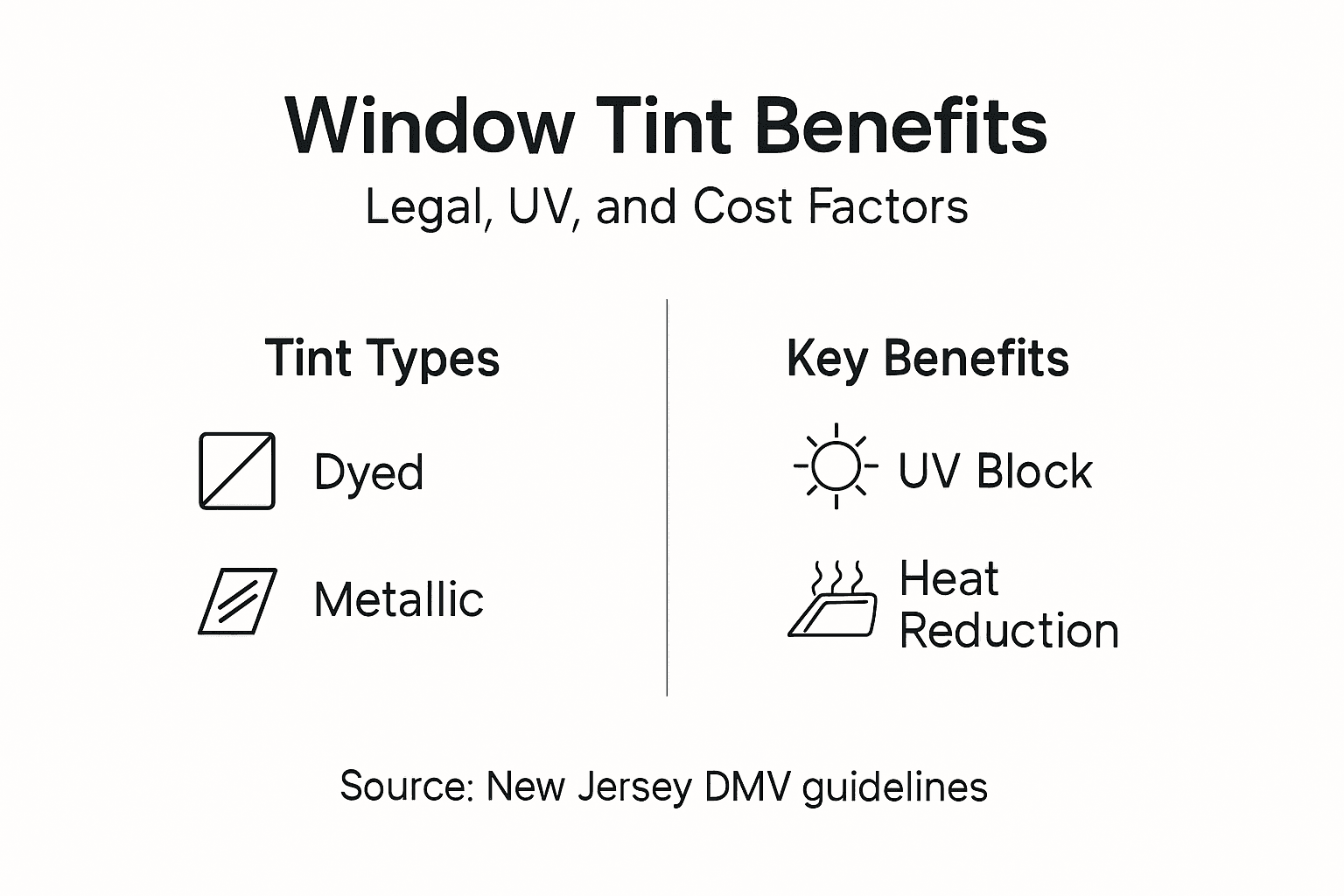
Once you know the legal limits, the next decision is which tint film type matches your priorities for UV protection, heat rejection, privacy, and budget. The three main categories are dyed, metallic, and ceramic films, each offering distinct tradeoffs in performance, cost, and durability.
Dyed tint films are the most affordable option, typically costing $100 to $200 installed for a standard sedan. They work by absorbing solar energy through a dyed polyester layer, reducing glare and adding privacy. However, dyed films offer only moderate UV and heat rejection compared to advanced options, and the dye tends to fade and turn purple over time, especially under intense sun exposure. Lifespan averages 3 to 5 years before noticeable degradation.
Metallic tint films incorporate tiny metallic particles that reflect heat and UV rays more effectively than dyed films. They deliver better heat rejection and durability, often lasting 5 to 7 years. The downside is that metallic layers can interfere with radio, GPS, and cell phone signals inside your vehicle, causing frustration for drivers who rely on connectivity. Metallic films also add slight weight and may have a shinier, more reflective appearance that some owners dislike.
Ceramic tint films represent the premium tier, using non-metallic, non-conductive ceramic particles to block up to 99% UV and offer superior heat rejection without signal interference. Ceramic films maintain clarity, do not fade, and typically last 10 years or longer with proper care. Prices range from $250 to $400 installed, but the investment pays off in comfort, interior protection, and long-term performance. For South Jersey summers and year-round UV exposure, ceramic tint is the top choice for serious vehicle owners.
When evaluating benefits of ceramic tint versus cheaper alternatives, consider:
- Budget: Dyed films fit tight budgets but require replacement sooner.
- Heat rejection: Ceramic films block the most infrared heat, keeping interiors cooler.
- Signal compatibility: Ceramic and dyed films do not interfere with electronics, metallic films do.
- Durability: Ceramic films resist fading and peeling far better than dyed or metallic options.
- Legal compliance: Ensure any film you choose meets the 70% VLT minimum on applicable windows.
| Tint Type | UV Protection | Heat Rejection | Durability | Cost Range | Signal Interference |
|---|---|---|---|---|---|
| Dyed | Moderate | Moderate | 3-5 years | $100-$200 | None |
| Metallic | Good | Good | 5-7 years | $150-$300 | Yes |
| Ceramic | Excellent (up to 99%) | Excellent | 10+ years | $250-$400 | None |
Pro Tip: If you plan to keep your vehicle for more than 5 years, ceramic tint delivers better long-term value despite the higher upfront cost because you avoid the expense and hassle of replacement.
Benefits of Mobile Tinting Services
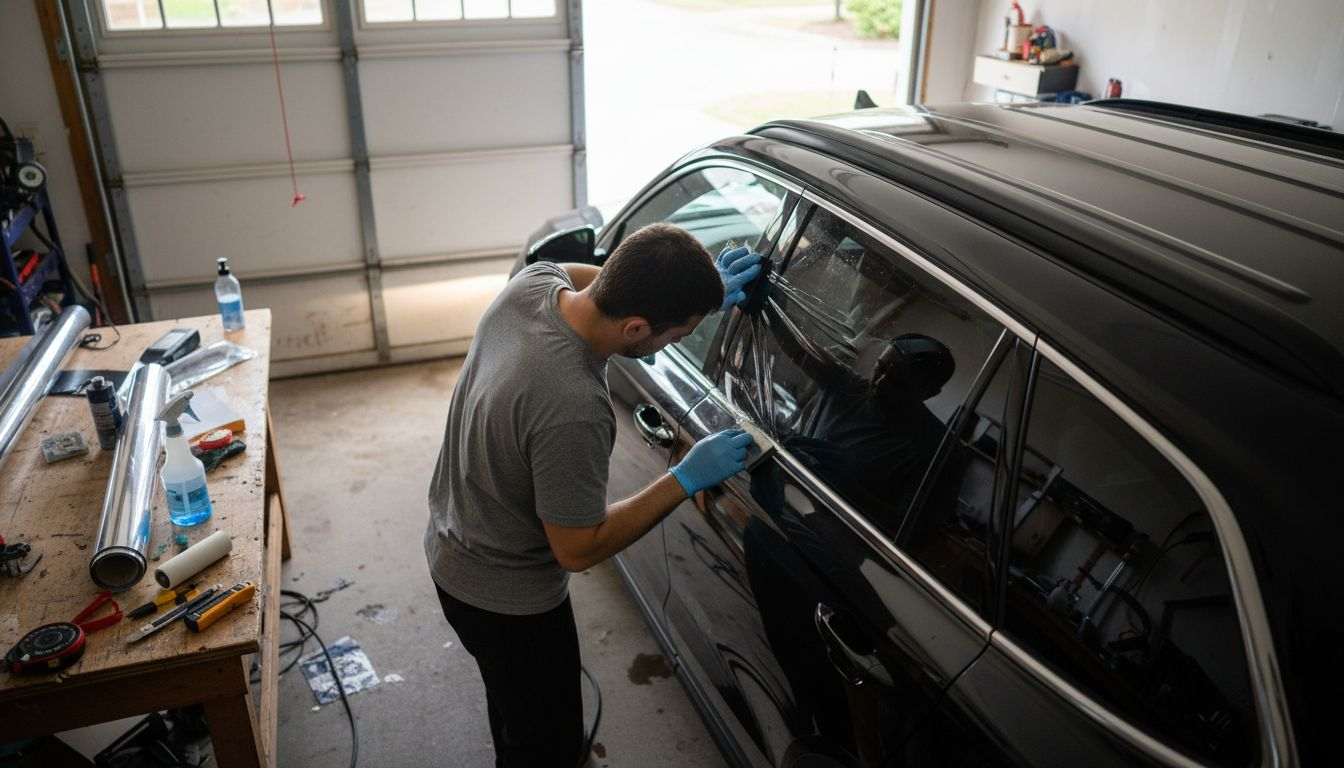
After deciding on your tint type, the next question is where and how to get it installed. Professional mobile window tinting services have become increasingly popular in South Jersey because they combine expert quality with unmatched convenience. Instead of driving to a shop and waiting hours, mobile installers come to your home or workplace and complete the job on-site.
Mobile tinting services save you time by eliminating travel and wait times. Professional installers arrive with all necessary tools, films, and cleaning supplies, performing the entire installation process in your driveway or parking lot. Mobile tinting reduces vehicle downtime to under 2 hours and ensures proper prep for longevity, so you can schedule installation during lunch breaks or weekends without disrupting your routine.
Quality is not sacrificed for convenience. Experienced mobile installers prep window surfaces meticulously, removing dirt, grease, and residue that can cause bubbles or peeling. They apply tint films with professional squeegees and heat guns, ensuring smooth, edge-to-edge coverage that adheres properly and looks flawless. This expertise reduces the risk of installation defects that void warranties or require costly rework.
Mobile services also offer flexible scheduling, accommodating your availability rather than shop hours. Many South Jersey mobile tinting providers offer same-day or next-day appointments, making it easy to book a mobile tinting appointment that fits your calendar. Installers typically work in well-lit outdoor or covered areas, which actually improves visibility and precision during application.
Key advantages of professional mobile tinting include:
- At-home or on-site installation eliminates travel time and waiting rooms.
- Professional surface prep improves adhesion and reduces bubbling or peeling.
- Installation completed in 1.5 to 2 hours minimizes vehicle downtime.
- Expert installers ensure legal VLT compliance and quality workmanship.
- Flexible scheduling accommodates busy lifestyles without compromising results.
Pro Tip: Always verify that your mobile installer provides a written warranty covering both the film and installation workmanship. This protects you if defects appear after the job is complete. Understanding the professional tinting process helps you evaluate installer expertise before booking.
Cost and Time Expectations for Window Tinting
Budgeting realistically for window tinting helps you avoid low-quality films that fail quickly or overpaying for features you do not need. Professional window tinting costs in South Jersey generally range from $150 to $400, depending on the film type, vehicle size, and number of windows tinted. Understanding these cost drivers helps you plan your investment wisely.
Dyed tint films typically cost $100 to $200 installed for a standard four-door sedan. This budget-friendly option appeals to owners prioritizing privacy and basic glare reduction over long-term durability. Metallic films fall in the $150 to $300 range, offering better heat rejection and lifespan but at a moderate price increase. Ceramic tint films command $250 to $400 due to superior materials, UV protection, and longevity, making them the best value for owners planning to keep their vehicles long term.
Vehicle size and window count also affect pricing. Larger SUVs, trucks, and vans require more film and labor, pushing costs toward the higher end of each range. Some installers offer package deals for full-vehicle tinting, including rear and side windows, which can save money compared to tinting windows individually.
Installation time averages 1.5 to 2 hours for professional mobile services, though larger vehicles or complex window shapes may take slightly longer. This quick turnaround means you can schedule tinting in the morning and have your vehicle ready by lunch, or book an afternoon appointment and drive home the same evening. Avoid installers who rush the job in under an hour, as proper surface prep and curing time are essential for quality results.
Key cost and time factors include:
- Film type: Dyed films cost less upfront, ceramic films offer better long-term value.
- Vehicle size: Larger vehicles require more material and labor, increasing cost.
- Mobile convenience: Mobile services may charge a small travel fee but save you time and hassle.
- Warranty coverage: Higher-priced films typically include longer warranties, protecting your investment.
- Curing time: Allow 24 to 48 hours after installation for tint to fully cure before rolling windows down.
| Cost Factor | Budget Range | Mid Range | Premium Range |
|---|---|---|---|
| Film Type | Dyed ($100-$200) | Metallic ($150-$300) | Ceramic ($250-$400) |
| Vehicle Size | Sedan (lower cost) | Crossover (moderate) | SUV/Truck (higher) |
| Installation Time | 1.5-2 hours | 1.5-2 hours | 1.5-2.5 hours |
| Warranty | 1-3 years | 3-5 years | 5-10 years |
Understanding the cost and benefits of window tinting helps you balance upfront investment with long-term performance and peace of mind. For window tinting services in South Jersey, compare quotes from multiple installers and verify warranty terms before committing.
Common Mistakes and How to Avoid Them
Even with the best intentions, vehicle owners frequently make errors during tint selection and installation that undermine results and waste money. Recognizing these pitfalls helps you avoid frustration and ensure your tint delivers lasting benefits.
-
Choosing tint darker than legal limits. Many owners assume darker tint means better performance, but exceeding New Jersey’s 70% VLT minimum on front and rear side windows leads to fines, failed inspections, and forced removal. Always confirm legal compliance before installation.
-
Skipping professional surface cleaning. Dirt, grease, wax residue, and old adhesive trapped under tint film cause bubbles, peeling, and poor adhesion. Professional installers clean windows thoroughly with specialized solutions, but DIY attempts or cheap installers often skip this critical step.
-
Opting for cheap dyed films to save money. Budget dyed films fade to purple within a few years, especially under intense sun exposure, forcing you to pay for removal and reinstallation sooner than expected. Investing in metallic or ceramic films upfront saves money and hassle over the vehicle’s lifespan.
-
Rushing installation or attempting DIY without experience. Applying window tint requires precision, patience, and proper tools. Rushing the process causes wrinkles, bubbles, and misalignment that look unprofessional and void warranties. DIY kits may seem cost-effective, but mistakes often require professional correction at added expense.
-
Ignoring installer reputation and warranty coverage. Not all installers deliver equal quality. Failing to verify reviews, credentials, and warranty terms before booking can leave you stuck with poor workmanship and no recourse for defects. Always research installer reputation and demand written warranties covering both film and labor.
To avoid common tint mistakes, follow these guidelines:
- Verify legal VLT limits for your vehicle type and windows before selecting film darkness.
- Hire professional installers who prep surfaces thoroughly and provide written warranties.
- Invest in quality films like ceramic tint that offer long-term performance and durability.
- Allow proper curing time after installation, typically 24 to 48 hours, before rolling windows down.
- Research installer reviews and ask for examples of previous work to confirm quality standards.
Expected Outcomes and Quality Assurance
When installed correctly with quality materials, window tint delivers measurable benefits that protect your vehicle and enhance comfort for years. Setting realistic expectations for performance, lifespan, and maintenance helps you maximize your investment and enjoy long-term results.
High-quality ceramic tint films typically last 10 years or longer with proper professional installation and care. Dyed films average 3 to 5 years before fading becomes noticeable, while metallic films fall in the 5 to 7 year range. Choosing premium films upfront extends the period before replacement is needed, saving money and hassle over time.
Warranties vary by film brand and installer, but most professional services offer 5 to 10 year coverage on both the film material and installation workmanship. These warranties protect you against bubbling, peeling, discoloration, and delamination caused by manufacturing defects or improper application. Always request a written warranty and understand what is covered before installation begins.
Window tint provides significant UV protection, with ceramic films blocking up to 99% of harmful ultraviolet rays. This protection reduces interior fading on seats, dashboards, and trim, preserving your vehicle’s resale value. UV blockage also protects your skin and eyes from sun damage during long drives, offering health benefits beyond comfort.
Proper post-installation care helps maintain tint quality and longevity. Avoid rolling windows down for 24 to 48 hours after installation to allow the adhesive to cure fully. Clean tinted windows with ammonia-free cleaners and soft microfiber cloths to prevent scratching or chemical damage. Inspect tint periodically for signs of bubbling, peeling, or discoloration, and contact your installer immediately if defects appear within the warranty period.
Key outcomes and quality indicators include:
- Longevity: Ceramic tint lasts 10+ years, dyed films 3-5 years, metallic films 5-7 years.
- UV protection: Quality films block up to 99% of UV rays, reducing interior fading and health risks.
- Warranty coverage: Professional installations include 5-10 year warranties on film and workmanship.
- Maintenance: Use ammonia-free cleaners and soft cloths to preserve tint clarity and adhesion.
- Legal compliance: Proper installation ensures VLT meets New Jersey’s 70% minimum, avoiding fines.
Monitoring tint condition and honoring warranty terms protects your investment and ensures you enjoy the full benefits of window tinting. For guidance on caring for window tint, consult your installer’s care instructions and follow manufacturer recommendations.
Enhance Your Vehicle with Expert Mobile Window Tinting Services
Now that you understand the legal requirements, film types, costs, and quality factors for window tinting, the next step is partnering with a trusted professional who delivers expert results. CDC Detailing offers professional window tinting services across South Jersey, combining premium ceramic and quality films with convenient mobile installation that comes directly to your location.
Their experienced team ensures every installation meets New Jersey’s 70% VLT legal standards while delivering maximum UV protection, heat rejection, and privacy. Mobile service means you schedule installation at your home or workplace, eliminating travel time and wait rooms. Typical installations complete in under 2 hours, minimizing vehicle downtime and fitting seamlessly into your busy schedule. CDC Detailing provides comprehensive care instructions and warranty coverage, so you can enjoy lasting performance and peace of mind. Booking mobile detailing services is simple through their online form, and their team responds quickly to confirm your appointment. Enhance your vehicle’s comfort, privacy, and protection today by exploring the benefits of window tinting with South Jersey’s trusted mobile professionals.
Frequently Asked Questions About Choosing Window Tint
What is the darkest legal tint allowed on my vehicle in South Jersey?
New Jersey law requires front and rear side windows to allow at least 70% visible light transmission, meaning you cannot go darker than 30% tint on those windows. Rear windows on SUVs and vans may have more flexibility, but front-side compliance is strictly enforced.
How can I maintain my window tint to extend its life?
Avoid rolling windows down for 24 to 48 hours after installation to allow adhesive curing. Clean tinted windows only with ammonia-free cleaners and soft microfiber cloths to prevent scratching or chemical damage, and inspect periodically for bubbling or peeling.
Are mobile window tinting services reliable compared to a shop visit?
Yes, professional mobile tinting services deliver the same quality as shop installations because experienced installers bring all necessary tools and materials to your location. Mobile services actually save you time and offer flexible scheduling without compromising workmanship or warranty coverage.
What should I look for to confirm quality tint installation?
Check for smooth, bubble-free application with no visible wrinkles or gaps along window edges. Verify the installer provides a written warranty covering both film and workmanship for at least 5 years, and confirm the tint meets New Jersey’s 70% VLT legal requirement on applicable windows.