
Finding the perfect window tint for your vehicle can feel like a balancing act between style and protection. With the sun beating down and risks like skin cancer linked to UV exposure, South Jersey drivers know that blocking UV rays effectively is more than just a cosmetic upgrade. This guide walks you through smart steps, from assessing your needs and understanding tint materials to checking local regulations, so you can make a confident, informed choice that fits your lifestyle.
Table of Contents
- Step 1: Assess Your Tinting Needs
- Step 2: Compare Tint Materials and Shades
- Step 3: Check Legal Requirements in Your Area
- Step 4: Select a Trusted Tinting Provider
- Step 5: Inspect Installed Tint for Quality
Quick Summary
| Key Point | Explanation |
|---|---|
| 1. Assess Your Tinting Needs | Understand your motivations before purchasing tint, focusing on UV protection, comfort, and local regulations for optimal choices. |
| 2. Compare Tint Materials | Evaluate different tint materials such as ceramic and carbon, considering heat protection and durability to suit your needs. |
| 3. Know Local Legal Requirements | Familiarize yourself with specific tint regulations in your area to avoid fines and ensure compliance for your vehicle. |
| 4. Choose a Trusted Provider | Select a reputable tinting professional by checking reviews, certifications, and material quality for successful installation. |
| 5. Inspect Tint Quality | After installation, review for bubbles, edge alignment, and color consistency to ensure quality and long-term performance of the tint. |
Step 1: Assess Your Tinting Needs
Choosing the right window tint for your vehicle requires understanding your specific needs and priorities. Whether you’re looking for enhanced comfort, protection, or aesthetic appeal, a thoughtful assessment is crucial before making a purchase.
Start by evaluating your primary motivations for window tinting. For many drivers, protection from harmful ultraviolet radiation is a top concern. Blocking UV rays effectively can significantly reduce skin cancer risks during daily driving. Consider these key factors when assessing your tinting requirements:
- Medical sensitivities requiring light reduction
- Desired level of interior temperature control
- Personal comfort and glare reduction needs
- Aesthetic preferences for vehicle appearance
- Local legal restrictions on tint darkness
If you have specific medical conditions that increase photosensitivity, consulting with a healthcare professional can help determine the most appropriate tint level. Medical professionals recommend carefully balancing protection with driving safety, ensuring your window tint meets both health and legal requirements.
Your ideal window tint should provide maximum protection without compromising visibility and safety.
Pro tip: Always check your local regulations before selecting a window tint to ensure compliance with state-specific laws and avoid potential fines.
Step 2: Compare Tint Materials and Shades
Selecting the right window tint material involves understanding the unique characteristics of different film technologies and how they align with your specific vehicle protection needs. Your choice will impact everything from heat reduction to UV protection and overall driving comfort.
Ceramic tints offer superior performance across multiple critical dimensions, making them an excellent option for discerning car owners. Consider these key material types and their respective advantages:
- Ceramic Films: Highest heat and UV protection, no electronic interference
- Carbon Films: Excellent thermal insulation, matte finish, higher cost
- Dyed Films: Most affordable, limited heat rejection, prone to fading
- Metallized Films: Enhanced strength, potential electronic signal disruption
Each material comes with distinct performance characteristics. Window films vary in solar control and privacy features, so understanding your primary objectives is crucial. Factors like infrared radiation reflection, UV blockage percentage, and durability should guide your decision.
Professional-grade window tints balance aesthetics, protection, and legal compliance.
Pro tip: Request material samples and compare them under different lighting conditions to truly understand their visual and functional differences.
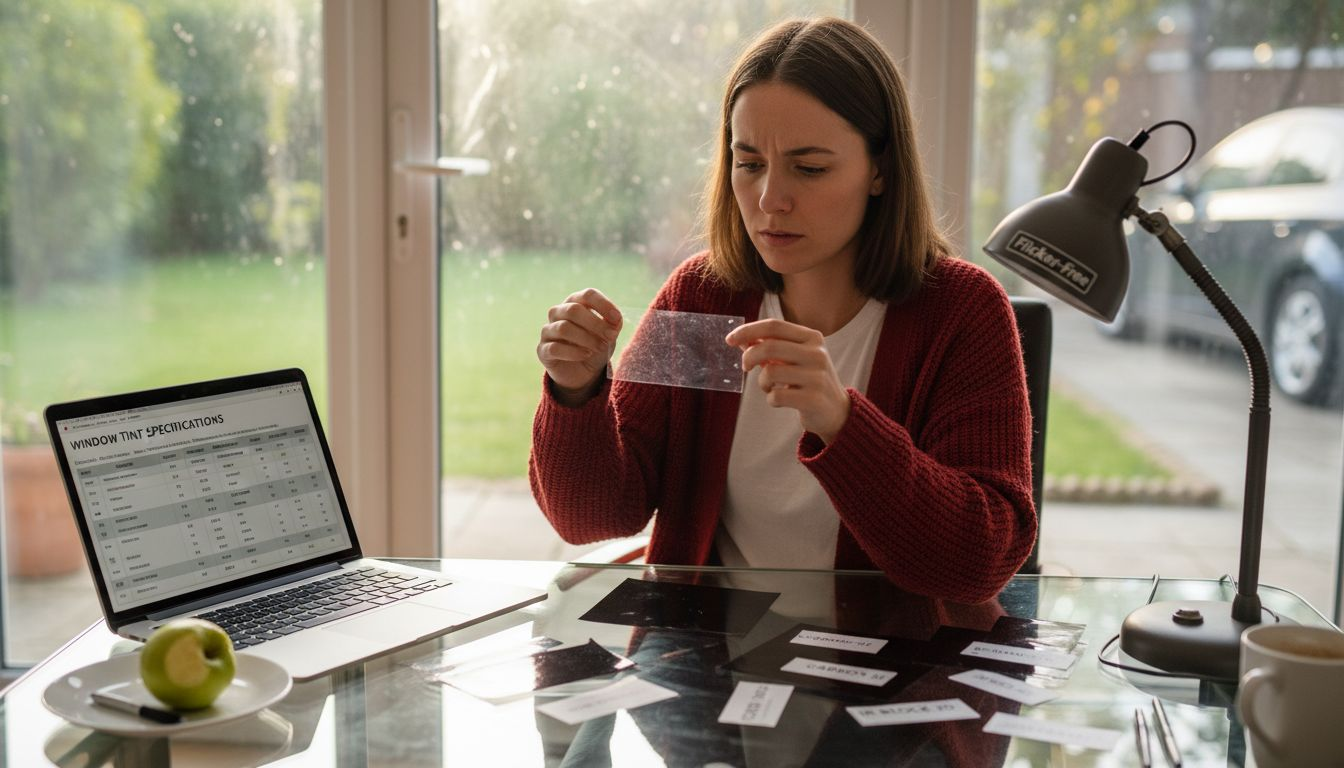
Here is a comparison of common window tint material types to help you choose based on your priorities:
| Tint Material | Heat Protection Level | UV Blocking | Signal Interference |
|---|---|---|---|
| Ceramic Film | Excellent | Up to 99% | None |
| Carbon Film | Very Good | Around 90% | None |
| Dyed Film | Low | Moderate | None |
| Metallized Film | Good | High | Possible |
Step 3: Check Legal Requirements in Your Area
Window tinting regulations can be surprisingly complex, with significant variations across different states and municipalities. Understanding these legal requirements is crucial to avoid potential fines and ensure your vehicle remains compliant with local laws.
Window tinting laws specify precise restrictions on darkness levels and reflectivity for different vehicle windows. Each jurisdiction typically mandates specific guidelines for:
- Front windshield tint percentage limits
- Side window darkness regulations
- Rear window tinting permissions
- Reflectivity and color restrictions
- Potential medical exemption procedures
Violations can result in substantial financial penalties, with some regions imposing fines up to thousands of dollars or even potential vehicle registration complications. Most states measure tint darkness using Visible Light Transmission (VLT) percentages, which determine how much light can pass through your window film.
Local law enforcement takes window tinting regulations seriously – compliance is not optional.
Pro tip: Contact your local Department of Motor Vehicles or visit their website to obtain the most current and accurate window tinting regulations specific to your region.
Step 4: Select a Trusted Tinting Provider
Finding the right window tinting professional can make the difference between a flawless installation and a disappointing result. Your goal is to identify a provider who combines technical expertise, quality materials, and a commitment to customer satisfaction.
Verifying a provider’s reputation through reliable sources is crucial in making an informed decision. Look for these key indicators of a trustworthy window tinting service:
- Validated Business Ratings: Check Better Business Bureau scores
- Comprehensive Customer Reviews: Examine detailed online testimonials
- Professional Certifications: Confirm industry-specific credentials
- Material Quality: Verify the range and quality of tinting films
- Installation Experience: Assess years of specialized experience
Consumer recommendations highlight the importance of selecting providers who understand advanced tinting technologies and legal compliance. The right professional will not only apply your tint correctly but also guide you through material selection, local regulations, and long-term maintenance.
A reputable tinting provider transforms window film from a simple product into a precision service.
Pro tip: Request portfolios of previous work and ask for references from recent customers to gain deeper insights into a provider’s actual performance and reliability.
Step 5: Inspect Installed Tint for Quality
After your window tint installation, a thorough quality inspection ensures you’ve received the professional service you expected. This critical final step helps you identify any potential issues that might compromise the tint’s performance or appearance.
Professional tint installations require meticulous examination of several key visual and functional aspects. Your inspection should focus on these critical quality indicators:
- Surface Smoothness: No visible air bubbles or wrinkles
- Edge Alignment: Clean, precise edges around window perimeters
- Color Consistency: Uniform shade and tone across all windows
- Adhesion Quality: Firm film attachment with no peeling edges
- Clarity: Crystal-clear visibility without distortion
Window tint quality directly impacts long-term performance and can reveal the skill of your installation professional. Carefully check for any signs of premature wear, such as bubbling, fading, or unexpected discoloration that could indicate substandard application.
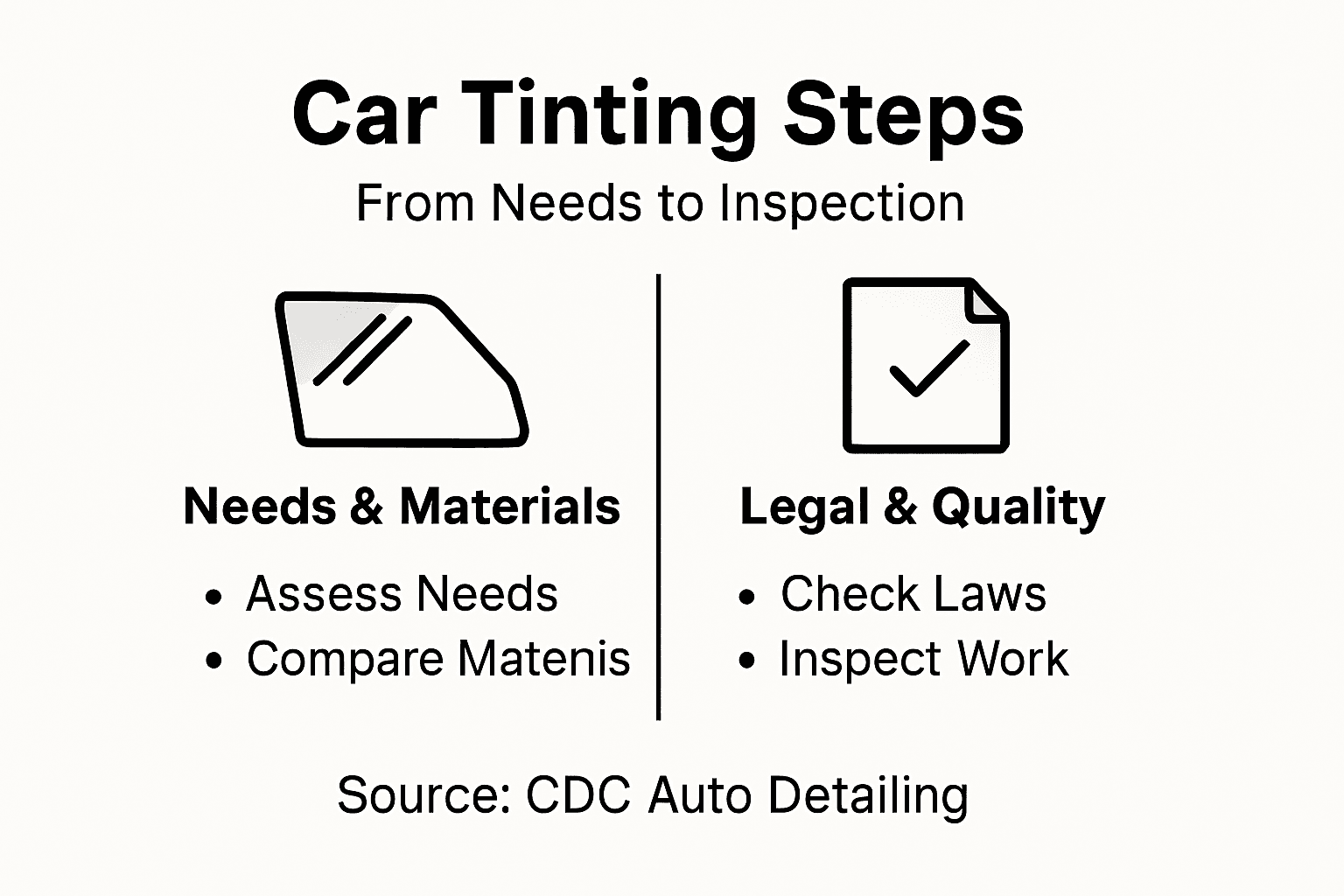
Use this quick reference to identify key steps in tint installation quality inspection:
| Inspection Area | Common Issues Detected | Why It Matters |
|---|---|---|
| Surface Smoothness | Bubbles, creases, dirt spots | Impacts appearance |
| Edge Alignment | Irregular, jagged edges | Reduces visual appeal |
| Color Uniformity | Patches, visible lines | Indicates poor application |
| Adhesion Quality | Peeling or loose corners | Affects durability |
A high-quality window tint should look seamless and perform flawlessly for years.
Pro tip: Use natural daylight and inspect your tinted windows from multiple angles, running your hand gently over the surface to detect any subtle imperfections that might not be immediately visible.
Elevate Your Car’s Comfort and Style with Expert Window Tinting
Choosing the right window tint is about more than just appearance. The article highlights challenges such as finding the perfect balance between UV protection, heat reduction, and legal compliance while ensuring a flawless finish. If you want to avoid common pitfalls like uneven tint application, signal interference, or legal issues, trusting experienced professionals is key. Addressing these pain points can dramatically improve your driving comfort and vehicle aesthetics.
At CDC Auto Detailing, we specialize in premium window tinting that meets strict quality standards and local regulations. Our expert mobile service brings state-of-the-art ceramic and carbon tint solutions directly to your driveway in South Jersey. We guarantee:
- Perfect installation free of bubbles or wrinkles
- High UV and heat rejection to protect you and your car
- Compliance with all local tinting laws
Experience the difference professional window tinting can make for your vehicle today.
Ready to enhance your driving experience with expertly installed window tint? Visit CDC Auto Detailing now to book your appointment. Take control of your car’s comfort and look with trusted professionals who care about quality and customer satisfaction.
Frequently Asked Questions
How do I assess my tinting needs for my car?
To assess your tinting needs, consider your main motivations such as protection from UV rays, glare reduction, and desired temperature control inside your vehicle. Start by listing your priorities, and always remember to check local legal restrictions on tint darkness.
What are the different materials available for window tinting?
The main materials for window tinting include ceramic films, carbon films, dyed films, and metallized films. Evaluate each type based on factors like heat protection, durability, and potential electronic signal interference to choose what best fits your needs.
How do I find out the legal requirements for tinting in my area?
To find out the legal requirements for tinting, research specific laws regarding tint darkness and reflectivity in your area. Contact your local Department of Motor Vehicles or visit their website to get the most current guidelines that apply to your vehicle.
What should I look for in a window tinting provider?
When choosing a window tinting provider, check their reputation through customer reviews and business ratings. Verify their experience, professional certifications, and the quality of materials they offer to ensure a successful installation.
How can I inspect the quality of my installed window tint?
After installation, inspect your window tint for visible bubbles, creases, or uneven edges to assess its quality. Use natural daylight to examine the tint from different angles, ensuring the appearance and performance meet your expectations.