
Yes, matte-specific ceramic coatings can protect a matte finish without turning it glossy, but only when the formula is designed for matte paint and the surface gets proper prep first. Coating locks in whatever condition your paint is in right now, swirls, marring, and all, so correction often has to happen before the coating goes on. Professional installations tend to hold up for multiple years; DIY kits are cheaper but wear out faster and demand more attention from you.
TL;DR:
- Only use ceramic coatings formulated specifically for matte or satin finishes to prevent glossing or patchy appearance on textured surfaces.
- Proper prep steps, including decontamination, inspection, and light correction with matte-safe tools, are crucial to avoid sealing in defects or altering the textured look.
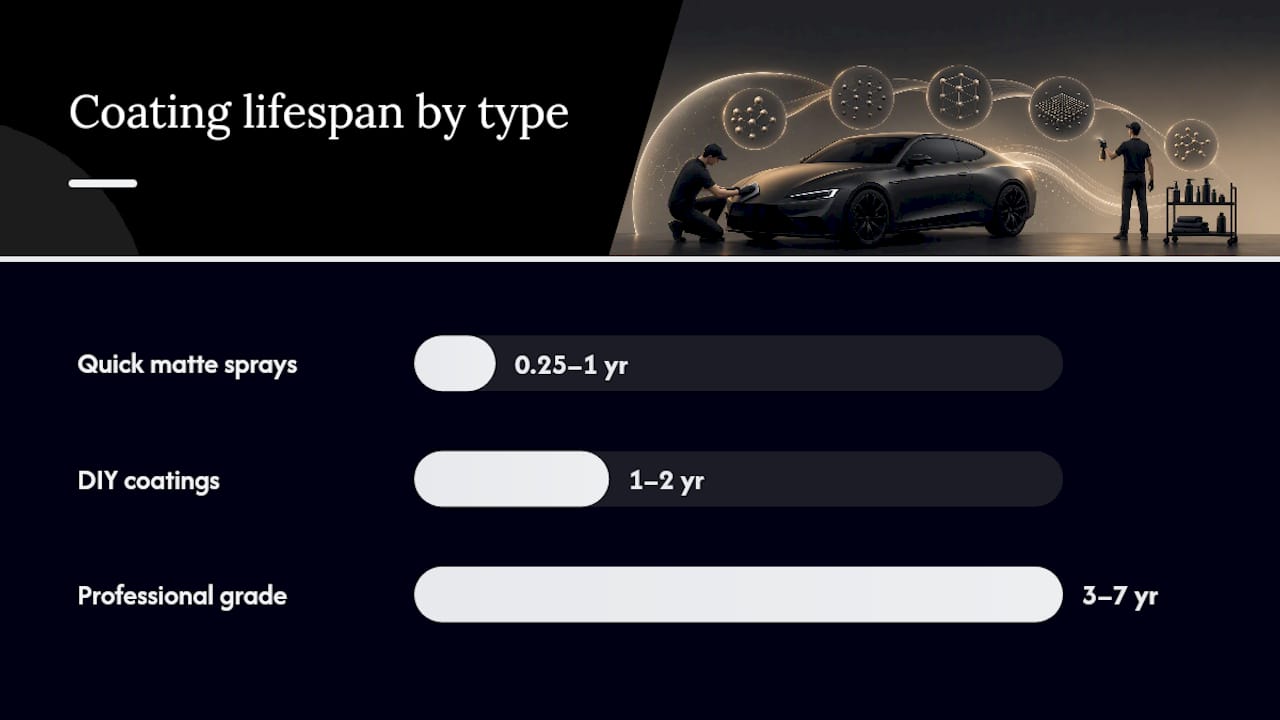
- Professional coatings offer durability of three to seven years, while DIY products typically last one to two years and require more frequent reapplication.
- Coatings do not protect against physical impacts such as chips or scratches; additional paint protection film or impact-resistant layers are needed for high-impact areas.
- Avoid applying gloss-enhancing topcoats or products with silicone oils after coating to maintain the factory matte appearance and hydrophobic performance.
Table of Contents
- Can You Put Ceramic Coating on Matte Paint?
- Prepping Matte Paint Before Coating
- Applying and Maintaining Coated Matte Paint
- What Coating Costs and How Long It Actually Lasts
- Where Ceramic Coating Falls Short
- How CDC Auto Detailing Handles Matte Coating Jobs
- Why “Just Use Any Ceramic Coating” Is Bad Advice for Matte Owners
- Protecting Your Matte Finish the Right Way
- Sources
- FAQ
Can You Put Ceramic Coating on Matte Paint?
The short answer is yes, and the longer answer explains why so many people get nervous about it. Matte and satin factory finishes rely on a textured clear coat that scatters light instead of reflecting it in a sharp, mirror-like way. Standard ceramic coatings, the kind built for glossy paint, are formulated to fill microscopic texture and maximize reflection. Put one of those on a matte hood and you’ll get exactly what you feared: a patchy, semi-gloss look that never quite matches the rest of the panel.
Matte-safe coatings solve this by using resins engineered to bond to the clear coat without leveling out its texture. Brands building specifically for satin and matte finishes, like Dr. Beasley’s matte paint coating line, formulate around that exact problem. The chemistry stays the same at its core, a liquid polymer that cures into a hard, hydrophobic layer, but the film thickness and leveling behavior are tuned so the surface keeps scattering light the way it did from the factory.
Here’s what a properly applied matte coating actually protects against:
- UV oxidation that fades or yellows unprotected paint over time
- Bird droppings, tree sap, and road grime that etch into bare clear coat
- Mild chemical exposure from fuel splashes, bug residue, and de-icing salt
- Water spotting, since the hydrophobic surface sheds rain and wash water before it dries into mineral spots
What it won’t do is stop a rock chip, a keying incident, or a deep scratch from a shopping cart. The coating film measures only a few microns thick. It hardens the surface chemically, but it doesn’t add meaningful physical armor against impact. According to WheelPrice’s ceramic coating guide, professional-grade coatings typically last multiple years with proper maintenance, while consumer-grade DIY versions last shorter periods before you’re back to bare, unprotected clear coat.
Pro Tip: If a seller can’t tell you whether their coating is matte-safe or standard-gloss, assume it’s the latter. Ask for the product name and look it up yourself before it touches your car.
Prepping Matte Paint Before Coating
Coating is not a fix for existing paint problems. It’s a seal. Whatever swirl marks, water spots, or transport scuffs are sitting on your paint the day of application get sealed under a hard, semi-permanent layer, and they’ll be there for the life of the coating. That’s the part shops sometimes gloss over during a sales pitch, and it’s the single biggest reason a coating job disappoints an owner six months later.
A proper job follows a sequence, and skipping steps in it is where things go wrong:
- Decontamination wash. A thorough two-stage wash removes loose dirt, road film, and surface oils before anything else happens.
- Mechanical decontamination. Clay bar or an iron-remover spray pulls embedded brake dust and rail dust out of the clear coat that a wash alone can’t touch.
- Inspection under raking light. This is where a detailer identifies swirls, scratches, water etching, or holograms that need addressing before coating.
- Correction, if needed. Light defects on matte paint call for finesse polishing techniques that avoid heating or leveling the texture; deeper defects sometimes require accepting a visible flaw rather than risking the matte look.
- IPA wipe-down. A final isopropyl alcohol wipe strips any polish oils or wax residue so the coating bonds directly to bare clear coat.
That correction step is where matte paint gets tricky. Standard paint correction uses compounding and polishing pads that generate heat and shear, exactly the process that flattens texture and creates gloss on matte surfaces. CDC Auto Detailing’s professional ceramic coating process treats decontamination and an IPA wipe as the non-negotiable minimum, and reserves machine polishing for cases where a defect genuinely needs it, using matte-safe pads and light pressure to avoid altering the finish. Experienced installers are constantly weighing removing a scratch against the risk of leaving a shiny patch behind, and the honest ones will tell you when a small defect is better left alone than “corrected” into a bigger cosmetic problem.
Before booking anyone for matte coating work, ask these questions:
- What’s included in your prep process, and is decontamination separate from correction?
- Have you coated matte or satin vehicles before, and can I see photos?
- What happens if a defect can’t be removed without risking gloss?
- What product are you using, and is it labeled matte-safe by the manufacturer?
Applying and Maintaining Coated Matte Paint
Application technique matters as much as the product itself on matte paint. Coating applied too thick, in the wrong temperature range, or without enough cure time between coats is how even a genuinely matte-safe product ends up with shiny streaks or high spots.
Getting the application right:
- Work in a controlled environment, ideally 60 to 80 degrees Fahrenheit with low humidity, since heat and moisture both affect how the resin levels and cures.
- Apply thin, even coats using a suede applicator, working small sections at a time rather than flooding a whole panel.
- Buff off residue within the product’s specified flash window, since letting it sit too long creates high spots that read as glossy patches once cured.
- Respect the cure schedule, typically 24 to 48 hours before the car sees rain and 7 to 14 days before a full cure, avoiding automatic car washes during that stretch.
- Skip anything with silicone oils, gloss-enhancing polymers, or “wet look” dressings on the coated panels. Those are the fastest way to turn a $1,500 matte job into a semi-gloss mistake.
Pro Tip: If you notice a shiny patch after coating, resist the urge to hit it with a polish or compound. Try a dedicated matte-safe cleanser first. Most “shiny spots” are surface contamination or a leveling issue that gentle cleaning resolves without touching the coating itself.
Once the coating is cured, your maintenance routine determines how long it performs. CDC’s guide to applying and maintaining coatings recommends washing every one to two weeks with a pH-neutral shampoo, using the two-bucket method to avoid dragging grit across the panels, and never running the car through an automatic tunnel wash with spinning brushes. Those brushes are abrasive enough to burnish matte texture into a soft sheen over repeated washes, which is one of the more common ways owners accidentally gloss their own paint.
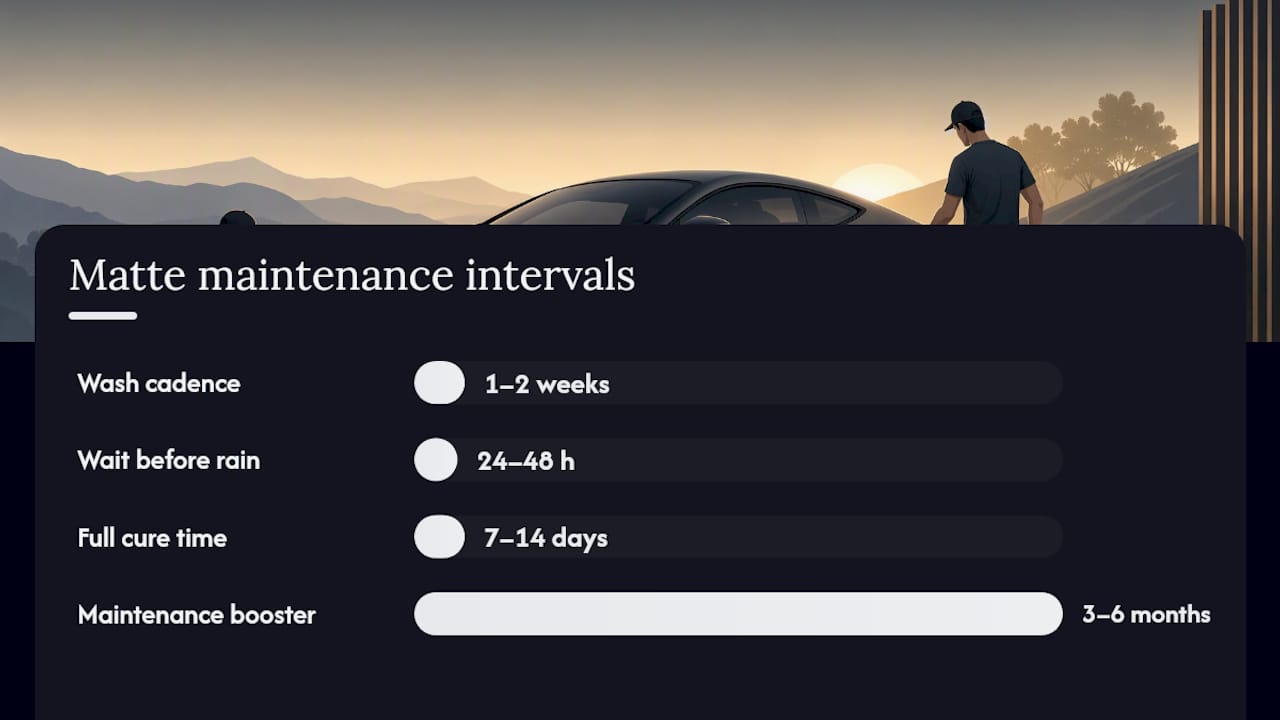
Plan on a maintenance booster, a spray or wipe-on top-up product formulated for matte, every three to six months. It restores the hydrophobic behavior that fades gradually from UV exposure and washing. If you want a written routine to follow, CDC’s matte paint care guide lays out a one to two week wash cadence built specifically to avoid shiny patches on OEM matte finishes. A UK-based writeup from Diamondbrite’s matte coating guide covers similar upkeep principles if you want a second source to cross-check against.
What Coating Costs and How Long It Actually Lasts
Price tracks almost entirely with prep level and product tier, not just the coating brand’s marketing. A basic job with minimal correction can start around $500, while a full package with multi-stage correction for a sedan commonly runs $1,200 to $2,500 or more, according to WheelPrice’s cost breakdown. Vehicle size, paint condition going in, and whether the quote includes a maintenance plan all push the number around inside that range.
Durability splits cleanly along the DIY versus professional line:
- DIY consumer coatings and spray-on matte products generally last one to two years, and some quick-application matte sprays need reapplication every few months to a year even under good conditions.
- Professional-grade coatings applied with proper prep hold up three to seven years with routine maintenance, per the same WheelPrice data.
That gap comes down to product chemistry and application control, not just marketing hype, since a coating’s real-world lifespan depends far more on how well the surface was prepped and maintained than on any number printed on the bottle.
Whether the extra cost of a pro job is worth it depends on what you’re trying to get out of the car. A newer car you plan to keep for years, or one you’re grooming for resale, generally justifies the higher upfront spend because the coating protects value over a longer horizon. An older beater you’ll trade in within a year or two might not need more than a DIY layer. When comparing quotes, watch for these red flags:
- A price that seems too low for a package claiming multi-year durability, often a sign prep is being skipped
- No mention of decontamination or paint inspection before coating
- Vague answers about which product is being used or whether it’s matte-safe
- No maintenance guidance included after the sale
Where Ceramic Coating Falls Short
Coating protects the surface chemically. It does nothing structurally. A pebble kicked up on the highway or a scrape against a garage wall will chip through a ceramic layer the same way it would bare paint, because the film is measured in microns, not millimeters. That’s not a flaw in the product. It’s simply outside what this category of protection is built to do.
For panels that take the most abuse, front bumper, hood leading edge, mirror caps, paint protection film handles what coating can’t. PPF is a thick urethane film that absorbs physical impact, and pairing it with a matte-safe ceramic topcoat on the rest of the car gives you impact resistance where it counts and easy-clean hydrophobic performance everywhere else.
A few things worth watching for when you’re shopping coating jobs:
- Any installer promising “permanent” or “lifetime” protection against chips or scratches is overselling what the chemistry can do.
- A quote that skips decontamination or correction entirely to hit a low price point is setting you up for sealed-in defects.
- Layering coating over PPF on high-impact panels, then coating the rest of the car, is a reasonable way to build real-world protection without overspending on film you don’t need everywhere.
How CDC Auto Detailing Handles Matte Coating Jobs
Matte paint punishes shortcuts, which is why decontamination and panel inspection aren’t optional steps in our process, they’re the baseline every coating job starts from. We select matte-safe products specifically for satin and matte vehicles, and we walk owners through a maintenance plan before they leave so the finish stays the way it looked the day they bought the car.
Before booking, have your paint’s condition in mind: recent scratches, any prior polishing work, and how the car’s been washed. That’s what determines whether you need light correction or just decontamination. During an on-site appointment, expect an inspection under proper lighting first, a conversation about what we find, and a clear plan before any product touches the panel. Charles, a contributing detailing practitioner for this guide, has spent years watching owners get burned by generic coating advice that ignores matte finishes entirely, which is part of why this piece exists.
Why “Just Use Any Ceramic Coating” Is Bad Advice for Matte Owners
Most ceramic coating content online is written for glossy paint, and it shows. The advice about “maximizing gloss” and “wet-look shine” that fills most coating guides is actively wrong for a matte car. Follow it, and you’ll spend $1,000 or more paying someone to ruin the exact finish you bought the car for.
The bigger issue is a knowledge gap, not a product gap. Matte-safe coatings have existed for years. What’s missing is installers who actually understand the difference between correcting a defect and accidentally leveling matte texture in the process. A detailer who’s only ever worked glossy paint will reach for the same compounding wheel and polish they’d use on a black sedan, and that’s how a $1,500 coating job turns a factory satin hood into a blotchy semi-gloss panel.
If there’s one thing worth internalizing from all of this, it’s that the prep conversation matters more than the product name on the bottle. Ask an installer how they handle correction on matte texture before you ask which coating brand they use. Their answer tells you more about the outcome than any spec sheet will.
— Charles
Protecting Your Matte Finish the Right Way
Ceramic coating packages can be designed to preserve factory matte appearance while adding real, lasting protection. The 3 Year, 5 Year, and 8 Year Packages scale prep and product tier to how long you want protection to last, and each one starts with the decontamination and inspection process matte paint actually needs, not a generic gloss-focused routine borrowed from standard paint jobs.

If your paint needs correction work first, the detail packages page shows how correction and coating combine into one scheduled visit instead of two separate appointments. And because we come to you across South Jersey, there’s no dropping the car off and waiting days to get it back. When you request a quote, mention that your paint is matte or satin specifically. That one detail changes which products and techniques we bring to your driveway. Book a coating appointment through the ceramic coating page and get a plan built around your actual finish, not a generic gloss job.
FAQ
Can You Put Ceramic Coating on Matte Paint?
Yes, as long as the product is formulated as matte-safe and the surface is properly prepped beforehand. A standard gloss-focused coating on matte paint risks filling the texture that gives the finish its satin appearance.
Is Ceramic Coating Worth It for a Matte Finish?
For most owners, yes, since it makes washing easier and adds UV and chemical resistance that unprotected matte clear coat doesn’t have. Professional coatings typically last three to seven years with proper maintenance, which usually justifies the upfront cost for anyone keeping the car more than a couple years.
What Is the Best Ceramic Coating for Matte Paint?
The best choice is any coating explicitly labeled matte-safe or satin-safe by its manufacturer, since these formulas are built to avoid altering the surface texture. A professional detailer who has worked with matte finishes before can confirm whether a specific product is appropriate for your car.
What Is the Best Topcoat for Matte Paint?
A matte-specific maintenance spray or booster designed for satin finishes works best, applied every three to six months to refresh hydrophobic performance. Avoid any topcoat marketed for gloss enhancement or “wet look,” since those additives are built to increase shine, the opposite of what a matte finish needs.