
Protecting your vehicle’s finish in South Jersey means more than just applying a ceramic coating. Without proper maintenance, even the best coatings lose their hydrophobic properties and protective benefits within months. This guide delivers expert tips and step-by-step routines to help you preserve your ceramic coating’s performance, ensuring your car stays protected and looks showroom-ready for years to come.
Table of Contents
- Key takeaways
- Understanding ceramic coating maintenance essentials
- Essential tools and schedule for effective ceramic coating care
- Step-by-step ceramic coating maintenance routine
- Troubleshooting and verifying coating integrity
- Get expert ceramic coating maintenance in South Jersey
- Frequently asked questions about ceramic coating maintenance
Key Takeaways
| Point | Details |
|---|---|
| Regular wash cadence | Wash every 1 to 2 weeks using a pH neutral shampoo and the two bucket method to prevent contaminants from embedding in the coating. |
| Quality washing tools | Use premium microfiber wash mitts and grit guards to minimize scratches during every wash. |
| SiO2 booster cadence | Apply SiO2 based maintenance sprays every 2 to 3 months to chemically bond with the coating and refresh the hydrophobic layer. |
| Quarterly decontamination | Perform clay bar or iron remover decontamination quarterly, especially after winter, to remove particles that washing cannot eliminate. |
| Annual professional inspections | Schedule annual professional inspections and booster treatments to significantly extend coating lifespan in coastal South Jersey conditions. |
Understanding ceramic coating maintenance essentials
Ceramic coatings create a durable, chemically bonded layer that protects your paint from environmental damage, UV rays, and contaminants. Unlike traditional wax that sits on the surface and washes away after a few weeks, ceramic coatings protect paint by forming a semi-permanent bond with your vehicle’s clear coat. This chemical bond creates a hydrophobic surface that repels water, dirt, and grime.
The fundamental difference between ceramic coatings and traditional protection methods dictates entirely different maintenance approaches. Wax requires frequent reapplication because it simply layers over paint without bonding. Ceramic coatings, however, need compatible products that won’t strip or damage the chemical bond. Using the wrong products can actually degrade your coating’s performance faster than leaving it unwashed.
Proper ceramic coating maintenance revolves around three core principles:
- Using pH-neutral shampoos that clean without breaking down the coating’s chemical structure
- Applying periodic SiO2-based boosters that chemically bond to strengthen the existing layer
- Regular decontamination to remove particles that mechanical washing cannot eliminate
Pro Tip: SiO2 boosters chemically bond to the existing coating, strengthening protection over time versus wax which only sits on top. This chemical reinforcement is what allows properly maintained coatings to last years instead of months.
Understanding these fundamentals helps you make informed decisions about products and techniques. When you grasp why certain products work and others cause damage, you can confidently maintain your coating without second-guessing every wash or product choice. This knowledge base becomes especially valuable when facing South Jersey’s harsh winters, coastal salt exposure, and summer heat that all challenge your coating’s integrity.
Essential tools and schedule for effective ceramic coating care
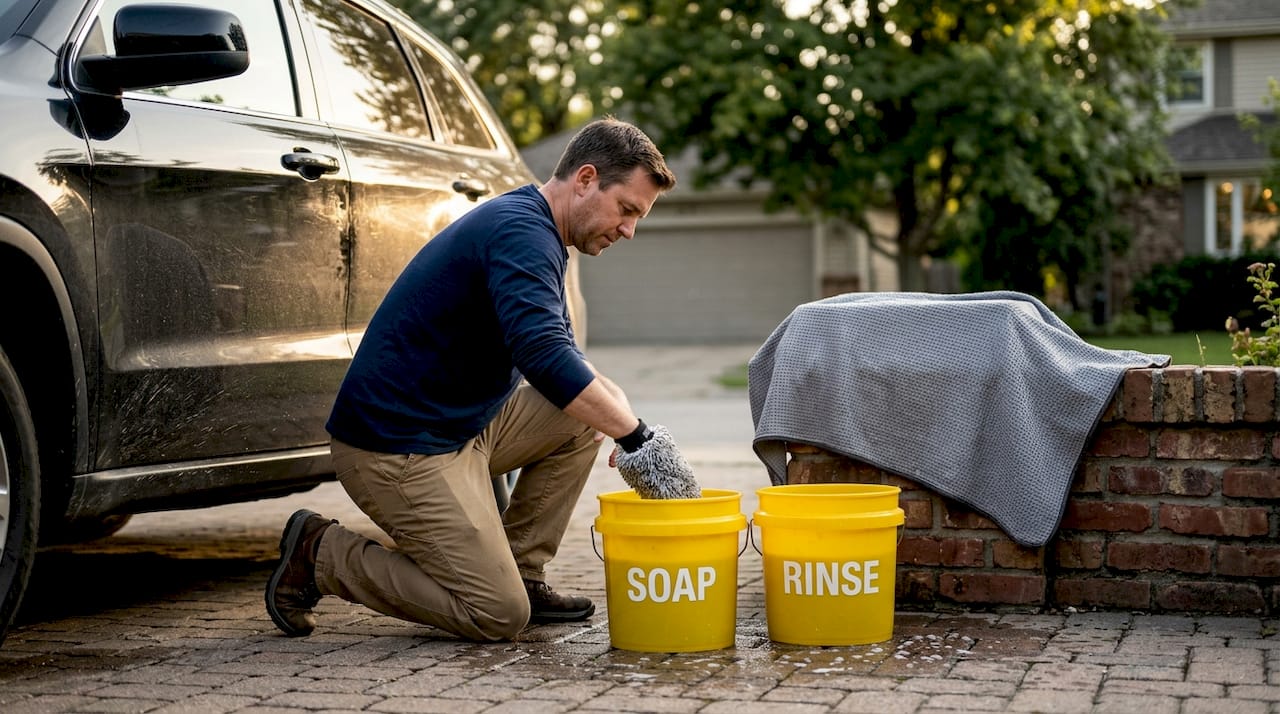
Equipping yourself with the right tools and following a consistent schedule makes ceramic coating maintenance straightforward and effective. The foundation starts with your washing setup. You need two buckets with grit guards, premium microfiber wash mitts, and pH-neutral car shampoo specifically formulated for ceramic coatings. The two-bucket method keeps contaminants separated from your clean wash water, preventing scratches during washing.
Regular washing every 1-2 weeks with pH-neutral shampoo and two-bucket method prevents contaminant buildup that can embed into the coating. In South Jersey, where road salt in winter and pollen in spring create persistent challenges, sticking to this schedule becomes even more critical. Missing washes allows contaminants to bond more strongly, requiring aggressive removal that risks coating damage.
Beyond basic washing, you need SiO2-based maintenance sprays or boosters applied every 2-3 months. These products contain silicon dioxide that chemically bonds with your existing coating, replenishing the hydrophobic layer and filling microscopic imperfections. Think of it as feeding your coating the same material it’s made from, allowing it to self-repair minor wear.
Decontamination tools complete your maintenance arsenal. Clay bar or iron remover quarterly removes bonded contaminants like brake dust and salt that washing cannot eliminate. Iron removers chemically dissolve metallic particles, while clay bars physically lift embedded debris. Both methods are essential for maintaining coating clarity and performance.
Here’s your complete maintenance schedule:
| Task | Frequency | Products Needed | Time Required |
|---|---|---|---|
| pH-neutral wash | Every 1-2 weeks | Two buckets, grit guards, microfiber mitts, pH-neutral shampoo | 30-45 minutes |
| SiO2 maintenance spray | Every 2-3 months | SiO2-based spray, clean microfiber towels | 15-20 minutes |
| Iron remover treatment | Quarterly | Iron remover spray, microfiber towels | 20-30 minutes |
| Clay bar decontamination | Quarterly | Clay bar, lubricant, microfiber towels | 45-60 minutes |
| Professional inspection | Annually | None (professional service) | Varies |
Pro Tip: Schedule your quarterly decontamination right after winter ends and again before winter starts. South Jersey winters dump salt and grime that bond aggressively to coatings, making spring and fall the critical times for deep cleaning.
Investing in quality tools pays dividends in coating longevity. Cheap microfiber towels leave lint and can scratch. Low-quality shampoos strip coating properties. Skipping grit guards means washing with contaminated water that creates swirl marks. Your coating represents a significant investment in paint protection, so supporting it with proper tools only makes sense.
Step-by-step ceramic coating maintenance routine
Following a systematic approach to ceramic coating maintenance ensures you never miss critical steps and your coating performs optimally. This routine builds on the tools and schedule covered earlier, providing the exact process for each maintenance task.
Step 1: Perform regular washes every 1-2 weeks using the two-bucket method. Fill one bucket with pH-neutral shampoo mixed according to bottle instructions, and the other with clean rinse water. Both buckets need grit guards at the bottom to trap dirt particles. Start by rinsing your vehicle thoroughly with water to remove loose debris. Work from top to bottom, dipping your mitt in soapy water, washing one section, then rinsing the mitt in the clean bucket before returning to soap. This prevents cross-contamination. Rinse each section immediately after washing to prevent soap from drying on the coating.
Step 2: Apply SiO2-based maintenance spray every 2-3 months after a complete wash and dry. Spray a light mist onto a clean panel, then immediately wipe with a premium microfiber towel using straight, overlapping passes. Buff to clarity with a second dry towel. Work panel by panel to ensure even coverage. The spray bonds chemically within minutes, so you’ll notice enhanced water beading immediately. Applying ceramic coating products correctly ensures maximum bonding and protection.
Step 3: Decontaminate quarterly with clay bar or iron remover to eliminate bonded particles. For iron remover, spray generously on cool panels, wait 3-5 minutes for the chemical reaction (you’ll see purple bleeding as it dissolves iron particles), then rinse thoroughly. For clay bar treatment, spray lubricant on a small section, gently glide the clay bar across the surface using light pressure, fold and knead the clay frequently to expose clean surfaces, then wipe away residue.
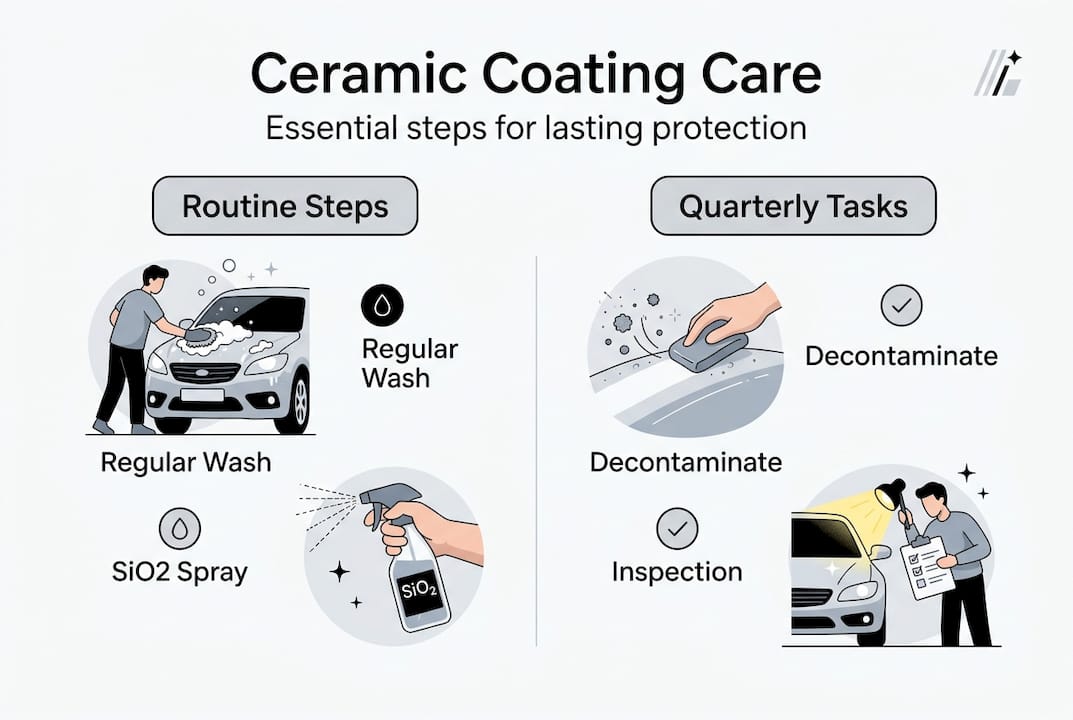
Step 4: Schedule professional inspection and booster services extend ceramic coating lifespan by catching issues early and applying professional-grade maintenance products. Annual professional services provide deep inspection for coating integrity, professional-grade booster application, and correction of any damage before it worsens. Professionals use specialized lighting and tools to identify problems invisible to untrained eyes.
Common mistakes that damage coatings include using automatic car washes with harsh brushes, applying traditional wax over ceramic coatings, washing in direct sunlight causing water spots, skipping the rinse bucket in two-bucket washing, and using household cleaners or degreasers on coated surfaces. Each of these shortcuts compromises your coating’s chemical structure and reduces its protective capabilities.
Pro Tip: Always wash your vehicle in shade and ensure panels are cool to touch. Hot surfaces cause rapid water evaporation, leaving mineral deposits that etch into ceramic coatings over time. Early morning or late evening provides ideal washing conditions in South Jersey’s climate.
Drying technique matters as much as washing. Use dedicated drying towels or a forced air blower to remove water without touching the surface. If using towels, employ the blotting method rather than dragging towels across panels. Dragging can trap particles between towel and coating, creating micro-scratches that accumulate over time.
Troubleshooting and verifying coating integrity
Recognizing when your ceramic coating needs attention prevents minor issues from becoming major problems requiring professional correction or reapplication. Several telltale signs indicate your coating’s condition and whether your maintenance routine needs adjustment.
Water beading behavior serves as your primary diagnostic tool. Fresh, healthy ceramic coatings cause water to bead tightly into tall, round droplets that roll off surfaces easily. As coatings age or accumulate contamination, beading becomes flatter and less defined. If water sheets across panels instead of beading, your coating has either degraded significantly or contaminants have covered the hydrophobic layer. Before assuming coating failure, perform thorough decontamination since bonded particles often mask otherwise healthy coatings.
Common issues vehicle owners encounter include water spotting from mineral deposits, loss of hydrophobic effect from contamination buildup, staining from bird droppings or tree sap left too long, and dulling from improper washing techniques. Each problem has specific solutions. Water spots often respond to diluted white vinegar or dedicated spot removers. Lost hydrophobicity typically returns after clay bar treatment and SiO2 booster application. Stains may require professional polishing if caught too late.
Here’s how to distinguish between coating damage and temporary contamination:
| Sign | Healthy Coating | Compromised Coating |
|---|---|---|
| Water behavior | Tight beads, high contact angle, quick sheeting | Flat beads, water clings to surface, slow drainage |
| Surface feel | Slick, glass-like smoothness | Rough texture, catches on clean hand |
| Appearance | Deep gloss, clarity, reflection | Dull finish, haziness, reduced depth |
| Dirt accumulation | Rinses clean easily, minimal scrubbing | Dirt bonds strongly, requires agitation |
| Contaminant bonding | Bugs and tar remove with gentle cleaning | Contaminants embed, resist normal washing |
Pro Tip: Perform the water test after every wash to track your coating’s condition over time. Spray a panel with water and observe beading behavior. Photograph the results monthly to create a visual timeline that helps identify gradual degradation before it becomes severe.
Mistakes to avoid when troubleshooting include immediately assuming coating failure without proper decontamination, using abrasive compounds or polishes that remove coating layers, applying traditional sealants or waxes thinking they’ll restore protection, and ignoring early warning signs until damage becomes irreversible. Coatings with recommended upkeep can last 5-7 years even in coastal or harsh climates like South Jersey, but only if you address issues promptly.
Inspecting gloss and clarity requires good lighting and a clean surface. After washing and drying, examine panels in bright, indirect light. Look for hazing, dullness, or areas where reflection appears distorted. Run your hand across the surface in a clean glove. Properly maintained coatings feel impossibly smooth, almost slippery. Any texture, roughness, or resistance indicates contamination or coating degradation.
When professional evaluation becomes necessary depends on your findings. If thorough decontamination and booster application fail to restore hydrophobic properties, the coating has likely worn through in spots. If you notice uneven performance where some panels bead well while others don’t, you may have application inconsistencies that require professional correction. Understanding ceramic coating durability helps set realistic expectations for when reapplication becomes necessary versus when maintenance can extend life further.
Get expert ceramic coating maintenance in South Jersey
Maintaining your ceramic coating properly requires dedication and the right approach, but professional support ensures optimal results. CDC Detailing specializes in ceramic coating services throughout South Jersey, offering both initial application and ongoing maintenance programs designed to maximize your coating’s lifespan.

Our mobile detailing service brings professional ceramic coating care directly to your location in Pitman and surrounding areas. We understand how auto detailing works to protect your investment, using professional-grade products and techniques that extend coating life beyond typical expectations. Annual booster applications, professional-grade decontamination, and expert inspections catch issues before they compromise your coating’s integrity. Whether you need routine maintenance or suspect your coating needs professional attention, our team provides the expertise South Jersey vehicle owners trust. Ready to protect your investment? Learn how to book mobile detailing services and schedule your ceramic coating maintenance today.
Frequently asked questions about ceramic coating maintenance
How often should I wash my ceramic coated car?
Wash your ceramic coated vehicle every 1-2 weeks using pH-neutral shampoo and the two-bucket method. How often you wash depends on driving conditions, but regular washing prevents contaminant buildup that can degrade coating performance over time.
Can I use any car shampoo on ceramic coatings?
No, you must use pH-neutral shampoos specifically formulated for ceramic coatings. Regular car shampoos often contain harsh detergents, waxes, or additives that break down the coating’s chemical bond, reducing its protective properties and lifespan significantly.
Why is professional inspection important?
Professional inspections identify coating degradation, contamination issues, and damage invisible to untrained eyes. Annual professional evaluation with booster application extends coating life by addressing problems early, often adding 1-2 years to the coating’s effective lifespan.
What is the role of SiO2 maintenance sprays?
SiO2 maintenance sprays contain silicon dioxide that chemically bonds with your existing ceramic coating, replenishing the hydrophobic layer and filling microscopic wear. Applied every 2-3 months, these boosters strengthen coating performance and extend durability between professional services.
How can I tell if my ceramic coating needs reapplication?
Watch for persistent loss of water beading after thorough decontamination and booster application, uneven protection where some panels perform differently than others, or visible wear patterns in high-contact areas. If professional maintenance fails to restore hydrophobic properties, reapplication becomes necessary.
Does winter require special ceramic coating maintenance?
Yes, winter maintenance for ceramic coatings demands more frequent washing to remove road salt and increased decontamination to address bonded winter grime. South Jersey winters are particularly harsh on coatings due to heavy salt use and freeze-thaw cycles that accelerate contamination bonding.