
Ceramic coating warranties cover chemical failure, meaning delamination, peeling, or a sharp loss of gloss caused by a product defect, but they exclude chips, scratches, and damage from neglect. Most require registration shortly after install and regular maintenance to stay active. The one thing that actually protects your investment is following the installer’s maintenance schedule and keeping every receipt.
TL;DR:
- Most ceramic coating warranties only cover product failures like delamination, peeling, or yellowing, not damage from chips, scratches, or neglect.
- The warranty period typically starts from registration or invoice date, not the coating application date, and “lifetime” often requires ongoing maintenance payments.
- Proper documentation, including photos, receipts, and logs of maintenance visits, is essential for successfully filing a claim, which rarely benefits owners without proof.
- Field lifespan varies widely from one to seven years depending on product quality, application, and vehicle care, but visible beading loss does not always indicate coating failure.
- Owner compliance with routine maintenance, professional inspections, and following the installer’s guidelines is critical to preserving warranty coverage and coating performance.
Table of Contents
- What A Ceramic Coating Warranty Actually Covers (And Doesn’t)
- Decoding Warranty Terms: “5 Years,” “Lifetime,” And Who’s Actually Covered
- The Claims Process: What To Do When You Suspect Coating Failure
- Maintenance That Keeps Your Warranty Active
- Real-World Lifespan Vs. The Number On The Warranty
- Before You Buy: What To Require From Any Installer
- What CDC Auto Detailing Documents On Every Ceramic Coating Job
- Why Most Warranty Disputes Are Really Maintenance Disputes
- Get A Warranty-Backed Ceramic Coating Done Right
- Sources
What A Ceramic Coating Warranty Actually Covers (And Doesn’t)
Read the fine print on almost any coating warranty and you’ll find it protects against a narrow band of failures, not everything that can happen to a painted surface. Coverage centers on defects in the coating itself, not damage to the car underneath it.
Covered failures typically include:
- Delamination, where the coating separates or lifts from the clear coat in sheets or patches
- Peeling at panel edges or high-friction zones like door handles and mirror caps
- Premature loss of hydrophobic properties (water stops beading) tied to a product or application defect rather than age
- Yellowing or clouding that results from a manufacturing flaw in the coating chemistry
Notice the pattern: every one of those is a failure of the product, not an event that happened to the car. That distinction runs through every exclusion list you’ll read.
Common exclusions include:
- Stone chips, rock impact marks, and road debris damage
- Scratches, key marks, and swirl marks from improper washing
- Oxidation or fallout staining left untreated for extended periods
- Damage from automatic brush car washes, which grind grit into the film and can strip the coating’s bonded layer
- Chemical etching from bug guts, tree sap, or bird droppings left to sit
- Improper paint correction or repair work performed after the coating was applied
The gap between those two lists is where most disputes happen. An owner sees swirl marks and assumes the coating “failed.” An installer looks at the same marks and sees a wash-technique problem, not a product defect. Cdcautodetailing’s own guide on the benefits of ceramic coating walks through why the coating’s job is to make paint easier to protect, not to make it indestructible.
Coverage is also frequently conditional rather than automatic. A warranty document might state that protection only applies if the vehicle was serviced by an authorized applicator using an approved wash routine, and if the owner can produce maintenance records on request. Skip a scheduled inspection or use a corner-shop repair after a fender-bender, and the manufacturer can point to that gap as the reason coverage lapsed, regardless of whether it actually caused the failure. This is why prep quality matters so much before the coating ever goes on. Field failure analyses consistently trace early delamination back to prep misses like residual polish oils or skipped iron decontamination rather than the ceramic chemistry itself breaking down.
Decoding Warranty Terms: “5 Years,” “Lifetime,” And Who’s Actually Covered
Warranty language sounds simple until you try to pin down exactly what it promises. Three terms cause the most confusion, and each one hides a detail that matters more than the headline number.
The start date isn’t when you think it is. Most warranties begin counting from the invoice date or the date the warranty card gets registered, not from when the coating physically cures on the car. If your installer applies the coating on a Tuesday but doesn’t submit your registration until the following week, that gap can shave real time off your coverage window. Some programs also cap mileage alongside years, which matters if you drive a high-mileage fleet or delivery vehicle more than a typical commuter car.
“Lifetime” rarely means what it sounds like. A genuinely open-ended, no-strings chemical guarantee is rare in this industry. What most brands market as a lifetime warranty is closer to a maintenance subscription: the coverage stays active only as long as you pay for annual inspections or periodic top-coat reapplication. Independent warranty analysis describes this pattern plainly. The manufacturer isn’t promising the original application will chemically protect your paint forever. It’s promising to keep renewing protection as long as you keep showing up and keep paying.
Coverage usually follows the person, not always the car. Here’s a detail owners miss constantly: some warranties are registered to the original purchaser and don’t automatically transfer if you sell the vehicle. Others transfer freely but require the new owner to notify the installer within a set window, often 30 days, or the warranty lapses. A smaller number require a paid re-inspection before transfer takes effect. If you’re buying a used car with a “ceramic coated, still under warranty” claim in the listing, that claim is worthless until you confirm transfer terms directly with the installer who applied it.
Key terms worth clarifying before you sign anything:
- Warranty term length: commonly ranges from two to five years or longer, measured from invoice or registration date
- Mileage cap: some programs limit coverage past a certain odometer reading
- Coverage holder: registered owner versus the vehicle itself
- Transfer window: the timeframe a new owner has to register after purchase
- Renewal trigger: what maintenance actions extend or reset the warranty period
Read the document as a contract, not a marketing sheet. If a term isn’t spelled out in writing, assume it doesn’t exist.
The Claims Process: What To Do When You Suspect Coating Failure
Filing a successful claim comes down to documentation. Owners who lose disputes almost always lose them on paperwork, not on the merits of the actual damage.
- Register within the deadline. Most vendors give you a short window, often 14 to 30 days after installation, to submit your warranty card and invoice. Missing this step can void coverage before anything even goes wrong.
- Keep every maintenance receipt. If your program requires annual inspections or a paid top-coat, save the invoice from each visit. A gap in your maintenance history is the single most common reason manufacturers reject legitimate claims. Documented registration and retained receipts are consistently what separates successful claims from denied ones.
- Schedule the annual inspection. A certified inspector checks adhesion, gloss consistency, and water behavior across multiple panels, and typically photographs the vehicle for the file. This visit is often the only formal record that the coating was performing normally at a given point in time.
- Photograph the suspected failure immediately. Get clear, well-lit photos of the affected area before washing or touching it. Timestamps matter.
- Submit your full claim package. This usually means your original invoice, warranty registration card, maintenance receipts, and failure photos, sent to either the installer or the coating manufacturer, depending on how the warranty is structured.
- Expect a remedy, not a refund. Manufacturers typically resolve valid claims through reapplication or a spot repair on the affected panel rather than cash compensation or a full repaint.
Public consumer-complaint records show how often disputes trace back to owners who used automatic brush washes or skipped documented maintenance entirely. The lesson repeats across nearly every complaint thread: the coating didn’t necessarily fail. The paperwork trail did.
Maintenance That Keeps Your Warranty Active
Every warranty clause about “required maintenance” translates into a fairly simple weekly and seasonal routine. The trouble is that most owners either overdo it with the wrong products or under-do it and assume the coating is handling everything on its own.
The safe wash routine that satisfies nearly every manufacturer’s terms looks like this:
- Use a pH-neutral shampoo for ceramic-coated cars to protect the coating’s bonded layer
- Employ the two-bucket washing method to minimize grit dragging
- Use clean microfiber wash mitts instead of sponges or brushes that can trap debris
- Rinse the entire vehicle first to remove loose dirt before washing
- Dry with a microfiber towel or blower to reduce swirl marks after washing
Pro Tip: Keep a simple wash log, even a note on your phone with the date and products used. If you ever need to file a claim, that log becomes evidence that you maintained the vehicle according to the warranty’s terms, not just a good habit.
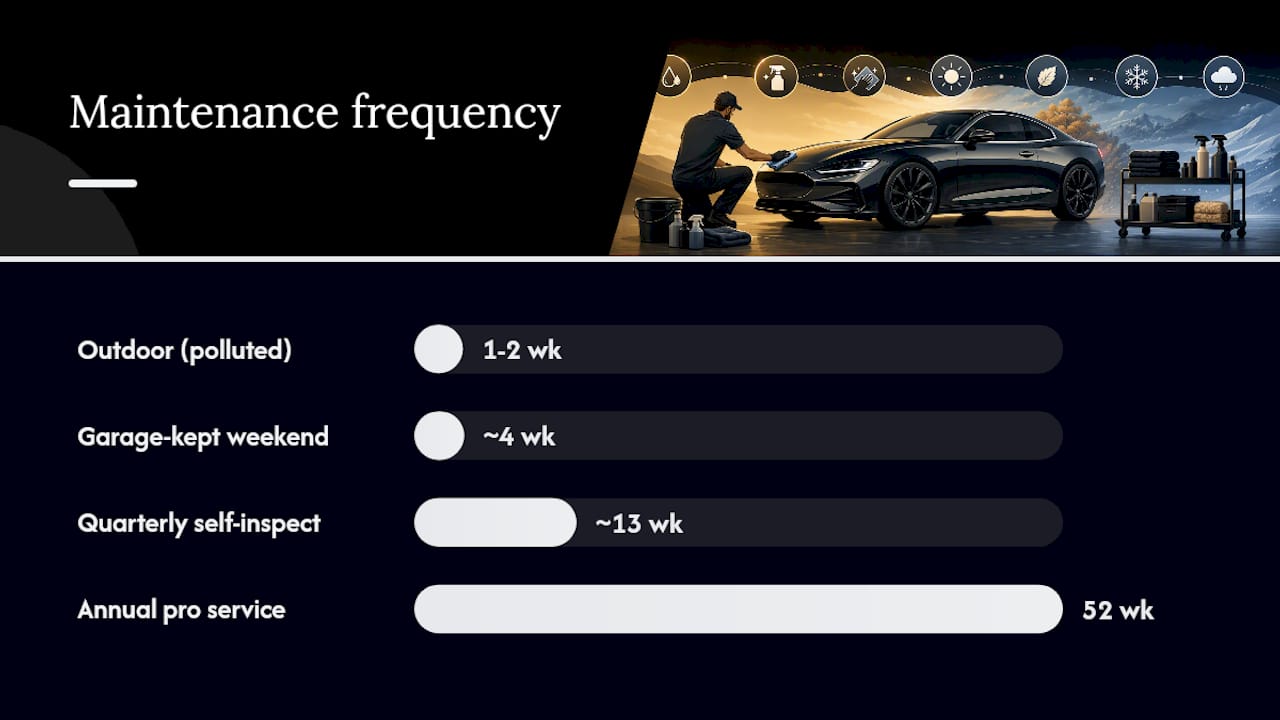
Frequency expectations depend on vehicle use and environment. Cars parked outdoors in harsh or high-pollution areas benefit from washing every one to two weeks to prevent contamination bonding, while garage-kept weekend vehicles might only require monthly washing. Many warranty programs include quarterly self-inspections and annual professional maintenance visits.
That partner between you and your installer matters more than most owners realize. Products matter too. A pH-neutral shampoo formulated for coated paint helps preserve the coating’s slickness far longer than a generic bottle from a hardware store shelf, and Cdcautodetailing’s maintenance guide covers the specific product categories that won’t fight against the coating chemistry.
Behaviors that reliably void coverage include:
- Regular trips through automatic brush car washes, which grind abrasive brushes across the coated surface
- Using strong acidic wheel cleaners or alkaline degreasers anywhere near painted panels
- Letting bird droppings, bug splatter, or tree sap sit for days or weeks before cleaning
- Skipping the required annual inspection or top-coat visit entirely
- Having a body shop repaint or repair a panel without notifying the coating provider first
None of this is complicated. It’s just consistent. The owners who keep warranties intact for the full term are rarely the ones with the most expensive coating. They’re the ones who actually followed the maintenance sheet they were handed at pickup.
Real-World Lifespan Vs. The Number On The Warranty
A five-year warranty and five years of real-world protection are not the same promise, and confusing the two is where most disappointment starts. Lab testing measures accelerated UV exposure and controlled chemical stress in a way no daily driver ever experiences. Field exposure adds salt, road grime, inconsistent wash habits, and whatever UV dose your specific climate delivers.
That gap between bench numbers and street performance is well documented. Installer quality and surface prep create more variance in real-world lifespan than the warranty term printed on the box. This means two cars with the identical coating and identical warranty can age at completely different rates depending on who installed it and how the owner treats it afterward.
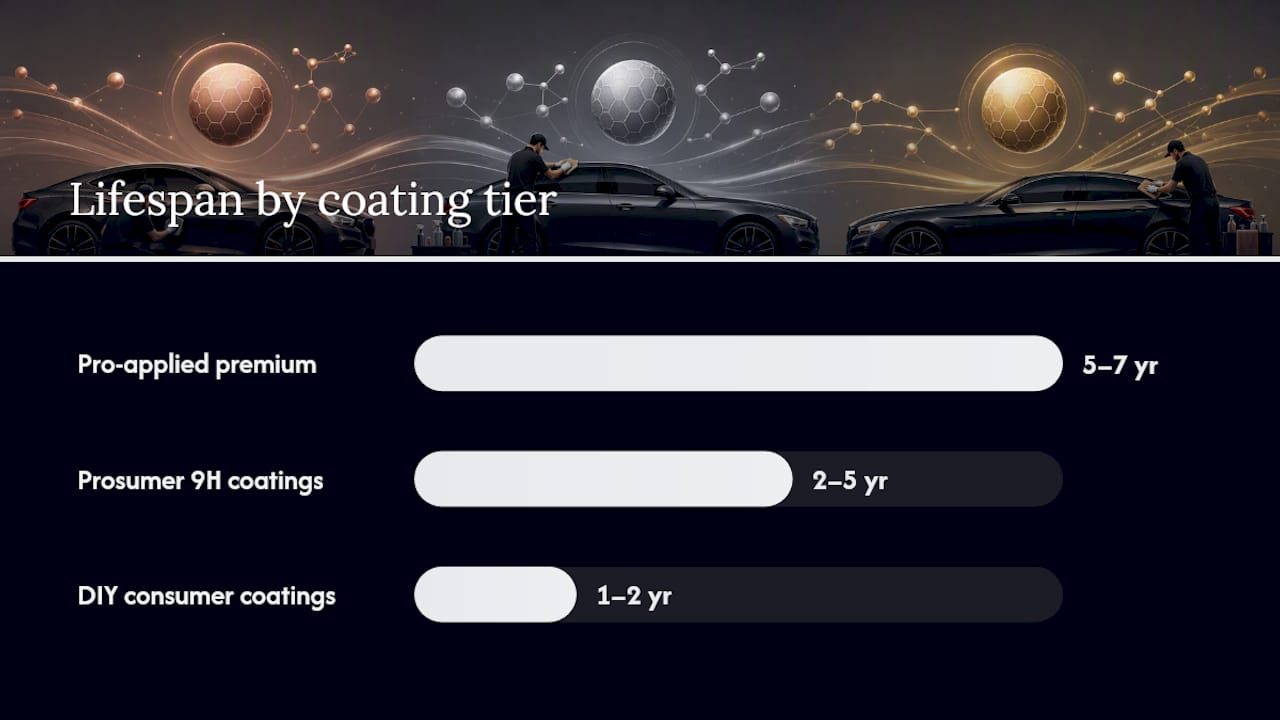
Realistic lifespan ranges by product tier:
- Pro-applied premium coatings: commonly hold up for five to seven years on a garaged, well-maintained vehicle, though a car parked outside and washed at automatic brush tunnels regularly can see that shrink well below the warranty’s headline number
- Prosumer 9H coatings, often sold through detail shops at a mid-tier price point, typically perform in the two to five year range depending on install quality
- DIY consumer coatings, applied at home from a retail kit, generally last one to two years before the hydrophobic effect fades noticeably, even with careful maintenance
Parking habits shift these ranges more than almost any other single factor. A coated car that sleeps in a garage every night sees a fraction of the UV dose that an identical car parked on the street absorbs daily, and solar irradiation differences by climate region change expected coating lifetime substantially even when the product and installer are identical.
Here’s the part that trips up most owners: losing the water-beading effect doesn’t automatically mean the coating has chemically failed. A visible decline in beading or gloss often signals contamination buildup or the topcoat wearing thin, not the underlying ceramic layer breaking down. A decontamination wash and a maintenance booster can often restore the surface’s performance without any warranty claim at all. True warranty-covered failure looks different: it’s patchy delamination, visible peeling at edges, or cloudy patches that a wash and clay bar won’t touch. Learning to tell the two apart saves you both an unnecessary claim and a wasted trip to your installer.
Before You Buy: What To Require From Any Installer
A warranty is only as good as the paper trail behind it. Before you hand over payment for a ceramic coating package, run through this short list with whoever’s doing the install.
- Get the written warranty terms in hand, not a verbal summary. Ask specifically which behaviors void coverage, and get the answer in the document, not just from the sales conversation.
- Check that your invoice lists specifics, not just “ceramic coating package.” It should name the exact product used, the number of layers applied, the applicator’s name or certification ID, and confirmation that your registration was submitted.
- Confirm the maintenance pricing up front. Ask what an annual inspection or top-coat visit costs, who performs it (does it have to be the original shop, or any authorized location), and whether missing one voids the whole warranty or just pauses it.
- Ask about transfer rules before you need them. If you might sell the car within the warranty period, get the transfer process and any transfer fee in writing now, not after you’ve already listed the vehicle.
- Verify the applicator’s certification status with the coating manufacturer directly, rather than taking the shop’s word for it, especially for premium coating lines that require formal training to install.
Cdcautodetailing’s guide on applying ceramic coating correctly covers what proper prep and layer application actually look like, which is worth reviewing before any conversation with an installer so you know what questions to ask.
What CDC Auto Detailing Documents On Every Ceramic Coating Job
Every warranty claim lives or dies on paperwork, so Cdcautodetailing treats documentation as part of the install itself, not an afterthought. Before any coating goes on, the vehicle gets photographed panel by panel, capturing existing paint condition, swirl marks, and any prior damage. That baseline record protects the owner just as much as it protects the shop, since it draws a clear line between pre-existing paint issues and anything that happens after the coating cures.
The invoice itself lists the specific product applied, the number of layers, and the application date, and the warranty card gets registered before the customer leaves. That registration step alone eliminates the most common reason claims get denied elsewhere: a missed deadline nobody caught in time.
The mistakes owners make most often aren’t complicated. They run their car through an automatic brush wash out of convenience, let contamination sit for weeks, or skip the annual inspection because the car “still looks fine.” Fine to the eye and fine at the chemical level aren’t always the same thing.
A simple file worth keeping at home for any coated vehicle:
- Before and after photos from the original install
- The dated invoice with product and layer details
- The registered warranty card confirmation
- A running log of washes and maintenance visits, even a basic phone note
That folder takes five minutes to start and can save a claim years down the road.
Why Most Warranty Disputes Are Really Maintenance Disputes
The conventional advice on ceramic coating warranties treats the document like an insurance policy: something you file away and forget until disaster strikes. That’s backwards. A coating warranty behaves more like a gym membership with a fine-print clause. It only pays off if you show up and do the maintenance that keeps it valid.
The industry’s dirty secret is that “lifetime” marketing sells confidence, not chemistry. Nobody’s promising the original molecular bond lasts forever untouched. They’re promising to keep renewing protection as long as you keep paying for inspections and top-coats on schedule.
What gets underrated is how much of a claim’s outcome depends on decisions made months before any damage occurs. The registration deadline you almost missed. The wash log you didn’t bother keeping. The automatic car wash you used because it was raining and you were in a hurry. None of that feels like it matters in the moment. All of it matters enormously the day you’re staring at delamination and trying to prove it wasn’t your fault.
If you take one thing from this: treat the maintenance schedule as the warranty, not a chore attached to it.
— Charles
Get A Warranty-Backed Ceramic Coating Done Right
A warranty is only as strong as the install and the maintenance behind it, which is exactly where Cdcautodetailing focuses. Every ceramic coating job includes proper surface prep, documented layer counts, and warranty registration handled on the spot, so you’re not left chasing paperwork weeks later.

Beyond the install, scheduled maintenance visits are offered that satisfy the annual inspection requirements most coating warranties demand, keeping your coverage active without you having to track deadlines yourself. If you’re in South Jersey and ready to get your paint protected the right way, book a ceramic coating service and start your warranty on solid footing from day one.
Sources
A handful of independent guides and consumer records are worth checking before you commit to any coating package or file a claim.
- How Long Ceramic Coating Actually Lasts · CarCareTruth
- How Long Does Ceramic Coating Last? (Durability Guide) | DetailingFinder
- How Long Does Ceramic Coating Last? The Real 2026 Lifespan Guide | LA Wrap & Tint
- Ceramic Coating vs Wax vs Sealant: Durability · CarCareTruth
Read the manufacturer’s own warranty PDF for whatever product you’re considering before you sign anything. Independent guides explain the general landscape, but the specific terms that bind you live in that one document.