
The safe, correct way to clean a convertible top is to hand wash it with a cleaner made for the specific material, agitate gently with a soft brush, rinse thoroughly at low pressure, let it air dry completely, and reapply protectant only once water stops beading on the surface. Skip pressure washers, skip bleach or ammonia-based household cleaners, and never fold the top while it’s still wet.
TL;DR:
- Hand washing is crucial, using a material-specific cleaner and a soft brush, avoiding pressure washers and harsh household chemicals.
- Regularly test water beading after cleaning to determine if reproofing is necessary, which should be done only when beads no longer roll off the surface.
- Vinyl tops require a UV-safe conditioner after cleaning to prevent brittleness, while fabric tops need water repellents applied once beading stops.
- Mildew, algae, and stubborn stains demand targeted treatments and thorough rinsing to prevent recurring issues and fiber damage.
- Professional detailing is recommended for persistent problems, large-area reproofing, or plastic-window restoration to ensure even application and prevent damage.
Table of Contents
- What You Need Before You Clean Convertible Top Fabric or Vinyl
- How Do You Clean a Fabric Convertible Top?
- How Do You Clean a Vinyl Convertible Top?
- How Do You Remove Stains, Mildew, and Algae From a Convertible Top?
- When Should You Reproof or Reapply Protectant?
- What Ongoing Maintenance Keeps a Convertible Top in Good Shape?
- What Mistakes Damage a Convertible Top the Fastest?
- When Is It Worth Calling a Professional Detailer?
- Book a Professional Soft-Top Cleaning With Cdcautodetailing
- Sources
- FAQ
What You Need Before You Clean Convertible Top Fabric or Vinyl
Gather everything before you start, because switching gears mid-wash on a hot top invites shortcuts. The right kit differs slightly depending on whether you have a cloth roof or a vinyl one.
- Soft-bristle brush (a dedicated top brush, not a wheel brush)
- Microfiber towels, several, for blotting and drying
- Lint roller or a vacuum with a soft-bristle attachment
- Low-pressure hose or pump sprayer
- Soft sponge for vinyl
For fabric tops, use a cleaner formulated specifically for convertible fabric, along with a matching reproofer or waterproofer. Vinyl owners need a vinyl-safe cleaner and a UV conditioner. Grab a non-abrasive plastic polish too if your rear window is plastic rather than glass. Work in the shade, not direct sun, and test any product on a hidden patch first. This single step catches colorfastness problems before they show up across the whole roof, a precaution detailing specialists consistently recommend.
How Do You Clean a Fabric Convertible Top?
Cloth tops respond well to a patient, low-tech process. Rushing it, or grabbing whatever cleaner is under the sink, is how good tops start looking tired years too early.
- Park in the shade with the top up and closed. Run a lint roller or a vacuum fitted with a soft-bristle attachment over the whole surface to lift pollen, leaves, and grit before any water touches it, a step Ford’s own owner guidance calls out specifically.
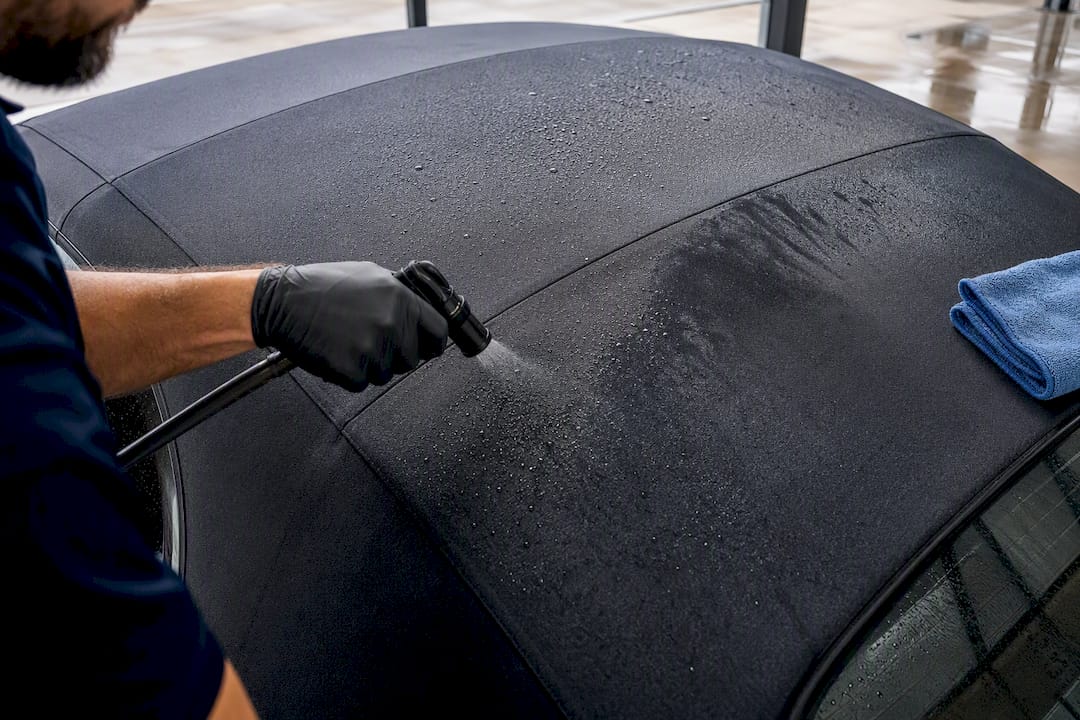
- Rinse the entire top with a low-pressure hose to knock loose whatever the lint roller missed.
- Working one small section at a time, spray on a fabric-specific top cleaner and work it in with the soft brush using gentle circular motions. Don’t scrub like you’re attacking a driveway stain.
- Rinse each section before the cleaner dries, and keep rinsing until no suds remain anywhere on the roof.
- Blot excess water with a microfiber towel, then let the top air dry completely. Don’t put it away wet and don’t fold it.
Once it’s bone dry, sprinkle a little water on the surface. If it beads and rolls off, you’re set. If it soaks in, the fabric needs reproofing, a detail covered in the next section.
Pro Tip: Do the beading test in a few different spots, not just one. UV exposure wears unevenly, so the rear slope of the top often loses water repellency before the front does.
How Do You Clean a Vinyl Convertible Top?
Vinyl behaves differently than cloth, and treating it like fabric is one of the fastest ways to dull it out.
- Rinse off loose dirt and grit first, the same as you would with a fabric top.
- Apply a vinyl-specific cleaner with a soft cloth or sponge, working it across the surface without pressing hard enough to grind grit into the material.
- Rinse thoroughly and dry with a clean microfiber towel.
- Once dry, apply a UV-safe vinyl conditioner following the product’s instructions.
Skip solvents and rubbing alcohol on vinyl. They strip the plasticizers that keep the material flexible, and once that happens, cracking follows fast. Household detergents cause the same problem over time, stripping factory conditioners even when they look like they’re doing a fine cleaning job. The conditioner step matters more than most owners realize. It’s not cosmetic; it’s what keeps vinyl from turning brittle and cracking along the fold lines within a couple of seasons.
How Do You Remove Stains, Mildew, and Algae From a Convertible Top?
Not every mark comes off with a basic wash. Bird droppings and tree sap are usually easiest if you catch them fresh: blot first, then treat the spot with a dedicated bug and tar remover or a small amount of alcohol on a microfiber cloth, rinse, and dry.
- For fresh spots, blot before they set instead of scrubbing them in
- Mildew usually needs a cleaner formulated for biological growth, or a diluted vinegar solution as some vendors suggest, worked in with the soft brush and rinsed well
- Green algae deposits often require more than one cleaning pass, plus better airflow during storage to keep them from coming back
- Always test on a hidden section first, since mildew treatments can be more aggressive than everyday cleaners
Rinsing and drying completely matters as much as the cleaner you choose. Mildew that isn’t fully rinsed and dried tends to return, sometimes worse than before. Multiple light clean-and-dry cycles with real airflow between them usually beat one aggressive scrub, since heavy single-pass chemical treatments can weaken the fibers themselves.
When Should You Reproof or Reapply Protectant?
Reproofing isn’t a schedule you follow blindly. It’s a response to what the beading test tells you. Factory tops usually arrive pretreated, so a brand-new convertible often doesn’t need anything for a year or more, and piling on protectant too soon can actually interfere with that factory finish.
- Reproof once water stops beading; timing varies depending on sun and weather exposure.
- Apply protectant in the shade, on a clean and fully dry top, in thin even coats rather than one heavy pass
- Never mix fabric reproofers and vinyl conditioners. They’re chemically different and neither works right on the other’s material
- For daily outdoor parking, plan on reapplying roughly every 6 to 12 months; garage-kept cars can usually stretch to about once a year
Pro Tip: Always run the full clean-and-rinse cycle before reproofing, even if the top looks fine. Sealing a protectant over old residue traps contaminants underneath and blocks the new coat from actually bonding. Products like the ones covered in fabric protection guides for interiors follow the same logic: clean surface first, protectant second.
What Ongoing Maintenance Keeps a Convertible Top in Good Shape?
Most convertible top failures aren’t sudden. They’re the slow result of skipped small tasks that had nothing to do with the last wash.
- Keep the seal area where the top meets the body clear of grit and debris. This zone is where leaks and premature seal wear usually start, and it’s easy to miss because it’s not visible from a normal wash angle
- Clean and condition rubber seals every few months so they stay flexible instead of cracking
- For plastic rear windows, use a non-abrasive plastic polish and a microfiber towel, never an ammonia-based glass cleaner or a paper towel, which can scratch or yellow the plastic. Glass rear windows tolerate standard glass cleaner fine, but a streak-free method still beats spraying and wiping blindly
- Never fold the top while it’s wet, even for a quick trip to the garage
- Before winter storage, clean it, dry it fully, apply protectant if the beading test calls for it, and leave the top up rather than folded down for months
- Check stitching, seams, and drain channels periodically for early wear before it turns into a leak
What Mistakes Damage a Convertible Top the Fastest?
A handful of habits account for most of the preventable damage owners see.
- Running the car through an automatic brush wash or blasting the top with a pressure washer
- Reaching for bleach, strong solvents, or a stiff scrub brush instead of material-specific products
- Folding the top down while it’s still damp, or applying protectant in direct sunlight where it dries unevenly
- Skipping the test patch on a new cleaner or conditioner
- Guessing on a stubborn stain instead of asking a professional before it sets permanently
When Is It Worth Calling a Professional Detailer?
Persistent mildew that keeps returning, large-area reproofing, plastic-window restoration, and seal repair are the jobs where a DIY approach tends to backfire. A trained detailer applies protectant with controlled, even coverage and inspects seams and seals along the way, catching the small failures owners typically miss until they’ve already turned into leaks. A mobile, hands-on approach to convertible top care is available to owners across South Jersey.
— Charles
Book a Professional Soft-Top Cleaning With Cdcautodetailing
Professional services offer an alternative to guessing your way through a convertible top cleaning at home. Instead of buying five different bottles and hoping the beading test comes back right, you can have a technician who knows which cleaner suits your top’s material and applies protectant evenly, under the right conditions.
An Exterior Detail starting at $175 covers the kind of surface care a convertible top benefits from as part of a full exterior pass, and it’s the natural pairing if your roof needs attention alongside the paint. If your seals or window plastic need a closer look, A professional service can inspect seals and windows during the appointment, to identify potential issues early. Booking is simple: reach out through the site, describe your top’s material and current condition, and we’ll confirm a mobile appointment at your home or office. Check current detail packages to see what fits your convertible best, and get it scheduled before the next long stretch of sun or the first cold snap of the season.
Sources
- Vehicle Care – Cleaning the Convertible Top (Ford owner guidance)
- How to waterproof your convertible soft top roof (Renovo International)
- How to care for a convertible car top (The Daily Automotive)
- Convertible Top Care – Convertible Top Solutions
FAQ
How Can I Make My Convertible Top Look New Again?
Start with a full clean using a material-specific cleaner and soft brush, rinse completely, and let it dry fully before judging the result. If the beading test fails after drying, reproofing restores the look and water repellency that made it look new in the first place, something Renovo’s own guidance ties directly to how well the top sheds water.
How Do I Clean Green Algae and Moss Off My Convertible Roof?
Algae usually needs more than one gentle cleaning pass with a fabric top cleaner and soft brush, followed by a thorough rinse and full air dry. Improving airflow during parking and storage helps stop it from coming right back after you’ve already cleaned it once.
Is It Okay to Take a Soft Top Convertible Through a Car Wash?
No. Automatic brush washes and pressure washers can tear fabric fibers, force water past seals, and strip protectant coatings, which is why hand washing with low-pressure water is the recommended method. Stick to a hose at low pressure and a soft brush instead.
Can I Use Armor All on a Convertible Top?
General-purpose household protectants aren’t formulated for convertible top fabric or vinyl, and they can leave residue that blocks proper reproofing later. Use a cleaner and protectant matched to your top’s actual material, cloth or vinyl, rather than a generic all-purpose product.
How Often Should I Clean My Convertible Top?
There’s no fixed calendar rule, since it depends on how often the car sits outside and how dirty it gets. A quick debris removal with a lint roller between washes, plus a full clean every few weeks in season, keeps most tops from needing aggressive stain treatment later.