
Most vehicle owners think engine bay cleaning is just for show. In reality, removing dirt, grease, and grime maintains aesthetics and prevents corrosion that can shorten your engine’s life. This guide explains what engine bay cleaning involves and why it matters for your vehicle’s health. You will learn safe cleaning steps, common mistakes to avoid, and tips for achieving professional results in South Jersey conditions.
Table of Contents
- Understanding Engine Bay Cleaning: What It Is And Why It Matters
- Safe And Effective Engine Bay Cleaning Techniques
- Common Mistakes And Pitfalls To Avoid During Engine Bay Cleaning
- Choosing The Right Time And Conditions For Engine Bay Cleaning In South Jersey
- Professional Engine Bay Cleaning Services In South Jersey
Key takeaways
| Point | Details |
|---|---|
| Engine bay cleaning removes dirt and grime to prevent corrosion and extend engine life. | Regular cleaning protects metal surfaces and helps your engine last longer. |
| Protecting electrical components during cleaning is essential to avoid damage. | Always mask sensitive electronics and use gentle water pressure. |
| Choosing the right conditions and products improves cleaning effectiveness and safety. | Warm, dry days and proper degreasers ensure better results. |
| Regular cleaning helps spot potential engine problems early, saving money. | Visible leaks, cracks, and worn parts become obvious on a clean engine. |
| Proper technique prevents damage to plastics, rubber, and painted surfaces. | Use diluted degreasers and avoid harsh chemicals that cause staining. |
Understanding engine bay cleaning: what it is and why it matters
Engine bay cleaning is the process of removing accumulated dirt, oil, road salt, and grime from your engine compartment. Over time, these contaminants build up on engine surfaces, wiring, hoses, and metal components. South Jersey vehicle owners face unique challenges with coastal humidity, winter road salt, and seasonal temperature swings that accelerate buildup.
Beyond making your engine compartment look better, regular cleaning offers practical maintenance benefits. Clean engine bays make it easier to spot fluid leaks, cracked hoses, loose connections, and worn belts before they become expensive repairs. Oil and grease buildup can trap heat against engine components, potentially affecting cooling efficiency.
Corrosion prevention is another critical reason to clean your engine bay. Salt from winter roads and moisture from humid South Jersey summers create ideal conditions for rust. Removing these corrosive elements protects metal surfaces and extends component life. A clean engine bay also makes routine maintenance tasks like checking fluids and replacing filters much more pleasant.
Vehicle enthusiasts appreciate the aesthetic value of a detailed engine compartment. Whether you are preparing for a car show or simply take pride in your vehicle’s condition, regular detailing matters for both appearance and function. Here are the main contaminants engine bay cleaning addresses:
- Road grime and dirt from daily driving
- Oil and fluid residue from normal engine operation
- Grease buildup around moving components
- Salt and chemical residue from winter road treatments
- Leaves, debris, and organic matter trapped in crevices
Proper engine bay cleaning contributes to your vehicle’s overall maintenance program. It is not just about vanity but about protecting your investment and ensuring reliable performance.
Safe and effective engine bay cleaning techniques
Cleaning your engine bay safely requires the right approach and materials. Rushing the process or using incorrect methods can damage sensitive components and create electrical problems. Proper engine bay cleaning involves masking sensitive components, using appropriate degreasers, and rinsing thoroughly to protect your vehicle.
Start by allowing your engine to cool completely. Never clean a hot engine, as thermal shock from cold water can crack engine blocks or damage components. Once cool, remove loose debris like leaves and dirt with compressed air or a soft brush.
Next, protect electrical components before introducing any liquids. Covering sensitive electronic components before cleaning is a critical step to avoid damage. Use plastic bags and tape to cover:
- Battery terminals and connections
- Alternator and starter motor
- Fuse boxes and relay panels
- Exposed wiring harnesses and connectors
- Air intake openings and filters
- Distributor caps on older vehicles
Select a quality engine degreaser formulated specifically for automotive use. All-purpose degreasers designed for garage floors can be too harsh and damage plastics, rubber seals, and painted surfaces. Follow manufacturer dilution instructions carefully. Stronger is not better when it comes to engine cleaning products.
Apply degreaser to engine surfaces, allowing it to penetrate and break down grease for the recommended presoak time, typically 5 to 10 minutes. Do not let the product dry on surfaces. Use detailing brushes with soft bristles to agitate stubborn areas, working the degreaser into crevices and around components.
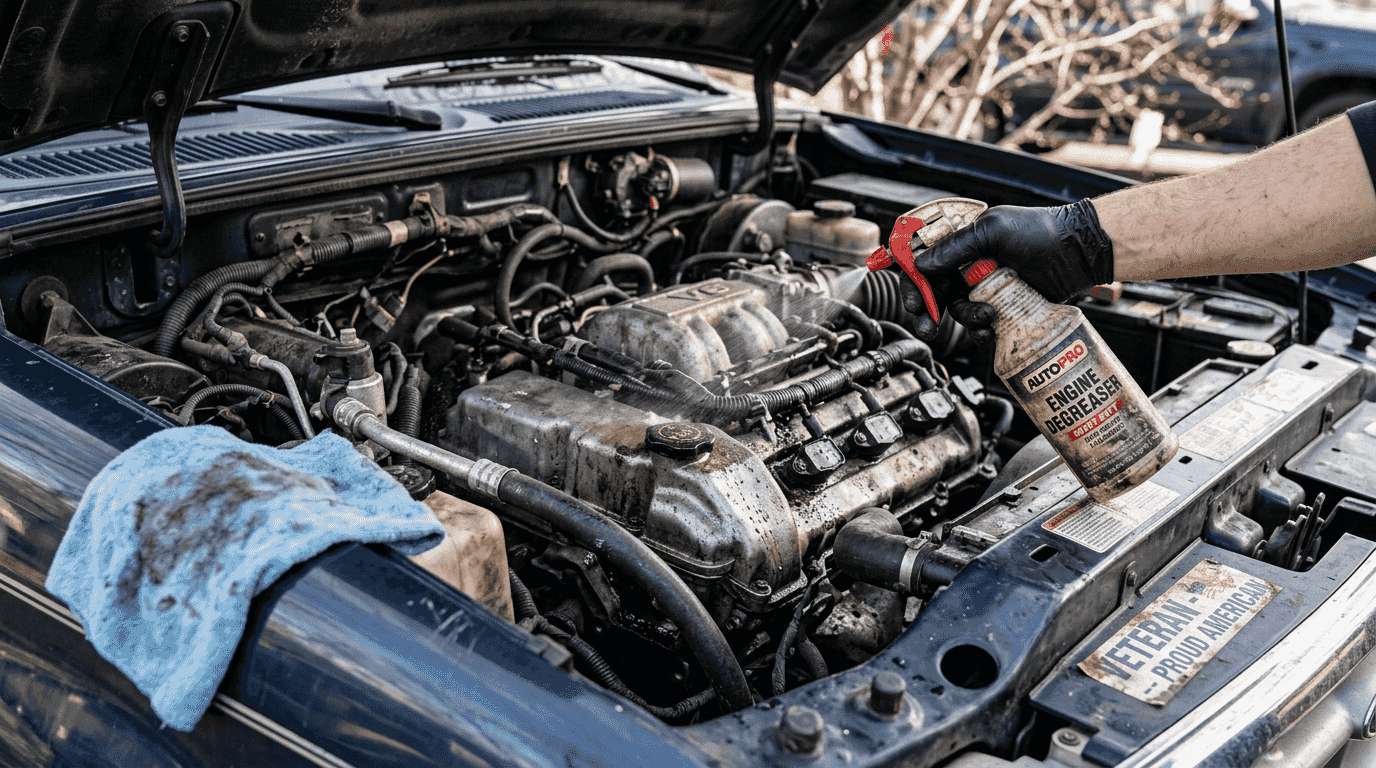
Rinse thoroughly using low to moderate water pressure. A garden hose with a spray nozzle works well. Avoid pressure washers or high-pressure settings that can force water past seals and into electrical components. Direct water flow downward and away from sensitive areas. Following detailing best practices ensures you achieve professional results.
After rinsing, use compressed air to blow water out of crevices and from around electrical components. Allow the engine bay to air dry completely, which typically takes 30 to 60 minutes depending on conditions. You can start the engine briefly to help evaporate remaining moisture once most visible water is gone.
Pro Tip: Apply a quality protectant designed for engine bays after cleaning and drying. These products restore color to plastics and rubber while providing protection against future dirt buildup. Allow protectants to cure for 24 hours before driving in wet conditions.
Common mistakes and pitfalls to avoid during engine bay cleaning
Even experienced vehicle owners make errors that can damage components or reduce cleaning effectiveness. Understanding these common pitfalls helps you avoid costly mistakes and achieve better results.
Cleaning a hot engine ranks among the most dangerous mistakes. Thermal shock occurs when cold water contacts hot metal surfaces, potentially causing cracks in the engine block, cylinder head, or exhaust manifold. Additionally, hot surfaces cause cleaning products to evaporate rapidly before they can work effectively, leaving residue behind.
Electrical damage from improper water use creates problems that may not appear immediately. Using high-pressure water directly on electrical components can lead to electrical issues. Water forced past seals and into connectors causes corrosion and intermittent failures that are difficult to diagnose. Always use gentle water pressure and keep spray directed away from electronics.
Overusing or misusing degreasers damages engine bay surfaces. Using strong engine degreasers excessively causes staining and damage to plastics, rubber, and painted areas. Concentrated industrial degreasers can strip protective coatings, fade colors, and make rubber brittle. Always dilute products according to instructions and test on inconspicuous areas first.
Skipping the presoak step reduces cleaning effectiveness significantly. Degreasers need time to penetrate and dissolve built-up grease. Spraying and immediately rinsing wastes product and leaves you with mediocre results. Follow recommended dwell times but do not allow products to dry on surfaces.
Neglecting to let protectants cure properly defeats their purpose. These products need time to bond with surfaces and form protective barriers. Driving in rain or washing your vehicle too soon after application washes away uncured protectants, wasting your effort.
Rushing the engine bay cleaning process or ignoring proper masking and product selection can result in electrical failures, damaged components, and disappointing results that cost more to fix than professional cleaning would have cost.
Common oversights also include:
- Forgetting to remove the masking materials after cleaning, which can cause overheating
- Using tire shine or other inappropriate products that attract dirt
- Cleaning in direct sunlight where products dry too quickly
- Neglecting to check for and address fluid leaks before cleaning
Understanding why you should detail your car regularly helps you appreciate the importance of doing the job correctly. Taking shortcuts undermines the benefits of maintenance and creates new problems.
Choosing the right time and conditions for engine bay cleaning in South Jersey
Weather conditions dramatically affect engine bay cleaning results. Temperature, humidity, wind, and precipitation all influence how well products work and how quickly surfaces dry. South Jersey’s climate presents specific considerations for timing your cleaning sessions.
Warm temperatures between 60°F and 80°F provide ideal conditions. Degreasers work more effectively in moderate warmth, breaking down grease faster. Surfaces also dry more quickly, reducing water spot formation and corrosion risk. Avoid cleaning in extreme heat above 90°F, as products evaporate too rapidly.
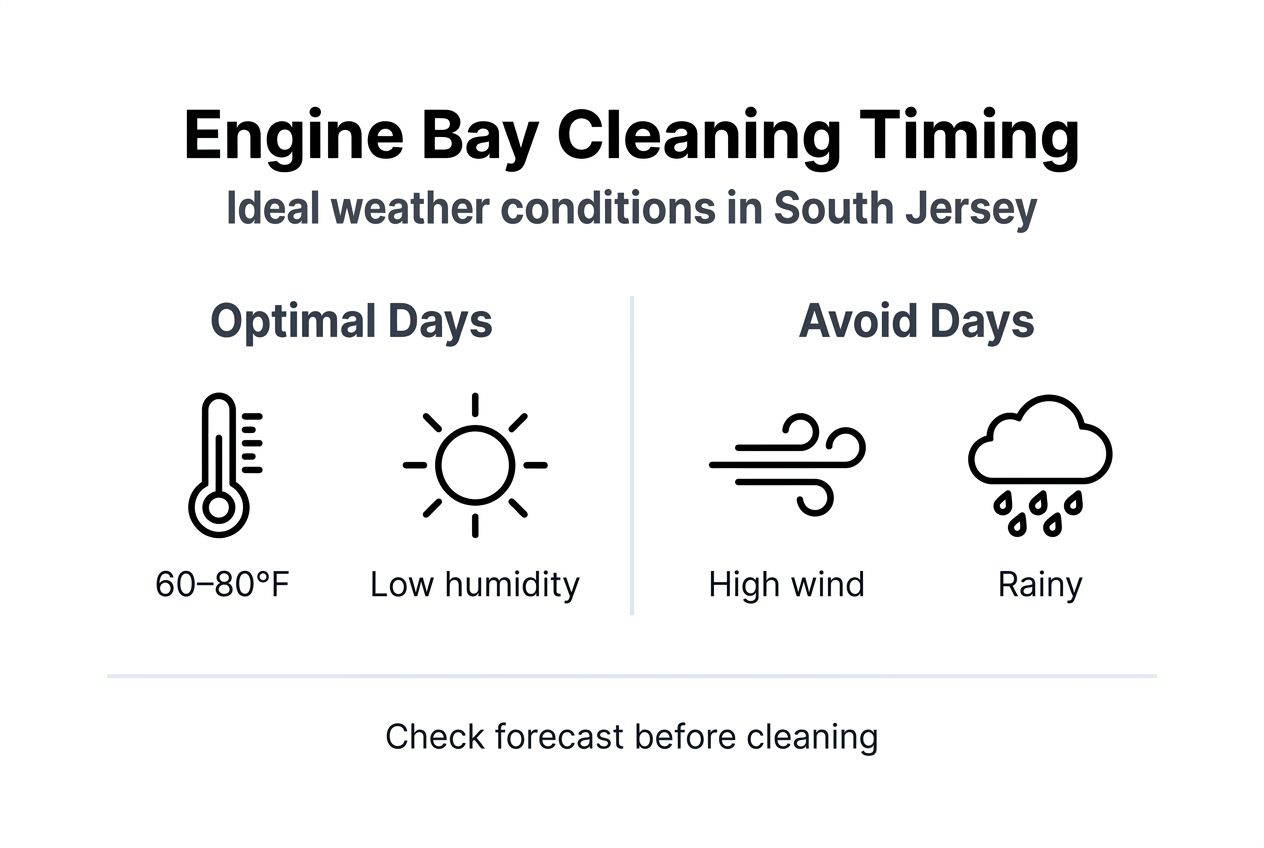
Humidity levels impact drying times significantly. Choosing the right day with warm temperatures, low humidity, and a gentle breeze helps the cleaning dry faster and reduces water spots and corrosion risk. South Jersey summers can be humid, so check weather forecasts and choose days with lower humidity readings when possible.
Gentle breezes aid evaporation without blowing dirt onto wet surfaces. Calm days or those with light winds of 5 to 10 mph work well. Avoid cleaning on windy days when airborne debris contaminates freshly cleaned surfaces or cleaning products blow into unintended areas.
Seasonal timing matters for South Jersey vehicle owners. Spring and fall often provide optimal conditions with moderate temperatures and lower humidity than summer. Early summer before peak heat arrives also works well. Winter cleaning is possible on unusually warm days but requires extra care due to freezing risks.
| Condition | Optimal | Non-Optimal | Effect on Cleaning |
|---|---|---|---|
| Temperature | 60-80°F | Below 50°F or above 90°F | Products work best in moderate warmth; extreme temperatures reduce effectiveness |
| Humidity | Below 60% | Above 70% | Low humidity speeds drying and prevents water spots |
| Wind | Light breeze 5-10 mph | Strong winds above 15 mph | Gentle air movement aids drying without contamination |
| Precipitation | No rain forecast 24 hours | Rain expected within 12 hours | Dry conditions allow proper curing of protectants |
| Time of Day | Morning or early afternoon | Late afternoon or evening | Earlier cleaning allows maximum drying time before dew |
Plan your engine bay cleaning around weather forecasts. Check conditions the day before and morning of your planned session. The South Jersey interior cleaning guide also emphasizes working with regional climate conditions for best results.
Pro Tip: Schedule engine bay cleaning at least 24 hours before any planned rain. This gives protectants adequate time to cure and bond with surfaces, ensuring they provide maximum protection rather than washing away.
Professional engine bay cleaning services in South Jersey
While DIY engine bay cleaning is possible with proper knowledge, professional services offer expertise and convenience that save you time while ensuring superior results. Professional detailers have specialized tools, commercial-grade products, and experience handling delicate engine components safely.

Professional engine bay cleaning includes thorough degreasing, safe rinsing techniques, and application of long-lasting protectants that restore your engine compartment to like-new condition. Technicians know how to identify and work around sensitive components specific to different vehicle makes and models. They also spot potential maintenance issues during the cleaning process, alerting you to leaks or worn parts before they cause breakdowns.
For South Jersey vehicle owners who value their time and want guaranteed results, professional auto detailing services provide peace of mind. Mobile detailing brings expert care directly to your home or workplace, eliminating the hassle of scheduling and transportation. Learn more about how auto detailing works and discover how to book mobile detailing for convenient, professional engine bay cleaning and complete vehicle care.
FAQ
Is engine bay cleaning safe for all vehicles?
Engine bay cleaning is generally safe when proper precautions are taken, including masking electrical components and using appropriate products. Older or vintage vehicles may require extra care due to delicate wiring, brittle plastics, and components more susceptible to water damage.
How often should I get my engine bay cleaned?
Frequency depends on driving conditions, but twice a year is ideal for most vehicles. South Jersey drivers may benefit from more frequent cleaning, especially after winter when road salt accumulates, or if you drive in dusty or off-road conditions regularly.
Can I clean my engine bay myself or should I hire a professional?
DIY cleaning is possible with correct knowledge and precautions, but professionals ensure thorough and safe results. Professional detailers have specialized tools, experience with various vehicle types, and expertise in handling delicate areas while detecting potential problems. Learn more about how auto detailing works to understand the professional advantage.
What products are best for cleaning engine bays?
Dedicated engine bay degreasers diluted according to manufacturer instructions work best for safe, effective cleaning. Avoid harsh industrial chemicals, household cleaners, or products not specifically formulated for automotive use, as these can damage plastics, rubber seals, and painted surfaces in your engine compartment.