
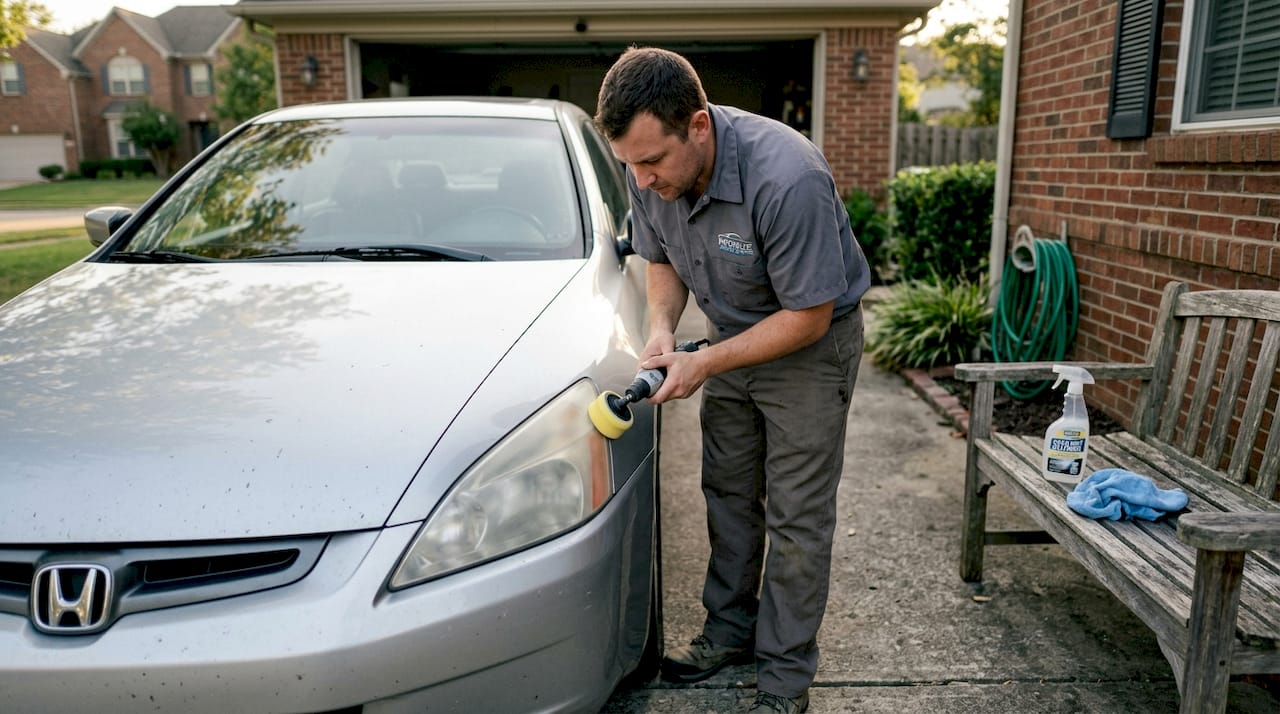
Faded headlights are more than an eyesore. When plastic lenses yellow and haze over time, your car’s light output can drop dramatically, making night driving genuinely dangerous. Restoration improves visibility by recovering original light output, which directly reduces your crash risk on dark South Jersey roads. Whether you drive through Pitman, Vineland, or anywhere in between, understanding what headlight restoration is, how it works, and when to call a professional can save you money and keep you safer every time you drive after dark.
Table of Contents
- What is headlight restoration?
- The science behind headlight restoration: Visibility and safety
- Step-by-step process: How professionals restore headlights
- DIY vs professional restoration: Cost, durability, and common mistakes
- When restoration won’t work: Edge cases and replacement scenarios
- Affordable headlight restoration services in South Jersey
- Frequently asked questions
Key Takeaways
| Point | Details |
|---|---|
| Restoration boosts safety | Restored headlights can improve light output by as much as 81% and reduce accident risk significantly. |
| DIY vs pro value | DIY kits are cheaper but professionals offer longer-lasting and more effective results. |
| Replacement needed for damage | Severely cracked or internally damaged headlights cannot be restored and must be replaced. |
| UV sealant is essential | Applying a UV-protective sealant ensures your restoration lasts and prevents re-oxidation. |
| Local experts offer affordable help | South Jersey detailing professionals provide reliable restoration for $99-150 per pair. |
What is headlight restoration?
Headlight restoration is the process of removing oxidation, yellowing, and haze from the outer surface of your plastic headlight lenses. Over time, UV rays from the sun break down the polycarbonate coating on your lenses, turning them from crystal clear to a cloudy, amber mess. This is not just a cosmetic problem. Cloudy lenses scatter light instead of projecting it forward, which means less road illumination and more glare for oncoming drivers.
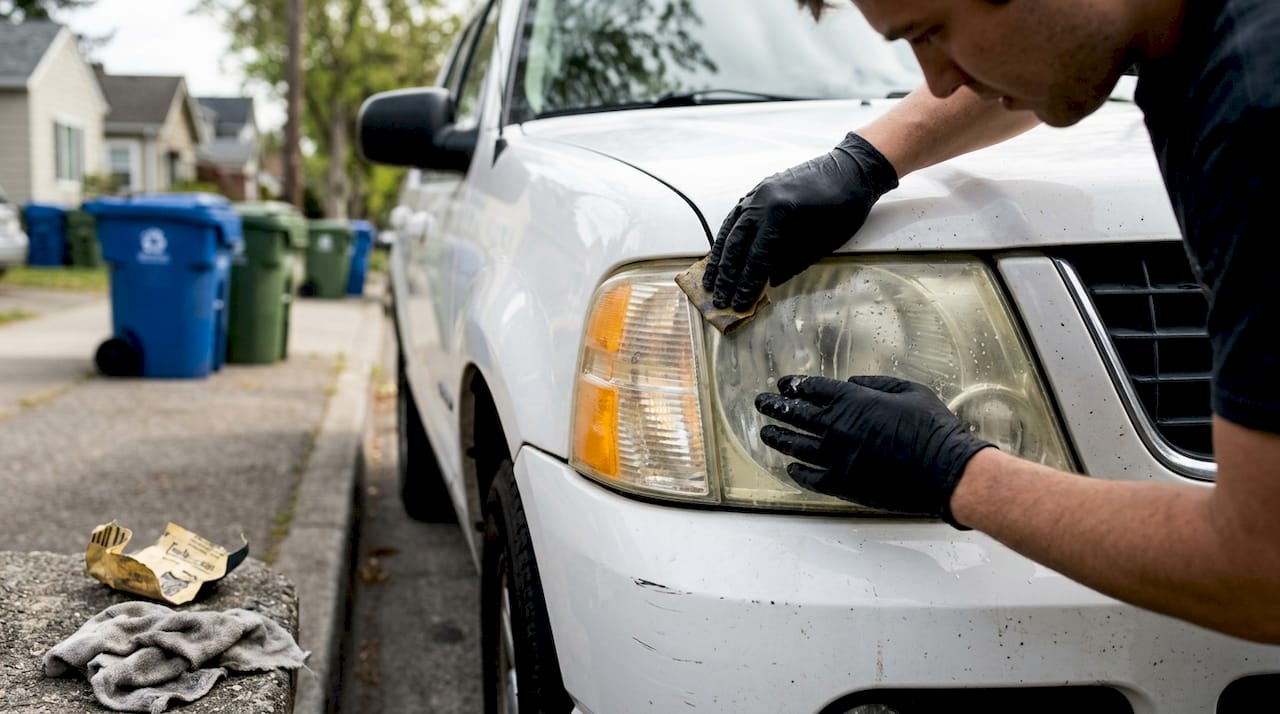
The restoration process involves progressive sanding to remove damaged layers, polishing to restore optical clarity, and applying a UV-protective sealant to prevent future oxidation. Each step builds on the last, and skipping any one of them leads to faster re-hazing. This is why the process requires patience and the right materials.
One of the most persistent myths is that toothpaste can restore headlights. It can make them look slightly better for a week or two, but it does not remove deep oxidation or provide any UV protection. Real restoration needs abrasive sanding and a proper sealant. Skipping these steps is one of the detailing mistakes that costs drivers money in the long run.
“Headlight restoration is a multi-step process that removes oxidation, yellowing, and hazing from plastic headlight lenses using progressive sanding and UV-protective sealant.”
For a broader look at headlight maintenance best practices, it helps to understand what causes degradation in the first place before you invest in any solution.
The science behind headlight restoration: Visibility and safety
Here is where the numbers get serious. Oxidized headlights do not just look bad. They actively put you at risk. Empirical tests show that professional restoration can recover 70 to 95 percent of original light output, with up to a 42 percent increase in illuminance and significantly reduced light scatter. That means your beam goes where it is supposed to go instead of diffusing into a foggy glow.
The safety stakes are real. Reduced light output increases crash risk by up to 30 percent, according to NHTSA data. Think about that on a rural South Jersey road at 10 PM with no streetlights. The difference between a clear lens and a hazy one could be the difference between seeing a deer in time or not.
| Condition | Light output | Crash risk |
|---|---|---|
| New headlights | 100% | Baseline |
| Moderately oxidized | 50-60% | Up 15% |
| Severely oxidized | 20-30% | Up 30% |
| After professional restoration | 70-95% | Near baseline |
Beyond the numbers, restored headlights also improve your ability to read road signs, spot pedestrians, and react to hazards faster. Checking out detailing maintenance tips regularly can help you stay ahead of lens degradation before it becomes a safety issue.
“Dirty or oxidized headlights are not just an aesthetic problem. They are a measurable safety hazard with documented crash risk increases.”
Step-by-step process: How professionals restore headlights
Knowing the safety benefits makes the process worth understanding in detail. Here is how a professional detailer approaches headlight restoration from start to finish.
- Clean the lens thoroughly with soap and water to remove surface dirt and road grime.
- Mask the surrounding paint with painter’s tape to protect the finish during sanding.
- Wet-sand with coarse grit (usually 400 or 600 grit) to remove the top oxidized layer.
- Progress through finer grits (800, 1000, 1500, 2000) to smooth the surface incrementally.
- Polish the lens with a machine or hand applicator to restore optical clarity.
- Apply UV sealant as the final protective coat to lock in clarity and prevent re-oxidation.
Each step matters. Jumping from coarse to fine grit too quickly leaves micro-scratches that cloud the lens again within weeks. Professional detailers use compound polishes and dedicated UV coatings that outperform anything in a basic DIY kit.
| Factor | DIY kit | Professional service |
|---|---|---|
| Cost | $15 to $50 | $75 to $150 per pair |
| Durability | 6 to 12 months | 1 to 3 years |
| Tools used | Basic pads, manual sanding | Machine polisher, pro-grade UV coat |
| Risk of damage | Higher | Lower |
Pro Tip: Always apply a dedicated UV sealant as the last step. Without it, your lenses will re-haze within a few months regardless of how well you sanded and polished them. This single step is what separates a lasting result from a temporary fix.
For more context on how exterior detailing tips connect to headlight care, spring is actually the best time to assess your lenses after a full winter of UV exposure and road salt. Following detailing best practices year-round keeps your entire vehicle looking and performing its best.
DIY vs professional restoration: Cost, durability, and common mistakes
After seeing the step-by-step process, it is worth comparing your options honestly. DIY kits are widely available and cost between $20 and $50. They work, but the results typically last only 6 to 12 months because consumer-grade sealants are thinner and less durable. Professional restoration in South Jersey runs $99 to $150 per pair and lasts 1 to 3 years thanks to better tools and coatings.
| Metric | DIY | Professional |
|---|---|---|
| Upfront cost | $20 to $50 | $99 to $150 per pair |
| Longevity | 6 to 12 months | 1 to 3 years |
| Equipment quality | Basic | Commercial grade |
| Convenience | Self-managed | Mobile or shop service |
The most common mistakes people make with DIY restoration include:
- Skipping the masking step, which leads to accidental paint damage from sandpaper.
- Using only one grit, which leaves deep scratches that polishing cannot fully remove.
- Forgetting the UV sealant, which is the single biggest reason DIY results fade fast.
- Over-sanding, which thins the lens and can cause permanent distortion.
- Using toothpaste as a substitute, which provides no lasting protection whatsoever.
Pro Tip: If you go the DIY route, buy a kit that includes at least three grit levels and a dedicated UV coating. Kits that skip the sealant are not worth your time or money.
Avoiding these detailing mistakes is especially important if you plan to sell your vehicle. Cloudy headlights signal neglect to buyers. For South Jersey drivers who want convenience without the guesswork, mobile detailing services bring professional-grade restoration directly to your driveway.
When restoration won’t work: Edge cases and replacement scenarios
Before you book a restoration service, it is important to know that not every headlight can be saved. Restoration only works on surface-level oxidation and haze. If the damage goes deeper, you may be throwing money at a problem that requires a different solution entirely.
Signs that your headlights need replacement, not restoration:
- Cracks or chips in the lens surface that allow moisture inside.
- Internal fogging or condensation that sits behind the lens and cannot be wiped away.
- Burn marks or melted plastic near the bulb housing.
- Deep pitting that goes through the polycarbonate layer entirely.
- Structural damage from an impact that compromises the housing shape.
Cracked or internally damaged lenses require full replacement, and attempting to sand or polish them can make the damage worse. Sanding a cracked lens, for example, can cause the crack to spread or allow more moisture to enter the housing.
“Attempting restoration on a lens with internal damage or deep cracks does not just fail. It can accelerate deterioration and create a more expensive repair down the road.”
If you are unsure whether your headlights qualify for restoration, a quick inspection by a professional is the safest first step. For additional guidance, headlight restoration tips from trusted sources can help you identify the difference between surface haze and structural damage. Avoiding the detailing mistakes that come from misdiagnosing your headlights will save you both time and money.
Affordable headlight restoration services in South Jersey
If your headlights show surface oxidation or haze, professional restoration is one of the most cost-effective upgrades you can make to your vehicle. It improves safety, boosts curb appeal, and costs a fraction of full headlight replacement.
At CDC Auto Detailing, we bring professional-grade headlight restoration directly to your driveway across South Jersey. Our mobile service means no drop-offs, no waiting rooms, and no hassle. We assess your lenses on the spot, use commercial-grade polishes and UV sealants, and deliver results that last. Pricing starts at $99 per pair, and our team handles everything from Pitman to Vineland and beyond. Explore our auto detailing examples to see the quality we deliver, and learn more about why working with professional detailers makes a measurable difference for your vehicle’s safety and appearance. Book your appointment today and see the difference clear headlights make.
Frequently asked questions
How long does headlight restoration last?
DIY restoration typically lasts 6 to 12 months, while professional restoration with UV sealant can last 1 to 3 years depending on sun exposure and maintenance.
Is headlight restoration really worth it for safety?
Absolutely. Restoration can boost light output by up to 42 percent and reduce crash risk by up to 30 percent, making it one of the most impactful safety upgrades you can make.
Can headlight restoration fix cracks or internal water damage?
No. Cracked or internally damaged lenses require full replacement. Restoration only addresses surface oxidation and haze on intact lenses.
Does toothpaste work for headlight restoration?
Toothpaste offers a very short-term cosmetic improvement, but real restoration requires progressive sanding and a UV sealant to deliver lasting clarity and safety benefits.
How much does professional headlight restoration cost in South Jersey?
Professional headlight restoration in South Jersey typically costs between $99 and $150 per pair, depending on the condition of the lenses and the service provider.