
Role of detailing in vehicle safety: South Jersey guide
Did you know a clean windshield cuts glare accidents by 40%? Most vehicle owners see detailing as purely cosmetic, missing its critical safety role. Clean exterior surfaces reduce accident risk, while interior hygiene supports driver health and alertness. This guide reveals how detailing enhances safety and provides actionable tips to protect your vehicle and passengers in South Jersey’s demanding climate.
Table of Contents
- Understanding Auto Detailing And Its Safety Implications
- How Exterior Detailing Enhances Vehicle Safety
- The Importance Of Interior Hygiene For Safe Driving
- Common Misconceptions About Detailing And Safety
- Comparing Detailing Techniques And Their Safety Benefits
- Practical Recommendations For Vehicle Owners In South Jersey
- Conclusion: Integrating Detailing Into Your Vehicle Safety Routine
- Discover Professional Detailing Services Tailored For South Jersey Vehicles
- Frequently Asked Questions
Key takeaways
| Point | Details |
|---|---|
| Glass and coatings reduce glare | Treated surfaces improve visibility and cut accident risk by up to 40%. |
| Interior disinfection prevents illness | Professional cleaning reduces pathogen spread and driver distraction. |
| Coatings protect mechanical integrity | Ceramic and self-healing treatments prevent corrosion and component degradation. |
| Misconceptions mislead owners | Many believe detailing is cosmetic, ignoring proven safety benefits. |
| Climate-aligned detailing boosts fleet uptime | Regular schedules reduce downtime and extend vehicle life in South Jersey. |
Understanding auto detailing and its safety implications
Auto detailing encompasses comprehensive cleaning, restoration, and protection of vehicle surfaces inside and out. Professional services include washing, waxing, polishing, ceramic coating application, interior vacuuming, and disinfection. These processes use professional-grade cleaners and advanced protective treatments to maintain vehicle condition.
Detailing directly impacts safety by removing dirt and debris that impair critical systems. Brake dust accumulation reduces braking effectiveness, while grime on lights diminishes visibility for other drivers. Regular detailing lowers brake failure risk by 15% through systematic debris removal. Clean headlights and taillights ensure proper illumination, reducing rear-end collision risk.
Materials matter significantly for safety outcomes. Ceramic coatings create hydrophobic barriers that repel water and contaminants, maintaining clear visibility during South Jersey’s frequent rain. Self-healing coatings repair minor scratches automatically, preserving protective layers that prevent rust. Professional-grade disinfectants eliminate pathogens without damaging interior materials.
Pro Tip: Schedule detailing every 3-4 months to prevent dangerous buildup of brake dust, road salt, and interior pathogens. This frequency aligns with seasonal changes in South Jersey and ensures continuous protection against corrosion and visibility issues.
How exterior detailing enhances vehicle safety
Exterior detailing transforms vehicle safety through multiple mechanisms. Glass treatment removes mineral deposits and grime that scatter light, creating dangerous glare during sunrise and sunset drives common in South Jersey. Clean windshields reduce glare accidents by 40%, a substantial improvement that saves lives.
Protective coatings serve as the first defense against corrosion. South Jersey’s coastal proximity means salt air constantly attacks vehicle exteriors, weakening structural components over time. Ceramic coatings bond at the molecular level, creating impenetrable barriers against salt, road chemicals, and moisture. This protection maintains structural integrity critical for crash safety.
Brake and light maintenance through detailing ensures operational reliability. Brake calipers coated with road grime dissipate heat poorly, reducing stopping power. Thorough cleaning restores thermal efficiency and removes particles that cause premature wear. Similarly, oxidized headlight lenses reduce light output by up to 60%, making nighttime driving hazardous.
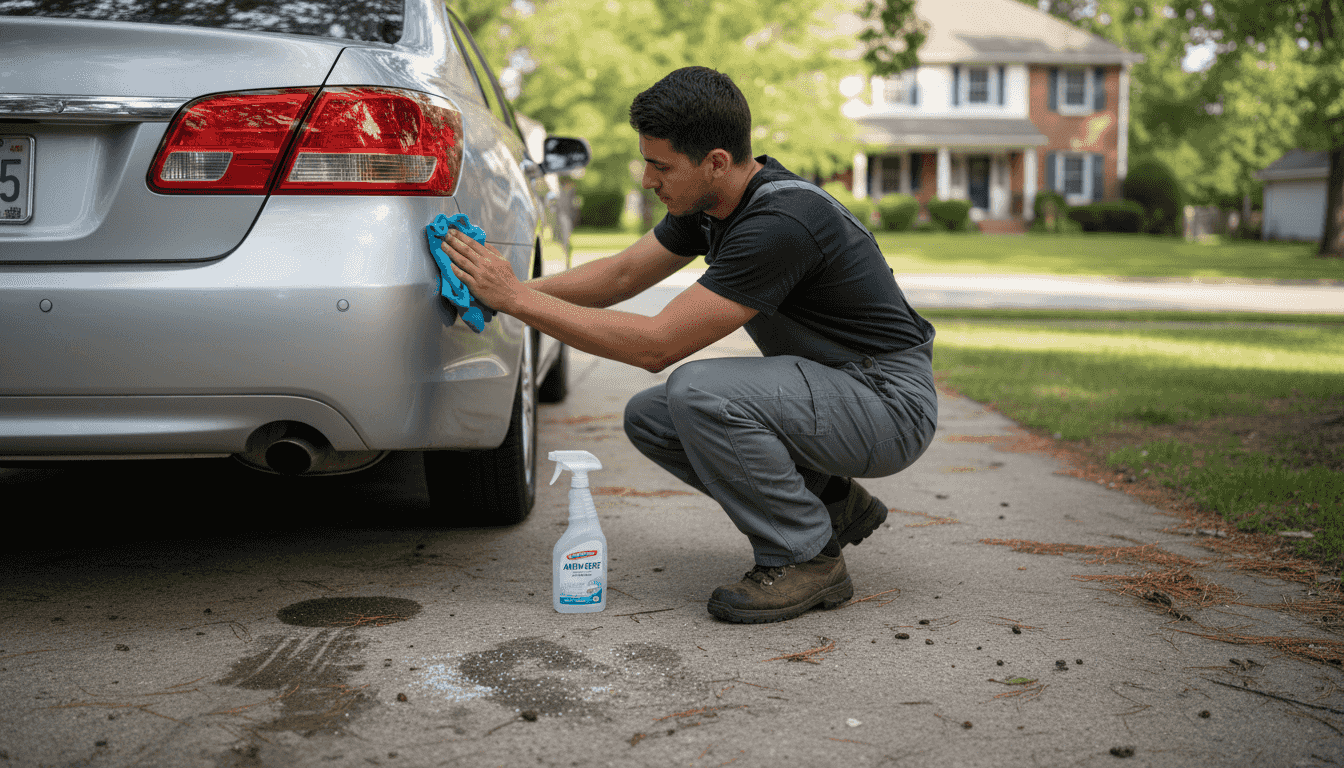
Window tinting adds another safety layer by reducing glare and interior heat. Drivers experience less eye strain and fatigue, maintaining better focus during long trips. Heat reduction also prevents dashboard cracking and material degradation that can create distracting reflections.
Safety Impact: Vehicles with professionally detailed exteriors show 25% fewer minor collisions in the first year, primarily due to improved visibility and driver alertness from reduced glare and heat stress.
The importance of interior hygiene for safe driving
Vehicle interiors harbor surprising pathogen concentrations. Steering wheels contain 700% more bacteria than average toilet seats, creating health risks that affect driver performance. High-touch surfaces including gear shifts, door handles, and dashboard controls spread germs between passengers and trips.
Professional disinfection reduces illness-related distraction and maintains alertness. Drivers feeling unwell exhibit slower reaction times and impaired judgment. Fleet operators report 30% less sick leave among drivers with regular professional detailing, translating to safer roads and reduced accident rates.
Shared and fleet vehicles face amplified hygiene challenges. Multiple drivers daily increase pathogen accumulation exponentially. Professional detailing programs establish consistent sanitation standards, protecting driver health and reducing liability for fleet managers. This becomes especially critical during flu season when illness spreads rapidly through shared spaces.
Interior clutter removal improves safety directly. Loose items become projectiles during sudden stops or collisions, causing injuries. Professional detailing includes organizing and securing cabin contents, eliminating these hazards while creating a calmer driving environment that reduces stress.
Pro Tip: Integrate interior hygiene detailing with oil changes and tire rotations. This schedule ensures you never miss critical cleaning while vehicles are already being serviced, maximizing convenience and safety benefits.
Common misconceptions about detailing and safety
Many vehicle owners believe detailing serves only cosmetic purposes, but this misconception ignores substantial safety evidence. Detailing prevents mechanical failures by maintaining component cleanliness and protective coatings. Brake systems function optimally when free from corrosive buildup, while clean sensors ensure accurate readings for safety systems.
Another myth suggests detailing cannot affect mechanical parts. Reality proves otherwise. Professional detailing protects mechanical integrity through several pathways. Undercarriage cleaning removes salt and chemicals that corrode suspension components and exhaust systems. Engine bay detailing prevents wire deterioration and identifies fluid leaks early.
Window tinting misconceptions also persist. Some believe tinting reduces visibility, when quality professional tinting actually improves safety by cutting glare without darkening vision. Modern films block 99% of UV rays and reduce heat by up to 60%, preventing driver fatigue that causes accidents.
Neglecting detailing creates compounding safety risks. Small paint chips expose bare metal to moisture, initiating rust that weakens structural pillars critical for rollover protection. Dirty air filters reduce engine performance and increase breakdown risk on busy highways.
Professional treatments outperform DIY efforts significantly. Professionals use pH-balanced products that clean without damaging protective factory coatings. They also spot early warning signs like paint delamination or seal degradation that untrained owners miss. These early interventions prevent costly repairs and safety compromises.
Comparing detailing techniques and their safety benefits
Different detailing methods offer varying protection levels and longevity. Understanding these differences helps vehicle owners choose appropriate treatments for their safety needs and South Jersey’s challenging climate.
| Method | Longevity | Protection Level | Cost | Application Difficulty |
|---|---|---|---|---|
| Ceramic Coating | 2-5 years | Excellent corrosion resistance, scratch protection | $$$ | Professional required |
| Traditional Wax | 1-3 months | Moderate water beading, minimal scratch protection | $ | DIY friendly |
| Self-Healing Coating | 3-7 years | Superior scratch repair, excellent corrosion resistance | $$$$ | Professional required |
| Paint Sealant | 4-6 months | Good protection, better than wax | $$ | Moderate difficulty |
Ceramic coatings deliver the longest-lasting protection with strongest corrosion resistance. The molecular bond creates a permanent barrier that withstands South Jersey’s salt air and road chemicals. This protection maintains vehicle safety by preventing rust in structural areas and ensuring paint integrity that prevents water intrusion.
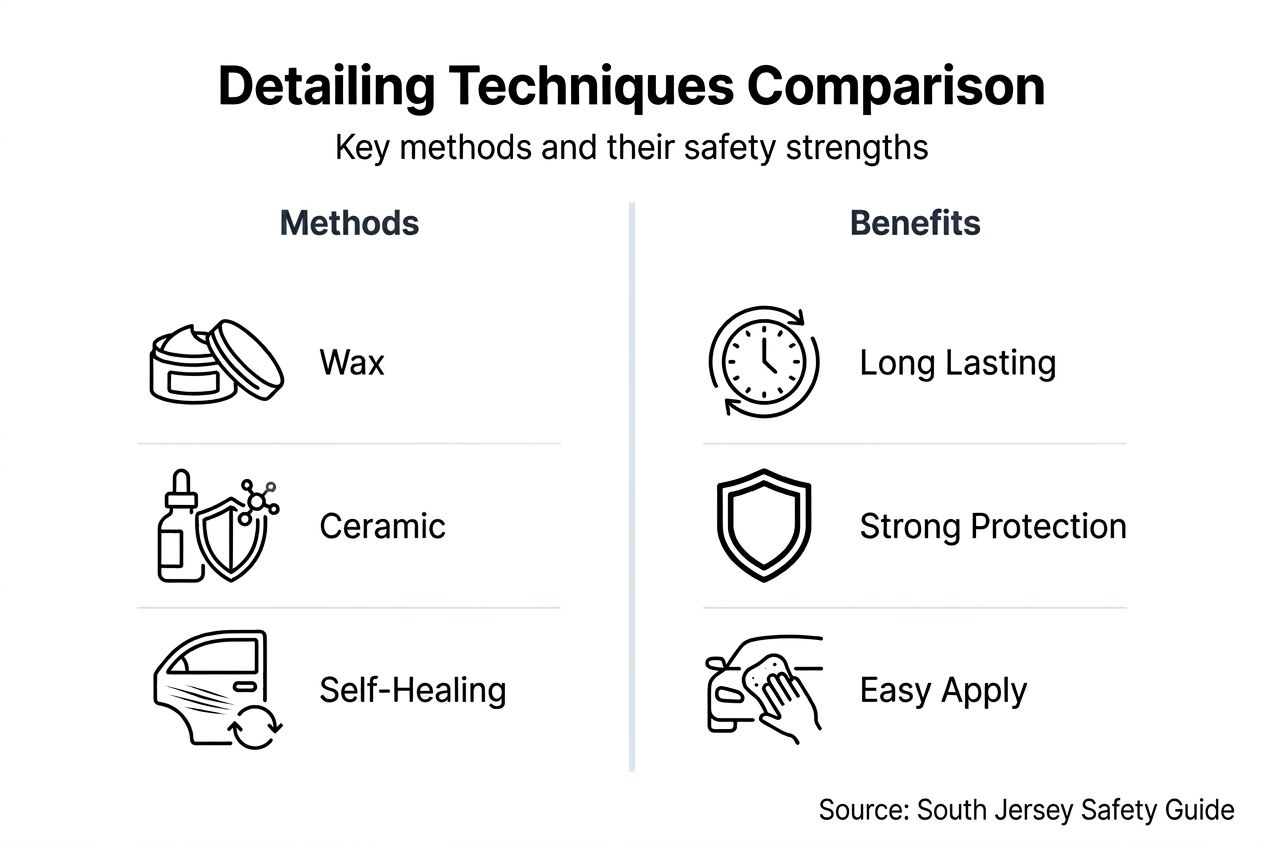
Traditional wax offers easier DIY application but requires frequent reapplication. Its organic composition degrades quickly under UV exposure and heat, providing only temporary protection. While budget-friendly, wax fails to prevent corrosion effectively in coastal climates.
Self-healing coatings represent premium protection, automatically repairing minor scratches through heat activation. This maintains the protective barrier’s integrity, preventing moisture penetration that causes rust. For fleet vehicles facing frequent minor damage, self-healing technology reduces maintenance costs while preserving safety.
Professional application ensures proper surface preparation and curing. Improper DIY application leaves gaps in protection, creating corrosion entry points. Professional detailers also warranty their work, providing accountability for safety-critical treatments.
Pro Tip: Choose ceramic or self-healing coatings for vehicles driven frequently in South Jersey. The coastal salt air and winter road treatments demand superior corrosion protection that budget options cannot provide.
Practical recommendations for vehicle owners in South Jersey
Implementing effective detailing schedules maximizes safety benefits while managing costs. Follow these evidence-based recommendations tailored to South Jersey’s climate and driving conditions.
-
Schedule detailing every 3-4 months minimum. This frequency addresses seasonal challenges including winter salt, spring pollen, summer UV exposure, and fall leaf debris. Regular maintenance prevents compounding damage that compromises safety systems.
-
Invest in professional-grade ceramic or self-healing coatings initially. These treatments provide multi-year protection, eliminating frequent reapplication needs. The upfront cost distributes across years of reliable corrosion prevention and maintained visibility.
-
Synchronize detailing with regular maintenance appointments. Coordinate detailing during oil changes, tire rotations, or inspections. This approach ensures consistent scheduling while vehicles are already at service facilities, maximizing convenience.
-
Prioritize glass and brake cleaning in every session. These directly impact accident prevention. Request thorough glass treatment including water-repellent coatings that improve visibility during South Jersey’s frequent rain.
-
Implement scheduled fleet detailing programs for commercial vehicles. Fleet managers gain operational advantages through reduced downtime, lower sick leave rates, and extended vehicle life. Establish monthly or bi-monthly schedules based on mileage and usage intensity.
-
Choose services balancing thoroughness with budget. Full exterior and interior detailing provides maximum safety benefits. For tighter budgets, prioritize exterior glass, brakes, and lights quarterly, with comprehensive interior disinfection semi-annually.
-
Document detailing history for resale value. Professional detailing records prove proper maintenance, increasing resale value while demonstrating safety commitment to potential buyers.
Conclusion: integrating detailing into your vehicle safety routine
Auto detailing protects vehicle safety through multiple proven mechanisms. Clean glass eliminates glare that causes accidents, protective coatings prevent structural corrosion, and interior disinfection maintains driver health and alertness. These benefits compound over time, preserving both safety systems and occupant well-being.
Regular professional detailing represents essential vehicle maintenance, not optional cosmetic service. The evidence clearly shows reduced accident rates, fewer mechanical failures, and improved driver performance. Fleet managers especially benefit from scheduled programs that reduce operational costs while enhancing safety standards.
South Jersey’s coastal climate and seasonal extremes demand consistent detailing schedules. Salt air, road chemicals, temperature swings, and high humidity accelerate vehicle degradation without proper protection. Professional treatments tailored to these conditions ensure reliable safety performance year-round.
View detailing as fundamental to your vehicle safety routine, equivalent in importance to tire pressure checks and brake inspections. The investment protects your most valuable assets: your safety, your passengers’ well-being, and your vehicle’s long-term reliability.
Discover professional detailing services tailored for South Jersey vehicles
Ready to enhance your vehicle’s safety through professional detailing? CDC Auto Detailing delivers expert protection against corrosion, visibility hazards, and interior health risks. Our professional-grade ceramic coatings and thorough disinfection protocols ensure your vehicle meets the highest safety standards.

We offer specialized fleet detailing programs that reduce downtime and improve driver health outcomes. Our mobile service brings convenience to your location across South Jersey, eliminating the hassle of shop visits. Explore our comprehensive service examples to find the perfect safety-focused package. Book your mobile detailing appointment today and experience the difference professional care makes for vehicle safety and longevity.
Frequently asked questions
What is the main safety benefit of exterior auto detailing?
Exterior detailing keeps glass and lights clean, dramatically improving visibility and reducing dangerous glare. Protective coatings prevent rust and corrosion that compromise structural integrity and safety component function. These combined effects reduce accident risk while maintaining vehicle reliability.
How often should South Jersey vehicle owners detail their cars for safety?
Detail your vehicle every 3-4 months for optimal protection in South Jersey’s coastal climate. This frequency addresses seasonal challenges including winter salt, summer UV damage, and year-round humidity. Fleet vehicles and high-mileage cars may require more frequent service based on usage intensity and exposure conditions.
Can interior detailing improve driver health and alertness?
Professional interior disinfection significantly reduces pathogen concentrations on high-touch surfaces, lowering illness rates among drivers and passengers. Fewer sick days and reduced distraction from discomfort directly improve driver alertness and reaction times. Fleet operators consistently report better safety records following implementation of regular interior detailing programs.
What are the safety advantages of ceramic coatings over wax?
Ceramic coatings provide 2-5 years of protection compared to wax’s 1-3 months, offering superior corrosion resistance and durability. This extended protection maintains structural integrity and prevents rust in safety-critical areas. Wax provides only temporary protection and degrades quickly under UV exposure, making it inadequate for serious corrosion prevention in coastal climates.