
Professional auto detailing should protect your vehicle, not risk it. Yet strict safety protocols reduce paint damage incidents by 40%, revealing how critical proper procedures are for maintaining your car’s finish and value. Understanding these protocols empowers you to choose detailers who prioritize vehicle protection alongside aesthetic results, especially when inviting mobile services to your South Jersey driveway.
Table of Contents
- Introduction To Safety Protocols In Auto Detailing
- Key Safety Practices In Auto Detailing Services
- How Safety Protocols Prevent Damage And Enhance Service Quality
- Common Misconceptions About Auto Detailing Safety
- Comparing Safety Protocol Quality: Mobile Vs. Fixed Auto Detailers
- Practical Tips For Vehicle Owners To Verify And Ensure Safety
- Conclusion: Why Prioritizing Safety Protocols Enhances Your Detailing Experience
- Discover Safe, Professional Auto Detailing Services In South Jersey
- Frequently Asked Questions
Key Takeaways
| Point | Details |
|---|---|
| Damage Prevention | Safety protocols reduce paint damage by 40% and chemical complaints by 30% |
| Mobile Service Gap | Mobile detailers show 15% lower safety adherence than fixed locations |
| Chemical Safety | Proper PPE and ventilation prevent health risks and vehicle interior contamination |
| Verification Power | Pre and post service checks with documentation build trust and accountability |
| Quality Impact | Protocol compliance extends protective coating lifespan by 35% |
Introduction to Safety Protocols in Auto Detailing
Safety protocols in auto detailing encompass systematic procedures for tool use, chemical handling, contamination prevention, and surface protection. These aren’t optional steps but essential safeguards that protect your vehicle’s surfaces from scratches, chemical burns, and premature wear while ensuring the health of occupants and technicians.
Mobile detailing introduces unique safety challenges compared to fixed location shops. Working in driveways or parking lots means detailers face inconsistent lighting, variable weather conditions, and limited access to specialized equipment. Mobile auto detailers have approximately 15% lower adherence to safety protocols compared to fixed location services, making it crucial for you to verify their standards before booking.
The Protect Prevent Verify framework helps you understand comprehensive safety. Protect refers to using proper tools and materials that won’t harm surfaces. Prevent means avoiding contamination through dedicated equipment for different vehicle areas. Verify involves documenting vehicle condition before and after service to ensure accountability.
Key safety elements include:
- Dedicated microfiber cloths for different surfaces to prevent cross contamination
- pH balanced chemicals appropriate for specific materials like leather, vinyl, and paint
- Personal protective equipment for technicians handling strong cleaners
- Proper ventilation systems or outdoor airflow when using volatile compounds
- Pre service vehicle inspection with photographic documentation
Pro Tip: Before booking any mobile detailer, ask to see their written safety protocols and chemical safety data sheets. Legitimate professionals maintain these documents and share them readily with clients who ask.
Choosing a detailing service with documented safety protocols means you’re investing in both immediate results and long term vehicle protection. Services that skip safety steps might deliver short term shine but risk causing damage that costs far more to repair than the original detailing fee.
Key Safety Practices in Auto Detailing Services
Professional detailers follow specific safety practices that separate quality service from risky shortcuts. Understanding these practices helps you recognize when a provider prioritizes your vehicle’s wellbeing.
Microfiber cloth management stands as a foundational safety practice. Quality detailers maintain separate cloths for wheels, paint, glass, and interior surfaces. Using the same cloth across multiple areas transfers brake dust, road grime, and abrasive particles that scratch delicate finishes. You should see detailers pull fresh cloths from organized containers, not reusing the same towel throughout your vehicle.
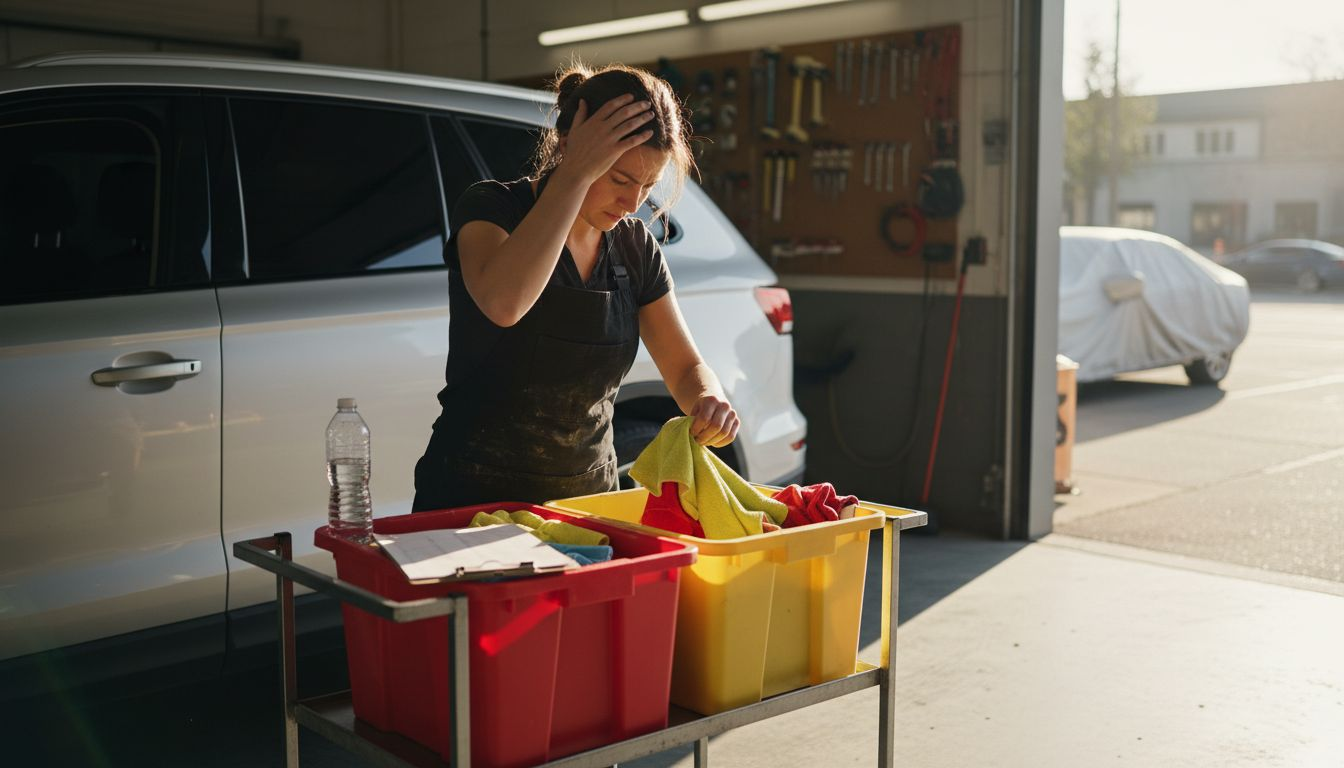
Chemical safety directly impacts both vehicle condition and occupant health. Proper chemical safety reduces customer complaints by 30%, emphasizing the importance of PPE and ventilation. Detailers should wear gloves when handling strong cleaners, use goggles for acidic wheel cleaners, and ensure adequate airflow during interior treatments. Chemical residues left from improper application can off gas inside your vehicle for days, affecting air quality.
Surface testing prevents costly mistakes. Before applying any treatment to your entire vehicle, professionals test products on small, inconspicuous areas. This practice catches potential reactions between chemicals and factory coatings, aftermarket tints, or custom finishes before they cause visible damage.
Drying and curing time compliance ensures protective coatings bond properly:
- Ceramic coatings require 24 to 48 hours of dry conditions for full curing
- Wax applications need at least 20 minutes before buffing to prevent streaking
- Interior protectants must dry completely before closing windows to avoid trapped moisture
- Paint sealants benefit from 12 hours without water exposure for maximum durability
Pro Tip: Ask your detailer about their chemical line certifications and request to see product labels. Reputable brands provide detailed application instructions and safety warnings that professional detailers follow precisely.
Respecting manufacturer guidelines for application and drying times separates professional results from amateur attempts. Rushing these steps to complete jobs faster compromises the protective benefits you’re paying for and can leave your vehicle vulnerable to environmental damage.
Verifying these essential safety protocols before service begins puts you in control of your vehicle’s care. Don’t hesitate to ask questions about procedures. Confident professionals welcome inquiries and explain their methods transparently.
How Safety Protocols Prevent Damage and Enhance Service Quality
Safety protocols deliver measurable benefits that protect your investment and extend the life of protective treatments. The data reveals significant differences between services that prioritize safety and those that cut corners.
Strict safety protocols reduce paint damage incidents by 40%, chemical related complaints by 30%, and extend coating lifespan by 35%. These aren’t marginal improvements but substantial gains that directly impact your vehicle’s condition and resale value.
| Safety Measure | With Protocols | Without Protocols | Improvement |
|---|---|---|---|
| Paint damage incidents | 6 per 100 services | 10 per 100 services | 40% reduction |
| Chemical complaints | 7 per 100 services | 10 per 100 services | 30% reduction |
| Coating lifespan | 27 months average | 20 months average | 35% extension |
| Customer satisfaction | 4.7 out of 5 | 3.9 out of 5 | 21% increase |
Proper paint preparation prevents swirl marks and scratches that diminish your vehicle’s appearance. When detailers use contaminated wash mitts or apply excessive pressure with abrasive pads, they create micro scratches that accumulate over time. Clay bar treatment performed correctly removes embedded contaminants without marring the clear coat, while rushed applications drag particles across your paint.
Chemical safety protocols protect more than just technician health. Proper dilution ratios prevent harsh cleaners from etching glass, fading interior plastics, or damaging protective films. Adequate ventilation allows solvents to evaporate safely rather than settling on surfaces where they continue reacting with materials long after application.
Damage prevention mechanisms that effective safety protocols address include:
- Cross contamination from using wheel brushes on painted surfaces
- Chemical burns from undiluted cleaners left on trim or upholstery
- Water spots from insufficient drying after washing in direct sunlight
- Premature coating failure from applying products to contaminated surfaces
- Scratches from debris trapped in wash media or drying towels
Coating longevity depends heavily on application conditions. Ceramic coatings applied in dusty environments or high humidity trap contaminants beneath the surface, reducing their protective capabilities and shortening their effective lifespan. Controlled application following strict protocols ensures these expensive treatments deliver their promised durability.
The quality difference becomes most apparent months after service. Vehicles detailed with proper safety measures maintain their shine longer, resist environmental contaminants more effectively, and require less frequent maintenance between professional services. This extended protection translates directly into cost savings and preserved vehicle value.
Common Misconceptions About Auto Detailing Safety
Several widespread myths about auto detailing safety lead vehicle owners to make risky decisions when selecting service providers. Clearing up these misconceptions protects you from unnecessary damage and disappointing results.
Myth one claims all detailing services maintain equal safety standards because the end result looks similar. This oversimplification ignores the techniques used to achieve that appearance. A vehicle can look clean immediately after service while having sustained micro scratches, chemical residue buildup, or improperly applied coatings that fail prematurely. Surface appearance doesn’t reveal whether safe methods were employed.
The mobile detailing safety assumption represents another dangerous misconception. Many vehicle owners believe mobile services automatically match fixed location shop standards because they’re more convenient and often more expensive. Reality shows mobile detailers have about 15% lower adherence to safety protocols compared to fixed location providers due to environmental challenges and equipment limitations.
The chemical safety myth suggests any product that makes your vehicle look clean must be safe. Harsh chemicals can deliver immediate visual results while causing long term damage to protective coatings, interior materials, and even paint. Strong degreasers might remove dirt quickly but can also strip wax, fade plastics, and dry out rubber seals if not properly formulated for automotive use.
Three critical misconceptions debunked:
- Misconception: Price reflects safety standards. Reality: High prices don’t guarantee proper protocols. Always verify specific safety measures regardless of cost.
- Misconception: Speed indicates efficiency. Reality: Rushing services often means skipping crucial safety steps like proper drying times or surface testing.
- Misconception: Visible damage is the only concern. Reality: Chemical residues, premature coating failure, and gradual surface degradation manifest weeks or months after unsafe service.
Ignoring protocol adherence carries real consequences. Vehicles detailed without proper safety measures experience accelerated clear coat deterioration, interior material breakdown, and reduced effectiveness of protective treatments. These issues compound over time, eventually requiring expensive correction that far exceeds the cost of choosing a safety conscious detailer initially.
Understanding common detailing mistakes helps you ask informed questions and evaluate provider responses. Detailers who dismiss safety concerns or can’t explain their protocols clearly should raise immediate red flags about their service quality and professionalism.
Comparing Safety Protocol Quality: Mobile vs. Fixed Auto Detailers
Understanding the differences between mobile and fixed location detailing safety helps you make informed choices based on your priorities and risk tolerance.
Mobile detailers have 15% lower adherence to documented safety protocols than fixed location detailers due to cost and training barriers. This gap stems from fundamental operational differences rather than individual skill levels.
| Factor | Fixed Location | Mobile Service | Safety Impact |
|---|---|---|---|
| Environment control | Complete indoor control | Weather dependent | High |
| Equipment access | Full tool range available | Limited portable gear | Medium |
| Process documentation | Standardized checklists | Variable procedures | High |
| Water quality | Filtered systems | Garden hose water | Medium |
| Chemical storage | Climate controlled | Vehicle transported | Medium |
| Lighting conditions | Consistent LED lighting | Natural light varies | High |
Fixed location shops maintain advantages in controlled environments. Indoor bays eliminate weather variables, provide consistent lighting for inspection, and allow proper ventilation systems for chemical use. These facilities invest in water filtration systems that prevent mineral deposits and maintain dedicated spaces for different service stages.
Mobile detailing offers unmatched convenience but introduces safety challenges. Detailers working in driveways face inconsistent water pressure, variable lighting that can hide imperfections, and weather conditions that affect product application and curing. Limited equipment capacity means mobile operators sometimes improvise solutions that compromise protocol adherence.
The convenience versus safety tradeoff requires honest assessment:
- Mobile services save you time by coming to your location but may rush procedures to stay on schedule
- Fixed locations require you to drop off your vehicle but provide optimal conditions for meticulous work
- Mobile detailers with proper implementation strategies can match shop quality but require careful vetting
- Shop services typically include more comprehensive pre and post service documentation due to established systems
Vehicle owners can bridge the safety gap by selecting mobile providers who demonstrate commitment to documented protocols despite operational challenges. Ask potential mobile detailers how they compensate for environmental variables, what backup plans exist for weather issues, and whether they decline service under suboptimal conditions.
The 15% adherence gap doesn’t mean mobile detailing is inherently unsafe. It means you must exercise greater diligence when vetting mobile providers compared to established fixed location shops. References, protocol documentation, and detailed service agreements become more critical for mobile services.
Your decision should weigh convenience against the specific safety measures each provider demonstrates, not assume either service type automatically delivers superior protection.
Practical Tips for Vehicle Owners to Verify and Ensure Safety
Taking proactive steps to verify safety protocols before service protects your vehicle and establishes clear expectations with your detailer.
Follow this verification sequence when evaluating detailing providers:
- Request written safety protocols before booking. Professional operations maintain documented procedures they share readily with potential clients.
- Ask specific questions about chemical lines used. Request safety data sheets for any products that will contact your vehicle’s interior.
- Inquire about tool maintenance practices. Learn how often wash media gets replaced and how equipment is cleaned between vehicles.
- Verify PPE usage for technicians. Confirm they wear appropriate protection when handling strong chemicals or operating power equipment.
- Confirm pre service vehicle inspection procedures. Ensure they photograph existing damage and document vehicle condition before starting work.
- Establish post service verification process. Arrange to inspect results together and receive final condition documentation.
Questions that reveal protocol commitment include:
- What happens if weather conditions become unsuitable during mobile service?
- How do you prevent cross contamination between wheel cleaning and paint work?
- What ventilation measures do you use when applying interior protectants?
- Can you show me your process for testing products on new vehicle finishes?
- What documentation will I receive showing vehicle condition before and after service?
Professional detailers welcome these questions and answer them confidently with specific details. Vague responses or defensiveness about safety inquiries signal potential issues with their actual practices.
Pre service documentation protects both parties. Insist on dated photographs showing your vehicle’s condition from multiple angles before work begins. These images establish a baseline that prevents disputes about pre existing damage versus service related issues.
Certification verification adds another layer of assurance. Ask whether technicians hold certifications from product manufacturers or industry organizations. While not mandatory, certified professionals typically demonstrate stronger safety commitment than uncertified operators.
Pro Tip: Request post service photographs documenting completed work and final vehicle condition. Professional detailers should provide these automatically, but explicitly asking ensures you receive visual records of the service quality and your vehicle’s state upon completion.
Visible compliance indicators during service include organized product storage, fresh microfiber towels for each vehicle section, proper dilution bottles with labels, and technicians wearing gloves when handling chemicals. These observable details confirm that stated safety protocols translate into actual practice.
Your willingness to verify safety measures signals that you’re an informed consumer who values quality over convenience. This often motivates detailers to maintain their highest standards throughout your service.
Conclusion: Why Prioritizing Safety Protocols Enhances Your Detailing Experience
Prioritizing safety protocols transforms auto detailing from a risky cosmetic service into a protective investment for your vehicle. The 40% reduction in paint damage and 35% extension of coating lifespan demonstrate that proper procedures deliver measurable benefits beyond immediate appearance.
Vehicle protection through protocol adherence preserves your car’s resale value and reduces long term maintenance costs. Services performed correctly the first time eliminate the need for paint correction, premature reapplication of protective coatings, or repair of damage from improper chemical use.
Service satisfaction improves dramatically when you work with detailers who document their processes, communicate transparently about procedures, and deliver results that last months rather than weeks. Professional relationships built on safety consciousness create confidence that your vehicle receives appropriate care every time.
Peace of mind matters especially with mobile detailing services where you entrust your vehicle to technicians working at your home or office. Knowing your selected provider follows verified safety protocols allows you to focus on the convenience benefits without worrying about potential damage or shortcuts taken in pursuit of efficiency.
Discover Safe, Professional Auto Detailing Services in South Jersey
Your vehicle deserves detailing services that prioritize protection alongside aesthetics. CDC Auto Detailing brings documented safety protocols and professional standards to convenient mobile services throughout South Jersey, bridging the gap between shop quality and at home convenience.
Our commitment to comprehensive auto detailing services includes pre and post service photography, certified chemical lines, and systematic procedures that prevent the common safety lapses affecting typical mobile operations.
Experience premium mobile detailing results without compromising on safety standards. Our transparent communication about procedures and willingness to answer detailed questions about our protocols reflects our confidence in the quality we deliver. From ceramic coatings to interior protection, every service follows strict safety measures that protect your investment. Contact CDC Auto Detailing to discuss your vehicle’s needs and book mobile detailing easily with the assurance that safety drives every aspect of our work.
Frequently Asked Questions
What are safety protocols in auto detailing?
Safety protocols encompass systematic procedures for tool use, chemical handling, contamination prevention, and surface protection during detailing services. These include using dedicated microfiber cloths for different surfaces, testing products before full application, maintaining proper ventilation, and documenting vehicle condition before and after service.
How can I ensure a mobile detailer follows safety protocols?
Request written documentation of their safety procedures before booking and ask specific questions about chemical lines, tool maintenance, and PPE usage. Insist on pre and post service photography documenting your vehicle’s condition. Observe whether they use fresh towels for different surfaces and wear gloves when handling chemicals during actual service.
Why is chemical safety important during detailing?
Improper chemical handling causes 30% of customer complaints and can damage interior materials, fade plastics, and etch glass or paint. Harsh chemicals without proper dilution or ventilation leave residues that off gas inside your vehicle for days. Professional chemical safety protects both your vehicle’s materials and occupant health while ensuring treatments perform as intended.
What should I expect in a pre and post service vehicle condition report?
Comprehensive reports include dated photographs from multiple angles showing your vehicle’s condition, documentation of existing scratches or imperfections, and notes about any areas requiring special attention. Post service reports should show completed work with clear images demonstrating results and confirming no new damage occurred during service.
Are mobile detailing services less safe than fixed location ones?
Mobile detailers show approximately 15% lower safety protocol adherence than fixed locations due to environmental challenges and equipment limitations. However, mobile services with documented procedures and proper training can match shop quality. The key is verifying specific safety measures rather than assuming either service type is automatically superior.