

TL;DR:
- Proper fleet scheduling involves vehicle classification, geographic grouping, and using dedicated software to prevent conflicts and improve efficiency. Taking intake photos, automating reminders, and building recurring maintenance plans help maintain service consistency and reduce operational issues. Prioritizing location over hierarchy and automating logistics are key to creating a reliable, cost-effective fleet detailing process.
Unplanned fleet detailing creates a chain reaction most managers don’t see coming. Vehicles fall out of rotation at the wrong time, costs pile up from reactive cleaning, and your company image takes the hit every time a dirty truck pulls up to a client. Knowing how to schedule fleet detailing properly is the difference between a process that runs itself and one that constantly demands your attention. This guide walks you through everything from vehicle classification and tool selection to route-optimized booking and schedule verification, with real tactics that work in the field.
Table of Contents
- Key Takeaways
- How to schedule fleet detailing: what to do before you book anything
- Building your fleet detailing schedule step by step
- Common scheduling problems and how to fix them
- Measuring whether your schedule is actually working
- My honest take on fleet scheduling
- Ready to put your fleet detailing schedule on autopilot?
- FAQ
Key Takeaways
| Point | Details |
|---|---|
| Classify vehicles before scheduling | Group vehicles by type and usage to assign the right detailing frequency from the start. |
| Use dedicated scheduling software | Purpose-built tools eliminate double bookings and give real-time visibility across all technicians. |
| Group appointments geographically | Clustering jobs by location saves significant drive time and cuts fuel costs daily. |
| Document vehicle condition upfront | Intake photos prevent disputes and help estimate accurate service windows for each vehicle. |
| Automate reminders and recurring plans | Set up auto-confirmations and maintenance cycles to keep schedules consistent without manual follow-up. |
How to schedule fleet detailing: what to do before you book anything
The most common mistake fleet managers make is jumping straight to the calendar before they understand what they’re actually scheduling. Two weeks into it, vehicles get missed, technician time gets wasted, and the whole system falls apart.
Start with documentation. Before any detailing appointment is placed on a calendar, take intake photos of every vehicle in your fleet. Baseline imagery during vehicle intake is non-negotiable for professional fleet operations. It prevents damage disputes after service and, just as usefully, helps your detailing provider estimate accurate service times before they ever show up.
Next, classify your vehicles. Not every unit in your fleet has the same detailing needs, and treating them all the same wastes money and time. Break them into three broad categories:
- Customer-facing vehicles (sales cars, delivery vans, company SUVs): These need the most frequent attention. Weekly detailing is recommended for vehicles that represent your brand in front of clients.
- Service trucks and work vans: These take a harder beating. Bi-weekly cleaning keeps contamination from building up without over-scheduling.
- Administrative vehicles: Monthly detailing is typically enough unless the vehicle has had significant exposure to road salt, chemicals, or off-road conditions.
| Vehicle type | Recommended frequency | Notes |
|---|---|---|
| Customer-facing cars/vans | Weekly | Prioritize exterior and interior presentation |
| Service trucks | Bi-weekly | Address chemical or debris exposure promptly |
| Administrative vehicles | Monthly | Adjust after harsh weather or heavy use |
| Any vehicle after harsh exposure | Immediate | Road salt, mud, or industrial chemicals |
Once you know what you have and how often each type needs attention, choose your scheduling tool. Shared calendars like Google Calendar can work for very small fleets, but they require constant manual oversight and are prone to conflicts. Purpose-built scheduling platforms assign jobs to specific technicians with real-time visibility, which is a completely different level of reliability when you are managing more than five vehicles.
Pro Tip: Before your first scheduled appointment, photograph each vehicle from all four corners and log the date. That simple step will save you from disputes and help your detailing team show up prepared every single time.
Building your fleet detailing schedule step by step
With your vehicle classification complete and your scheduling tool selected, you can build a calendar that actually holds up under real operational pressure. Here is how to do it correctly.
1. Determine detailing intervals based on exposure, not just time. A delivery van running routes through South Jersey winter roads needs attention more often than the same van in a dry summer month. Factor in road salt exposure, industrial areas, and how many miles each vehicle logs per week. High-exposure vehicles may need to move from bi-weekly to weekly during certain seasons. For guidance on seasonal vehicle maintenance, incorporating those seasonal shifts into your detailing calendar prevents costly paint and surface damage.
2. Group appointments geographically. This is one of the highest-return changes you can make. Unoptimized routing can cost your detailing operation up to 90 minutes per van in wasted drive time every single day. Block your scheduling calendar by geographic zones. Book all vehicles in the same lot or neighborhood on the same day, then move to the next zone. You will get more vehicles serviced per day and spend far less on fuel.
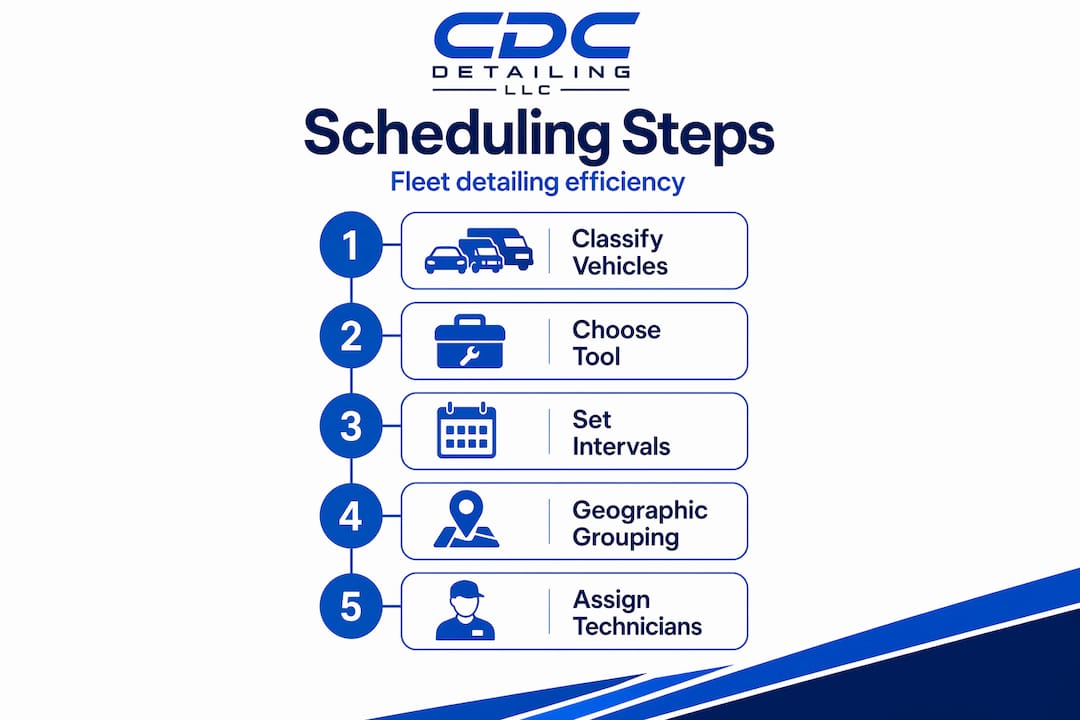
3. Assign jobs to individual technicians, not open time slots. Managing multiple detailers requires calendar tools that assign work to specific people. When jobs sit in a shared pool, confusion and missed appointments follow. Dedicated tools that assign individual technician calendars prevent that entirely. AI-driven scheduling software can increase booking capacity by up to 40% by handling this kind of crew allocation automatically.
4. Set up automatic confirmations and reminders. Every fleet detailing appointment should trigger an automatic confirmation and at least one reminder 24 hours before service. Automatic reminders and deposits at booking reduce last-minute cancellations and protect your scheduling reliability. Most modern scheduling platforms handle this without any manual input.
5. Build recurring maintenance plans into the calendar. One-off bookings are reactive. Recurring plans are where the real value lives. A three to four week maintenance cycle prevents heavy contamination buildup and eliminates the need for expensive corrective detailing down the road. Set these up once and let the system run them automatically.
Pro Tip: When setting up your geographic zones, print a map of your fleet’s regular parking locations and draw clusters by proximity. That visual exercise usually reveals two or three obvious zone groupings that save significant scheduling time.
Common scheduling problems and how to fix them
Even a well-designed schedule runs into friction. Here is where most fleet detailing operations break down and what to do about it.
-
Double bookings and route conflicts. These happen almost exclusively when multiple technicians share a generic calendar. The fix is dedicated scheduling software that assigns jobs to specific technicians with hard blocks. Managing multiple technicians requires individual calendar assignments, not pooled time slots. Once you make that switch, double bookings stop happening.
-
Last-minute cancellations. A vehicle becomes unavailable because it is out on a job, or a manager forgot to pull it from the lot. Deposits and 24-hour reminders dramatically reduce this problem. If a cancellation still happens, have a standing fill-in policy: keep one or two lower-priority vehicles as flexible slots that can absorb a reschedule without disrupting the entire day.
-
Weather and accessibility disruptions. Mobile detailing is weather-sensitive, and fleet lots are not always accessible during bad weather. Build a “weather hold” protocol into your calendar so that postponed appointments automatically get rescheduled rather than dropped. Flag vehicles that are stored outdoors as higher-priority after severe weather events.
-
Inaccurate service time estimates. When a detailer arrives and discovers the vehicle is in far worse condition than expected, the entire day’s schedule gets pushed. Photo documentation and dynamic scheduling at the intake stage reduces unexpected labor overruns by giving your team accurate information before they arrive.
-
Gaps in schedule visibility. If you cannot see at a glance which vehicles have been serviced, which are overdue, and which are coming up in the next two weeks, you are flying blind. Dedicated fleet maintenance scheduling platforms solve this with dashboard views that surface overdue vehicles automatically.
Measuring whether your schedule is actually working
Scheduling a fleet is only half the job. Verifying that the schedule produces results is where most managers stop short.
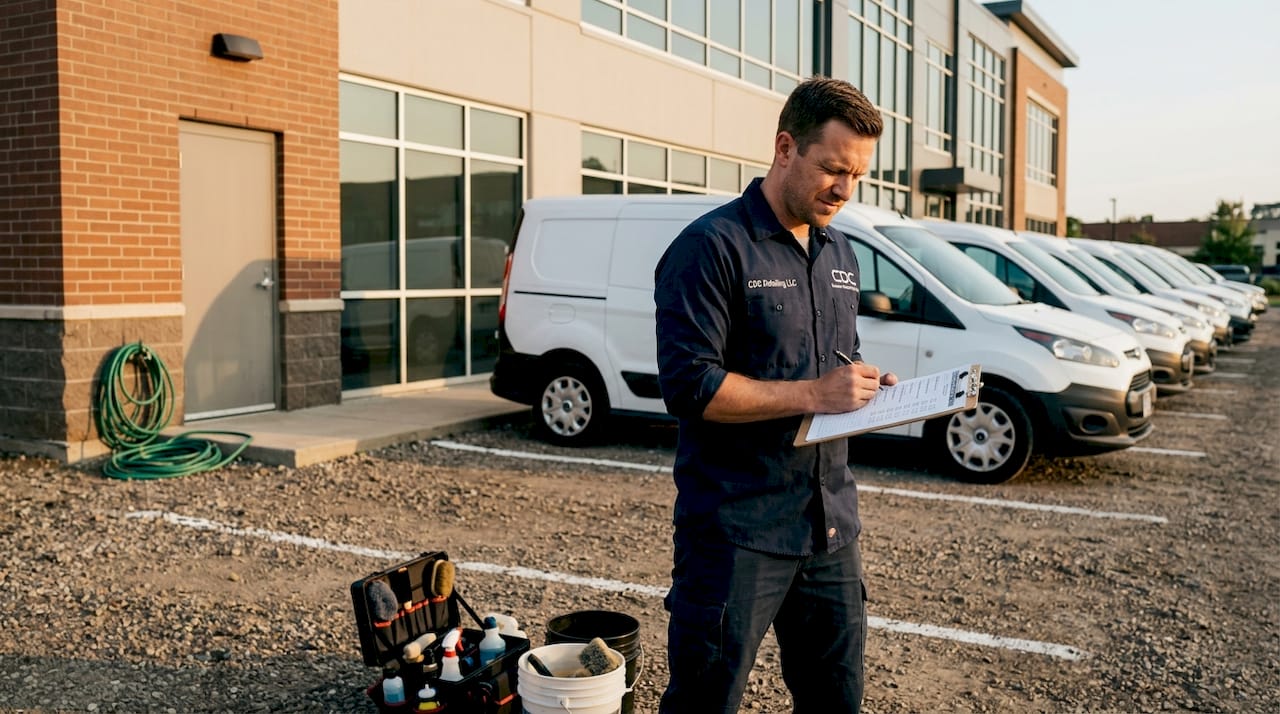
The simplest starting point is a comparison table that tracks cleaning frequency against observed vehicle condition. Run this review monthly.
| Metric | How to track | Review frequency |
|---|---|---|
| Vehicles serviced on schedule | Scheduling software reports | Weekly |
| Condition score per vehicle | Post-service inspection photos | Per service |
| No-show or cancellation rate | Booking platform data | Monthly |
| Cost per vehicle per month | Invoice totals by unit | Monthly |
| Overdue vehicles | Dashboard flag or manual audit | Weekly |
Beyond the table, monthly reports on booking trends and no-show rates help you spot patterns that are impossible to see in the day-to-day grind. If one vehicle type consistently generates cancellations, that tells you the scheduling window is wrong for that use pattern. If costs spike in certain months, seasonal scheduling adjustments are probably overdue.
Driver feedback is an underused verification tool. The people driving these vehicles daily notice things that do not show up in photos. A short monthly check-in question, asking whether their vehicle received its scheduled service and whether they noticed any quality issues, gives you ground-level data to refine workload balance across your detailing team.
Pro Tip: Set a recurring 15-minute calendar block at the end of each month to review your no-show rate, cost per unit, and overdue vehicles. That single habit will surface 90% of the problems in your scheduling system before they become expensive.
My honest take on fleet scheduling
I have seen plenty of operations where the scheduling system was technically solid but still underperforming. The reason, almost every time, was that the team was treating detailing as an afterthought rather than a core workflow. Fleet detailing should be treated as a core business workflow with the same operational discipline you apply to fuel management or driver safety programs.
The other thing I have learned is that geographic clustering beats strict appointment sequencing every single time. Managers often want to schedule by vehicle priority, booking their most important units first regardless of location. That instinct costs money. Two high-priority vehicles ten miles apart, with a low-priority vehicle directly between them, should all be booked on the same run. Prioritizing location over hierarchy saves more time than almost any other single scheduling decision.
Manual spreadsheets are also a bigger operational liability than most managers realize. The greatest scheduling improvements come not from adding more oversight but from reducing the mental load through automation. When confirmations, reminders, recurring plans, and technician assignments run themselves, your attention goes where it actually belongs.
— Charles
Ready to put your fleet detailing schedule on autopilot?
If building out a full scheduling system sounds like a lot to manage on top of everything else you are already running, that is exactly where Cdcautodetailing comes in. We work with fleet managers and business owners across South Jersey to set up detailing schedules that minimize downtime, protect vehicle condition, and keep your brand looking sharp on every road.
From recurring maintenance plans to multi-vehicle booking with automatic reminders, our team handles the logistics so you do not have to. Explore our fleet detailing service packages to see what fits your operation, or browse practical detailing service examples to understand exactly what each service includes. When you are ready to move forward, booking your first fleet appointment takes minutes.
FAQ
How often should fleet vehicles be detailed?
Detailing frequency depends on vehicle type and exposure. Customer-facing vehicles benefit from weekly service, service vans from bi-weekly, and administrative vehicles typically need monthly attention, with additional cleanings after harsh environmental exposure.
What is the best way to book fleet cleaning for multiple vehicles?
Use dedicated scheduling software that assigns jobs to individual technicians and groups appointments by geographic zone. This prevents double bookings and reduces drive time significantly compared to manual calendar tools.
How do automatic reminders help with fleet detailing appointments?
Automatic reminders and deposits reduce last-minute cancellations by keeping vehicle operators accountable and giving detailers advance notice to prepare. Most scheduling platforms can handle this without any manual input from your team.
Why does geographic clustering matter when scheduling vehicle detailing?
Grouping appointments by location rather than vehicle priority can save up to 90 minutes per van in daily drive time, which directly lowers fuel costs and allows more vehicles to be serviced per day.
Do I need intake photos before every fleet detailing appointment?
Yes. Baseline intake photos protect you from damage disputes, help your detailing team estimate accurate service times, and create a visual record that tracks vehicle condition over time across your entire fleet.