
Keeping your vehicle clean protects its value and enhances its appearance, yet busy South Jersey car owners often struggle to find time for proper maintenance. Mobile car washing delivers professional results at your location, combining convenience with quality care that traditional methods can’t match. This guide walks you through preparation, washing techniques, and verification steps to help you maintain your vehicle’s finish effectively. You’ll learn practical tips that save time while avoiding common mistakes that damage paint and reduce your car’s resale value.
Table of Contents
- Key takeaways
- Preparing your vehicle for a mobile wash
- Step-by-step mobile car washing process
- Common mistakes to avoid and verifying your wash
- Enhance your car care with professional mobile detailing
- Frequently asked questions
Key Takeaways
| Point | Details |
|---|---|
| Preparation matters | Thoughtful prep including location choice and gathering essential supplies sets up a successful mobile wash and protects surfaces. |
| Two bucket method | Using separate soapy and rinse buckets dramatically reduces swirl marks and paint scratches. |
| Protect delicate areas | Identify antennas, decals, trim and plastic components and wash them with extra care to avoid damage. |
| Shade and quality products | Choose a shaded area and use pH balanced automotive soap with a microfiber mitt to preserve finish. |
Preparing your vehicle for a mobile wash
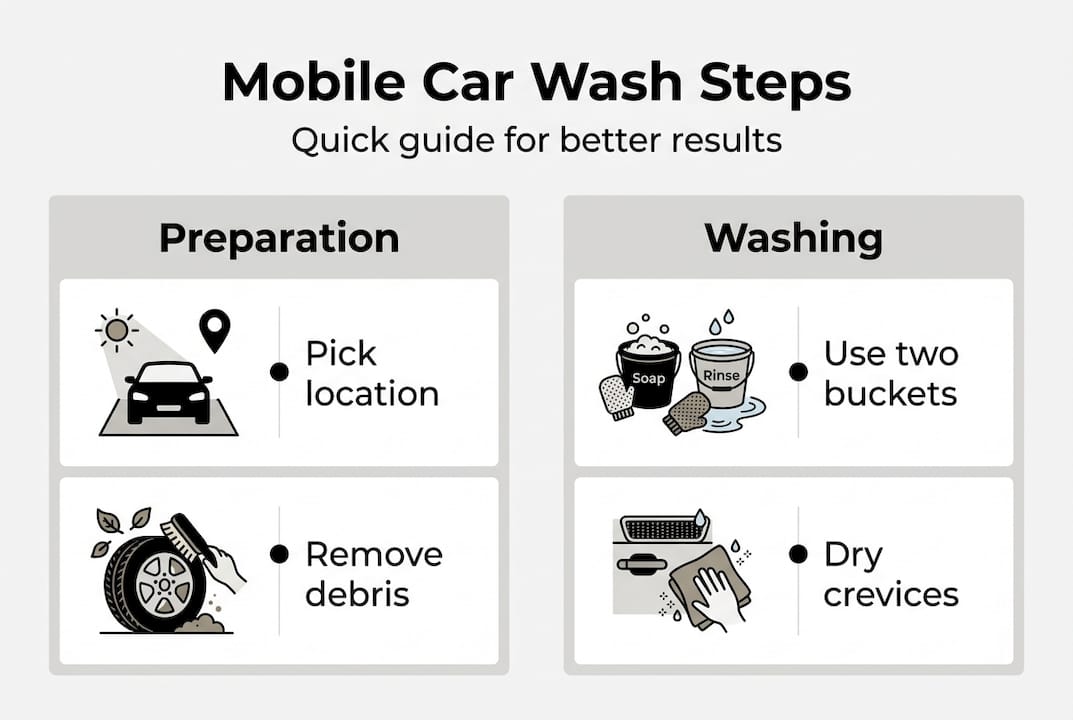
Successful mobile car washing starts with thoughtful preparation that sets the stage for excellent results. Proper preparation can enhance the effectiveness of mobile car washing and protect car surfaces from unnecessary damage. Your location choice matters significantly because washing in direct sunlight causes soap to dry too quickly, leaving streaks and spots that require extra work to remove.
Select a shaded, level area with good drainage where water runoff won’t create problems. Your driveway or a flat section of your property works perfectly for most mobile washing sessions. Check local regulations about water use and drainage before you begin, as some South Jersey municipalities have specific requirements for outdoor vehicle washing.
Gather your essential materials before starting to avoid interruptions during the wash process. You’ll need two buckets (one for soapy water, one for rinsing your mitt), a high-quality wash mitt made from microfiber, pH-balanced car soap designed specifically for automotive finishes, and several clean microfiber towels for drying. Having everything within reach streamlines your workflow and prevents the frustration of searching for supplies mid-wash.
Essential preparation checklist:
- Remove loose items from exterior (antennas, roof racks if detachable)
- Close all windows, sunroof, and doors completely
- Rinse vehicle thoroughly to remove loose dirt and debris
- Inspect for tar, sap, or stubborn contaminants needing pre-treatment
- Check weather forecast to avoid washing before rain
Rinsing off loose debris before washing prevents scratches caused by dragging dirt across your paint. Use a garden hose with good water pressure to flush away surface contaminants, paying special attention to wheel wells, lower panels, and areas behind trim pieces where grime accumulates. This initial rinse removes particles that would otherwise act like sandpaper during the washing process.
Identify delicate areas requiring extra care, such as aftermarket antennas, vinyl decals, chrome trim, and plastic components. These elements need gentler handling to avoid damage or premature wear. Mark mentally where these sensitive spots are located so you can adjust your technique when washing those sections.
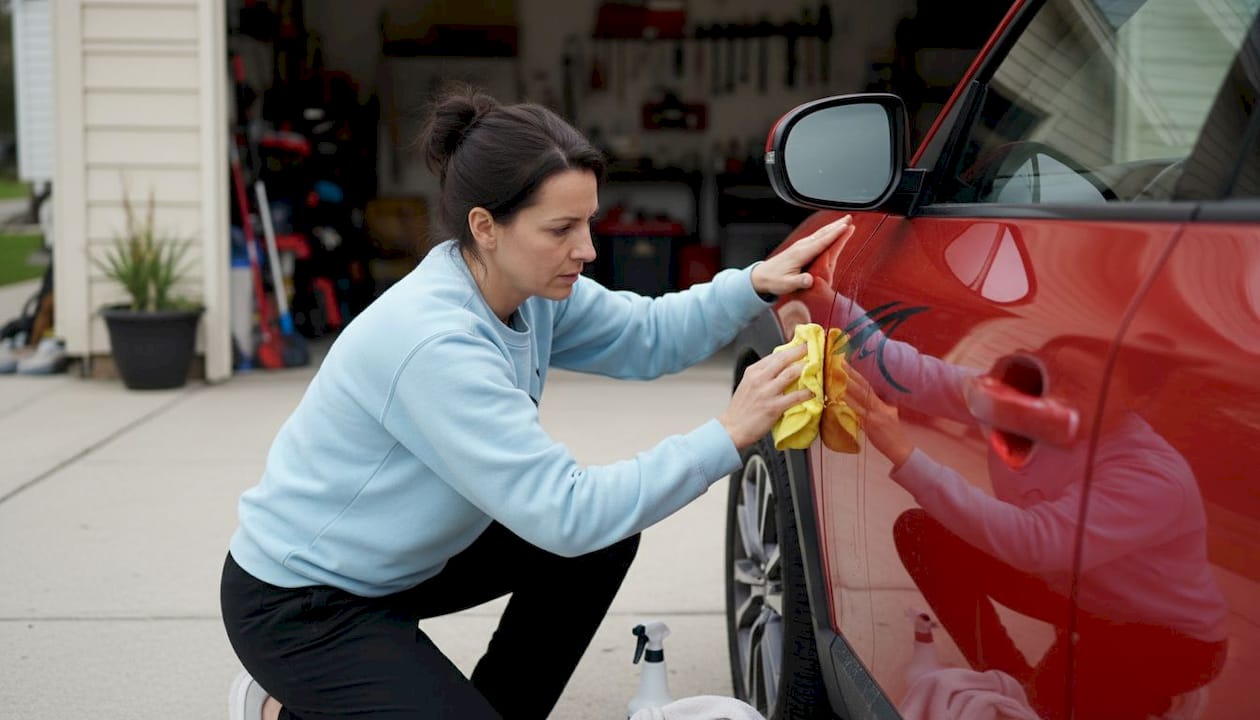
Pro Tip: Use the two-bucket method to dramatically reduce swirl marks and paint scratches. Fill one bucket with soapy water and keep the second filled with clean rinse water. After washing each section, rinse your mitt in the clean water bucket before reloading with soap. This simple technique prevents dirt from contaminating your wash solution and being redistributed across your paint.
| Preparation Step | Time Required | Impact on Results |
|---|---|---|
| Location selection | 5 minutes | Prevents water spots and soap drying |
| Material gathering | 10 minutes | Ensures smooth, uninterrupted workflow |
| Initial rinse | 5 minutes | Removes loose debris, prevents scratches |
| Inspection | 3 minutes | Identifies problem areas needing attention |
Understanding how to prep your car for detailing makes a measurable difference in your final results. Taking these preparation steps seriously transforms an average wash into a professional-quality outcome that protects your investment.
Step-by-step mobile car washing process
Executing a proper wash sequence ensures thorough cleaning while protecting your vehicle’s finish from damage. Following an organized washing sequence helps avoid damage and ensures comprehensive cleaning that addresses every surface effectively. The systematic approach outlined here delivers consistent results whether you’re washing weekly or monthly.
Complete washing sequence:
-
Rinse the entire vehicle starting from the top and working downward. Use steady water pressure to flush away loose dirt, paying extra attention to crevices around door handles, mirrors, and trim pieces where debris hides.
-
Clean wheels and tires first using a dedicated wheel cleaner and separate wash mitt. Wheels collect brake dust and road grime that you don’t want spreading to your paint. Spray wheel cleaner, let it dwell for the recommended time, then scrub with your wheel-specific mitt. Rinse thoroughly before moving to the body.
-
Wash the vehicle top to bottom in sections, starting with the roof and working down to the lower panels. Load your wash mitt with soapy water and use straight, overlapping strokes rather than circular motions. Complete one section, then rinse it before moving to the next to prevent soap from drying on the surface.
-
Rinse each section thoroughly after washing to remove all soap residue. Soap left on paint attracts dirt and can leave spots when it dries. Use a steady stream of water, ensuring you flush soap from all crevices, trim gaps, and body lines.
-
Dry the vehicle immediately using clean microfiber drying towels. Start at the top and work down, using a blotting motion rather than dragging the towel across the surface. Change to a fresh towel when the first becomes saturated to maintain drying efficiency.
-
Detail door jambs and crevices where water collects. Open doors carefully and wipe down jambs, hinges, and weather stripping with a damp microfiber cloth. These areas often get overlooked but contribute significantly to overall cleanliness.
Your washing technique directly impacts your results. Apply light to moderate pressure with your wash mitt, letting the soap and mitt do the work rather than scrubbing aggressively. Aggressive scrubbing creates swirl marks and micro-scratches that dull your paint’s finish over time. The goal is to lift dirt gently, not grind it into the surface.
Pro Tip: Compare foam cannon and traditional bucket wash methods to determine which works best for your situation. Foam cannons attach to pressure washers and create thick foam that clings to your vehicle, providing extra lubrication and loosening dirt effectively. However, a quality bucket wash with proper technique delivers excellent results without additional equipment investment. Choose based on your available tools, budget, and how frequently you wash your vehicle.
| Method | Equipment Needed | Time Required | Best For |
|---|---|---|---|
| Foam cannon | Pressure washer, foam cannon attachment | 30 minutes | Weekly washes, heavily soiled vehicles |
| Two-bucket | Two buckets, wash mitt, hose | 45 minutes | Standard maintenance, budget-conscious owners |
| Rinseless wash | Rinseless solution, buckets, towels | 40 minutes | Water restrictions, apartment dwellers |
Mastering essential detailing maintenance tips helps you maintain consistent quality between professional services. The washing process becomes faster and more effective with practice, and your vehicle’s appearance improves noticeably when you follow these systematic steps regularly.
Common mistakes to avoid and verifying your wash
Recognizing frequent washing errors prevents costly paint damage and helps you achieve professional results consistently. Avoiding common detailing mistakes preserves your vehicle’s finish and value long term, protecting your investment from preventable deterioration. Small technique adjustments make substantial differences in your outcomes.
Critical mistakes that damage your finish:
- Washing in direct sunlight causes soap and water to dry too quickly, leaving spots and streaks that require additional work to remove
- Using household detergents like dish soap strips protective wax and sealants, leaving paint vulnerable to environmental damage
- Scrubbing in circular motions creates swirl marks visible in direct light, reducing your paint’s gloss and clarity
- Neglecting to rinse your wash mitt allows dirt to accumulate and scratch paint during subsequent passes
- Skipping the drying step permits minerals in water to etch into paint as water evaporates, creating permanent spots
Washing in direct sun ranks among the most common errors South Jersey car owners make during summer months. The heat accelerates water evaporation, causing soap to dry on your paint before you can rinse it away. These dried soap residues bond to your clear coat and require significant effort to remove, often necessitating clay bar treatment or polish to restore the surface. Always wash in shade or during cooler morning and evening hours.
Household cleaning products seem like convenient alternatives to dedicated car soap, but their formulations attack the protective layers on your paint. Dish detergent contains degreasers designed to cut through cooking oils, and these same chemicals strip wax and sealants from your vehicle. Once these protective layers disappear, your paint faces direct exposure to UV rays, acid rain, bird droppings, and other environmental contaminants that cause oxidation and fading.
Circular scrubbing motions create the dreaded swirl marks that plague many vehicles. These fine scratches form circular patterns visible when light hits your paint at certain angles, making your finish look dull and poorly maintained. Instead, use straight, overlapping strokes that follow the vehicle’s body lines. Any minor scratches created by this method become far less noticeable because they align with the natural light reflection patterns on your car.
“Taking time to verify your wash saves costly future paint repairs and maintains your vehicle’s showroom appearance longer.”
Verification ensures you haven’t missed spots and confirms your technique delivered the desired results. Walk around your vehicle in different lighting conditions, checking for water spots, soap residue, or areas you overlooked during washing. Inspect under door handles, around emblems, and along trim pieces where soap commonly hides. Crouch down to view your paint from low angles, which reveals swirl marks, water spots, and other imperfections invisible from standing height.
Dry all crevices thoroughly to prevent moisture damage that leads to rust and corrosion. Water trapped in door jambs, trunk seals, and panel gaps creates ideal conditions for oxidation. Use a clean, dry microfiber towel to wick moisture from these areas, and consider using compressed air to blow water from tight spaces if available. This extra attention extends your vehicle’s lifespan and prevents rust from forming in vulnerable areas.
Check your windows and mirrors for streaks, as these surfaces show water spots prominently and affect visibility. Wipe glass surfaces with a dedicated glass cleaner and microfiber cloth if you notice streaking after your wash. Clean windows enhance safety and contribute significantly to your vehicle’s overall appearance.
Review exterior detailing best practices regularly to refine your technique and stay current with proven methods. Even experienced car owners benefit from periodic refreshers on proper washing techniques, as product formulations and best practices evolve with new research and technology.
Enhance your car care with professional mobile detailing
While DIY washing maintains your vehicle between services, professional mobile detailing delivers results that exceed what most car owners achieve at home. CDC Auto Detailing brings expert care directly to your South Jersey location, combining convenience with premium products and techniques that protect your investment. Our mobile team uses professional-grade equipment and proven methods that restore and maintain your vehicle’s finish without requiring you to leave home or work.
Professional detailers identify and address issues you might overlook, such as early-stage oxidation, embedded contaminants, and paint defects requiring correction. We assess your vehicle’s specific needs and customize our approach accordingly, whether you need a maintenance wash or comprehensive paint restoration. This personalized attention ensures your car receives exactly the care it requires rather than a one-size-fits-all treatment.

Scheduling professional mobile detailing fits seamlessly into your busy life. Book your mobile detailing appointment online at your convenience, selecting a time that works with your schedule. Our flexible booking system accommodates your needs, and our mobile setup means you can continue with your day while we transform your vehicle. Learn more about how auto detailing works and explore examples of auto detailing services to discover which options best suit your vehicle’s condition and your goals.
Frequently asked questions
How often should I wash my car using mobile services?
Wash your car every two weeks during normal conditions to maintain its appearance and protect the paint. Increase frequency to weekly during winter months when road salt accelerates corrosion, or if you park under trees that drop sap and debris. Regular washing prevents contaminants from bonding to your paint and causing permanent damage.
What are the benefits of mobile car washing over traditional methods?
Mobile car washing saves time by bringing professional service to your location, eliminating travel to car washes or detail shops. You avoid the harsh brushes and recycled water used by automatic car washes, which often cause scratches and leave residue. Mobile services provide personalized attention and use quality products specifically chosen for your vehicle’s needs.
Can mobile car washes accommodate special vehicles or paint types?
Professional mobile detailers handle specialty vehicles including classics, exotics, and cars with custom paint or wraps. They adjust their techniques and products based on your vehicle’s specific requirements, using pH-neutral soaps for delicate finishes and specialized tools for textured surfaces. Communicate your vehicle’s unique characteristics when booking your mobile detailing to ensure proper preparation.
How do I prepare my car for a mobile wash appointment?
Remove personal items from your vehicle’s exterior and ensure windows and doors close properly before the appointment. Park in an accessible location with adequate space for the detailer to work around your entire vehicle. Review how to prep your car for detailing for comprehensive guidance on maximizing your service results.
Are eco-friendly products used in mobile car washing?
Many professional mobile detailers use biodegradable, phosphate-free products that minimize environmental impact while delivering excellent cleaning results. These eco-friendly formulations break down naturally and don’t harm plants or waterways. Ask your mobile detailer about their product choices if environmental responsibility is a priority for you.