
Between back-to-back workdays and family outings around South Jersey, even the cleanest car interiors quietly collect dirt, spills, and odors that regular vacuuming leaves behind. The need for a truly fresh, healthy vehicle goes beyond surface cleaning—deep contaminants and allergens settle into fabric with every commute. Interior shampooing tackles these hidden problems through a process that removes grime, odors, and allergens, creating a noticeably cleaner and more comfortable ride tailored to your busy schedule.
Table of Contents
- Understanding Interior Shampooing and Its Purpose
- Common Types of Interior Shampooing Services
- Step-by-Step Interior Shampooing Process Explained
- Key Benefits for Vehicle Owners
- Risks, Costs, and Common Pitfalls
Key Takeaways
| Point | Details |
|---|---|
| Importance of Interior Shampooing | Regular interior shampooing significantly improves vehicular hygiene, air quality, and comfort while extending the lifespan of upholstery. |
| Service Types | Choose the right shampooing method—Rotary for heavy stains, Encapsulation for maintenance, and Steam for allergen control—to suit your vehicle’s specific needs. |
| Professional Standards | Always select professional services equipped with proper extraction systems and avoid low-cost options that may cause damage or lingering odors. |
| Maintenance Recommendations | Schedule professional shampooing every 6-12 months or after spills to maintain cleanliness and prevent long-term damage. |
Understanding Interior Shampooing and Its Purpose
Your car’s interior is where you spend countless hours commuting, running errands, or taking weekend road trips. Over time, your vehicle’s upholstery and carpets absorb dirt, spills, allergens, and odors that regular vacuuming can’t reach. Interior shampooing addresses this problem by deep cleaning fabric surfaces to restore hygiene and comfort.
Interior shampooing works similarly to how hair shampoo removes dirt and oils from your scalp. A specialized cleaning solution penetrates fabric fibers, breaking down embedded contaminants and lifting them away. This process goes far deeper than surface-level vacuuming can achieve.
Why does this matter? Your car’s interior accumulates more than just visible dirt. Dust mites, bacteria, pet dander, and other allergens settle into your upholstery daily. These microscopic invaders affect air quality inside your vehicle.
Interior shampooing serves several critical purposes:
- Removes deeply embedded dirt, dust, and debris from fabric surfaces
- Eliminates odors trapped in upholstery and carpet fibers
- Reduces allergens that affect air quality and occupant health
- Restores appearance and extends fabric lifespan
- Creates a healthier in-car environment for you and your family
Hygiene practices, including regular cleaning routines, play a significant role in maintaining health and preventing disease transmission. Your vehicle’s interior deserves the same attention you’d give your home’s carpets. Think of shampooing as essential maintenance, not just cosmetic improvement.
For busy South Jersey professionals, professional mobile shampooing saves time while delivering results you can’t achieve yourself. Technicians use commercial-grade equipment and solutions that penetrate deeper than consumer-grade products. The process transforms your cabin into a genuinely clean, fresh-smelling space.
Regular interior shampooing maintains vehicle hygiene, protects occupant health, and preserves your investment in your car’s condition.
Pro tip: Schedule interior shampooing every 6-12 months, or immediately after spills or pet accidents, to maintain optimal cleanliness and prevent permanent stains from setting into fabric fibers.
Common Types of Interior Shampooing Services
Not all interior shampooing is created equal. Different service types address various cleaning needs, fabric conditions, and your specific goals for your vehicle. Understanding these options helps you choose the right approach for your car.
Rotary shampoo systems represent the most common professional shampooing method. Technicians use a swing-type floor machine with agitating pads that work cleaning solutions deep into upholstery and carpet fibers. The machine oscillates back and forth, breaking down embedded dirt while the solution penetrates thoroughly. After agitation, technicians extract the dirty solution using wet vacuums, leaving your interior clean and damp.
This method works exceptionally well for heavily soiled interiors or stubborn stains. The mechanical agitation combined with chemical solutions tackles dirt that surface-level cleaning misses. For most South Jersey car owners, rotary shampooing delivers the deepest clean available.
Another option is encapsulation shampooing, which uses specialized solutions that crystallize around dirt particles. These solutions are applied to your carpets and upholstery, then dried. Once dry, the encapsulated soil is simply vacuumed away. This method requires less water and dries faster than traditional shampooing.
Steam cleaning represents a distinct approach, using high-pressure steam to dislodge dirt without heavy reliance on detergents. Steam sanitizes surfaces while lifting grime, making it excellent for allergen reduction and sanitization. The process dries quickly, and you’re back to driving sooner.
Here’s how these methods compare:
Here is a comparison of common interior shampooing methods and their ideal uses:
| Method | Best For | Drying Time | Chemical Use |
|---|---|---|---|
| Rotary Shampoo | Heavy stains, deep cleaning | Long (6-24 hrs) | Moderate |
| Encapsulation | Maintenance, quick freshening | Short (1-3 hrs) | Low |
| Steam Cleaning | Allergen control, sanitization | Very Short (<2 hrs) | Minimal |
- Rotary Shampoo: Deep cleaning, best for heavy soiling, longer drying time
- Encapsulation: Faster drying, lower moisture, ideal for maintenance cleaning
- Steam Cleaning: Maximum sanitization, minimal chemicals, quick drying
Your best choice depends on your car’s current condition. Heavily stained or pet-damaged interiors benefit from rotary shampooing’s aggressive cleaning power. Regular maintenance cleaning works well with encapsulation or steam. For vehicles used primarily for commuting without major spills, steam cleaning offers excellent sanitization with minimal downtime.
Professional shampooing service selection should match your vehicle’s condition, your timeline, and your health priorities—not just price.
Pro tip: Assess your interior’s condition before booking: if you see visible stains or notice odors, request rotary shampooing; for maintenance and allergen control, steam cleaning or encapsulation work well.
Step-by-Step Interior Shampooing Process Explained
Professional interior shampooing follows a structured approach that ensures thorough cleaning without damaging your vehicle’s interior. Understanding what happens during the process helps you know what to expect when technicians arrive at your South Jersey home.
The process begins with preparation and inspection. Technicians assess your interior’s condition, identifying heavily soiled areas, stains, and fabric types. They prepare cleaning solutions tailored to your specific upholstery and carpet materials. This customization matters because different fabrics respond differently to treatment.
Next comes protection of surrounding areas. Technicians safeguard door panels, plastic trim, and electronics from moisture exposure. They may place protective coverings on sensitive components to prevent accidental damage during the cleaning process.
The application phase involves preparing cleaning solutions and applying them evenly across your carpets and upholstery. Solutions are worked into fabrics systematically, ensuring complete coverage without oversaturation. This even distribution is crucial for consistent results.
Agitation comes next, where the rotary buffer with agitating pads oscillates across treated surfaces. This mechanical action breaks down embedded dirt and allows the cleaning solution to penetrate deep into fabric fibers. Technicians move continuously in overlapping patterns to avoid over-working any single area.
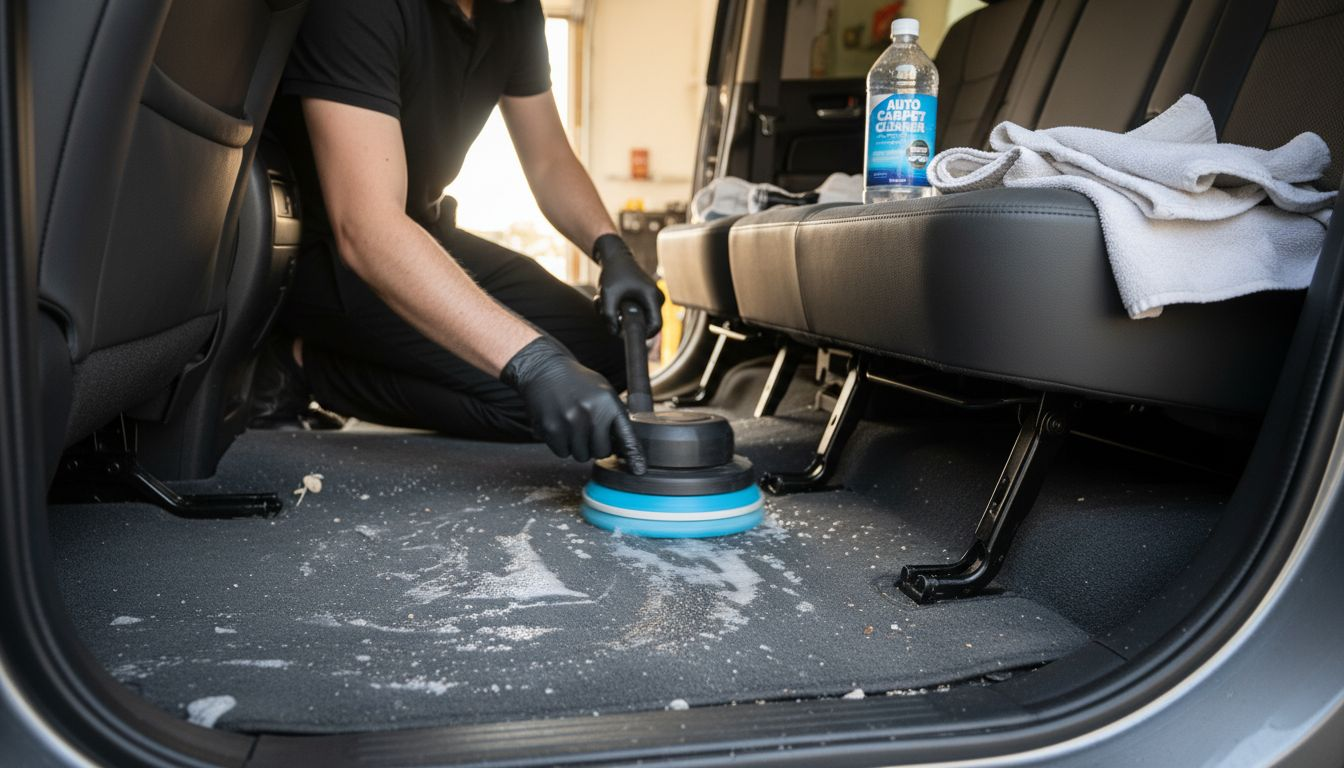
The foam created during agitation helps lift contaminants to the surface. This visible foam is actually your dirty solution bringing grime out of the fibers. It’s a sign the process is working effectively.
Once agitation is complete, wet vacuum extraction removes soil-laden solution. Powerful extraction equipment pulls dirty water and dissolved contaminants out, leaving carpets and upholstery cleaner and drier. Some technicians apply defoamers to control remaining bubbles during extraction.
The final step is drying and inspection. Technicians open windows and may use fans to accelerate moisture evaporation. They inspect cleaned areas to ensure satisfaction and address any remaining problem spots.
Here’s the typical sequence:
- Inspect interior and assess conditions
- Protect sensitive areas and electronics
- Apply specialized cleaning solutions
- Agitate with rotary equipment in overlapping passes
- Extract dirty solution using wet vacuums
- Control foam residue with defoamers if needed
- Air dry and perform final inspection
Professional shampooing typically takes 2-4 hours depending on vehicle size and soiling level, with complete drying achieved within 24 hours.
Pro tip: Avoid driving or using your vehicle immediately after shampooing; allow 24 hours for complete drying to prevent resoiling and ensure the best results.
Key Benefits for Vehicle Owners
Interior shampooing delivers tangible benefits that go far beyond just making your car look clean. For South Jersey professionals juggling work, family, and commitments, these advantages directly impact your daily driving experience and long-term vehicle investment.
The most immediate benefit is health improvement. Your vehicle’s interior accumulates dust mites, bacteria, pet dander, and allergens that regular vacuuming cannot remove. Good hygiene practices reduce the presence of pathogens and allergens, creating a healthier breathing environment inside your car. This matters especially if you or your passengers suffer from allergies or respiratory sensitivities.
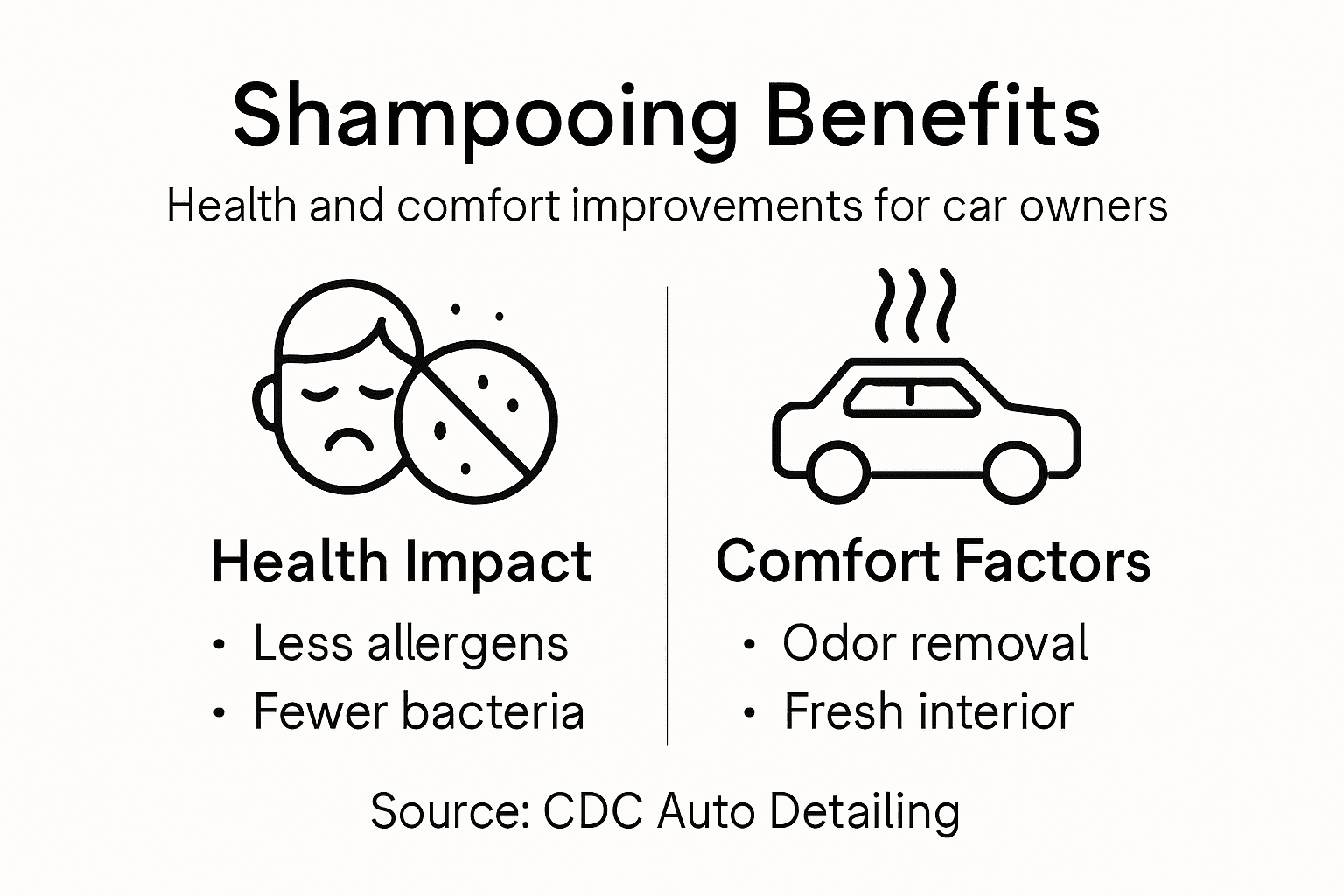
A cleaner interior reduces respiratory irritation from microbial buildup. When you spend 30 minutes commuting each direction, breathing clean air makes a real difference. You’ll notice fewer sneezing fits and less congestion during your drive.
Odor elimination is another major benefit. Shampooing removes trapped odors at their source in upholstery fibers. Unlike air fresheners that merely mask smells, professional shampooing actually eliminates them. Your car will smell genuinely fresh, not artificially scented.
Extended fabric lifespan protects your investment. Regular shampooing removes dirt that abrades and degrades fibers over time. Cleaner upholstery and carpets retain their original softness and appearance longer. This matters when you’re considering your vehicle’s resale value.
Here are the core benefits shampooing provides:
- Deep removal of dirt, allergens, and embedded stains
- Reduced bacterial growth and microbial contamination
- Elimination of stubborn odors at their source
- Extended fabric life through regular maintenance
- Improved occupant comfort and psychological satisfaction
- Enhanced vehicle hygiene for family safety
Comfort and satisfaction matter too. A genuinely clean interior creates pride in ownership. Your car becomes a pleasant space rather than something you tolerate. Passengers notice and appreciate the freshness immediately.
There’s also a psychological benefit. Clean vehicles reduce stress during commutes and improve mood during family trips. You feel better driving a car that’s genuinely hygienic, not just surface-clean.
Regular interior shampooing transforms your vehicle from merely appearing clean to actually being hygienically clean—benefiting both your health and your investment.
Pro tip: Schedule shampooing before the spring and fall seasons when allergen levels spike, maximizing health benefits during months when respiratory irritation is most common.
Risks, Costs, and Common Pitfalls
While interior shampooing delivers excellent results when done correctly, DIY attempts or poor professional work can create expensive problems. Understanding these risks helps you make informed decisions about your vehicle’s interior care.
Over-wetting ranks as the most common mistake. Applying too much solution or failing to extract moisture properly leaves your carpets and upholstery soaking wet. This creates ideal conditions for mold and mildew growth, which can damage fabrics permanently and create health hazards.
Prolonged drying times compound the problem. Wet interiors take days to dry completely, during which mold spores thrive. A damp car smells worse than before shampooing and may develop permanent odor problems.
Insufficient extraction leaves behind detergent residue that attracts dirt. Your carpets may actually get dirtier faster than before shampooing because the sticky residue acts like a magnet for dust. This defeats the entire purpose of cleaning.
Equipment damage occurs when technicians leave machines stationary too long or use excessive agitation. Over-agitation or improper technique causes fabric damage and discoloration. Delicate upholstery can become matted, faded, or torn from aggressive equipment use.
Using harsh chemicals without proper knowledge creates additional risks. Some solutions damage specific fabric types or leave permanent stains. Wrong product choices lead to discoloration that’s impossible to reverse.
Costs vary significantly based on method and vehicle size:
Below is a quick reference to typical cost ranges and hidden risks of interior shampooing services:
| Service Type | Estimated Cost (Sedan) | Potential Hidden Risk |
|---|---|---|
| Basic Shampooing | $150 – $300 | Incomplete extraction |
| Full Interior Shampoo | $300 – $600 | Prolonged interior dampness |
| Steam Cleaning | $200 – $400 | Residual moisture in fabrics |
| Encapsulation Shampoo | $250 – $500 | Rapid resoiling if overused |
- Basic shampooing: $150-300 for compact cars
- Full interior shampooing: $300-600 for standard sedans
- Steam cleaning: $200-400 depending on coverage
- Encapsulation shampooing: $250-500 for comprehensive treatment
Potential hidden costs emerge when problems develop. Mold or mildew damage may require upholstery replacement, costing $1,000 or more. Fabric discoloration from improper products is permanent.
Common pitfalls to avoid:
- Choosing budget services without checking experience or reviews
- Attempting DIY shampooing without proper equipment
- Selecting inappropriate cleaning methods for your fabric type
- Booking services before inspecting your vehicle’s specific needs
- Ignoring drying time requirements after service completion
Professional shampooing protects your investment; cheap services often create costly problems that exceed the original savings.
Pro tip: Always verify that your chosen service includes adequate extraction equipment, applies appropriate products for your specific upholstery, and provides drying time estimates before booking.
Elevate Your Car’s Cleanliness and Comfort with Expert Interior Shampooing
Your car’s interior deserves more than a quick vacuum to stay truly clean and healthy. As highlighted in the article, deep interior shampooing targets the embedded dirt, allergens, and lingering odors that everyday cleaning misses. This level of care restores freshness, extends fabric life, and promotes better air quality during your daily drives. If you want to protect your family’s health and enhance your vehicle’s comfort, professional mobile shampooing is the solution.
Discover premium interior shampooing services tailored for South Jersey drivers at CDC Auto Detailing. Our skilled technicians bring commercial-grade equipment directly to your home, offering methods like rotary shampoo, steam cleaning, and encapsulation to match your car’s specific needs. Don’t wait for stains and allergens to worsen. Act now and experience the transformation of your vehicle’s interior hygiene and appearance. Schedule your appointment easily through our contact and booking page and take the first step toward a healthier, fresher ride.
Frequently Asked Questions
What is interior shampooing, and why is it important?
Interior shampooing is a deep cleaning process for your car’s upholstery and carpets that removes dirt, allergens, and odors. It significantly enhances air quality and hygiene inside your vehicle, promoting a healthier environment for occupants.
How often should I schedule interior shampooing for my car?
It’s recommended to schedule interior shampooing every 6-12 months, or immediately after any spills or pet accidents, to maintain optimal cleanliness and prevent permanent stains from setting into fabric fibers.
What are the different types of interior shampooing methods available?
Common methods include rotary shampooing, encapsulation shampooing, and steam cleaning. Rotary shampooing offers a deep clean for heavily soiled interiors, encapsulation uses less water and allows for quicker drying, while steam cleaning focuses on sanitizing surfaces with minimal chemical use.
What are the common risks associated with DIY interior shampooing?
Common risks include over-wetting, insufficient extraction leading to detergent residue, and potential damage from improper techniques. These mistakes can create mold, prolong drying times, or damage your car’s upholstery, leading to costly repairs.
Recommended
- Why Get Interior Detailing – Lasting Value for Your Car
- Step by Step Car Interior Cleaning for Pristine Results
- Interior Car Cleaning Workflow for Pristine Results
- Interior detailing for pet owners: How to deal with hair and odors – CDC Detailing
- How to Detail Your Car for a Professional Finish | ReVroom