
For most Tesla owners, the best approach combines paint protection film on high-impact zones with a professional ceramic coating over the rest of the vehicle. The film blocks stone chips and abrasions where damage happens most, while the ceramic coating guards the remaining paint chemically and makes washing far easier. Having a professional handle the install also helps preserve both the finish and any applicable warranty coverage.
TL;DR:
- Combining paint protection film on high-impact areas with a ceramic coating on the rest of the Tesla offers the best protection against chips, scratches, and contamination.
- Installing PPF before ceramic coating ensures proper curing and enhances impact resistance, especially on the front bumper, hood, and fenders.
- Cost ranges from $1,000 to $2,400 depending on coverage and duration, with partial PPF packages being more affordable than full-vehicle coverage.
- Professional installation is highly recommended for PPF due to complex curves and edge sealing, while DIY options are suitable only for small patches.
- Regular maintenance with gentle washing and periodic decontamination prolongs both PPF and ceramic coating effectiveness.
Table of Contents
- What PPF, ceramic coating, wraps, and sealants actually protect against
- Why PPF plus ceramic coating is the practical best choice for Teslas
- Which panels to protect first and realistic cost ranges
- DIY vs professional installation and Tesla-specific cautions
- Maintenance schedule and washing techniques to protect coatings and film
- How CDC Auto Detailing executes the recommended approach
- A straight answer on protecting your Tesla’s paint
- Get your Tesla protected with CDC Auto Detailing
- FAQ
- Sources
What PPF, ceramic coating, wraps, and sealants actually protect against
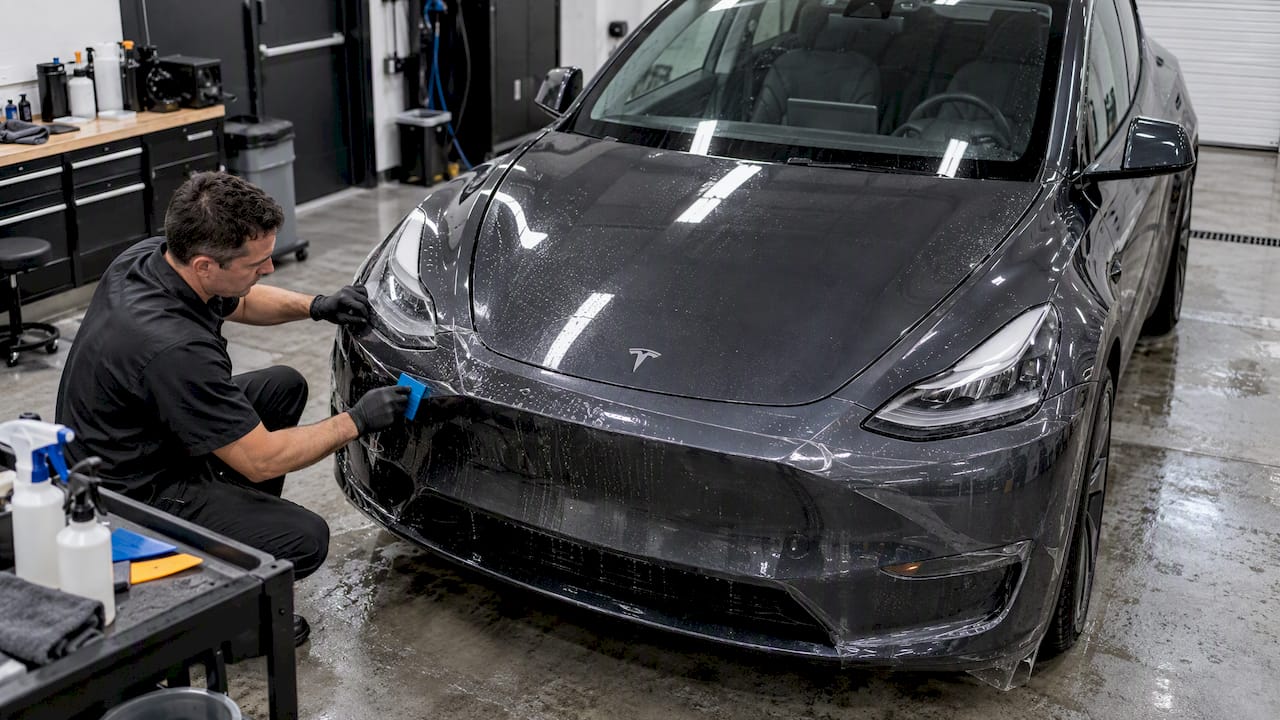
Paint protection film is a thermoplastic urethane layer, typically 6 to 8 mils thick, applied directly over factory paint. It carries a self-healing topcoat that uses heat to smooth out light swirls and scratches, and its main job is stopping stone chips, road debris, and surface abrasions before they ever reach the clear coat.
Ceramic coating works differently. It is a liquid polymer, usually silicon dioxide based, that bonds to the paint and cures into a semi-permanent layer. It adds gloss, repels water, and resists chemical staining from bugs, tree sap, and bird droppings, but it will not stop a rock chip or a deep scratch. Industry detailers are consistent on this point: ceramic coating enhances gloss and hydrophobicity but cannot prevent deep scratches or rock impacts.
Two other options round out the field:
- Vinyl wraps change color and add some UV resistance, but they are not built as impact armor and typically need replacement every few years.
- Wax and paint sealants offer a quick gloss and short-term chemical resistance, lasting weeks to a few months before reapplication is needed.
A daily-driven highway commuter benefits most from film on the nose. A garage-kept weekend car might get by on ceramic alone. A leased Tesla heading back in two years might only need a sealant to keep things presentable.
Why PPF plus ceramic coating is the practical best choice for Teslas
Film and coating solve two different problems, and that is exactly why combining them works so well. PPF is physical armor: it absorbs the impact of a flying rock or road grit and lets the self-healing topcoat erase minor marring on its own. Ceramic coating is chemical protection: it keeps contaminants from bonding to the surface and makes the paint easier to rinse clean. Neither one replaces the other.
Installers generally follow a set order of operations:
- Install PPF on the panels most exposed to road debris.
- Allow the film to cure and settle, generally 48 to 72 hours, before any further work.
- Apply a professional-grade ceramic coating over the cured film and the remaining painted panels.
This sequencing matters because coating over film that has not fully settled can trap adhesion inconsistencies at the edges. A single treatment can still make sense: a tight budget, a short-term lease, or low-mileage city driving with minimal highway exposure are all reasonable cases for skipping the hybrid setup.
Pro Tip: If budget only allows one step this year, get the front end filmed first. You can always add ceramic coating later, but you cannot undo a stone chip.
Which panels to protect first and realistic cost ranges
Not every panel takes the same abuse. Prioritize coverage based on where road debris actually hits.
- Hood and front bumper: the most exposed surfaces on any car, especially at highway speed.
- Fenders and leading edges: catch spray and grit kicked up from the front tires.
- Side mirrors: small surface area but high exposure to chips.
- Rocker panels: vulnerable to splash-up from puddles and wet roads.
Partial, front-end PPF packages generally run less than full-vehicle coverage, while track or performance packages extend film to additional panels prone to rock strikes. Full-vehicle PPF covers every exterior panel for maximum protection. Ceramic-only packages sit at the lower end of the cost spectrum since no film material or edge work is involved. For reference, CDC Auto Detailing’s own ceramic coating packages range from a 3 Year Package at $1,000 to $1,200 up to an 8 Year Package at $2,200 to $2,400, and PPF service is quoted per vehicle.
Protection pays off beyond looks. A chip-free front end and a coated finish tend to photograph and inspect better at resale, and avoiding paint correction or touch-up work down the line keeps repair costs off the table entirely.
DIY vs professional installation and Tesla-specific cautions
Professional installation earns its cost on PPF in particular. Patterning the film to match complex curves, sealing the edges so they do not lift, and properly prepping the paint beforehand all take practiced hands. The same goes for professional-grade ceramic coatings, which require a decontaminated, corrected surface to bond properly.
Tesla’s own service documentation backs up the caution around paint work. The Model Y service manual’s paint-defect rectification procedures call for careful, limited polishing near character lines to avoid thinning the clear coat.
Statistic Callout: Tesla’s guidance instructs technicians to reduce buffer speed by 40 to 50% near character lines during paint correction, a margin that leaves little room for error with an unpracticed buffer.
DIY has its place for small patches:
- Minor touch-up film on a mirror cap or door edge is a realistic weekend project.
- Kits typically use a water and baby shampoo slip solution and a squeegee for application.
- Manufacturer guidance recommends avoiding washing or rain exposure for the first 24 hours after install.
Maintenance schedule and washing techniques to protect coatings and film
Both PPF and ceramic coating last longer with consistent, gentle care rather than occasional deep cleans.
- Wash weekly to every other week using the two-bucket method and a pH-neutral automotive shampoo, working top-down to avoid dragging grit across the finish.
- Skip dish soap and abrasive pads entirely, since they strip protective layers and introduce fine scratching over time.
- Decontaminate before any coating or film installation with a clay bar and iron remover, and repeat decontamination periodically to keep the surface free of bonded grime.
- Inspect film edges regularly for lifting and address small chips or contamination spots early rather than letting them spread.
Anything beyond a minor edge lift or spot contamination is worth handing to a professional rather than risking further damage with DIY fixes.
How CDC Auto Detailing executes the recommended approach
We run this exact sequence on Tesla vehicles that come through our shop: full inspection, paint decontamination and prep, PPF on the high-impact front panels, a cure period, then a professional ceramic coating applied over the film and surrounding paint. From there, we offer an ongoing maintenance plan to keep both layers performing as intended.
A straight answer on protecting your Tesla’s paint
If you take one thing from this, it is that physical and chemical protection solve different problems, and skipping one leaves a real gap. Film without coating still invites swirls and water spotting; coating without film still lets chips through on the nose. Start with an inspection, get the front clip filmed, let it cure, then coat. If you are not ready for the full setup, a maintenance plan keeps you from falling behind until you are.
— Charles
Get your Tesla protected with CDC Auto Detailing
We bring the inspection, prep, and installation to your driveway, so protecting your Tesla does not mean losing a day to a shop visit. Our relevant services include:

- Paint Protection Film for high-impact panels, quoted per vehicle.
- Ceramic coating packages from the 3 Year Package at $1,000 to $1,200 through the 8 Year Package at $2,200 to $2,400.
- Detail packages that bundle protection with interior and exterior care, starting at $375 for the Bronze Package.
For readers who want an installer’s view of film materials before booking, NJ Vinyl Wrapz’s PPF primer covers the basics well. When you are ready, request a quote through our booking page and we will schedule mobile service around your car, not the other way around.
FAQ
Is Tesla paint protection worth it?
For most owners, yes: the upfront cost of film and coating is generally lower than paying for paint correction or touch-up work after chips and swirls accumulate. It also helps preserve resale condition, since a clean, chip-free exterior inspects better at trade-in or sale.
What is the best paint protection option for a Tesla?
Industry guidance points to a hybrid approach: PPF on the front clip combined with a multi-year ceramic coating across the rest of the vehicle for the best balance of physical and chemical protection. Single treatments still work for lower-budget or short-term ownership situations.
How much does Tesla paint protection cost?
Pricing depends on coverage level and package choice. Ceramic coating packages at CDC Auto Detailing range from $1,000 to $1,200 for a 3-year option up to $2,200 to $2,400 for an 8-year option, while PPF is quoted per vehicle through our PPF service page.
Does Tesla paint scratch easily?
Tesla paint behaves like most modern factory finishes: it resists everyday handling but remains vulnerable to stone chips and fine swirls from improper washing. Tesla’s own service documentation calls for reduced buffer speeds near character lines during correction work, which reflects how easily an aggressive polish can thin the clear coat.
Sources
- Model Y service manual — Paint defect rectification (Tesla)
- PPF vs Ceramic Coating: The definitive 2026 guide — LA Wrap and Tint School
- Ceramic coating vs paint protection film: Which is better? — Car Care Total