
TL;DR:
- South Jersey’s fluctuating climate requires ongoing, season-specific vehicle maintenance strategies.
- Regular tire, battery, fluid, and exterior checks are vital to prevent costly repairs.
- Professional detailing and protective coatings enhance long-term vehicle durability in tough conditions.
South Jersey’s weather doesn’t play by the rules. One week you’re dealing with a February cold snap that drops temperatures below 20°F, and the next you’re watching spring rains flood local roads. That kind of climate volatility puts serious stress on your vehicle, and a generic maintenance checklist written for mild climates simply won’t cut it here. Skipping even one seasonal step can mean a dead battery in a Wawa parking lot, hydroplaning on the Atlantic City Expressway, or rust eating through your undercarriage before summer arrives. This checklist gives you the specific, evidence-backed steps to keep your car running strong through every season South Jersey throws at it.
Table of Contents
- Preparing your tires for seasonal shifts
- Battery, fluids, and belts: winter and summer specifics
- Visibility and safety maintenance: windshield, lights, and brakes
- Exterior detailing and protective steps for every season
- What most checklists miss about South Jersey car care
- Protect your investment with expert detailing and maintenance
- Frequently asked questions
Key Takeaways
| Point | Details |
|---|---|
| Tire safety matters | Check tire pressure and tread monthly in cold, wet weather to prevent accidents and maximize control. |
| Battery and fluids | Test batteries twice yearly and confirm a proper coolant mix to avoid breakdowns from temperature extremes. |
| Visibility checks | Replace wipers and use winter washer fluid so you’re always prepared for storms or sudden snow. |
| Exterior detailing | Seasonal car detailing and protection extend paint life and help your vehicle withstand South Jersey’s harsh conditions. |
| Stick to basics | Follow your manual’s maintenance schedule and avoid unnecessary upgrades for cost-effective care. |
Preparing your tires for seasonal shifts
Now that you’ve grasped the importance of seasonal maintenance, it’s time to start the checklist with your tires, the first line of defense against changing weather. Tires are the only part of your car that actually touches the road, so their condition directly controls your safety margin in rain, snow, and everything in between.
Tire pressure: the invisible risk
Most South Jersey drivers don’t realize how fast tire pressure changes when temperatures swing. Tire pressure drops 1 PSI for every 10-degree temperature drop, which means a cold snap from 50°F to 20°F can rob your tires of 3 PSI overnight. Underinflated tires handle poorly, wear unevenly, and reduce fuel efficiency. Check your tire pressure at least once a month during winter, and always check it cold (before driving more than a mile).
Tread depth: the quarter test
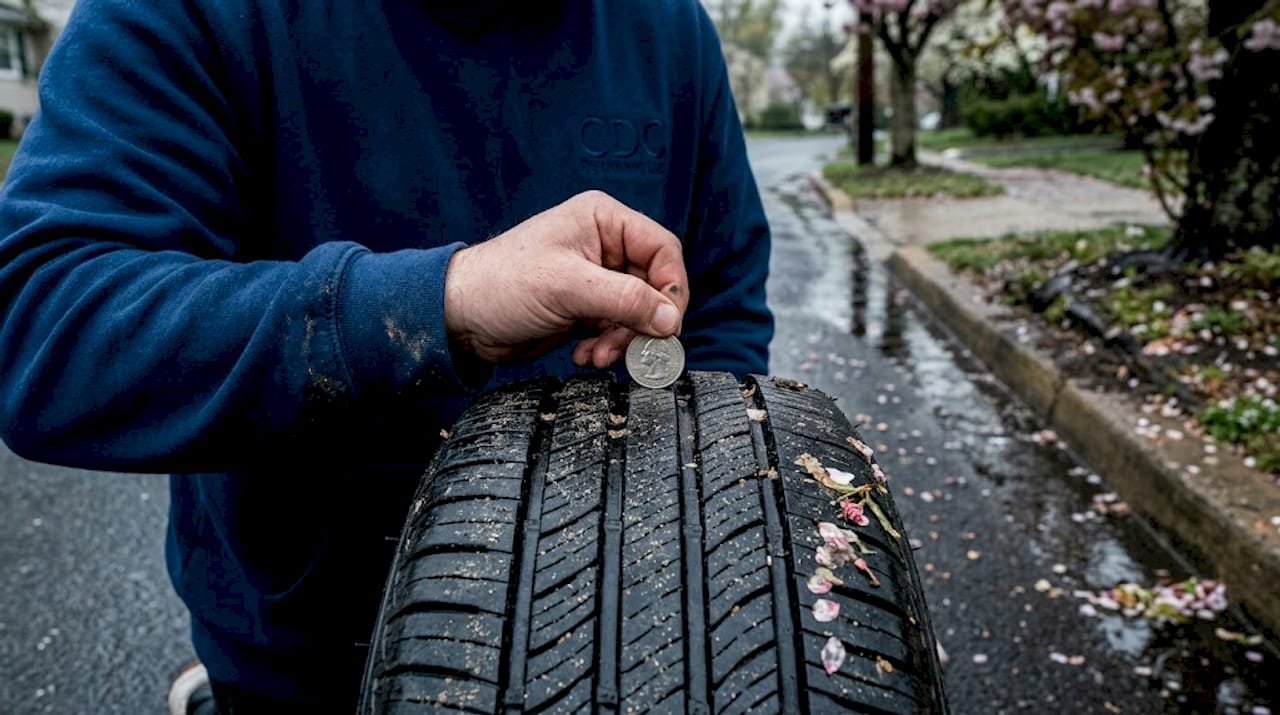
Worn tread is a silent danger, especially during South Jersey’s heavy spring rains when roads turn slick fast. Tread depth minimum is 4/32 inch for adequate snow traction. Use the quarter test: insert a quarter into the tread groove with Washington’s head pointing down. If you can see the top of his head, your tread is too shallow for safe winter or wet-weather driving. Replace those tires before the season changes, not after your first scary skid.
Winter tires versus all-season tires
Here’s something many South Jersey drivers skip because they assume all-season tires are “good enough.” They’re not, at least not when January ice storms hit. Winter tires provide better traction than all-season tires in snow and ice because their rubber compound stays flexible in freezing temperatures, gripping the road rather than hardening and sliding. If you drive frequently during winter months, a dedicated set of winter tires mounted on spare rims is one of the smartest investments you can make.
Pro Tip: Store your off-season tires in a cool, dry place away from direct sunlight. UV exposure degrades rubber faster than most people expect, shortening the life of tires you’re paying good money to maintain.
Pair your tire checks with a solid car maintenance checklist to make sure nothing slips through the cracks between seasons. And once your tires are in shape, don’t forget that road grime, salt, and brake dust cling to your wheels and can accelerate corrosion, so regular cleaning matters too. Following exterior detailing best practices keeps your wheels and wheel wells protected year-round.
Battery, fluids, and belts: winter and summer specifics
After checking your tires for changing weather, turn your attention to what’s under the hood. Your battery, fluids, and belts face distinct seasonal stresses, and failing to address them is one of the most common causes of roadside breakdowns in South Jersey.
Battery: cold weather’s first casualty
Cold temperatures reduce a battery’s ability to deliver cranking power, which is the energy needed to start your engine. Car batteries last 3 to 5 years in the Northeast, but many fail earlier because of repeated freeze-thaw cycles. Have your battery tested at least once a year, ideally in October before the first hard freeze. If your battery is over three years old and you notice slow cranking or dimming lights, replace it proactively. A $150 battery replacement is far cheaper than a tow truck and a missed workday.
Fluids: the seasonal balancing act
Here’s a simple breakdown of the key fluids to check each season:
| Fluid | Winter priority | Summer priority | Interval |
|---|---|---|---|
| Coolant (antifreeze) | Prevent freezing | Prevent overheating | Every 2 years |
| Engine oil | Use correct viscosity | Monitor level in heat | 5,000 to 10,000 miles |
| Windshield washer fluid | Use winter formula | Standard formula OK | Top off as needed |
| Brake fluid | Check for moisture | Check for moisture | Every 2 years |
| Power steering fluid | Check level | Check level | Inspect annually |
Your coolant deserves special attention. A 50/50 antifreeze-water mix protects your engine from freezing below zero and from overheating in summer. Flush and replace it every two years. Don’t just top it off and assume you’re covered. Old coolant loses its corrosion inhibitors and can actually damage your radiator from the inside.
For engine oil, change intervals run 5,000 to 7,500 miles for conventional oil and up to 10,000 miles for full synthetic. In South Jersey winters, using the correct viscosity grade for cold starts matters. Check your owner’s manual for the recommended grade rather than guessing.
Belts and hoses: the parts nobody checks
Rubber belts and hoses harden and crack in cold weather, then soften and swell in summer heat. Inspect them every season for visible cracks, fraying, or soft spots. A snapped serpentine belt can disable your alternator, power steering, and air conditioning all at once. It’s a five-minute visual check that can save you hundreds in repairs.
- Pop the hood when the engine is cool.
- Visually trace each belt for fraying, glazing, or cracks.
- Squeeze hoses gently. Soft, mushy, or very stiff hoses need replacement.
- Check for any coolant residue around hose connections, which signals a slow leak.
- If anything looks questionable, have a certified technician confirm before the season changes.
Pro Tip: Photograph your engine bay at the start of each season. If something looks different three months later, you’ll have a baseline to compare against when talking to your mechanic.
Understanding how regular maintenance saves money is one of the most practical mindset shifts you can make as a vehicle owner. Small checks now prevent massive repair bills later.
Visibility and safety maintenance: windshield, lights, and brakes
Once your battery and fluids are ready for seasonal extremes, ensure your visibility and safety systems keep pace. In South Jersey, where morning fog off the Delaware Bay mixes with icy roads and sudden downpours, your ability to see and stop is everything.
Wiper blades and washer fluid
Wiper blades are cheap. Accidents caused by streaky, skipping wipers are not. Replace wiper blades twice a year and switch to a winter windshield washer fluid formula before temperatures drop. Standard summer washer fluid freezes on contact with a cold windshield, turning your visibility from bad to zero in seconds. Winter formula stays liquid down to minus 20°F in most cases.
Here’s a quick comparison of wiper blade types for South Jersey conditions:
| Wiper type | Best season | Performance in snow/ice | Cost range |
|---|---|---|---|
| Standard frame blade | Spring/Summer/Fall | Poor, ice builds up in frame | $10 to $20 |
| Beam/bracketless blade | Year-round | Good, no frame to ice up | $20 to $40 |
| Winter-specific blade | Winter only | Excellent, rubber boot protects | $15 to $35 |
Lights: don’t assume they work
Walk around your car each season and check every light. Headlights, taillights, brake lights, turn signals, and reverse lights all need to function properly. Cloudy or yellowed headlight lenses cut your light output dramatically and are a safety hazard. Polishing kits can restore clarity, or a professional detailer can handle it as part of an exterior service.
“Clear, functioning lights aren’t just a legal requirement in New Jersey. They’re the difference between being seen and being hit on a dark, wet winter road.”
Brakes: salt is your enemy
South Jersey road crews apply significant amounts of road salt during winter storms. That salt accelerates corrosion on brake components, including rotors, calipers, and brake lines. Check brake pads every 12,000 to 15,000 miles and specifically inspect for salt damage after major winter storms. If you hear grinding or squealing, don’t wait for your next oil change. Brake failure is not a gradual inconvenience. It’s a sudden emergency.
Keeping your car clean through winter directly protects these components. Learn more about keeping your car clean in winter and check out these car care tips for South Jersey to build a complete seasonal routine.
Exterior detailing and protective steps for every season
After ensuring your car is mechanically and safely set for the season, complete your checklist with exterior detailing and protection for year-round durability. Your car’s finish takes a beating from South Jersey’s salt air near the shore, road salt in winter, UV rays in summer, and pollen in spring.
Why regular washing matters more than you think
Road salt doesn’t just sit on the surface. It works its way into every crevice, including door seams, wheel wells, and the undercarriage, and starts breaking down metal within days of exposure. Washing your car every one to two weeks during winter, including an undercarriage rinse, removes that corrosive buildup before it causes permanent damage.
Here’s a seasonal exterior care checklist to follow:
- Winter: Wash every 10 to 14 days, focus on undercarriage, apply a protective wax or sealant before the first freeze
- Spring: Deep wash to remove winter salt residue, inspect paint for chips, apply fresh wax or ceramic coating top-up
- Summer: Wash weekly to remove bird droppings and tree sap (both etch paint fast in heat), reapply UV-protective coating if needed
- Fall: Full detail before winter, apply ceramic coating or paint sealant for maximum cold-weather protection
Wax versus ceramic coating: what’s right for your car?
Traditional wax lasts about 4 to 8 weeks and is easy to apply yourself. Ceramic coatings, applied by a professional, bond chemically to your paint and can last two to five years with proper care. For South Jersey vehicles that face heavy salt exposure and UV stress, a professional ceramic coating is a genuinely worthwhile investment in long-term paint protection.
DIY versus professional detailing
AAA recommends certified technicians for complex mechanical work, while basics like tire pressure and fluid top-offs are DIY-friendly. The same logic applies to detailing. You can handle routine washes and wax applications at home. But for paint correction, ceramic coating application, or deep interior cleaning, a professional gets results that protect your car’s value far better than a weekend DIY job.
Pro Tip: Apply a ceramic coating or quality paint sealant in the fall, before winter arrives. Starting the cold season with a protected finish means salt and grime have a much harder time bonding to your paint.
Explore the full case for seasonal car detailing and check out our exterior car care guide for South Jersey-specific advice. If spring is around the corner, our spring exterior detailing tips walk you through exactly what to do after a tough winter.
What most checklists miss about South Jersey car care
Generic seasonal maintenance guides are written for an average climate that doesn’t exist in South Jersey. The reality here is more demanding, and most checklists don’t account for it.
South Jersey weather shifts faster and more dramatically than the mid-Atlantic averages suggest. A warm spell in January followed by a hard freeze two days later is not unusual. That freeze-thaw cycle is brutal on tires, battery terminals, door seals, and paint. Most checklists tell you to “check before winter.” Here, you need to check throughout winter because conditions reset every few weeks.
The other thing most guides ignore is the cumulative effect of local road salt. South Jersey municipalities are aggressive with salt application, and rightfully so given the traffic and road conditions. But that means your undercarriage and brake components are exposed to far more corrosive material than a driver in, say, central Pennsylvania might experience. Waiting until spring to wash off winter salt is too late. The damage is already happening in February.
Here’s the opinion that might save you real money: avoid unnecessary fluid flushes and oil upgrades beyond what your owner’s manual recommends. Some service centers push premium oil or early coolant flushes as upsells. Stick to your manual’s intervals and specifications. The money you save goes toward the maintenance that actually matters for South Jersey conditions, like more frequent washes, a quality ceramic coating, and proactive battery testing.
One more overlooked area: winter maintenance for ceramic-coated cars requires a different washing approach than uncoated vehicles. Using the wrong soap or pressure washing technique can degrade a coating you paid good money for. Know what you have on your car and maintain it accordingly.
The bottom line is that South Jersey car care is not a twice-a-year event. It’s an ongoing, weather-responsive practice. Treat it that way and your car will last significantly longer.
Protect your investment with expert detailing and maintenance
If you want maximum protection and effortless results, consider how professional detailing can finish your seasonal checklist and provide real peace of mind.
At CDC Auto Detailing, we specialize in mobile detailing services that come directly to South Jersey vehicle owners, so you don’t have to rearrange your schedule to protect your car. Whether you need a thorough exterior wash to strip away winter salt, a professional ceramic coating before summer UV damage sets in, or a full interior and exterior detail to restore your vehicle’s condition, we bring the expertise and equipment to you.

Explore our auto detailing examples to see the range of services we provide, or learn how detailing works to understand exactly what you’re getting. For long-term paint protection that stands up to South Jersey’s toughest seasons, our ceramic coating service is one of the most effective investments you can make in your vehicle’s longevity and appearance. Book your appointment today and let us handle the seasonal protection your car deserves.
Frequently asked questions
How often should I check tire pressure in South Jersey during winter?
Check tire pressure at least once a month during winter, since every 10-degree drop in temperature lowers pressure by 1 PSI. During cold snaps, check more frequently to stay safe.
What’s the ideal windshield washer fluid for South Jersey winters?
Switch to a winter windshield washer fluid formula before temperatures drop, as it resists freezing even during sudden cold snaps. Replace wiper blades twice yearly to ensure clear visibility through ice and snow.
Why do Northeast car batteries fail more in winter?
Cold temperatures significantly reduce a battery’s cranking power, meaning older batteries often can’t deliver enough energy to start your engine. Batteries last 3 to 5 years in the Northeast, so test yours every fall if it’s approaching that age.
Do I need winter tires in South Jersey?
Yes, especially if you drive regularly during winter storms. Winter tires provide better traction than all-season tires in snow and ice because their rubber compound stays flexible in freezing temperatures, giving you more control when it matters most.