
TL;DR:
- Effective fleet management can reduce operating costs by up to 30% through preventive maintenance, fuel control, and strategic scheduling. Implementing disciplined processes, clear ownership, and real-time driver feedback significantly improve safety, efficiency, and asset longevity. Prioritizing operational discipline over technology and addressing key KPIs ensures sustainable fleet performance and long-term value.
Managing a fleet is a constant balancing act between vehicle uptime, driver safety, fuel costs, and compliance deadlines. The good news is that applying the right tips for fleet managers can reduce your total operating expenses by up to 30% through smarter maintenance, fuel control, and scheduling. Whether you run 10 vehicles or 500, the fundamentals are the same: discipline, data, and the right priorities. This article breaks down the most practical, experience-backed fleet management strategies you can act on today.
Table of Contents
- Key takeaways
- 1. Build a real preventive maintenance program
- 2. Attack fuel costs with more than a fuel card
- 3. Choose fleet software that solves your actual problems
- 4. Manage driver performance without destroying trust
- 5. Schedule smarter and manage the full asset lifecycle
- What I have actually learned running fleet operations
- Protect your fleet’s appearance and long-term value
- FAQ
Key takeaways
| Point | Details |
|---|---|
| Preventive maintenance pays | Scheduled maintenance cuts vehicle costs by 12-18% compared to reactive repairs. |
| Fuel is your biggest lever | Fuel represents about 32% of operating costs; driver coaching and idle reduction save thousands. |
| Software should match your pain points | Pick tools that solve your top two or three problems, not the ones with the most features. |
| Driver behavior drives outcomes | Real-time feedback beats monthly reports for reducing risky driving and fuel waste. |
| Lifecycle data protects capital | A 12-month spend analysis identifies the worst-performing assets before they drain your budget. |
1. Build a real preventive maintenance program
Most fleet managers say they do preventive maintenance. Far fewer actually run a program with defined intervals, documented workflows, and measurable targets. 54% of fleet professionals rank preventive maintenance as their top priority, yet breakdown rates in many fleets suggest the follow-through is inconsistent.
A genuine program starts on paper before it ever goes into software. Fleets that map workflows before adopting software see better adoption rates and faster ROI. Define what gets inspected, at what intervals, by whom, and what triggers escalation.
The KPIs worth tracking quarterly are:
- PM compliance rate (target: 90% or higher)
- Planned vs. unplanned repair ratio (more planned = lower total cost)
- Maintenance cost per mile
- Unplanned downtime rate
One often-skipped step is assigning ownership. Fleet managers should assign specific roles for each workflow to avoid program failure within 90 days. If no one is accountable for follow-up, the program falls apart regardless of the software you use.
Pro Tip: Adjust your PM intervals every quarter based on actual mileage, load type, and seasonal conditions. A “set-and-forget” schedule is just a slower version of reactive maintenance.
Here is a quick-reference table for PM program essentials:
| Program Element | What Good Looks Like |
|---|---|
| Inspection intervals | Defined by mileage AND calendar date |
| Workflow ownership | Named individual per vehicle category |
| PM compliance tracking | Reviewed monthly, adjusted quarterly |
| Escalation triggers | Clear thresholds before a PM becomes urgent repair |
2. Attack fuel costs with more than a fuel card
Fuel costs account for about 32% of your operating expenses. That makes it the single largest variable cost most fleet managers have real influence over. And yet most fuel programs stop at issuing cards and reviewing receipts.
The better approach combines tracking, behavioral coaching, and route logic. On the tracking side, a proactive fuel program can capture 3% lost to fraud and unauthorized use. That is not a rounding error. Across a 50-truck fleet, it adds up to thousands of dollars annually.
Idle time is the other underestimated drain. Reducing idle time by 20 minutes daily across a 50-truck fleet saves significant fuel costs and cuts approximately 15 metric tons of CO2 annually. Drivers often idle out of habit, not necessity. That changes fast with feedback.
Specific tactics that move the needle:
- Use telematics to flag excessive idling in real time, not at the end of the month
- Coach drivers on smooth acceleration and early braking, not just speeding
- Run route optimization on every dispatch cycle, not just at scheduling time
- Compare fuel consumption per driver on the same route to isolate behavior vs. route variables
Driver behavior corrections can cut fuel consumption by around 10%. That is meaningful savings you can achieve without capital investment.
Pro Tip: Use your telematics data to build individual driver fuel scorecards. When drivers see their own numbers compared to fleet average, improvement happens faster than any policy memo will ever achieve.
3. Choose fleet software that solves your actual problems
There is no universal best fleet management software. The right choice depends entirely on which operational pain points cost you the most right now. Software adoption should align with your fleet’s immediate priorities rather than feature breadth.
Before you demo anything, rank your top three problems. Is it maintenance compliance? Driver behavior? Fuel waste? Route inefficiency? Then shortlist tools that solve those specific issues and validate them using your own fleet data during the pilot.
The six features worth having in any serious fleet management tool are:
- Maintenance scheduling with automated reminders
- GPS tracking with historical route playback
- Driver behavior monitoring with scoring
- Fuel analytics by vehicle and driver
- Route optimization with real-time traffic integration
- Compliance documentation and reporting
Below is a simplified feature matrix to help you match tool type to fleet need:
| Fleet Priority | Features to Prioritize | What to Deprioritize |
|---|---|---|
| Reducing maintenance costs | PM scheduling, cost-per-mile tracking | Advanced routing modules |
| Cutting fuel spend | Telematics, idle monitoring, fuel analytics | Compliance-heavy documentation |
| Improving safety records | Driver scoring, real-time alerts, dashcams | Asset lifecycle management |
| Maximizing uptime | Predictive maintenance alerts, downtime tracking | Marketing and customer tools |
Usability matters as much as capability. A feature-rich platform that your team avoids using is worse than a simpler tool they actually engage with daily. Pilot with a real subset of your fleet for 30 days before committing.
Pro Tip: Involve your mechanics and drivers in software evaluation. If they find it cumbersome to log data, adoption will fail within 60 days and you will have accurate data from nobody.
4. Manage driver performance without destroying trust
Your drivers are not just operators. They are the single biggest variable in your fuel costs, vehicle wear rates, and safety record. How you manage them matters as much as what you track.
The research is clear: real-time alerts reduce risky behavior more effectively than monthly summary reports alone. Immediate feedback creates an immediate behavior loop. A driver who gets notified about hard braking during a shift can correct it the same day. The same driver reading a monthly report two weeks later has lost the context.
The approach that works in practice combines transparency with positive reinforcement:
- Tell drivers exactly what is being monitored and why before monitoring starts
- Share individual scorecards regularly, not just when there is a problem
- Recognize top performers publicly, even informally
- Use coaching conversations for issues, not disciplinary write-ups as a first response
- Set team benchmarks so drivers compete against an average, not just a rulebook
The trust component is not soft advice. Drivers who feel surveilled without context are more likely to game metrics or disengage. Drivers who understand the “why” behind monitoring tend to take ownership of their scores.
Reviewing metrics monthly is the floor, not the ceiling. The fleet managers who get the best results also use short weekly check-ins to address patterns before they calcify into habits. For high-risk routes or new hires, consider bi-weekly one-on-ones for the first 90 days.
Pro Tip: Create a simple monthly fleet safety scorecard with three metrics per driver. Keep it short enough that drivers actually read it and specific enough that they know what to improve.
5. Schedule smarter and manage the full asset lifecycle
Running a fleet efficiently is not just about keeping vehicles moving. It is about knowing when to fix, when to reassign, and when to replace. Most fleet managers are reactive on all three.
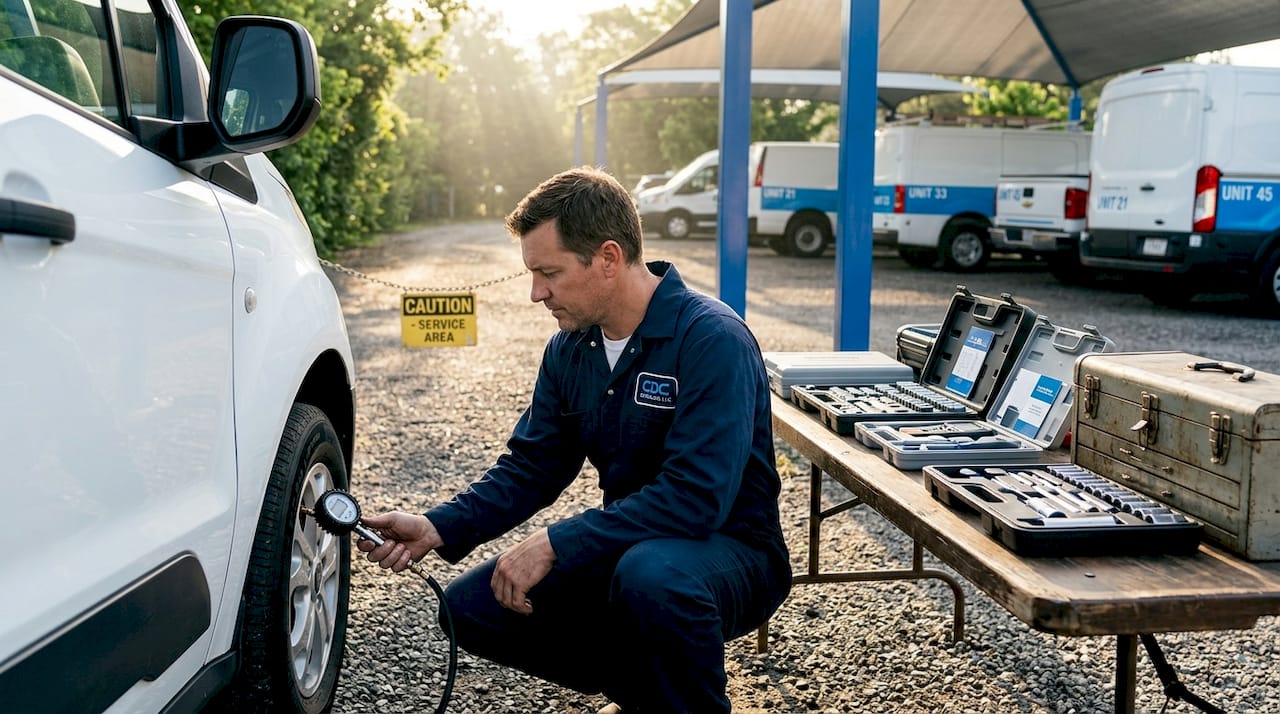
A 12-month fleet spend analysis consistently shows that the bottom 10% of assets account for roughly 30% of total repair costs. That is a pattern, not bad luck. And yet many fleets continue to pour money into those vehicles simply because replacement feels expensive.
Strategic scheduling and lifecycle management means:
- Tracking utilization rates per vehicle to spot underperforming assets
- Benchmarking maintenance cost per mile across the fleet and flagging outliers
- Staggering PM appointments so your fleet is never down by more than 10-15% at any time
- Setting clear replacement thresholds based on cost-per-mile, not just age or mileage alone
- Running a formal spend review every 12 months to identify replacement candidates early
On the scheduling side, use your dispatch history to schedule maintenance during natural low-demand periods. If your fleet peaks on Fridays, schedule PM windows on Mondays. It sounds obvious but most fleets schedule around the shop’s convenience, not the operation’s.
Remarketing timing matters too. Selling or redeploying vehicles at the right point in their lifecycle can increase resale returns by 12%. Hold a vehicle too long past its reliability window and you give back every dollar you would have gained.
Pro Tip: Set a monthly calendar reminder to review your five highest-cost vehicles. If any of them are trending upward in repair frequency, start the replacement or redeployment process before it becomes an emergency decision.
Also worth considering for fleet reliability: choosing durable, field-tested vehicle components saves real money. Understanding why fleet operators need durable wipers is a small example of how component selection compounds into significant cost and uptime differences over time.
For a practical, manager-ready checklist to keep your preventive maintenance on track throughout the year, the fleet maintenance checklist from Cdcautodetailing covers the key priorities for 2026.
What I have actually learned running fleet operations
I have seen fleets with excellent software and terrible outcomes. I have also seen fleets running spreadsheets and outperforming competitors with enterprise tools. The difference is almost never technology. It is operational discipline.
The trap most fleet managers fall into is buying a solution before defining a process. Software does not create accountability. People do. If your maintenance program does not have clear ownership and a defined review cadence, adding a $40,000 platform will just make the dysfunction more visible.
The other thing I have learned is that purely reactive management leads to repair costs running 300% higher than preventive approaches. That number used to surprise me. It does not anymore. Every emergency repair carries hidden costs: rush parts, overtime labor, a driver sitting idle, and a customer who did not get served.
What actually works is boring. Document your processes. Assign ownership. Measure the right three or four KPIs consistently. Adjust every quarter. Repeat. The fleet managers I respect most are not chasing the newest technology. They are relentlessly consistent with the basics.
— Charles
Protect your fleet’s appearance and long-term value
Operational efficiency keeps your fleet moving. Professional detailing keeps it looking like an asset worth protecting. At Cdcautodetailing, we work directly with fleet managers across South Jersey to deliver mobile detailing for fleets that fits around your schedule, not the other way around. From exterior protection to interior deep cleaning, our services reduce long-term wear and reinforce the professional image your clients expect.
Explore the full range of fleet detailing services we offer for commercial clients, including ceramic coatings for fleets that protect paint and reduce cleaning time across your entire vehicle lineup. If your fleet represents your brand on the road, it should look the part every time.
FAQ
How much can effective fleet management reduce operating costs?
Implementing preventive maintenance, fuel management, and route planning can reduce fleet operating expenses by up to 30%. The biggest savings typically come from reduced unplanned repairs and lower fuel spend.
What is the most important metric for fleet managers to track?
PM compliance rate, maintenance cost per mile, and planned-to-unplanned repair ratio are the three metrics that give you the clearest picture of fleet health. Tracking all three together helps you spot problems before they become expensive.
How do you improve driver behavior without damaging morale?
Be transparent about what you monitor and why, share individual scorecards regularly, and lead with coaching rather than discipline. Real-time alerts create faster behavior change than monthly reports and feel less punitive when framed as feedback rather than surveillance.
When should you replace a fleet vehicle rather than repair it?
Run a 12-month spend analysis on every vehicle annually. If a vehicle falls into the bottom 10% for repair costs and its cost-per-mile is trending upward, replacement typically outperforms continued maintenance. Selling at the right time can also increase resale value by 12%.
What fleet management software features matter most?
Prioritize maintenance scheduling, GPS tracking, driver behavior monitoring, and fuel analytics. Choose tools that match your top operational pain points rather than the platform with the most features, and always validate with a real pilot before full deployment.