
TL;DR:
- Reactive maintenance is significantly more costly and leads to higher downtime compared to preventive scheduling. Implementing structured PM tiers and integrating driver reports help prevent failures and extend vehicle lifespan. For South Jersey, adjusting maintenance frequency and adding corrosion protection are essential due to harsh winter conditions.
Many South Jersey fleet managers assume that fixing vehicles only when something breaks is the financially smart move. It isn’t. Reactive maintenance costs 3-9 times more than preventive approaches, and every day a vehicle sits idle drains $450 to $1,000 from your operating budget. For businesses running delivery vans, service trucks, or commercial vehicles across South Jersey’s salty winter roads, these losses compound fast. This article breaks down preventive maintenance programs, tier structures, real cost benchmarks, and region-specific strategies so you can stop bleeding money on breakdowns and start managing your fleet like a business asset.
Table of Contents
- What is fleet vehicle maintenance?
- Preventive maintenance tiers and schedules
- Reactive maintenance vs preventive: Financial and operational impact
- Edge cases and expert solutions for South Jersey fleets
- The uncomfortable truth about fleet maintenance in South Jersey
- Enhance your fleet’s value with professional detailing and protection
- Frequently asked questions
Key Takeaways
| Point | Details |
|---|---|
| Preventive saves money | Switching from reactive to preventive maintenance can cut costs by 18-30% and reduce downtime by 50%. |
| PM tiers enable planning | Using PM-A, B, C, and D tiered inspections gives clarity to scheduling and extends fleet longevity. |
| Benchmark your fleet | Tracking cost per mile and downtime benchmarks helps spot inefficiencies and goal-setting for South Jersey fleets. |
| Adjust for local conditions | Salt roads and harsh winters in South Jersey require shorter intervals and special focus on corrosion, batteries, and coolant. |
| Use automation tools | Connected software and telematics streamline maintenance, cut errors, and improve compliance across your fleet. |
What is fleet vehicle maintenance?
Fleet vehicle maintenance is the structured process of keeping every commercial vehicle in your operation roadworthy, compliant, and running efficiently. It covers everything from routine oil changes and brake inspections to emissions checks and tire rotations. But the real distinction that separates thriving fleets from struggling ones is whether maintenance is preventive or reactive.
Reactive maintenance means you wait for something to fail before addressing it. The engine warning light comes on, a tire blows, or a transmission gives out mid-route. You react. This approach feels like it saves money until you factor in tow costs, emergency labor rates, missed deliveries, and the cascading effect on the rest of your schedule.
Preventive maintenance (PM) flips that model. Instead of waiting for failure, you schedule inspections and service at regular intervals based on mileage, time, or vehicle use. Fleet vehicle maintenance relies heavily on tiered PM programs using structured services labeled PM-A through PM-D, each covering progressively deeper system checks.
A well-run PM program includes these core components:
- Scheduled inspections at defined mileage or time intervals
- Work orders that document every repair, part used, and technician involved
- Driver Vehicle Inspection Reports (DVIRs) submitted by drivers at the start and end of each shift
- Compliance records that protect you during DOT audits and warranty claims
- Parts inventory tracking to avoid delays caused by waiting on supplies
“A fleet that treats maintenance as a system rather than a reaction builds compounding reliability. Every inspection skipped is a future emergency purchased in advance.”
Driver input through DVIRs is often undervalued. Drivers notice subtle changes before they show up on diagnostics: a slight pull in the steering, an unusual vibration, or a delayed brake response. Capturing those observations early can prevent expensive failures down the road. Pair driver reports with solid winter maintenance tips for your coated vehicles and you close most of the gap between reactive chaos and predictive control.
Understanding auto warranty basics is also critical here. Missed PM intervals can void manufacturer warranties, turning a covered repair into a five-figure out-of-pocket expense. For South Jersey fleets operating vehicles year-round in demanding conditions, that risk is very real.
Preventive maintenance tiers and schedules
PM programs are structured in four tiers, each building on the last. Understanding what each tier covers and when it should occur is the foundation of a reliable maintenance program.
PM intervals and tasks are calibrated to mileage, duty cycle, and environmental conditions:
| PM Tier | Interval | Key Tasks |
|---|---|---|
| PM-A | 10,000-15,000 miles | Oil change, fluid check, filter inspection, belts, lights |
| PM-B | 25,000-30,000 miles | Everything in A, plus brake inspection, tire rotation, battery test |
| PM-C | 50,000-60,000 miles | Everything in B, plus fuel system, cooling system, drivetrain check |
| PM-D | 100,000 miles | Full overhaul: suspension, transmission, major component inspection |
Here is how to implement PM tiers effectively for your South Jersey operation:
- Assign each vehicle a tier schedule based on its average monthly mileage and duty type (local delivery, highway, mixed).
- Shorten intervals for harsh conditions. Salt exposure, stop-and-go urban routes, and winter cold all accelerate wear. A vehicle doing 500 miles per week on coastal routes needs more frequent PM-A service than one doing highway miles.
- Track completion in a centralized system so nothing slips through the gap between multiple vehicles and drivers.
- Combine PM visits with detailing inspections to catch corrosion, paint damage, or undercarriage rust before it spreads.
Salt from South Jersey’s winter roads is one of the most damaging forces your fleet faces. It accelerates brake corrosion, attacks undercoatings, and degrades seals faster than normal wear. Scheduling your fleet detailing types alongside mechanical PM visits creates a full protection loop.
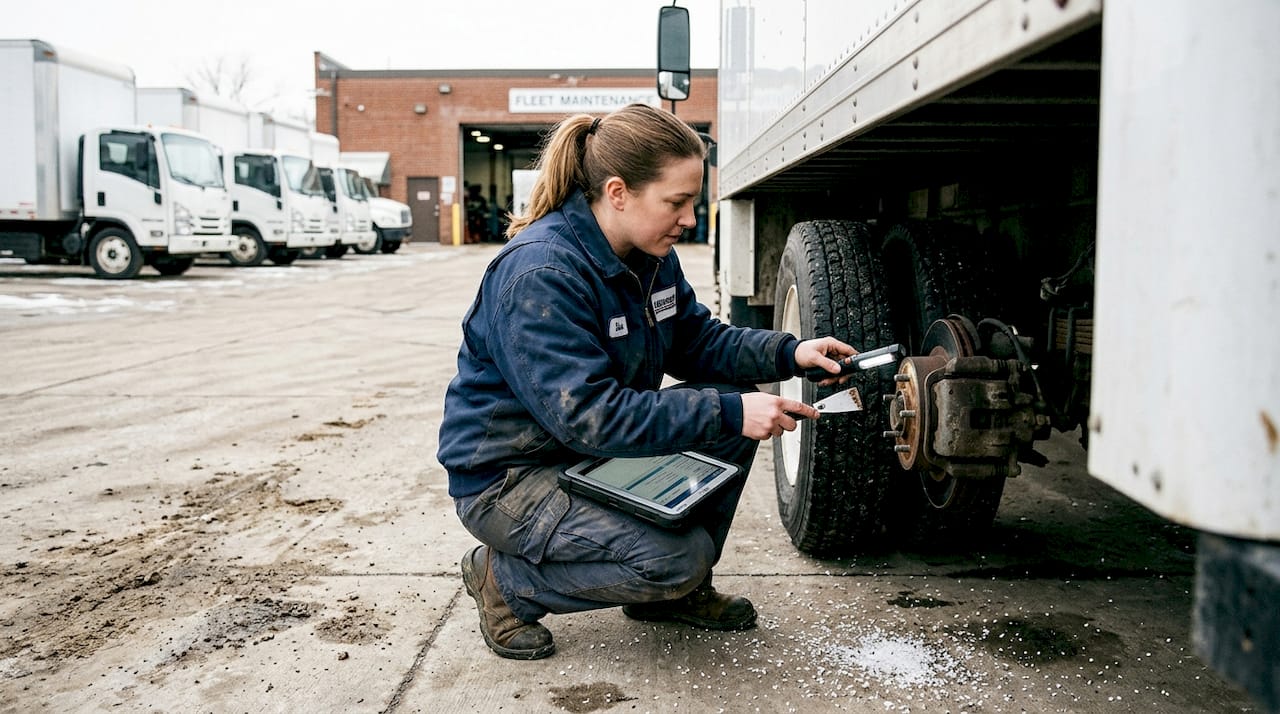
Pro Tip: Use your PM-A visits as touchpoints for a quick detailing assessment. Catching early surface corrosion at the 10,000-mile mark costs far less to address than dealing with structural rust at 50,000 miles.
Proper detail scheduling for fleets does more than keep vehicles clean. It creates regular opportunities to spot developing problems before they become expensive ones. A structured PM calendar combined with a detailing schedule gives you two layers of protection across every vehicle in your fleet.
Reactive maintenance vs preventive: Financial and operational impact
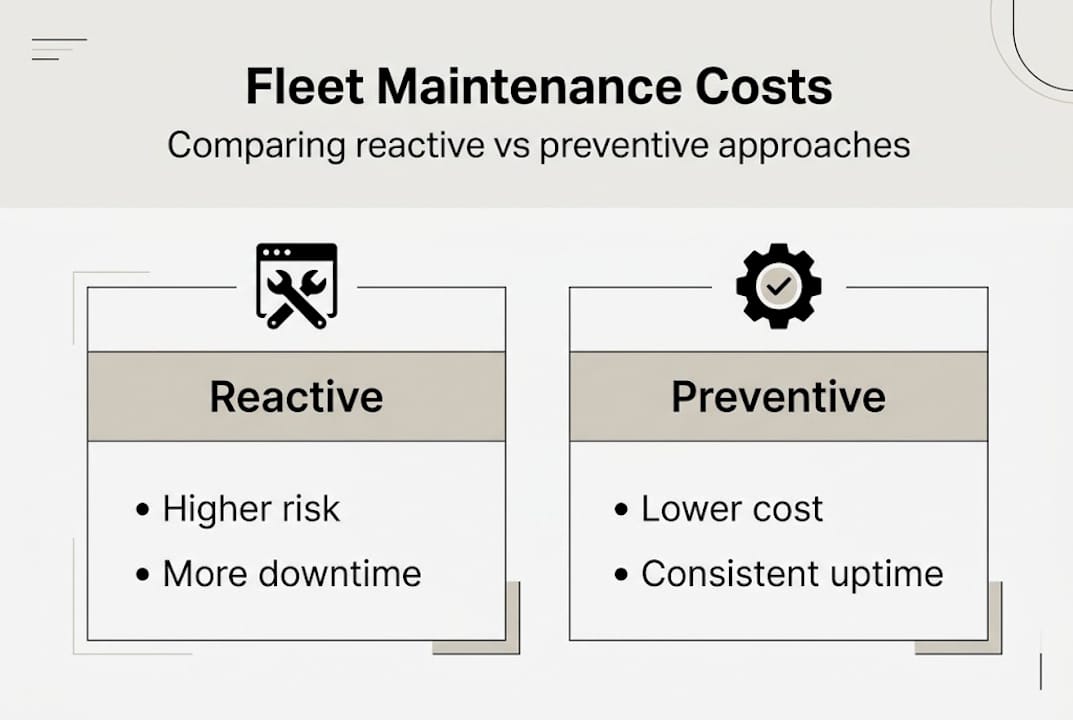
The numbers here are hard to argue with. Reactive maintenance costs 3-9 times more per incident than a comparable preventive service, adds $450-$1,000 per day in downtime costs, shortens vehicle lifespan significantly, and produces 50% more total downtime than fleets running structured PM programs. Preventive programs, by contrast, deliver 18-30% savings on overall maintenance spend and extend vehicle life by 15-20%.
Let’s put that into concrete terms:
| Metric | Reactive Approach | Preventive Approach |
|---|---|---|
| Cost per incident | 3-9x higher | Controlled and predictable |
| Daily downtime cost | $450-$1,000 | Minimal scheduled gaps |
| Vehicle lifespan | Shortened by premature failure | Extended 15-20% |
| Annual maintenance savings | None | 18-30% reduction |
| Fleet downtime rate | ~8.2% average | ~4.7% for top fleets |
Fleet maintenance benchmarks show the national average maintenance cost sits at 40 cents per mile overall, climbing to $1.10 per mile for vehicles older than ten years. Top-performing fleets hold downtime to 4.7%, while average fleets run at 8.2%. That gap represents significant lost revenue for a South Jersey operation running ten or more vehicles.
Key cost drivers that separate best-in-class fleets from the average:
- Parts purchasing power: Planned maintenance allows bulk purchasing and scheduled parts delivery rather than emergency sourcing at premium rates.
- Labor efficiency: Technicians working on scheduled visits are 40% more productive than those responding to breakdowns under time pressure.
- Asset depreciation: Vehicles maintained preventively hold higher resale value and lower total cost of ownership.
- Insurance implications: A documented PM history can reduce liability exposure and support warranty claims.
Pro Tip: Track cost per mile for every vehicle in your fleet, not just total maintenance spend. This single metric instantly reveals which vehicles are pulling your averages up and which ones justify replacement or more aggressive PM.
For fleets running Freightliner trucks, reviewing Freightliner warranty tips alongside your PM schedule ensures you stay covered under manufacturer terms. Understanding fleet cleaning vs individual detailing also helps you allocate your care budget more effectively across different vehicle types.
Edge cases and expert solutions for South Jersey fleets
Standard PM intervals are built for average conditions. South Jersey is not average. The combination of coastal salt air, freeze-thaw cycles, urban stop-and-go traffic, and highway highway stretches creates a wear pattern that demands adjusted strategies.
Harsh duty cycles including cold temperatures, dust, and salt exposure shorten PM intervals and increase the likelihood of unplanned failures in brakes, drivetrain components, and electrical systems. Predictive tactics and strong driver reporting become essential when operating under these conditions.
“Fleets that treat South Jersey’s winter as a maintenance exception rather than the standard operating condition pay for that assumption every spring.”
Solutions built specifically for South Jersey fleet operations:
- Shorten PM-A intervals to 8,000 miles during winter months when salt exposure is highest
- Add calendar-based PM triggers for low-mileage vehicles (utility vehicles, specialty equipment) that don’t accumulate miles fast enough to hit standard thresholds
- Prioritize brake and suspension inspections after every winter season, since these components absorb the most damage from salt and road deterioration
- Deploy telematics systems that monitor engine hours, idle time, and fault codes in real time to catch developing issues before they cause failures
- Use digital DVIRs to create timestamped driver reports that integrate directly with your maintenance software
- Schedule undercarriage washes after major snow events or salt exposure to slow corrosion between full detailing visits
Staying current on fleet detailing trends also gives you access to newer protective treatments that extend the interval between corrosion issues. Pay attention to wheel and tire care tips as a simple but often overlooked part of regional maintenance, since salt accumulates fastest in wheel wells and along brake components.
For fleets needing a maintenance checklist tailored to heavy commercial vehicles, using a structured reference removes guesswork from each PM visit. Pairing that with the commercial fleet detailing side of vehicle care rounds out your protection strategy beyond just mechanical upkeep.
The uncomfortable truth about fleet maintenance in South Jersey
Here’s what most maintenance guides won’t say directly: the “fix it when it breaks” mentality isn’t just a financial mistake. It’s a cultural one. Fleets that operate reactively are usually also the ones with inconsistent driver reporting, disorganized records, and no clear picture of total operating costs. The maintenance failure is a symptom of a deeper management gap.
In South Jersey specifically, salt corrosion is not a seasonal inconvenience. It is a year-round threat that starts doing damage the moment winter roads are treated. Fleets that treat PM as insurance against that environment consistently outperform those that don’t. The ones that mature from reactive to predictive maintenance don’t just save money on repairs. They extend vehicle lifecycles, protect resale value, and carry fleet longevity signs that attract better drivers, better clients, and better insurance rates.
The local fleets we work with in South Jersey that have made the shift treat each PM visit as a data point, not a chore. That mindset shift is what separates the ones still running original vehicles at 200,000 miles from those replacing assets every four years.
Enhance your fleet’s value with professional detailing and protection
Mechanical maintenance keeps your fleet running. Professional detailing keeps it protected and profitable. If your vehicles operate in South Jersey’s corrosive coastal environment, a standard wash routine simply isn’t enough to prevent the paint degradation, rust, and surface damage that quietly reduce resale value.
At CDC Auto Detailing, we specialize in ceramic coatings for fleets that create a durable barrier against salt, UV damage, and road grime. Our mobile service comes to your lot, minimizing downtime while delivering professional-grade protection. Staying ahead of fleet detailing trends is part of how we help South Jersey businesses protect their assets. Whether you’re focused on business image detailing or long-term vehicle protection, we make scheduling easy for fleets of any size.
Frequently asked questions
How often should fleet vehicles get preventive maintenance?
PM-A service is recommended every 10,000-15,000 miles, while PM-D covers major annual service. Adjust intervals shorter for harsh South Jersey conditions.
How much does reactive maintenance cost compared to preventive?
Reactive maintenance runs 3-9 times more expensive per incident and adds $450-$1,000 per day in downtime costs, making preventive programs far more budget-friendly over time.
What are the main benchmarks for fleet maintenance costs?
National averages sit at 40 cents per mile, but vehicles older than ten years can push that to $1.10 per mile, making age a key factor in fleet budgeting.
How can South Jersey fleets adjust maintenance for salt and winter?
Shorten PM intervals during winter, prioritize brake and corrosion checks after salt exposure, and use connected software to track real-time vehicle health.
Which tools help automate and optimize maintenance for fleets?
Connected maintenance software, telematics, digital DVIRs, and driver inspection reports work together to automate scheduling, catch problems early, and keep compliance records current.